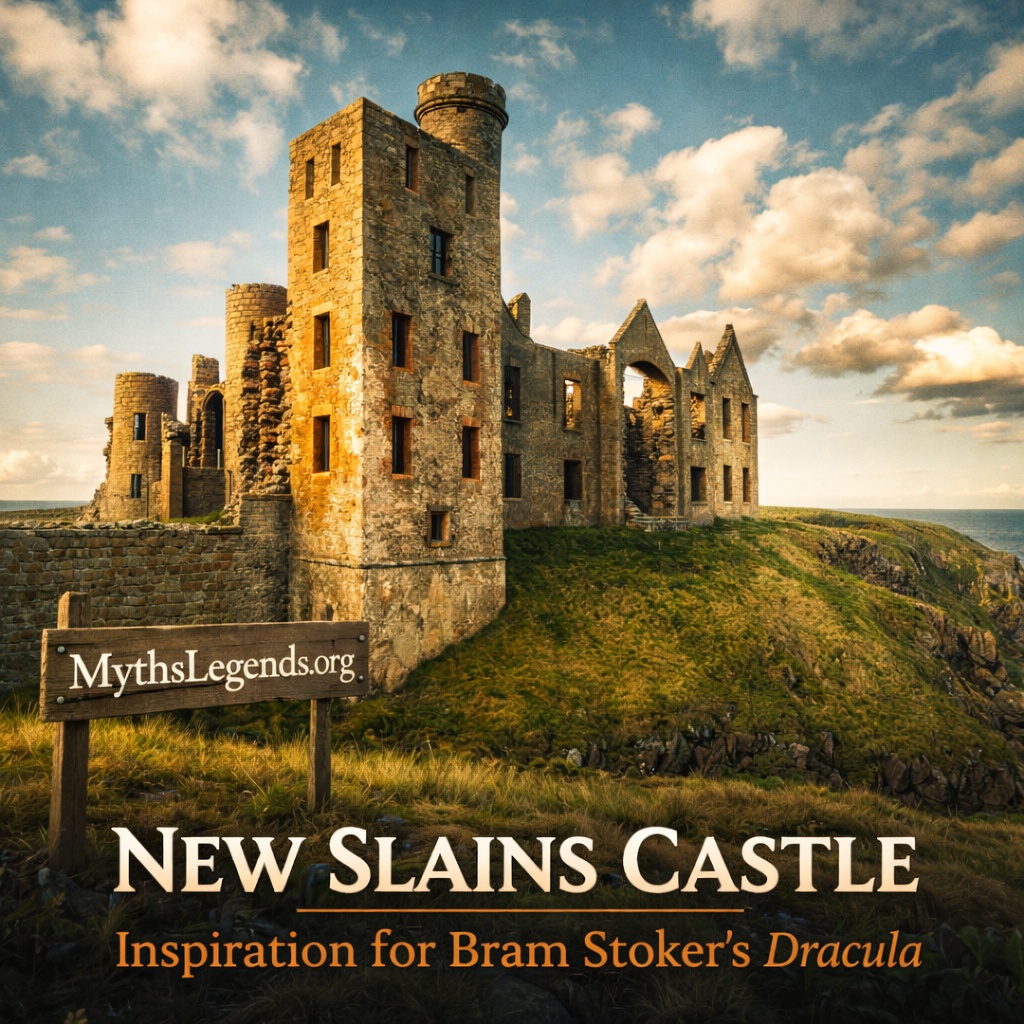
The dark allure of Slains Castle: Bram Stoker and his inspiration for Dracula
Set amidst the rugged coastal landscape of Aberdeenshire, Slains Castle stands as a ruin that exudes a mysterious atmosphere from the very first glance. The history of this castle is just as fascinating as its connection to world literature. For it is here, on the east coast of Scotland, that Bram Stoker – the legendary author of the famous horror novel Dracula – is said to have found the inspiration for his masterpiece. But how exactly did this place influence the writer, and what myths surround the connection between Slains Castle and arguably the most famous vampire in literary history?
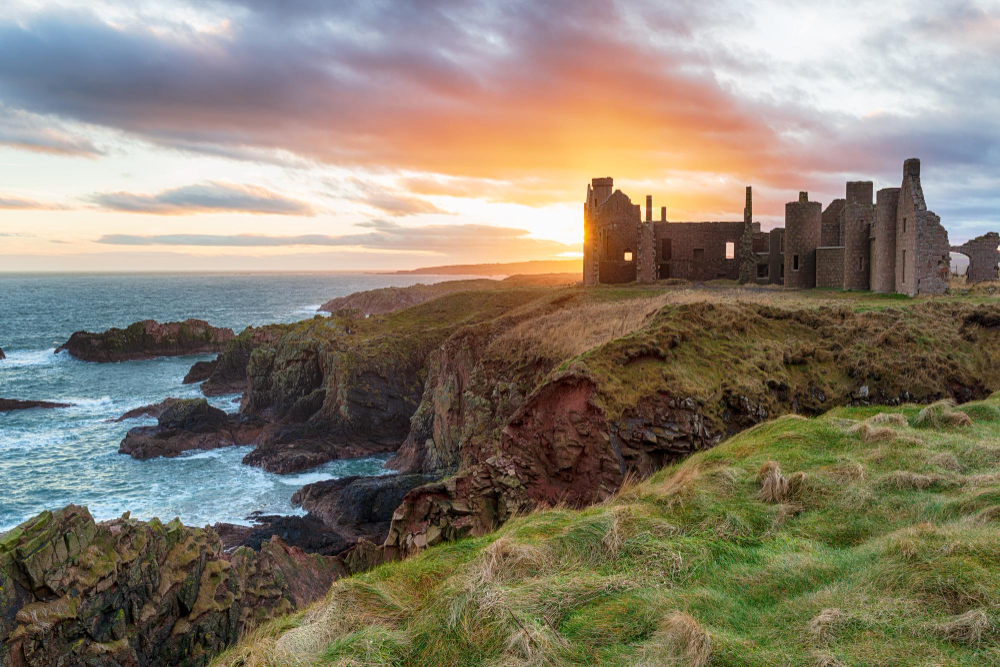
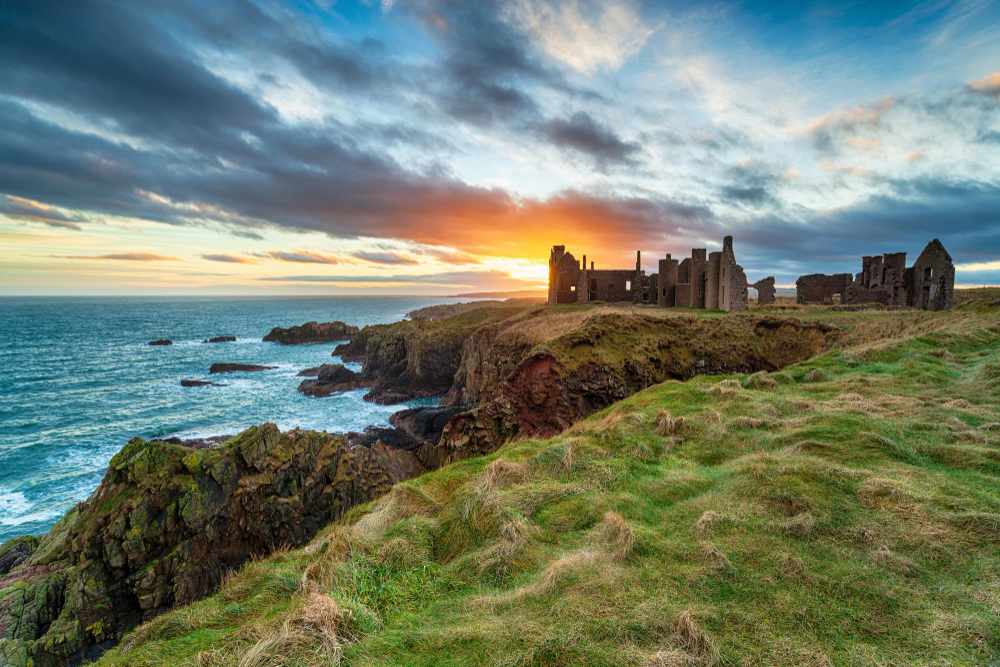
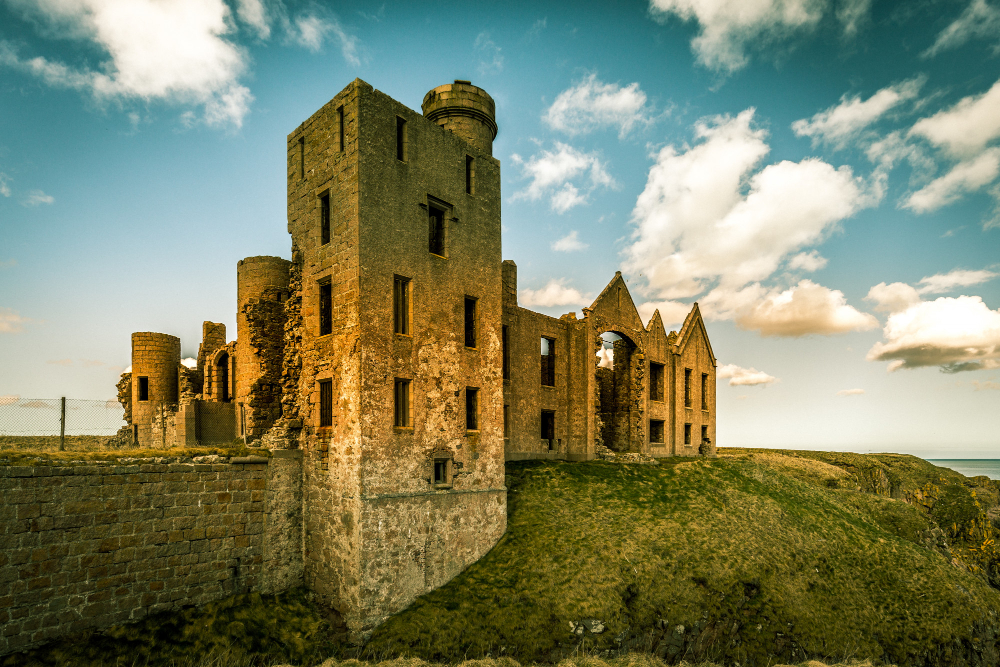
Slains Castle: A place full of secrets and history – Slains Castle, also known as New Slains Castle, sits picturesquely perched on the cliffs near the small village of Cruden Bay. Originally built in the 16th century and later altered through various renovations, the castle is now a ruin that has nevertheless lost none of its imposing presence. With its crumbling walls and breathtaking views of the roaring North Sea, it regularly attracts visitors who are not only interested in architecture and history, but also wish to experience the eerie atmosphere of the place. Although the castle itself is of historical significance – it once served as the residence of the powerful Hay family – it is the literary legend and the speculation surrounding Bram Stoker that make Slains Castle unforgettable for many.
Bram Stoker’s Visits to Cruden Bay – It is a well-documented fact that Bram Stoker visited the small village of Cruden Bay on several occasions. He stayed there regularly, particularly between 1893 and 1910, evidently drawn to the wild beauty of the surroundings. During his stays, Stoker usually lodged at the ‘Kilmarnock Arms Hotel’, which still stands today. It is said that he worked on several of his works here, most notably Dracula. The hotel’s proximity to Slains Castle and the opportunity to explore the building’s dramatic setting provided the author with ideal conditions for developing his creative ideas. Although many claim that Slains Castle served directly as the model for Dracula’s eerie castle, there is no conclusive evidence to support this. In fact, Stoker had already begun making notes for his novel Dracula as early as 1890 – at a time when he had not yet even visited Slains Castle. Nevertheless, the question of the extent to which the place might have influenced him later remains a fascinating one.
Parallels between Slains Castle and Dracula’s castle – A particularly interesting aspect of the connection between Slains Castle and Dracula is the so-called ‘Octagonal Hall’. This octagonal room in the castle bears striking similarities to a room that Stoker describes in detail in his novel. In Dracula, a comparable hall is depicted, exuding a gloomy atmosphere with a mysterious, frightening aura. The rugged coastal landscape surrounding Slains Castle may also have inspired Stoker. The wildness and unpredictability of nature described in his novel undoubtedly reflect the austere beauty of Scotland’s north-eastern coast. Furthermore, Dracula contains numerous scenes featuring eerie castles, menacing cliffs and a stormy sea. These elements may well stem from impressions the author gathered during his time in Cruden Bay and on his visits to Slains Castle. It is important to note, however, that there are castles with similar characteristics in other parts of Europe, so Slains Castle need not necessarily have been the primary source of inspiration.
An atmosphere that sparks creativity – One of the reasons why Slains Castle is so frequently associated with Dracula undoubtedly lies in the atmospheric effect of the place. The castle’s ruins convey a sense of transience that fits perfectly with the themes of death and immortality explored in the novel. It is easy to imagine Stoker wandering through the abandoned halls, whilst the wind whistled through the open windows and the rugged landscape provided a sombre backdrop – a perfect setting in which to ponder the sinister machinations of a vampire. Cruden Bay itself also held a special charm back then. Although the small village was quiet, the surrounding natural landscape – with its rugged cliffs and unspoilt beauty – continues to inspire to this day. Many authors and artists have been influenced by such places, and it is quite possible that Stoker developed some of his best ideas here.
The legends surrounding Bram Stoker and Slains Castle – The claim that Slains Castle served directly as the model for Dracula’s castle now belongs more to the realm of legend. Nevertheless, it is fascinating to see how this connection has developed over the decades. For literature fans and lovers of horror stories, the idea that such an iconic work as Dracula was inspired by a real castle that one can visit is enticing. In fact, this myth-making may well be one reason why Slains Castle continues to attract so much attention to this day. It should be noted, however, that the castle itself does not provide a typical setting for vampire stories. In contrast to the gloomy, Gothic atmosphere of Dracula’s castle, Slains Castle presents itself more as a Scottish manor house featuring a mixture of different architectural styles. Nevertheless, with its ruins and secluded location, it possesses a melancholic aura that lends itself perfectly to literary fantasies.
A cultural heritage worth preserving – Whilst Slains Castle continues to attract tourists and literature enthusiasts, the question also arises as to how this historic site can be preserved in the long term. The ruins are in an advanced state of disrepair and, without targeted measures, could ultimately fall victim to the ravages of time. Many local initiatives are working to preserve the castle as a cultural heritage site, in order to safeguard both its historical significance and its role in literary history. Although the link between Bram Stoker and Slains Castle may not be conclusively proven, it remains a fascinating part of the legend surrounding Dracula. For anyone who loves the story of the famous vampire novel and wishes to discover the mystical side of the Scottish coast at the same time, a visit to Slains Castle offers a unique opportunity to combine both worlds.
Myth and Reality in the Shadow of Slains Castle – The connection between Bram Stoker’s Dracula and Slains Castle may seem contradictory at first glance: on the one hand, no direct inspiration can be conclusively proven; on the other hand, there are numerous indications that the author was at least influenced by the atmosphere and the setting. Whatever the truth may be, one thing is certain: Slains Castle remains a place that fires the imagination – whether through its own history or through its place in the legendary world of literature. With its unique blend of dark romance and rugged natural beauty, the ruin has irrevocably secured a place in the cultural consciousness. And who knows – perhaps the next great horror writer will find inspiration here for another masterpiece that will captivate the world just as Dracula did back then.

Post Comment