Xivert: The Templar castle between documented history and the legend of the hidden treasure
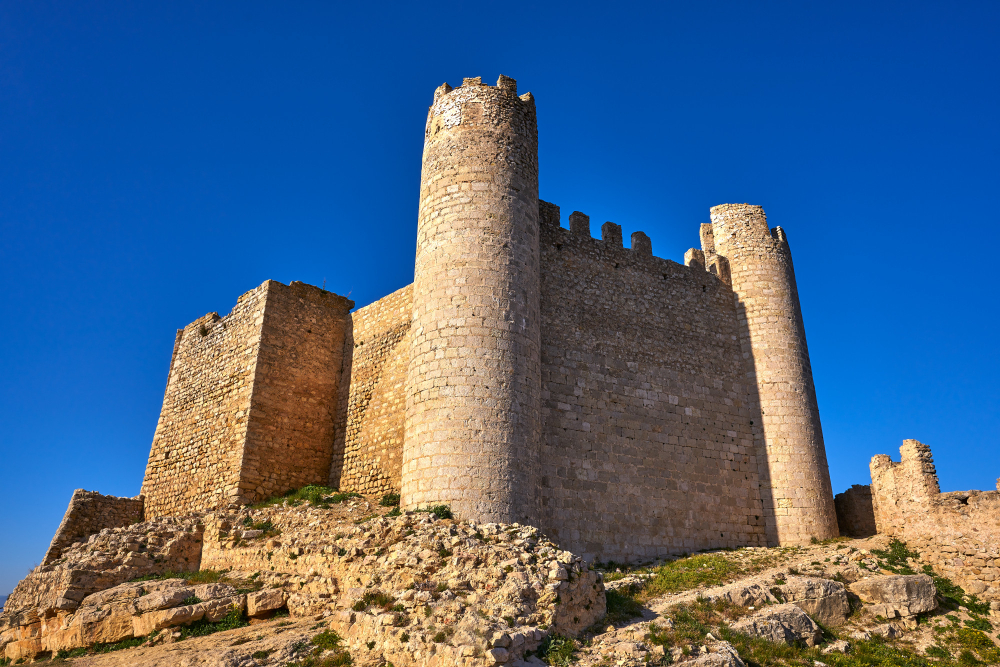
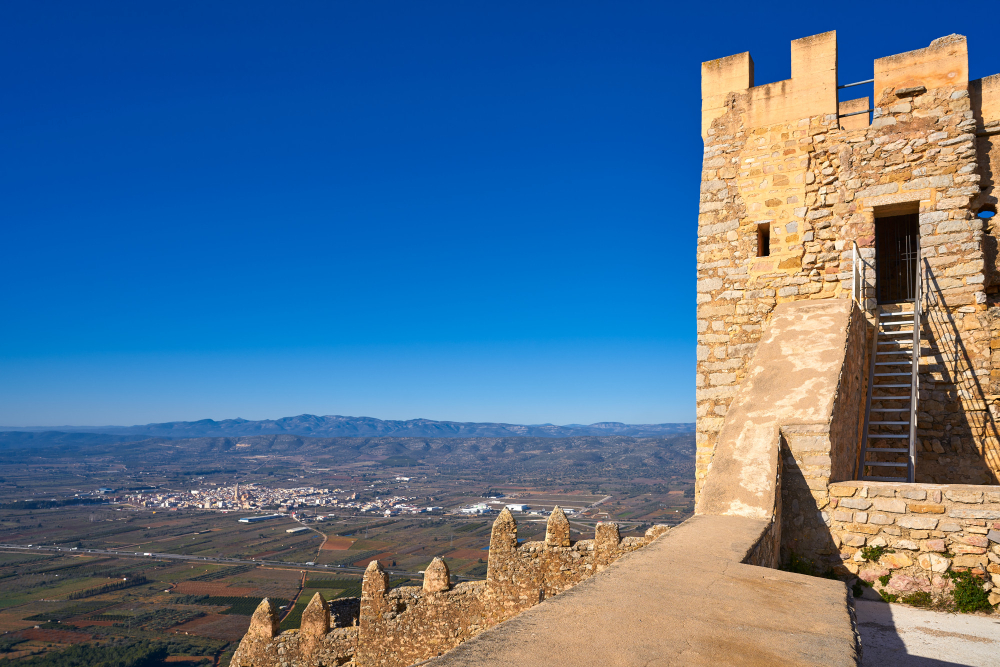
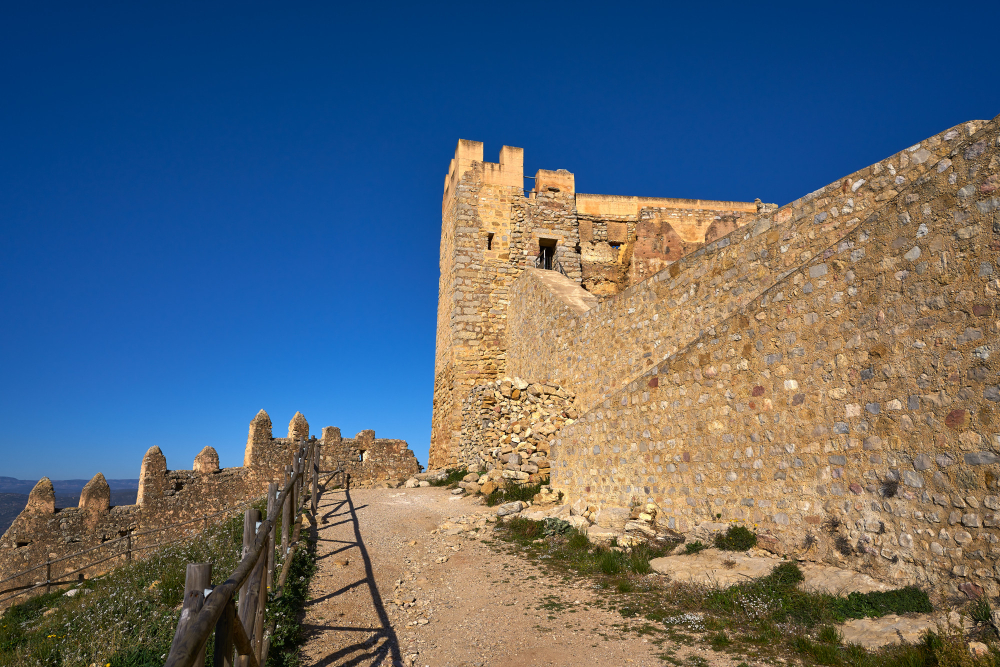
High above the coastal plain of Castellón, on a rugged ridge of the Sierra de Irta, lie the ruins of the Castell de Xivert. This medieval fortress near Alcalà de Xivert in the Spanish region of Valencia is one of the most impressive castles of the former Kingdom of Aragon. Its location is spectacular: from the ramparts, the view stretches across the Mediterranean landscape to the sea. Yet it is not just the architecture and its eventful history that attract visitors. As with many former settlements of the Order of the Templars, stories abound around Xivert of underground passages, hidden cisterns and a treasure that the knights are said to have concealed before their downfall. The facts are at least as fascinating as the legends – even if they must be recounted with considerably more caution.
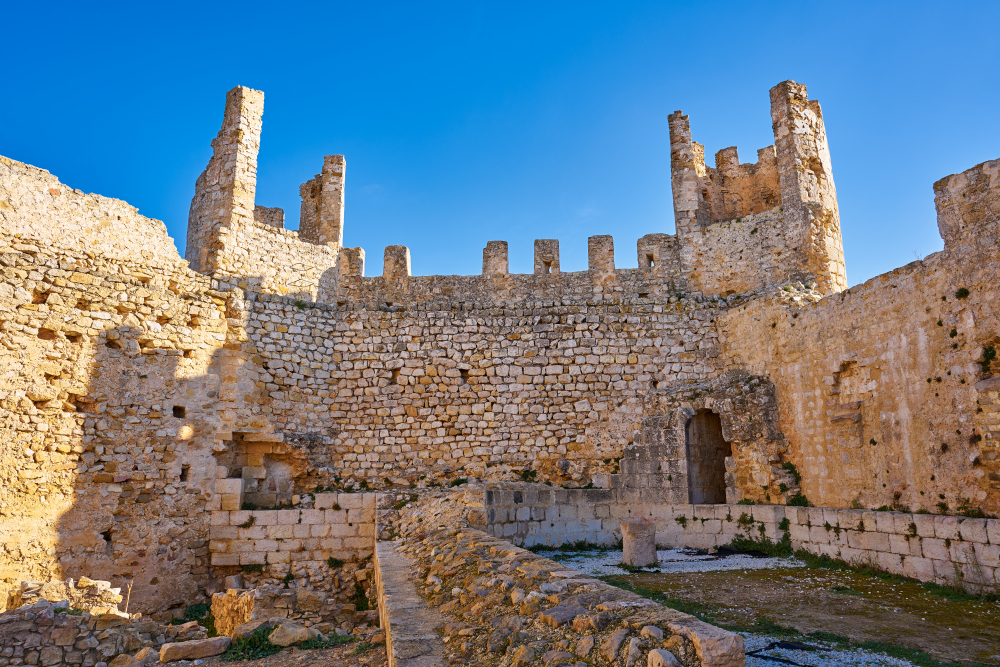
A fortress built on older foundations – Xivert was not originally a Templar castle. This strategically important ridge had already been fortified long before the Christian conquest of the region. Archaeological and historical evidence points to an Islamic complex that was expanded during the period of al-Andalus. The castle served not only as a defence but also monitored routes between the hinterland and the Mediterranean coast. A new phase began following the conquest of the area by King James I of Aragon in the 13th century. The Christian ruler granted many newly acquired territories to nobles, settlers and monastic military orders. In the case of Xivert, the Knights Templar played a central role. The complex was entrusted to them in 1234, along with the task of securing and administering the territory and promoting Christian settlement. The Knights Templar therefore did not take over an empty hilltop, but a castle with an Islamic past. This explains why Xivert architecturally combines several eras within itself. Parts of the walls, cisterns and the basic structure date back to the Muslim fortification; later Christian construction work added new defences and administrative buildings to the complex. It is precisely this layering that makes Xivert extraordinary. Anyone walking through the ruins today does not simply encounter a ‘pure’ Templar fortress, but a place where Arab-Islamic and medieval Christian history overlap.
The Templars and their role in Aragon – The Order of the Templars was founded in the Holy Land in the early 12th century. Its original aim was to protect Christian pilgrims. However, the Order quickly developed into a Europe-wide networked institution of military, economic and political significance. The Templars owned estates, castles, farms and trade networks. It was precisely this power and wealth that later provided fertile ground for countless speculations. On the Iberian Peninsula, the Templars were particularly active in the context of Christian expansion southwards. They were granted border territories, tasked with maintaining castles and stabilising newly conquered areas. Xivert was situated in a region that, following its conquest, first had to be permanently secured and settled. The castle was therefore not a mysterious retreat, but primarily a military and administrative stronghold. Nevertheless, its location provided the ideal setting for later tales. Access to the fortress is via steep paths, the ruins lie far from major towns, and numerous remains of walls leave room for the imagination. Standing amongst the crumbling buildings, one can easily understand why stories of hidden chambers and sealed-off passageways persist here.
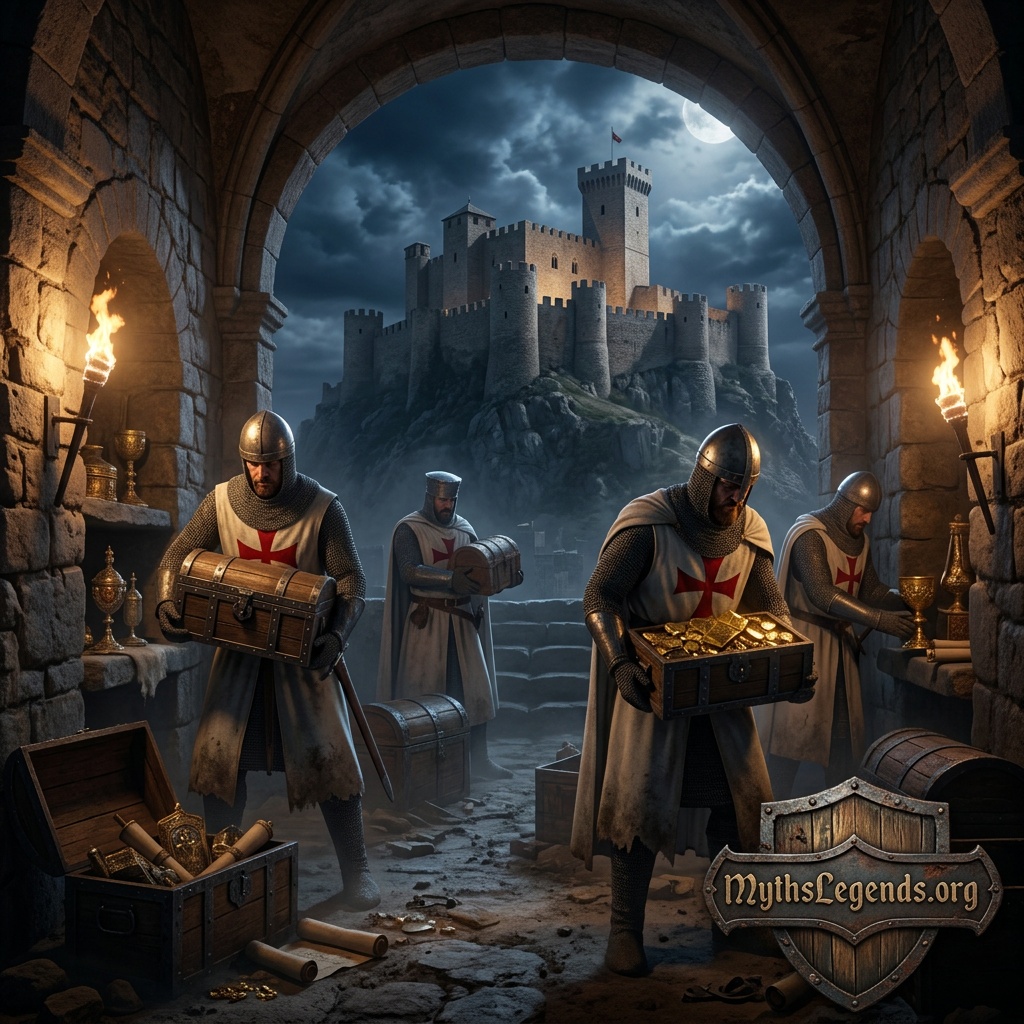
The End of the Order – and the Beginning of the Treasure Legend – The historic turning point came in the early 14th century. Under massive pressure from the French King Philip IV, the Knights Templar were persecuted. Pope Clement V officially dissolved the Order in 1312. In many European countries, its assets were confiscated, transferred or redistributed. In the Crown of Aragon, this transition unfolded differently from that in France. The Templars’ estates did not simply pass to secular rulers. Instead, the Order of Montesa was established in 1317, expressly intended to take over former Templar estates in the eastern parts of the Iberian Peninsula. Xivert also came under this arrangement and became part of the new order of knights’ holdings. This actual change of power later gave rise to one of the best-known legends surrounding the castle: that the Templars had hidden their most valuable possessions before their departure. It is claimed that gold, religious relics, documents or other treasures were concealed in cisterns, cavities in the walls or underground passages. However, there is no reliable historical or archaeological evidence for such a treasure at Xivert. Neither have any finds been documented that point to a deliberately hidden Templar treasure, nor do contemporary sources provide evidence of any such action. The story therefore belongs to the realm of local folklore and popular Templar mythology – not to established history.
Cisterns rather than treasure chambers – A particularly important element of the legend is the castle’s water systems. In fact, medieval fortresses often had cisterns. On a mountain without a permanent spring, the storage of rainwater was vital. A castle could only withstand prolonged sieges if its inhabitants had access to water. From today’s perspective, the deep, stone-built reservoirs at Xivert seem mysterious. Dark shafts, cool chambers and hard-to-reach openings provide the perfect backdrop for stories of hidden relics. Historically speaking, however, they were primarily technical installations: they collected and stored water. The fact that cisterns were later interpreted as supposed treasure hiding places is by no means an isolated case. In many castles across Europe, functional cellar rooms were transformed in popular belief into secret vaults. The idea is appealing, but it is no substitute for critical analysis of sources. In the case of Xivert in particular, a distinction should be made between the real significance of the water supply and the narratives that emerged later.
Are there secret tunnels? – The question of underground tunnels is also an integral part of the mythology surrounding Xivert. Medieval castles did indeed sometimes feature concealed exits, storage rooms, sewers or protected passageways within the fortifications. Such structural elements could have been useful in the event of a defence. However, a secret escape route was by no means standard, and there is no evidence of an extensive, confirmed tunnel system at Xivert. Many supposed ‘secret passages’ in old fortresses can be plausibly explained by collapses, supply shafts, access points to cisterns or underground architectural remains. Furthermore, a castle complex was subject to centuries of alterations. Walls were moved, rooms abandoned, and passageways covered over. What looks like a mysterious entrance today may well have been part of a perfectly practical infrastructure. This does not mean that Xivert could not still harbour hidden areas. Archaeological sites are never fully explored, and new investigative methods can reveal previously unknown architectural structures. Yet there is a world of difference between the possibility of undiscovered building remains and the claim of a secret Templar tunnel leading to a treasure chamber.
Stonemason’s marks: mysteries within the walls – Another central element of the treasure tales is the alleged presence of Templar symbols in the stones. Stonemason’s marks are, in fact, a real phenomenon in medieval architecture. Craftsmen frequently marked worked ashlars with simple symbols. These marks may have served to organise the building site, assign tasks or monitor deliveries. However, interpreting them is complicated. A cross, a square, a star or a geometric line is not automatically a secret Templar code. Many marks were simply craftsmen’s markings and were used by different master builders across various eras. The temptation to see every engraving as a clue to gold or relics is understandable – but it is usually not scientifically justifiable. Particular caution is required in the case of Xivert, as the site has a long history of use. Islamic architectural elements, alterations made under the Templars and later interventions by the Order of Montesa have all left their mark. Not every symbol can be unambiguously attributed to a specific group or period.
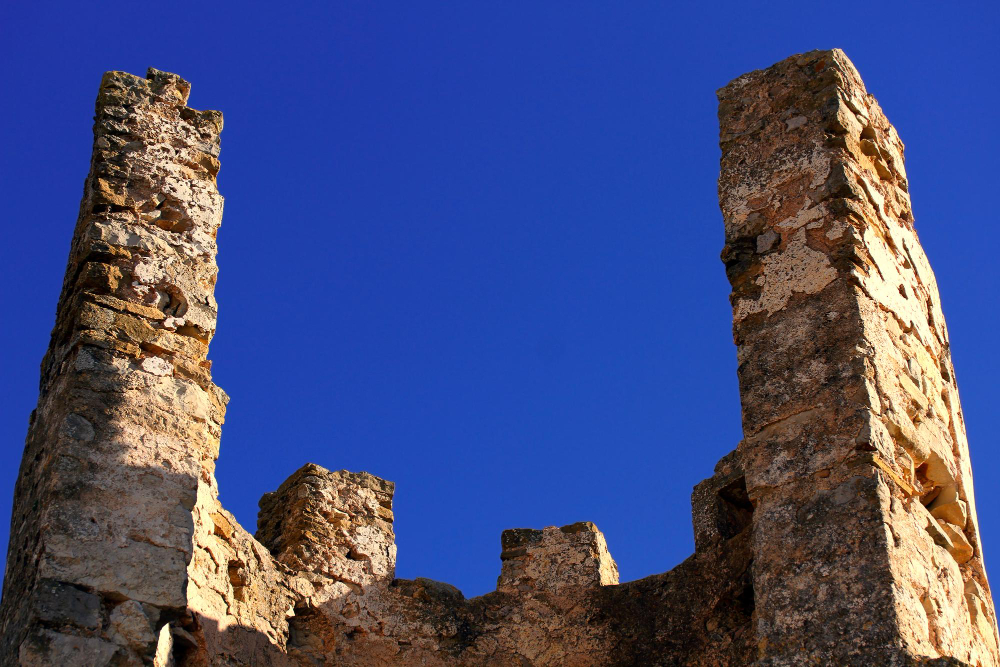
The Order of Montesa and later history – With the transfer to the Order of Montesa, Xivert by no means lost its significance immediately. The complex remained part of a wider network of rule and administration. Over time, however, life increasingly shifted from the mountain fortress to settlements further down the valley. The location, which had once been ideal from a military perspective, became less practical for everyday life: water, supplies and trade were easier to organise down in the valley. Thus, the castle gradually lost its function. Buildings fell into disrepair, walls were damaged, and the once-fortified hilltop became a ruin. It was precisely this state of decay that later reinforced its mysterious reputation. Where written records are patchy and walls remain silent, legends fill the gaps.
Between Adventure and Responsibility – Xivert is therefore far more than a setting for treasure-hunters’ fantasies. The castle tells of the region’s Islamic past, of the conquest by Aragon, of the Knights Templar as border guardians, and of the transfer of their possessions to the Order of Montesa. Its cisterns and walls are not merely a backdrop for myths, but tangible evidence of a complex medieval world. The legend of the treasure may well retain its place – as part of the local narrative culture and as an expression of the enduring fascination with the Order of the Knights Templar. However, it should not be confused with historical facts. To this day, there has been no scientifically confirmed discovery of a Templar treasure, nor any reliable evidence of an extensive secret tunnel system in Xivert. Perhaps the castle’s true secret lies precisely in this: not in a chest full of gold, but in the many layers of its history. Anyone visiting Xivert finds themselves in a place where power politics, religion, military architecture and popular belief converge. And sometimes this verifiable past is more exciting than any fictional treasure map.








Post Comment