
The “Gluckhenne” of Bielefeld: Mystical Guardian of Sparrenburg Castle
In the heart of the vibrant city of Bielefeld stands the majestic Sparrenburg Castle, whose venerable walls have borne witness to an eventful history for centuries. But far more than a stone witness to times past, the castle is known by a very special nickname: “Gluckhenne.” A name that not only reflects historical facts but is also a myth deeply ingrained in the collective consciousness of the city’s residents. This mysterious name symbolizes the protection and sense of security the castle radiates over the city—and uniquely connects history, legend, and the city’s identity.
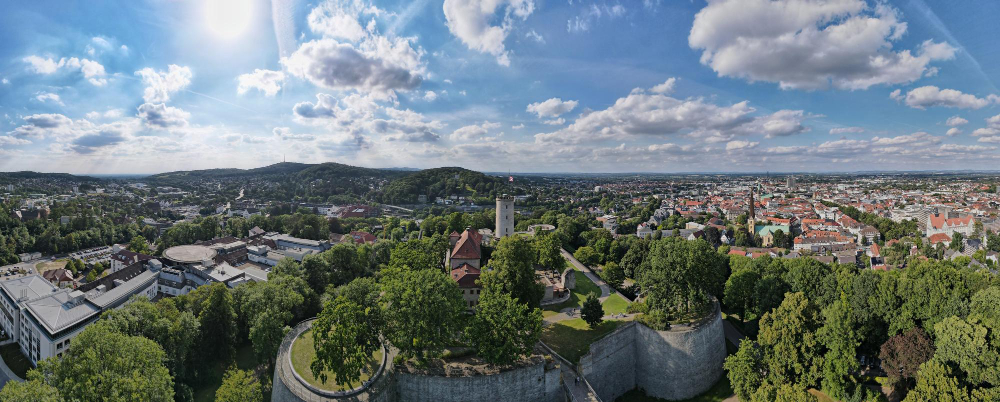
Sparrenburg Castle—History and Significance – Founded in the 13th century, Sparrenburg Castle rises on a mountain spur above the Teutoburg Forest and the city of Bielefeld. It was originally a strategically important fortress designed to control trade routes and secure the territories of what was then the Duchy of Saxony. Over the centuries, the castle was expanded and fortified several times, giving it its characteristic imposing silhouette. More than just a military structure, it also served as a residence for local noble families and later as an administrative center. Particularly noteworthy is the fact that, despite numerous sieges—especially during the Thirty Years’ War (1618–1648)—Sparrenburg was virtually never captured. This resilience stemmed from its clever design, strategic location, and the determination of its defenders. All of this contributed to the castle becoming a symbol of strength and security in people’s writings and oral traditions.
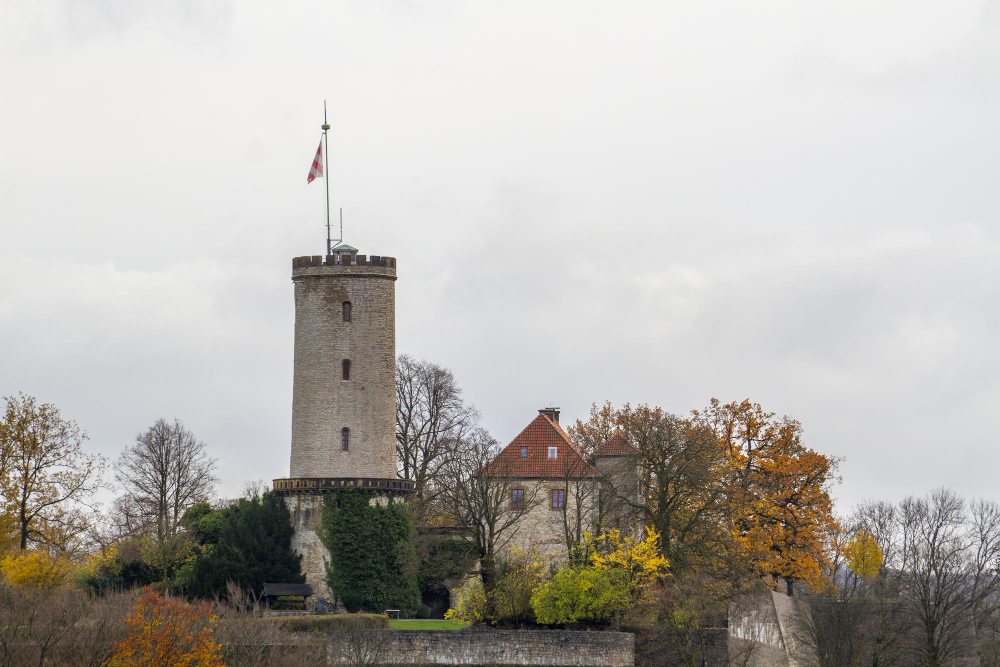
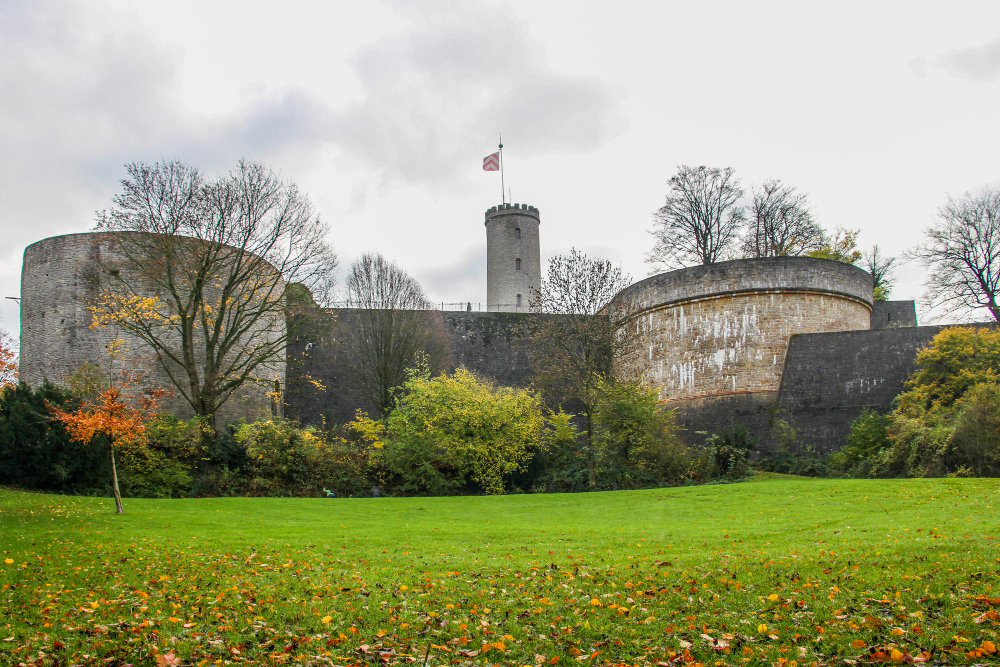
The Origin of the Name “Gluckhenne” – The term “Gluckhenne” stems from a metaphorical interpretation that describes the castle as a kind of protective hen. In old documents and reports, Sparrenburg is affectionately referred to as “Gluckhenne”—as that mother figure who spreads her wings over the city and shelters her chicks. The analogy is simple yet profound: just as a mother hen protects her chicks from danger and provides them with a safe nest, so too was the castle meant to protect the residents of Bielefeld from enemies and external threats. This figurative language is more than just poetry. Historians speculate that the name also stems from the castle’s architecture and appearance. Some explanations suggest that the striking round towers and curved walls resemble the shape of a chicken’s body with outstretched wings. On the other hand, the “Gluckhenne” may also have been an expression of the population’s emotional attachment to their fortress, which provided them with comfort and confidence in times of uncertainty.
Legends and Traditions Surrounding the “Gluckhenne” – Sparrenburg Castle has been a magnet for romantics, historians, and storytellers long before the 20th century. As early as the Middle Ages, numerous stories—some containing mystical elements—surrounded the stronghold. The name “Gluckhenne,” in particular, inspired many local storytellers to associate the fortress with a protective spirit or a watchful deity. A well-known legend recounts that, in the face of threatening enemies, an invisible force emanated from the castle, deterring attackers and saving the town from destruction. Although there is no historical evidence of supernatural events, such legends illustrate the close bond between the local population and their landmark. They demonstrate how deeply rooted the image of the “Gluckhenne” as a protector is in local culture.
The Cruelty of War and the Fortress’s Strength – The strength of Sparrenburg Castle was particularly evident in times of crisis: During the Thirty Years’ War, one of the most devastating periods in European history, Bielefeld was threatened on multiple occasions. However, the castle provided a safe haven for the inhabitants and served as a stronghold against enemy troops. Despite prolonged sieges, the defenders managed to hold the fortress—a fact that further fueled the legend of the “Gluckhenne.” In later conflicts as well—such as during the Napoleonic Wars—Sparrenburg played a role as a military stronghold, and the myth of its protective power remained alive. The combination of its robust construction, geographical location, and the fighting spirit of its defenders truly made the castle an impregnable bastion.
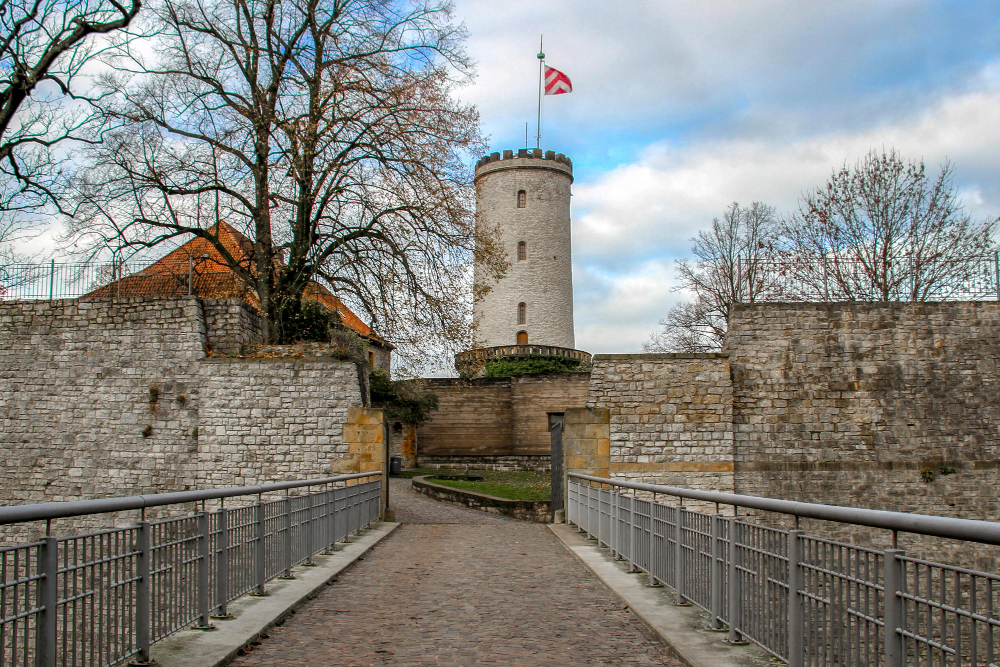
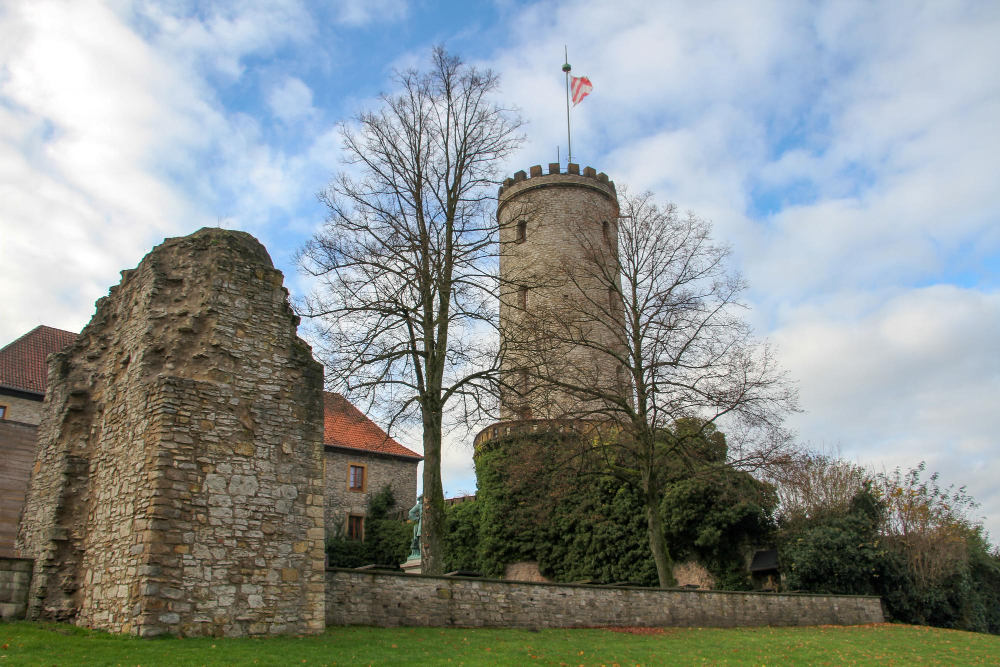
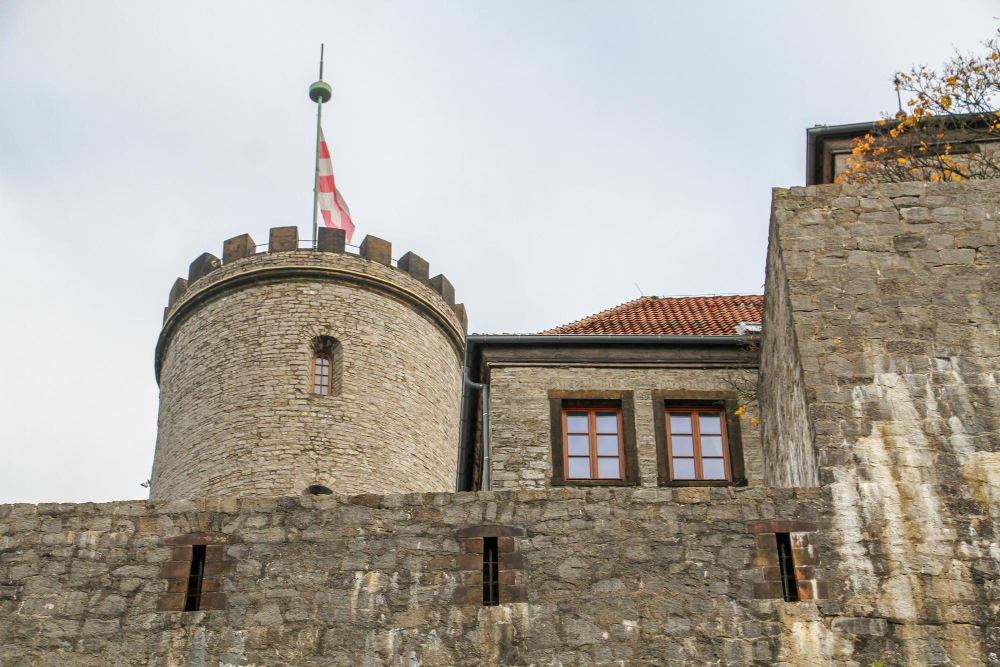
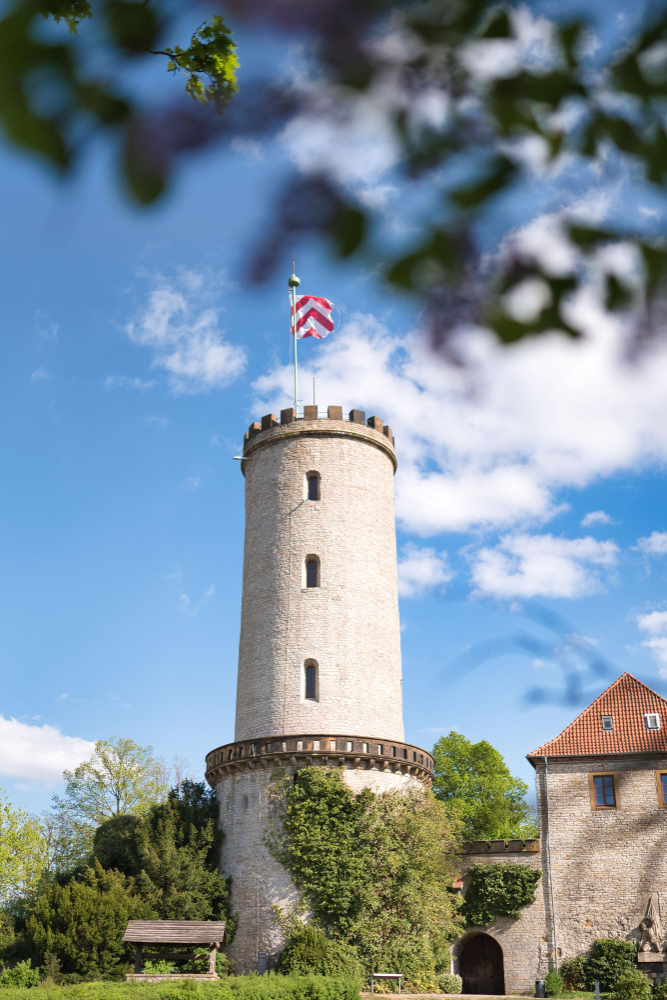
Architectural Features as an Expression of the Concept of Protection – The architecture of Sparrenburg reflects its dual purpose of defense and representation. Its sturdy walls, deep moat, and numerous towers are classic features of medieval fortifications. They symbolize the need for security, yet at the same time they attest to the ambition to demonstrate power and stability. The so-called “Hahnenturm” (Rooster Tower) deserves special attention; it is a defensive tower whose name refers to the rooster’s head that once adorned its top. This symbol of the rooster is closely related to the image of the “mother hen”—both stand for vigilance and protection. The tower itself served as a lookout and defensive platform and was a fundamental component of the castle’s fortifications.
Sparrenburg Today—A Cultural Monument and Place of Identity – Today, Sparrenburg is not only a historic structure but also a vital part of cultural life in Bielefeld. Numerous events, guided tours, and exhibitions make it a vibrant place of history. The “Gluckhenne,” as its mythical nickname, is repeatedly referenced—whether in publications, tourist offerings, or local stories. The castle thus serves as a bridge between the past and the present, connecting residents to their roots and fostering a sense of belonging to the city. The mystical aura of the “Gluckhenne” helps preserve Sparrenburg as a symbol of protection, unity, and a sense of home.
Myth and Reality Merge – Bielefeld’s “Gluckhenne” is more than just a historical nickname—it is a symbol of the close connection between the city, the castle, and its people. History reveals a fortress that fulfilled its protective function through its architectural features and military successes. The legends and metaphorical language also lend Sparrenburg a mystical dimension that continues to fascinate to this day. By understanding the “Gluckhenne” both as a real fortress and as a mythological symbol of protection, a multifaceted image emerges that enriches Bielefeld’s culture. The Sparrenburg continues to tower over the city—as a guardian, a storyteller, and a living legacy of a bygone era.









Post Comment