The Sunken Giant City of Rakvere: What Lies Behind Estonia’s Mysterious Legend
According to an ancient legend, a vast city is said to lie hidden beneath the hills of the north-Estonian town of Rakvere. Magnificent buildings, streets and people – all are said to have sunk into the ground one day. Only a small remnant remains visible: the striking castle hill, on which the ruins of Rakvere Castle now stand, and the town that has grown up around it. The story is one of the most impressive legends surrounding Rakvere – known in Estonian as Rakvere, and historically also known in German as Wesenberg. At its heart are a young girl, a mysterious book and a man who appears to emerge from the earth. The tale reads like a fairy tale, yet at the same time refers to a real place with an exceptionally long and conflict-ridden history. Whilst archaeology and historical research do not confirm the existence of a sunken giant city beneath Rakvere, they do reveal why this particular place has provided the stuff of legends for centuries.
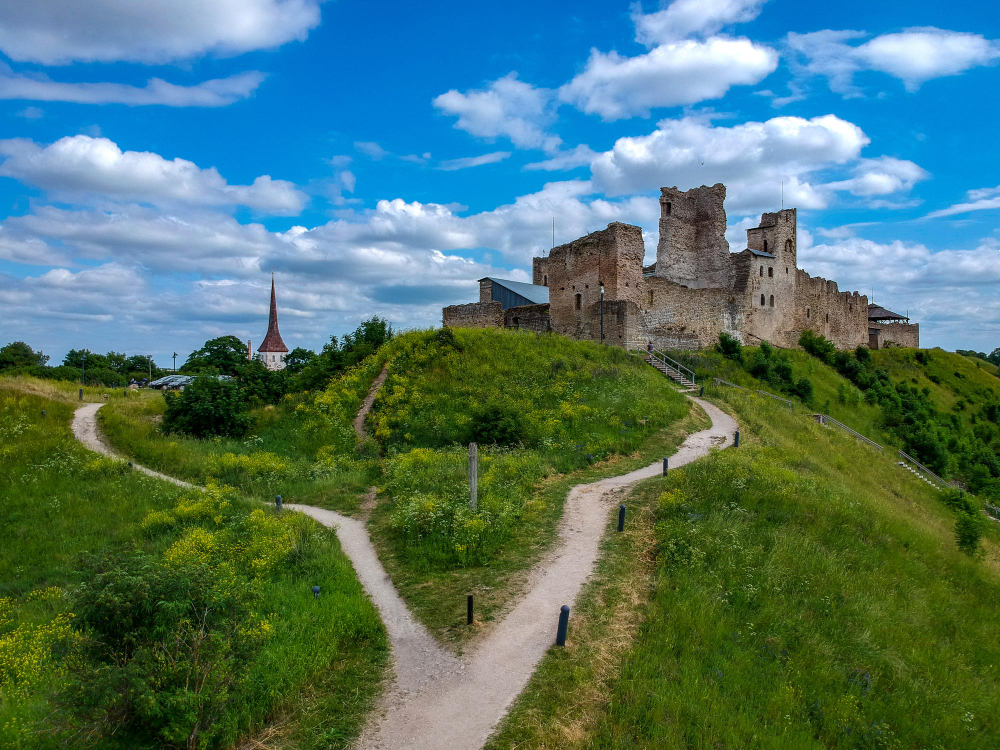
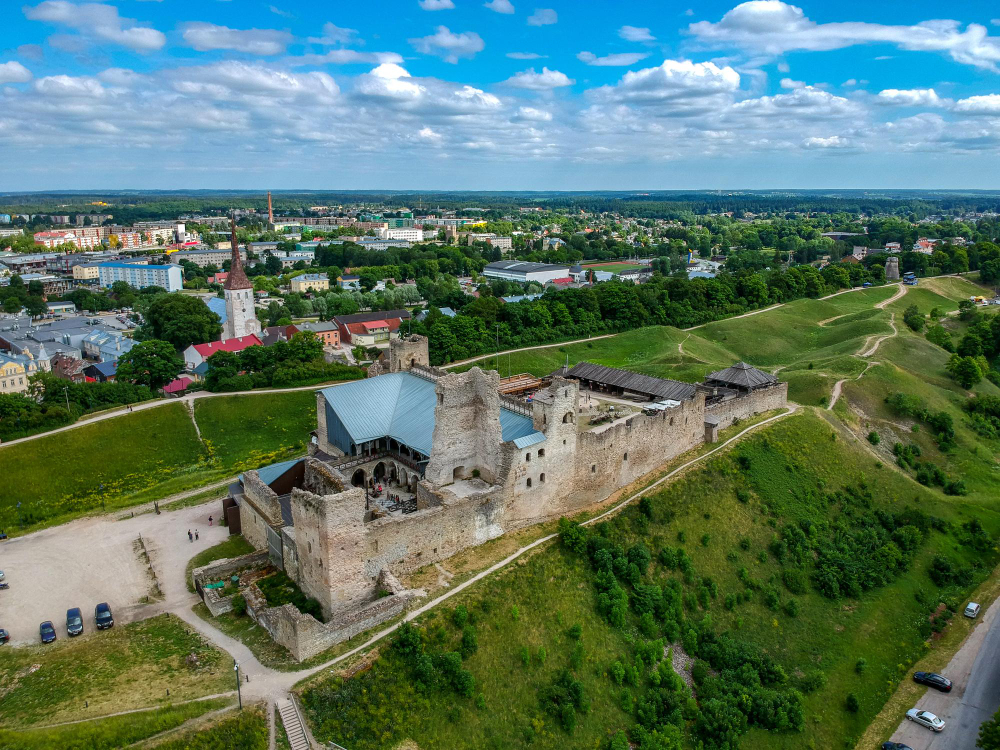
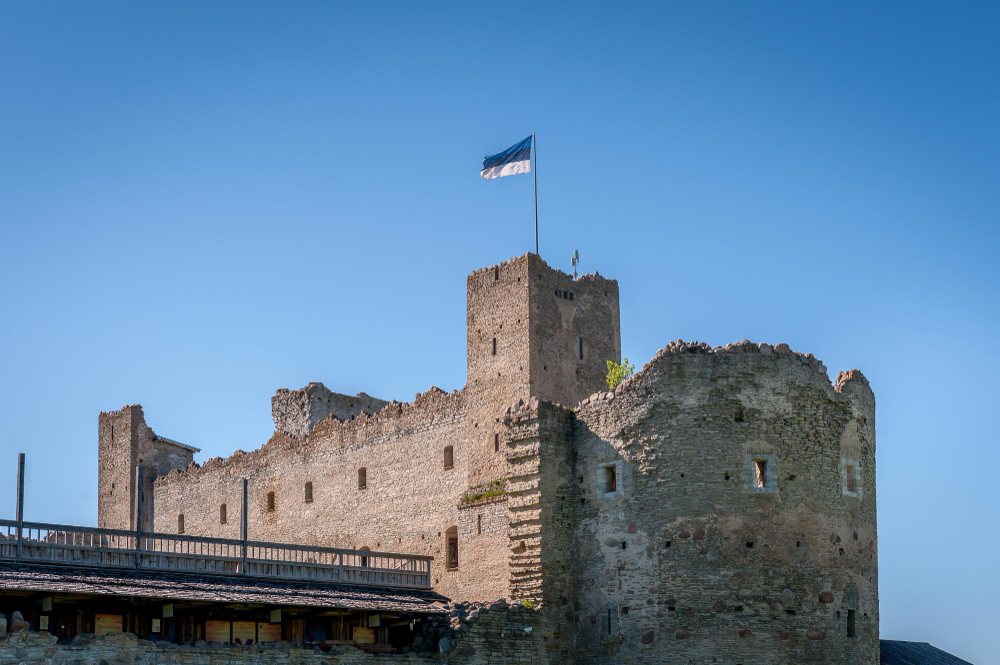
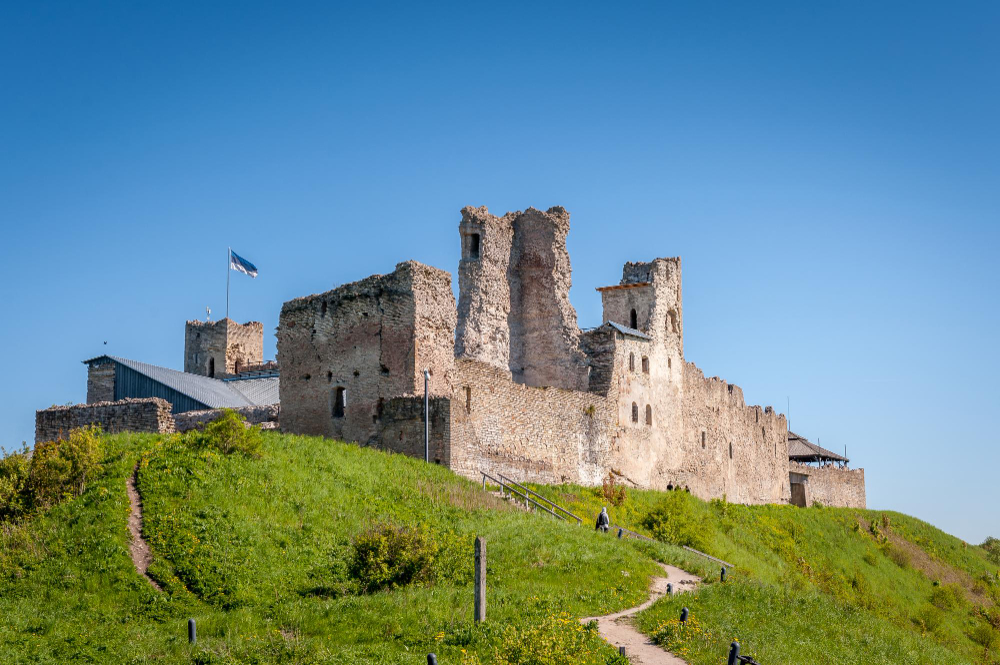
A place that has been giving rise to stories for centuries – Rakvere is situated in the Lääne-Viru region of north-eastern Estonia and is today one of Estonia’s more significant towns outside the capital, Tallinn. The townscape is dominated by a high limestone hill, the Vallimägi. On top of it lie the remains of the medieval Rakvere Castle. Even from a distance, the hill looks like a natural vantage point – and a place where history, landscape and imagination converge. The location was strategically advantageous. Whoever controlled the hill could monitor the routes between the north-eastern coast and the interior of the country. People were already using the hill even before the medieval castle was built. Archaeological and historical research suggests that an Estonian fortification stood there in prehistoric times. Later, the site was expanded, conquered and destroyed again by various ruling powers. It is precisely such places that often become the focus of folk traditions. Ruins raise questions: Who lived there? What did the complex look like in its heyday? Why did it fall into disrepair? Where written sources leave gaps, stories fill these voids with images of hidden kingdoms, lost treasures and underground worlds. The legend of the sunken city explains the striking landscape in its own way. In it, the castle hill does not simply appear as a natural ridge with medieval walls. It becomes the last visible part of a once-vast metropolis that vanished into the earth as a result of a curse or a broken oath.
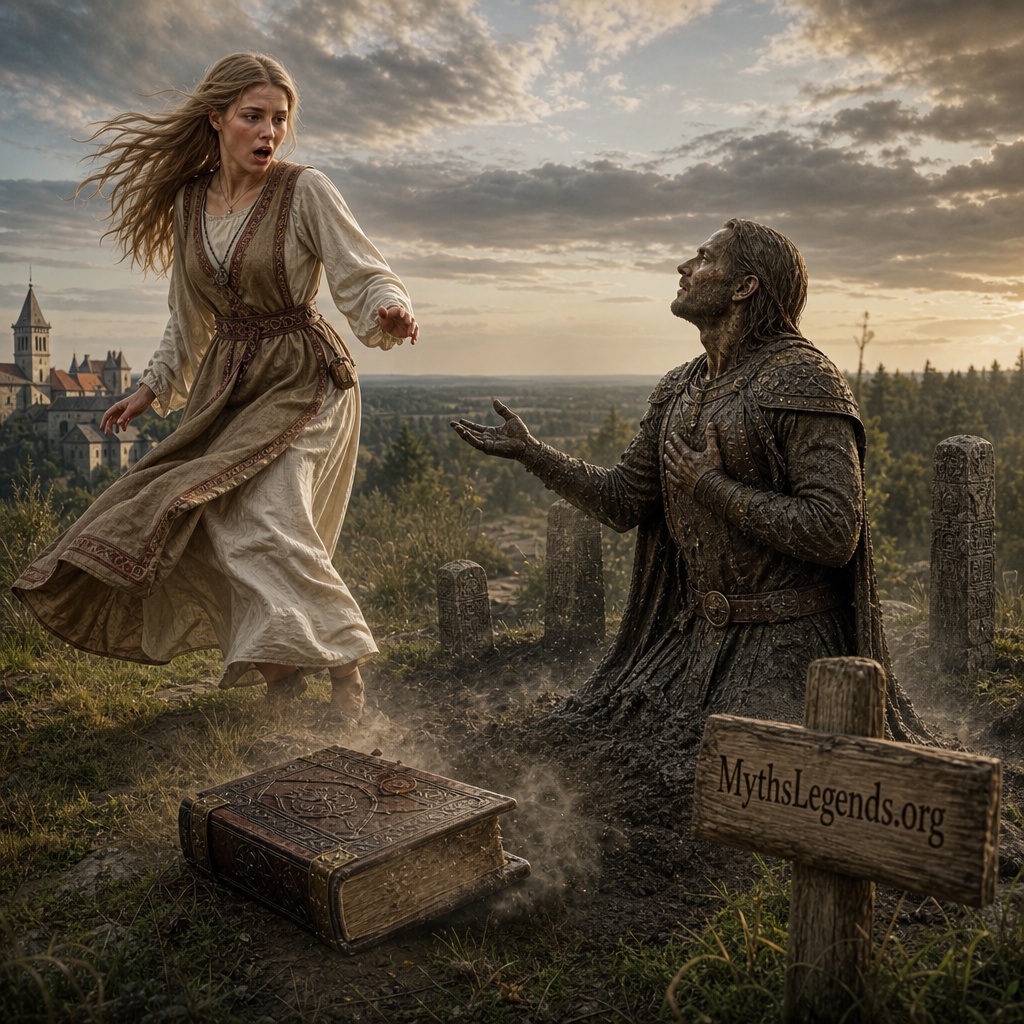
The Book, the Stranger and the Unexpected Queen – Tradition tells of a young woman from Rakvere who was staying outside the town. There she found a mysterious book. When she opened it, something inconceivable happened: a stranger appeared, said to have emerged from the ground. He bowed before her and addressed her as queen. But instead of asking questions out of curiosity or making a wish, the young woman was terrified. She dropped the book and fled back into the town. And so, according to the legend, the mystery of the sunken city remained unsolved. It is precisely this scene that makes the story so powerful. For a brief moment, the girl appears to gain access to a hidden reality. The book appears to be a key; the stranger, perhaps, a servant or inhabitant of the lost city. His question – what the queen desires – suggests that, by opening the book, the young woman has been granted a special role. Perhaps she could have redeemed the lost city. Perhaps she would have gained access to its riches or its inhabitants. The legend offers no clear answer. The unfinished nature of the story is part of its impact: the decisive action does not take place. The possibility remains, but it is lost through fear and flight. Thus, the story becomes not only a tale of a sunken place, but also of a missed opportunity.
Curse and Oath: Recurring Motifs in European Folklore – The notion that a city perishes because of a curse, an oath or a moral transgression is widespread in Europe. Particularly well-known is the legend of Vineta, a wealthy city on the Baltic Sea which, according to various versions, sank into the sea as a result of hubris or debauchery. The tale of Atlantis, which dates back to the Greek philosopher Plato, also describes the downfall of a mighty island power. The legend of Rakvere, however, differs in one important respect: the town does not sink into the water, but into the ground. This motif fits a landscape whose geological formations and hills have always given rise to speculation. Whilst a city sunk into the sea is associated with storm surges and coastal erosion, an underground city evokes caves, tombs, cellars, ancient fortifications and hidden layers of the past. In many Estonian folk tales, powerful figures, hidden treasures, sacred places and unusual landscape formations also play a role. Legends were not historical accounts in the modern sense. They served to interpret places, preserve memories and pass on values. In doing so, real events, historical ruins and fantastical elements could intertwine. A curse or an oath as the cause of a city’s downfall often fulfils a moral function in such stories. The message is: power, prosperity or hubris are not permanent. Anyone who crosses boundaries or disregards obligations risks losing what they have achieved. However, the handed-down summaries do not explain in detail whether Rakvere’s sunken city disappeared as a result of a specific transgression. This vagueness leaves room for different interpretations.
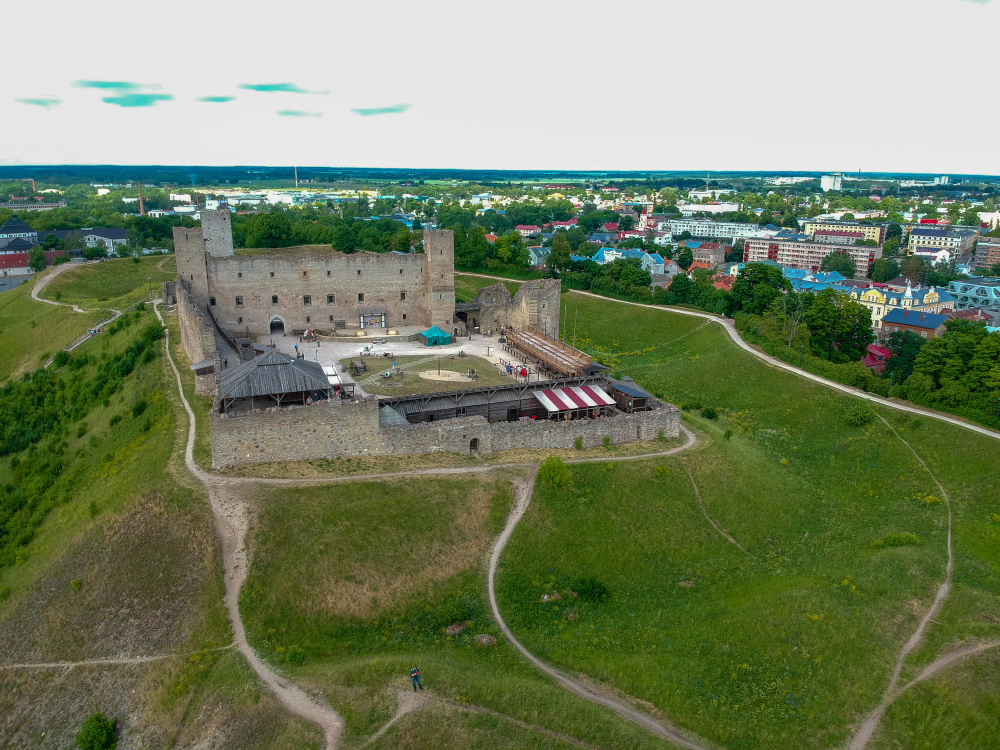
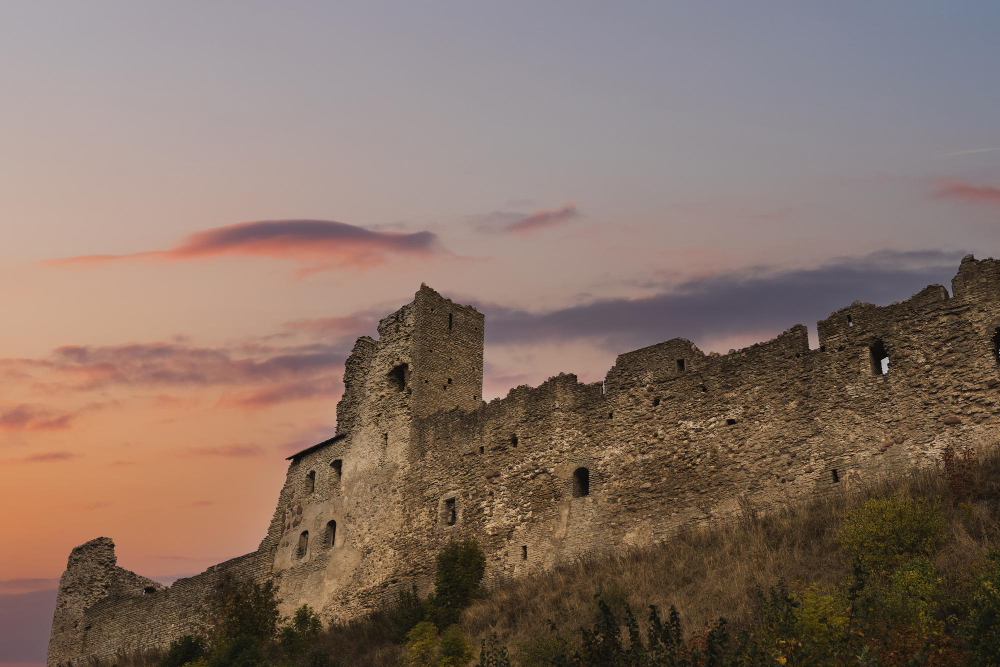
The real history of Rakvere Castle – The significance of the castle hill is historically verifiable. In the 13th century, the area came under successive rulers in the wake of the medieval conquests in the Baltic region. The Danish Crown, the Teutonic Order and, later, the Livonian Order played a role in the development of the fortress. The stone castle was expanded over a long period and served not only as a military stronghold but also as an administrative and political centre. In the 16th century, Rakvere became embroiled in the conflicts of the Livonian War. During this period, several powers vied for influence in the Baltic region, including Russia, Sweden and Poland–Lithuania. The castle was damaged repeatedly and eventually lost its former military significance. Its ruins, however, remained visible – and thus preserved as a reminder of a turbulent past. The castle complex as it stands today is therefore not evidence of a sunken city, but a very real source of legends. Anyone standing before the walls sees only a fraction of what the place once was. Buildings disappeared, fortifications were altered, people came and went. The visible ruins suggest that further traces may lie beneath the ground. Archaeology can investigate such traces, but it relies on finds, strata and verifiable evidence – not on the assumption of a buried metropolis stretching for kilometres.
What research can actually tell us – To date, there is no scientific evidence to suggest that a gigantic city from time immemorial lies buried beneath Rakvere. A settlement of the size described in the legend would normally have left clear archaeological traces: extensive building remains, street layouts, large quantities of pottery, tools, refuse pits, burial sites and evidence of dense, long-term settlement. The fact that such findings do not confirm the existence of a sunken giant city does not render the legend meaningless. On the contrary: its value lies precisely in the fact that it is an example of cultural memory. It does not recount what happened in an archaeological sense, but rather how people perceived a place steeped in history. Estonian folk traditions were documented, particularly in the 19th and early 20th centuries, by collectors, linguists and folklorists. The Estonian Literary Museum in Tartu preserves extensive collections of folk songs, fairy tales, legends and memoirs. Such archives are important because they show how differently local communities described their surroundings and which motifs were passed down through the generations. Modern readers, too, can therefore view the tale on two levels: as a thrilling legend and as part of Estonian cultural history. It is not an archaeological report, but it forms part of Rakvere’s symbolic landscape.
Why the legend continues to fascinate to this day – The legend of the sunken giant city weaves together several powerful images: a lost world beneath people’s feet, a magical book, a messenger from the depths and a young woman who is suddenly proclaimed queen. Added to this is the real-life backdrop of the castle ruins, which lends the story credibility without historically confirming it. Perhaps its greatest appeal lies in the question of what would have happened if the girl hadn’t run away. Would she have been allowed to make a wish? Would the ancient city have risen again? Or would she have learnt a truth that is better left hidden? The legend does not answer these questions. Instead, it leaves Rakvere with a mystery. There is verifiable history beneath the walls of the castle hill – layers of earlier settlement, traces of war, rule and everyday life. Whether a vast city also lies dormant there remains a matter of legend. Precisely because reality offers no definitive, fantastical resolution, the tale can live on.






Post Comment