The Rose of Turaida: A Love Legend Amidst Castles, War and Remembrance
Anyone visiting the Gauja Valley near Sigulda in Latvia will encounter a landscape where medieval castles, steep sandstone cliffs and dense forests lie in close proximity. Yet, alongside the ruins of Sigulda Castle and the imposing Turaida Castle complex, one story in particular draws visitors: the legend of the ‘Rose of Turaida’. It tells of Maija, a young woman who is said to have died for her love and her honour. For centuries, it has been one of Latvia’s best-known tales – and continues to shape the region’s cultural memory to this day. Yet the story is more than just a romantic legend. It links real places, historical upheavals and literary tradition. Its form as we know it today dates back to court records from the early 17th century, though it was later developed into a tragic love legend. The Rose of Turaida therefore symbolises both the past of the Gauja Valley and the question of how historical documents give rise to sites of national remembrance.
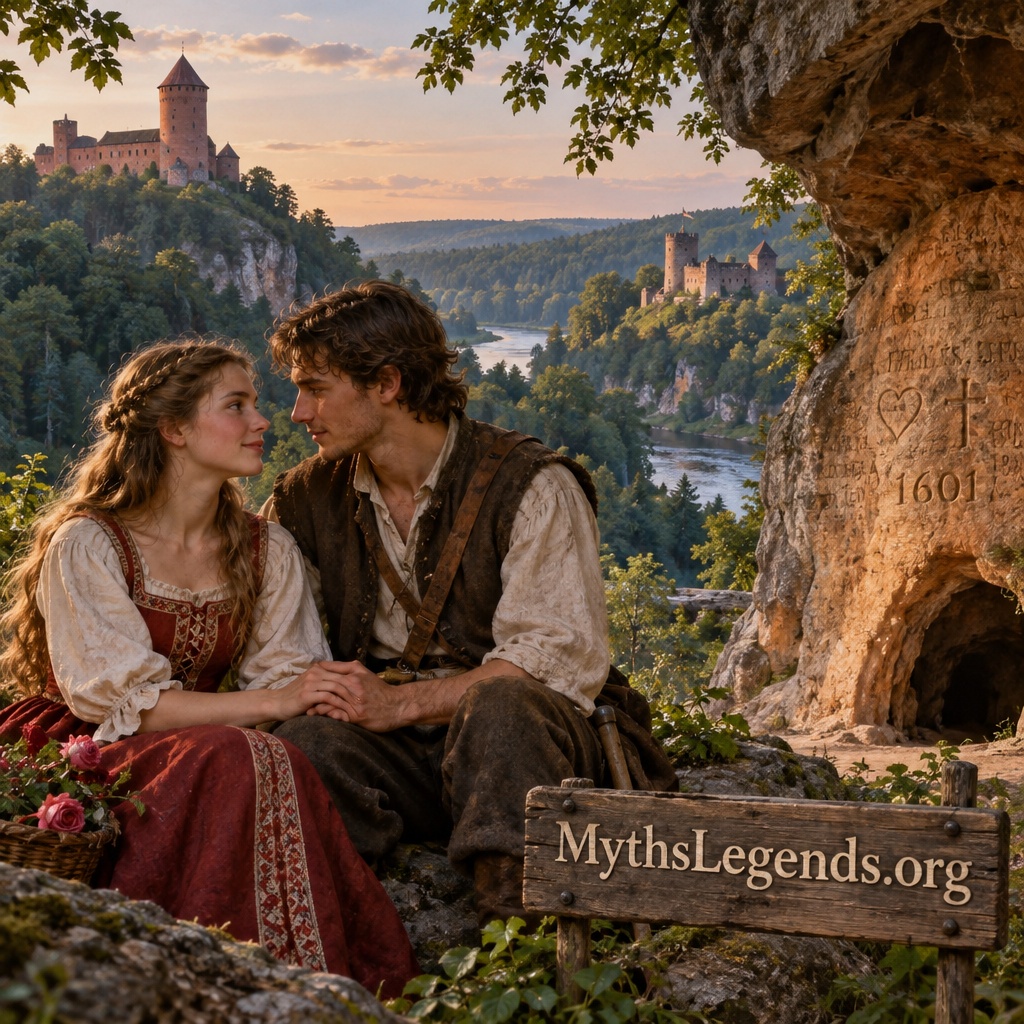
A young woman in the ruined Turaida – The story is set in the year 1601, at a time when the territory of present-day Latvia was marked by the aftermath of the Polish–Swedish War. Turaida Castle, not far from Sigulda, had been affected by fighting and destruction. According to tradition, after a battle, residents found a little girl who had lost her parents. She is said to have been taken in by a scribe or official at the castle and given the name Maija. Over the years, the foundling grew into a young woman who was called the ‘Rose of Turaida’ because of her beauty. The nickname is said to have referred to her fresh, rosy complexion. According to legend, Maija lived in the vicinity of Turaida Castle, whilst her fiancé, Viktor Heil – also known as Victor in some accounts – worked as a gardener at Sigulda Castle. The two castles lie just a few kilometres apart, separated by the scenically impressive Gauja Valley. Their relationship forms the emotional core of the story. Maija and Viktor are said to have met regularly, often near Gutmanis Cave. This natural sandstone cave near Sigulda is one of the area’s best-known attractions. It is not only geologically remarkable but also a place of remembrance, featuring numerous engraved names and inscriptions spanning several centuries. In the legend, it becomes the meeting place for a young couple – and the scene of a crime.
The deadly ruse – According to the traditional version of the story, Maija caught the eye of a soldier or mercenary named Jakubowski. He desired the young woman and wanted to lure her to him against her will. To this end, he is said to have written a forged letter purporting to be from Viktor. Maija believed her fiancé was asking her to meet him, and went to the Gutmanis Cave. Jakubowski, however, was waiting there. When Maija realised she had fallen into a trap, she found herself, according to legend, in a hopeless situation. She is said to have shown the man a red scarf and claimed it possessed magical powers: whoever wore it could not be harmed by a sword. To prove this, she challenged her pursuer to strike her neck with his sword. Jakubowski was taken in by the ruse. The blow was fatal. In the romantic interpretation of the legend, Maija sacrificed her life to remain faithful to her love for Viktor and to escape a violent abduction. It is precisely this motif that explains why the story has had such a powerful impact across generations. Maija is portrayed not only as a beautiful young woman, but as a symbol of loyalty, courage and self-determination under extreme duress. Viktor, who according to tradition later arrived at the agreed meeting place, found Maija dead. Initially, suspicion is said to have fallen on him. However, the events were investigated, and the story ultimately led to the perpetrator’s unmasking. Many retellings report that Jakubowski committed suicide after his arrest. The precise details vary depending on the source and subsequent adaptations.
Between court records and romantic legend – The Rose of Turaida is not solely a product of oral tradition. Its special status in Latvian culture is also linked to the fact that the narrative has a documentary core. It is based on court records from 1620 concerning a homicide in the vicinity of Turaida and Sigulda. These records were rediscovered in the 19th century and adapted into literary form by the German-Baltic writer and researcher Magnus von Wolffeldt. The version that later became widespread thus owes its existence to a combination of a historically documented event and romantic embellishment. Historians therefore distinguish between verifiable details and elements derived from literary interpretation or local tradition. Names, relationships and individual dramatic scenes are not identical in every version. The notion of a ‘magical’ scarf, too, belongs primarily to the legendary version of the story. It is precisely this blend that makes the story interesting from a cultural-historical perspective. It shows how historical experiences can be transformed into a narrative that extends far beyond its original context. War, social unrest and violence characterised Livonia in the early 17th century. The legend condenses this reality into a personal tragedy. A regional criminal case became a story of love, loss and moral steadfastness.
Maija’s grave at Turaida Castle – Today, Maija’s grave is one of the best-known attractions in the Turaida Museum Reserve. The site is situated in Gauja National Park and, in addition to the medieval castle, comprises historic buildings, archaeological sites, sculptures and places of remembrance. Visitors will find the grave on the edge of the old cemetery near the castle. It is usually adorned with flowers – a visible sign that the Rose of Turaida still holds emotional significance for many people. Red roses are laid there particularly often. They allude to Maija’s nickname and to the central symbolism of the tale. In Latvia, the site is regarded by some couples as a romantic place of remembrance; wedding parties also visit it. The grave is thus perceived not only as a historical landmark, but as a place where love, loyalty and farewell are intertwined. Its proximity to Turaida Castle is a key factor in this. The castle was built in 1214 on the orders of the Bishop of Riga and, over the centuries, developed into an important centre of power and administration. After a fire in the 18th century, it fell largely into disrepair, but was extensively researched and restored in the 20th century. Today, its striking red-brick tower dominates the landscape above the Gauja Valley. The fact that the Rose of Turaida is linked to this castle gives the legend a concrete geographical anchor.
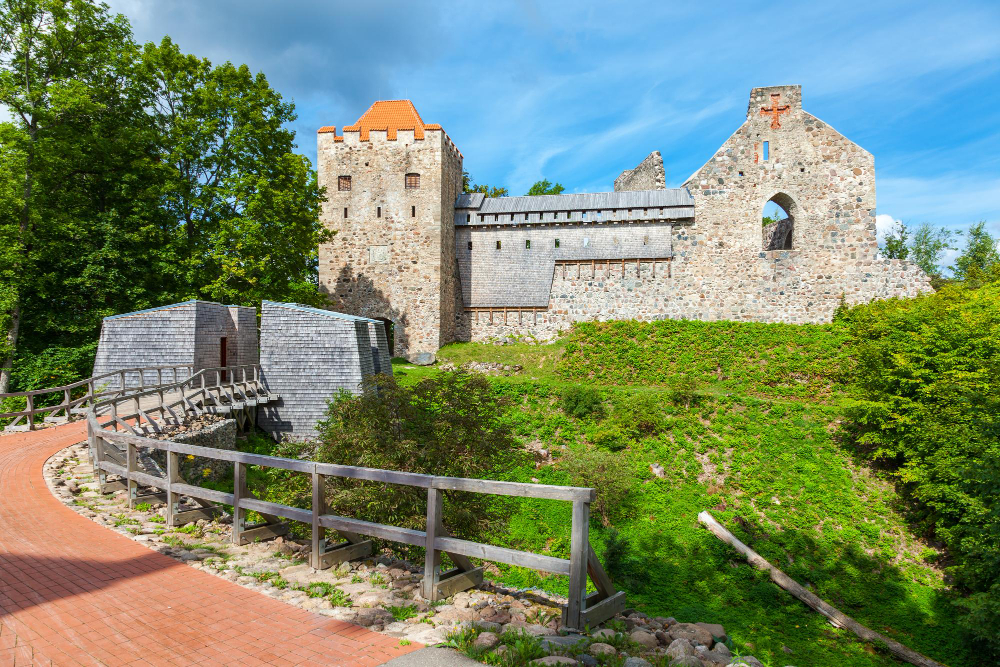
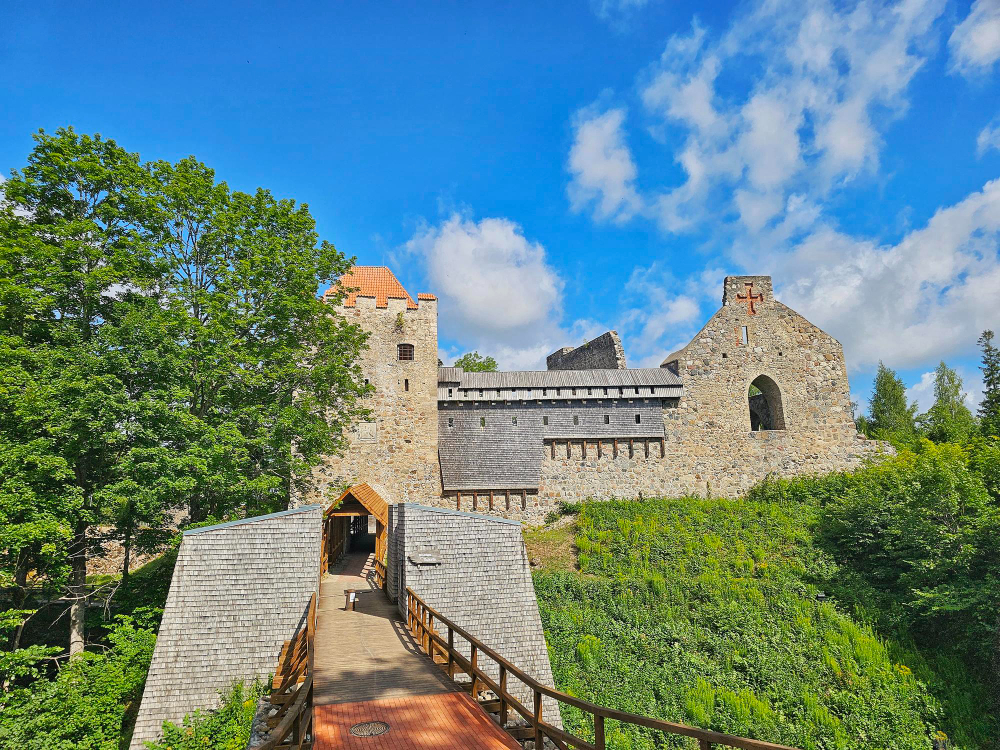
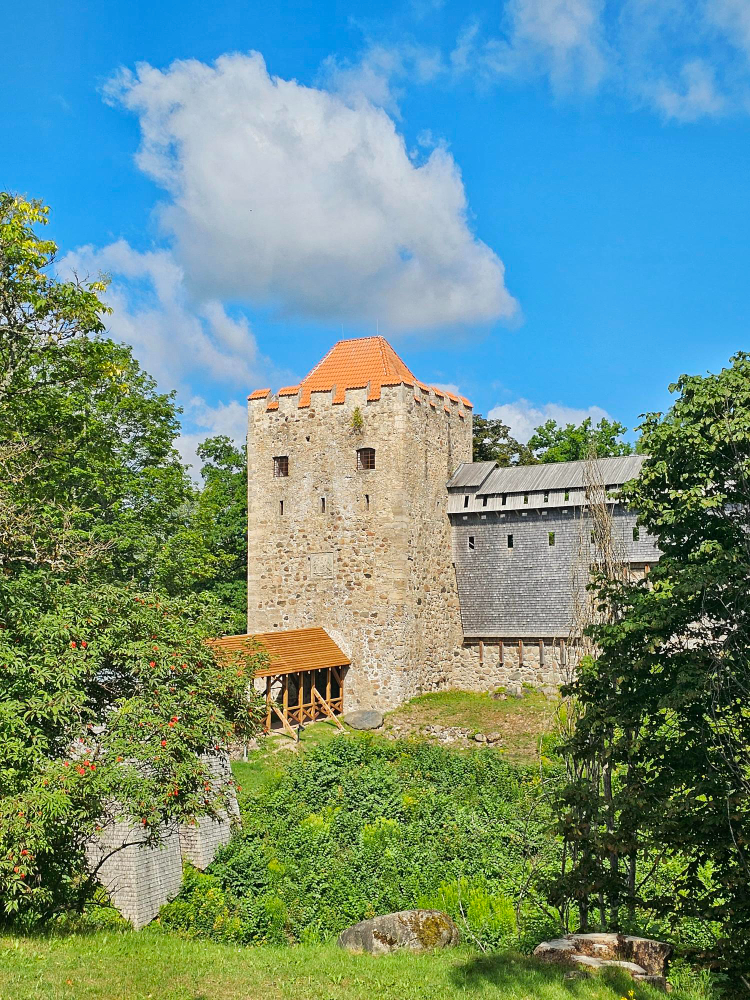
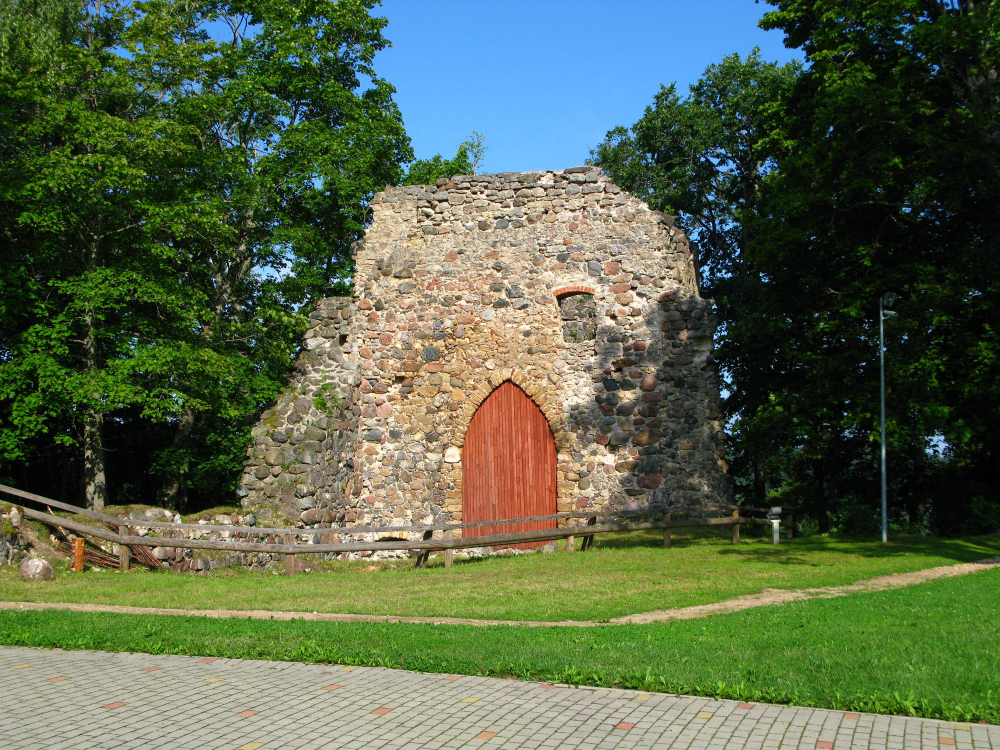
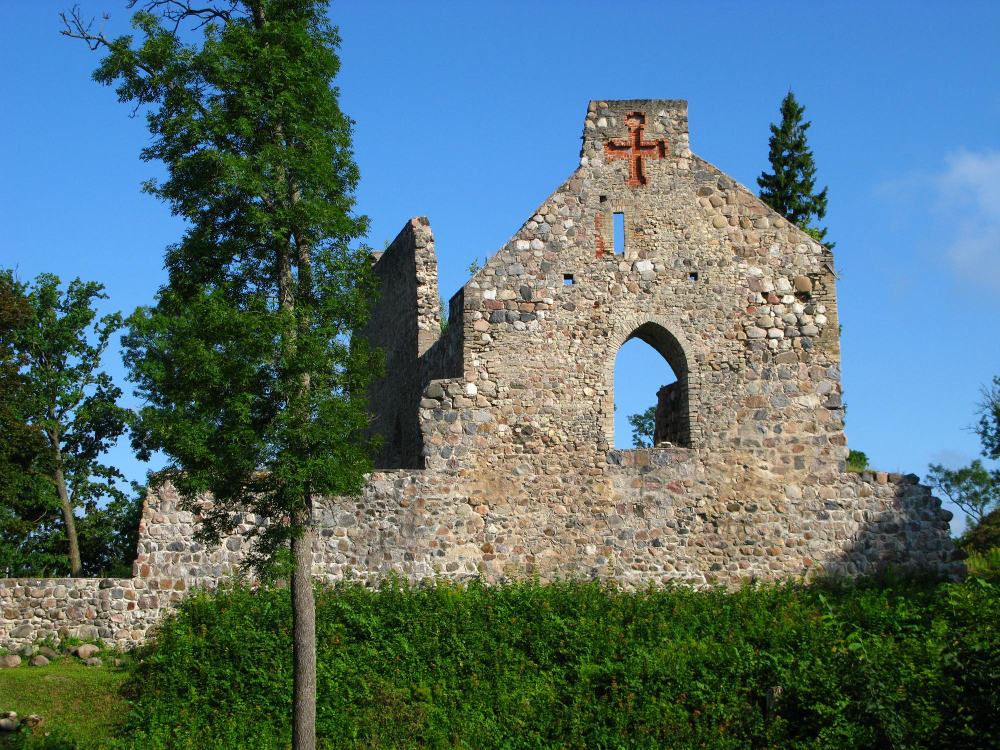
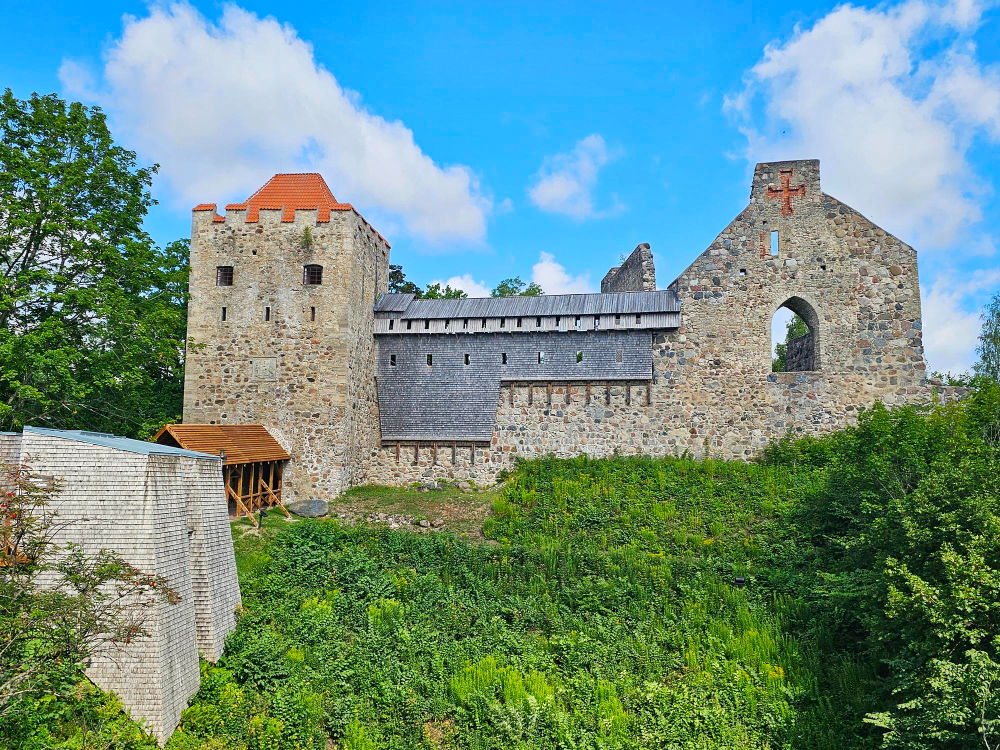
Sigulda, Turaida and the landscape as part of the narrative – The story cannot be separated from its surroundings. Sigulda is often described as one of Latvia’s tourist centres because its natural and cultural heritage converge within a small area. The medieval castles of Sigulda and Turaida, the Gutmanis Cave, walking trails through the Gauja National Park and sweeping views across the valley create a backdrop that brings the legend to life. Sigulda Castle was built in the 13th century as a stronghold of the Order of the Sword Brothers, and later of the Livonian Order. Impressive ruins of the castle remain today. Turaida lay on the opposite side of the valley and fell within the sphere of influence of the Archdiocese of Riga. The two sites serve as a reminder that, for a long time, the region was shaped by rival rulers, military conflicts and shifting political boundaries. In the ‘Rose of Turaida’ narrative, these historical sites become an emotional map: Turaida Castle represents Maija’s origins and her final resting place; Sigulda Castle symbolises her connection to Viktor; and the Gutmanis Cave stands for the fatal deception. Anyone visiting these places today is therefore not only travelling through a charming landscape, but also through the setting of one of Latvia’s most famous legends.
A symbol with a lasting impact – The Rose of Turaida has found its way into literature, theatre, music and tourism. It is an example of how a regional story can become a national symbol. Its significance lies not solely in the question of which details can be historically verified with precision. What is also crucial is how the narrative has been passed down, interpreted and associated with certain values. In Latvian cultural memory, Maija is often regarded as a figure of loyalty and dignity. At the same time, from a contemporary perspective, the legend can also be read as a story about violence against women. The focus is not merely on an idealised love, but on the threat to a young woman posed by the abuse of power and coercion. This perspective lends the narrative a haunting relevance to the present day. The Rose of Turaida therefore remains more than just a tourist attraction. It links the specific historical setting of the Gauja Valley with a universal tragedy. Within the walls of the castles, the paths through the forest and the dark entrance to the Gutmanis Cave, a story lives on that tells of love – but also of loss, violence and the desire to preserve one’s dignity.








Post Comment