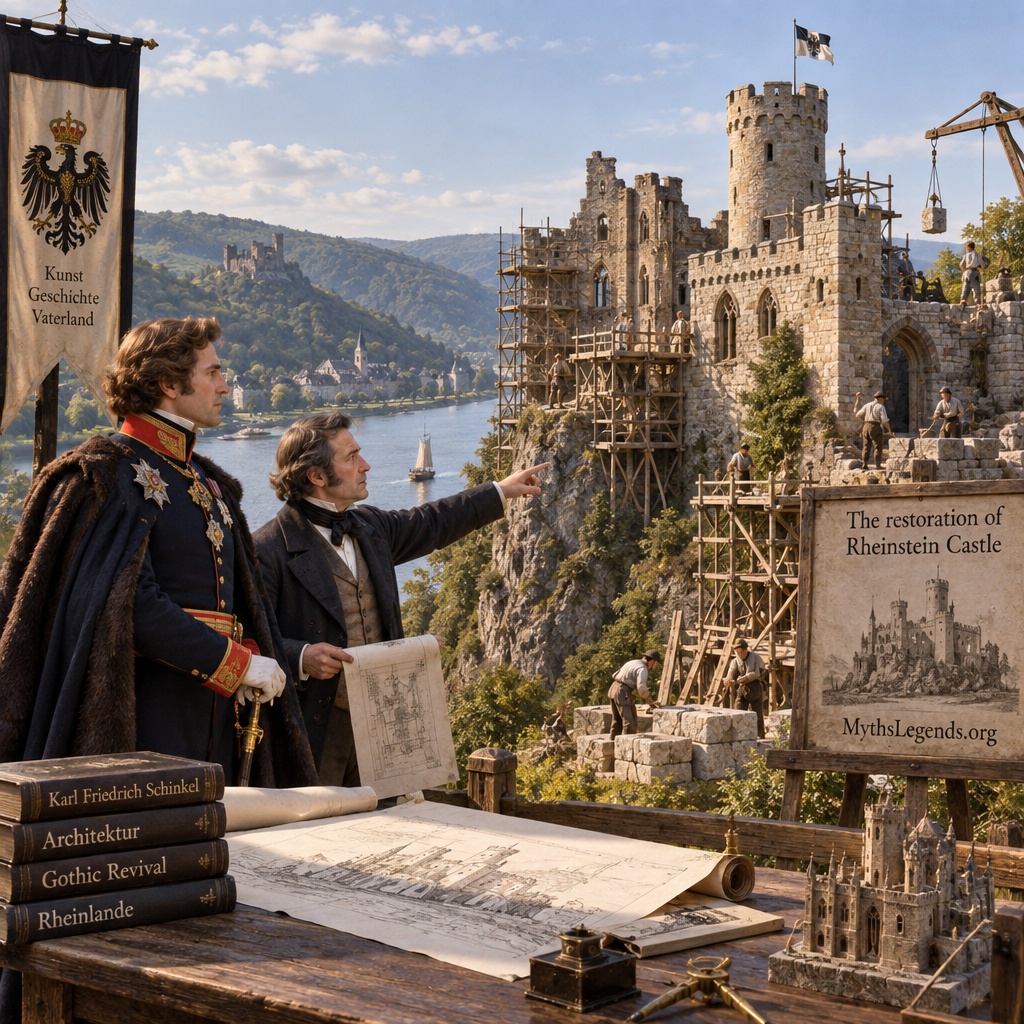
The real ‘legend’: The Prince’s Sleeping Beauty – The Rebirth of Rheinstein Castle
The fascinating history of Rheinstein Castle is more than just a tale of ancient stones and crumbling walls. It is a living monument to German Rhine Romanticism, combining history, art and architecture. In particular, the role of Prince Friedrich Wilhelm of Prussia, who acquired the ruins in the 19th century and breathed new life into them, makes the castle an extraordinary historical figure. These real-life events form a kind of ‘Sleeping Beauty’s slumber’ for the castle – a period of repose and decay before a weary fairytale castle came to life in the truest sense of the word.
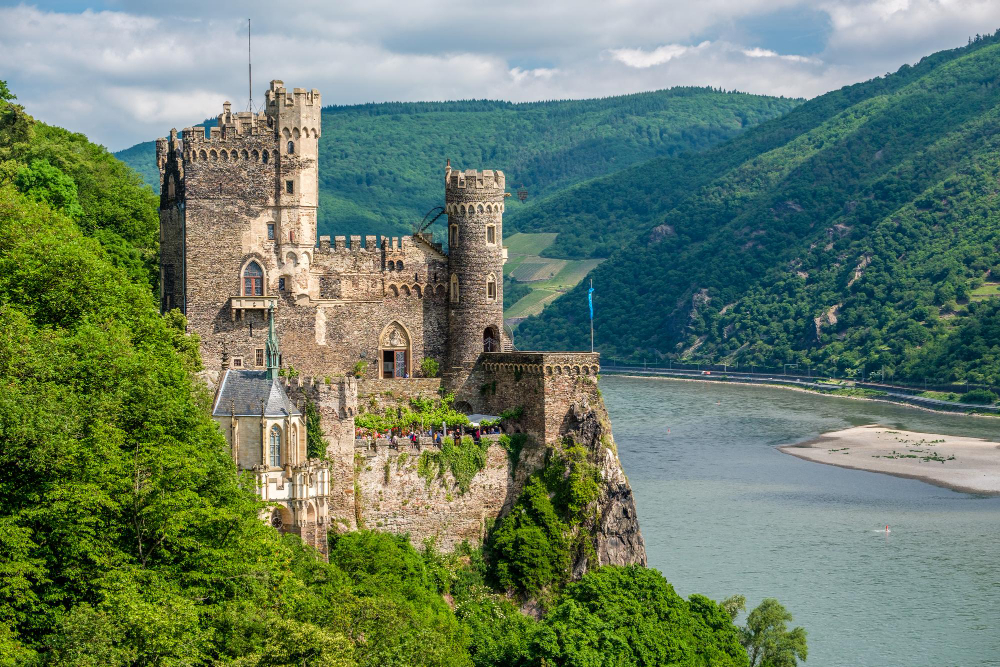
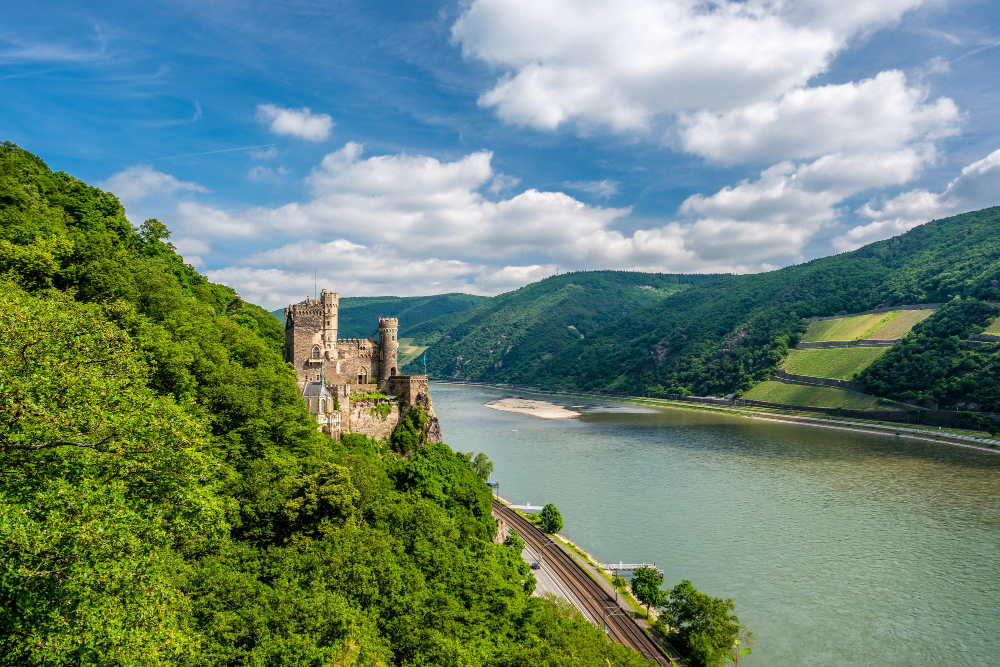
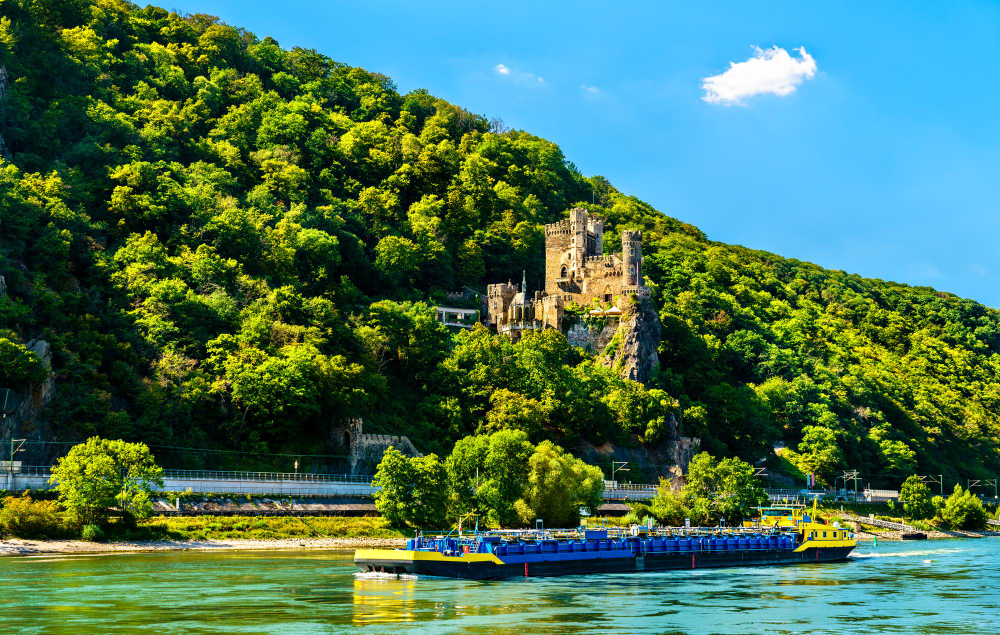
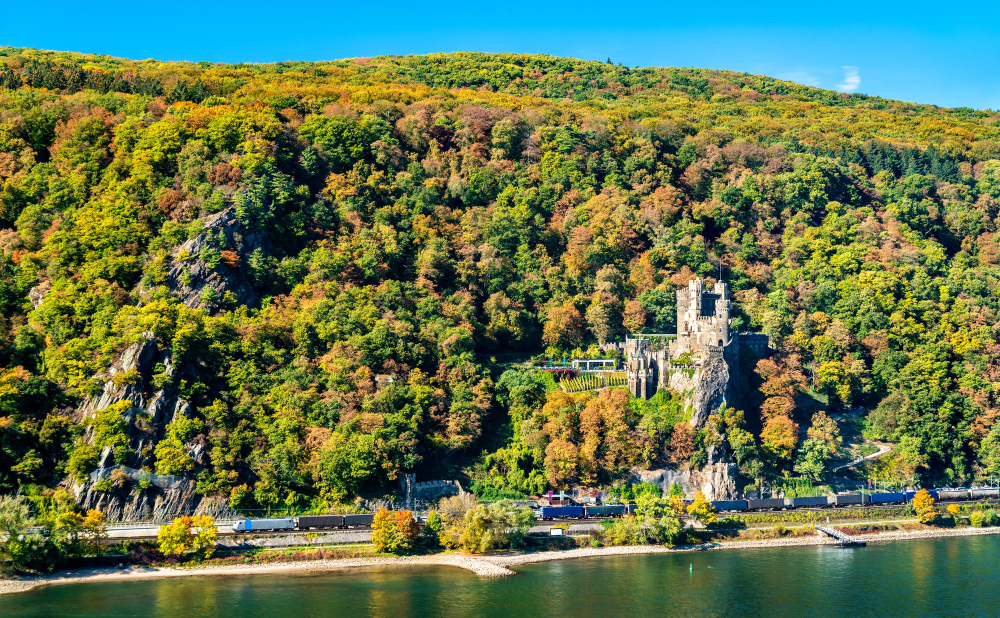
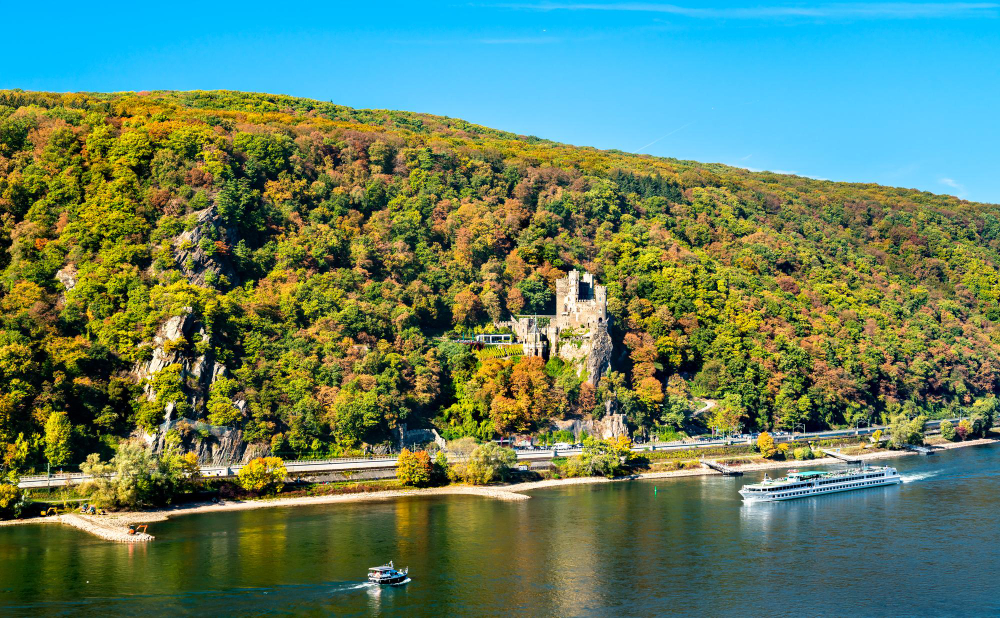
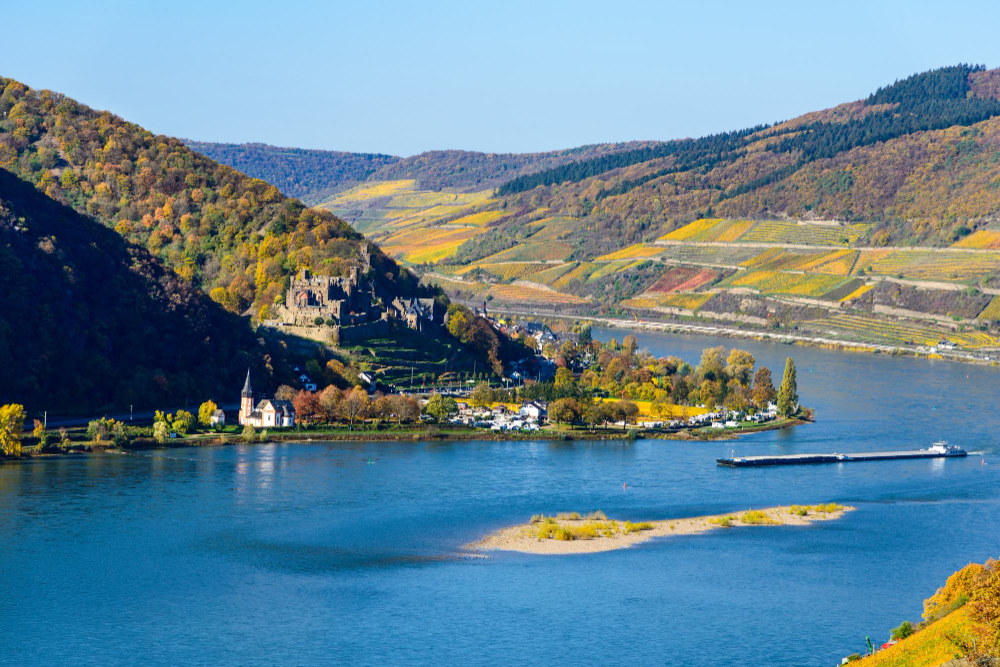
From a medieval customs castle to a ruin – Rheinstein Castle towers high above the Rhine near Trechtingshausen in Rhineland-Palatinate and looks back on an eventful history. Originally built in the Middle Ages as a customs castle, it was known at the time as Vaitzburg or Voitsberg. Its strategic location enabled the control and monitoring of shipping traffic on the Rhine, which was of great economic importance. For centuries, the castle served as a military outpost, an administrative centre and a customs post. Yet, like so many other castles on the Rhine, Rheinstein too became redundant over time due to wars, political upheavals and changes in transport routes. In the 17th and 18th centuries, the once magnificent complex gradually lost its importance. Crumbling walls, collapsed towers and overgrown courtyards were the result of decades of neglect. The castle fell into ever-greater disrepair and seemed to have been abandoned to the ravages of time once and for all. It was as though it had fallen into a deep sleep – a Sleeping Beauty slumber that cut it off from the world for a long time.
Prince Friedrich Wilhelm of Prussia and the Romanticism of the Rhine landscape – The year 1823 marked a turning point when Prince Friedrich Wilhelm of Prussia, a member of the Prussian royal family, came across the ruins whilst searching for a place with a romantic atmosphere. The era was characterised by a growing enthusiasm for ‘Rhine Romanticism’ – a cultural movement that championed the beauty and mystique of the Rhine Valley. Poets, painters and architects had begun to take a keen interest in the medieval castles and the idyllic landscapes along the Rhine. Prince Friedrich Wilhelm was no ordinary buyer of old ruins. He recognised the value of this historical heritage and wanted not only to preserve the ruins but also to breathe new life into them. In doing so, he set a trend that swept across the entire Rhine region in the 19th century – the restoration and reconstruction of castles in the Neo-Gothic style. This was far more than a mere renovation; it represented an idealised return to the Middle Ages, combined with a romantic idealisation of chivalry, history and German identity.
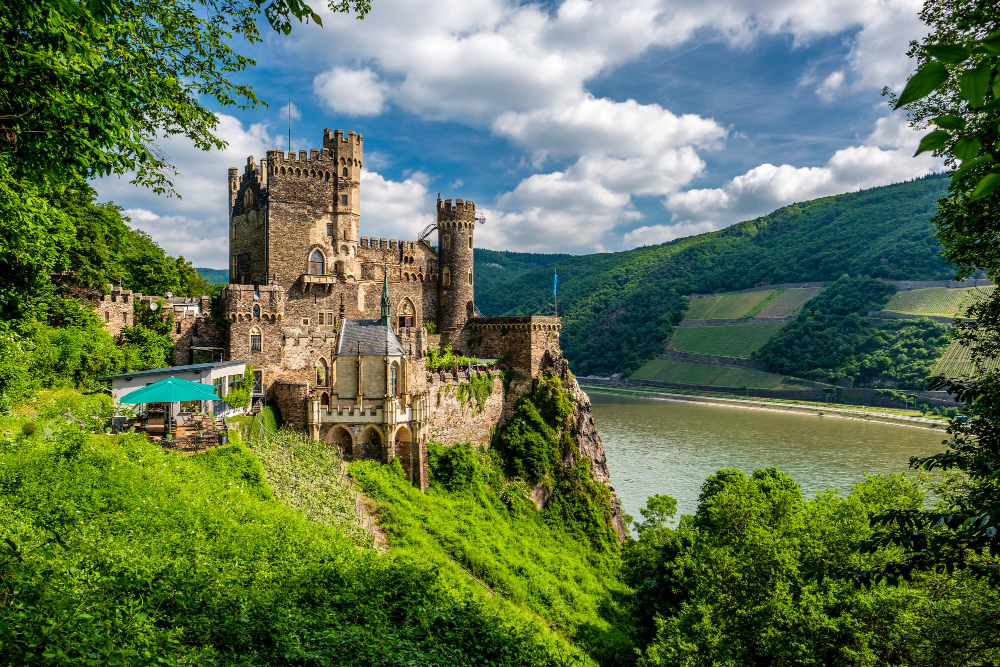
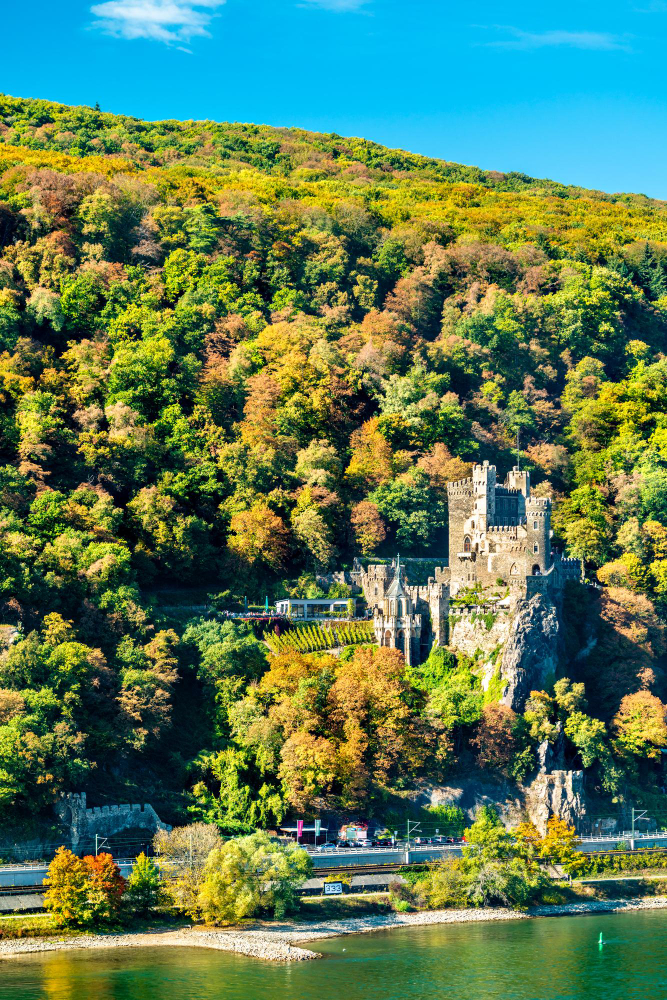
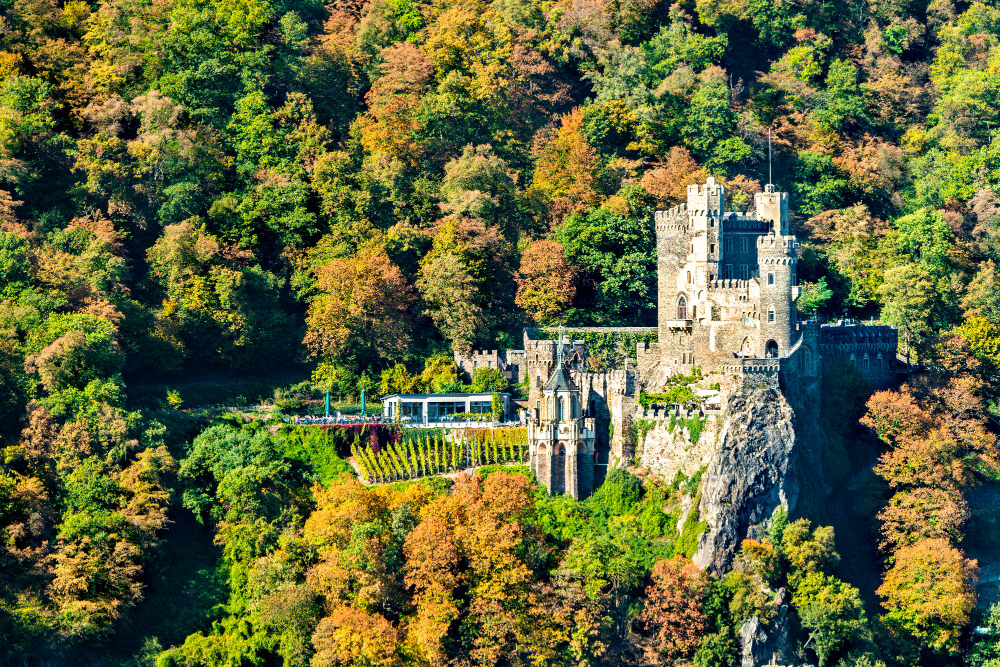
The Renaissance of Rheinstein Castle under Karl Friedrich Schinkel – For the plans of his summer residence, Prince Friedrich Wilhelm enlisted the renowned architect Karl Friedrich Schinkel – one of the most prominent figures in Prussian architecture. Schinkel was known for his work in the Classical style and was regarded as a champion of the Neo-Gothic style, characterised by pointed-arch windows, battlements, bay windows and towers. Numerous buildings designed by him are still regarded as masterpieces today. The restoration of Rheinstein Castle was guided by the then-modern concepts of historical accuracy and Romantic aesthetics. The surviving structures were carefully integrated and complemented by stylish additions. New living and reception rooms were created, giving the castle a stately appearance that both reflected the charm of the Middle Ages and offered the comforts of a contemporary aristocratic residence. The reconstruction was groundbreaking: Rheinstein Castle became the first Neo-Gothic-restored castle on the Middle Rhine and, within a short space of time, developed into a symbol of the Romantic longing for an idealised past. The castle became a model for numerous similar projects along the Rhine and beyond.
The significance of Rheinstein Castle today – Today, Rheinstein Castle is not only a tourist attraction but also a cultural monument of inestimable value. It stands as a testament to how heritage conservation and Romantic ideals went hand in hand to bring history into the present. Every year, the castle attracts numerous visitors who, amidst Gothic towers and green vineyards, allow themselves to be transported into the mysterious atmosphere of times gone by. Furthermore, it serves as a memorial to the importance of cultural preservation. What once lay in a deep slumber and was threatened by decay was saved thanks to a prince’s vision and an architect’s skilful design. Rheinstein Castle thus stands as a prime example of the cultural revival of numerous historic sites along the Rhine.
A ‘Sleeping Beauty’ story with a happy ending – The history of Rheinstein Castle is reminiscent of the famous fairy tale of Sleeping Beauty, who is only brought back to life after a hundred-year slumber. Yet this is a real-life ‘legend’: The castle, which had fallen into ruin over the centuries, was roused from its deep slumber in the 19th century by a prince’s devotion and an architect’s artistry. This not only saved a historic building but also created a symbol of Romanticism, history and national identity. Rheinstein Castle is thus far more than a ruin or a scenic gem. It stands as a striking example of how history is preserved and interpreted – a living reminder of times gone by and, at the same time, an inspiring site for the present day. Its ‘Sleeping Beauty’ slumber ended almost 200 years ago, yet the myth of Rhine Romanticism lives on to this day – towering majestically over the gently flowing Rhine.








Post Comment