The Romantic Legend of the Hochzeitswehr in Leipzig: Love, Promises, and a Ghost
Leipzig, a vibrant city steeped in history and culture, holds numerous secrets and stories that are often known only to a few. One of these is the legend of the Hochzeitswehr—a tale of love, broken promises, and a ghost that continues to capture the imagination of many Leipzig residents to this day. The legend takes us back to a time when life and fate were often more closely intertwined than we can imagine today.
The Son of a Merchant on a Journey – At the heart of this story is the son of a merchant from Leipzig, whose family had earned an excellent reputation through trade and prosperity. The young man’s life was marked by curiosity and a thirst for adventure, and so one day he decided to travel to Venice. This Italian city, known for its beauty, art, and commercial opportunities, attracted many travelers from all over the world—especially merchants who wanted to expand their business contacts there. In the magnificent streets, amidst the gondolas and the ornate buildings of Venice, the merchant’s son met a young woman. She was not only exceptionally beautiful but also possessed a fascinating mind and great charm. Soon a deep connection developed between the two that went far beyond a mere acquaintance. After several weeks of walks along the Grand Canal and intimate conversations, the man from Leipzig decided to propose to her. His bride didn’t take much convincing and accepted the proposal with sparkling eyes. But their happiness didn’t last long. The merchant’s son had to return to Leipzig to run the family business. He solemnly promised his future wife, however, that after some time he would come to Venice to fetch her and take her back to Saxony so they could spend their lives together. The young woman trusted him blindly—a mistake, as it would later turn out.
Return Without a Bride – Back in Leipzig, the merchant’s son was caught up in the daily grind. The responsibility for the family business and the temptations of his homeland increasingly distracted him. Weeks turned into months, and months eventually into years. He thought less and less of his beloved in Venice, who waited faithfully for him and never doubted his promise. Instead, he seemed to take pleasure in leading the life of a wealthy bachelor. The bride in Venice, however, waited patiently, hoping anew each week that her fiancé would return. But the more time passed, the greater her doubts and her pain became. Finally, so the legend goes, she died—disappointed and alone, far from the city that had once been promised to her. Her death, however, was not to be the end of her story.
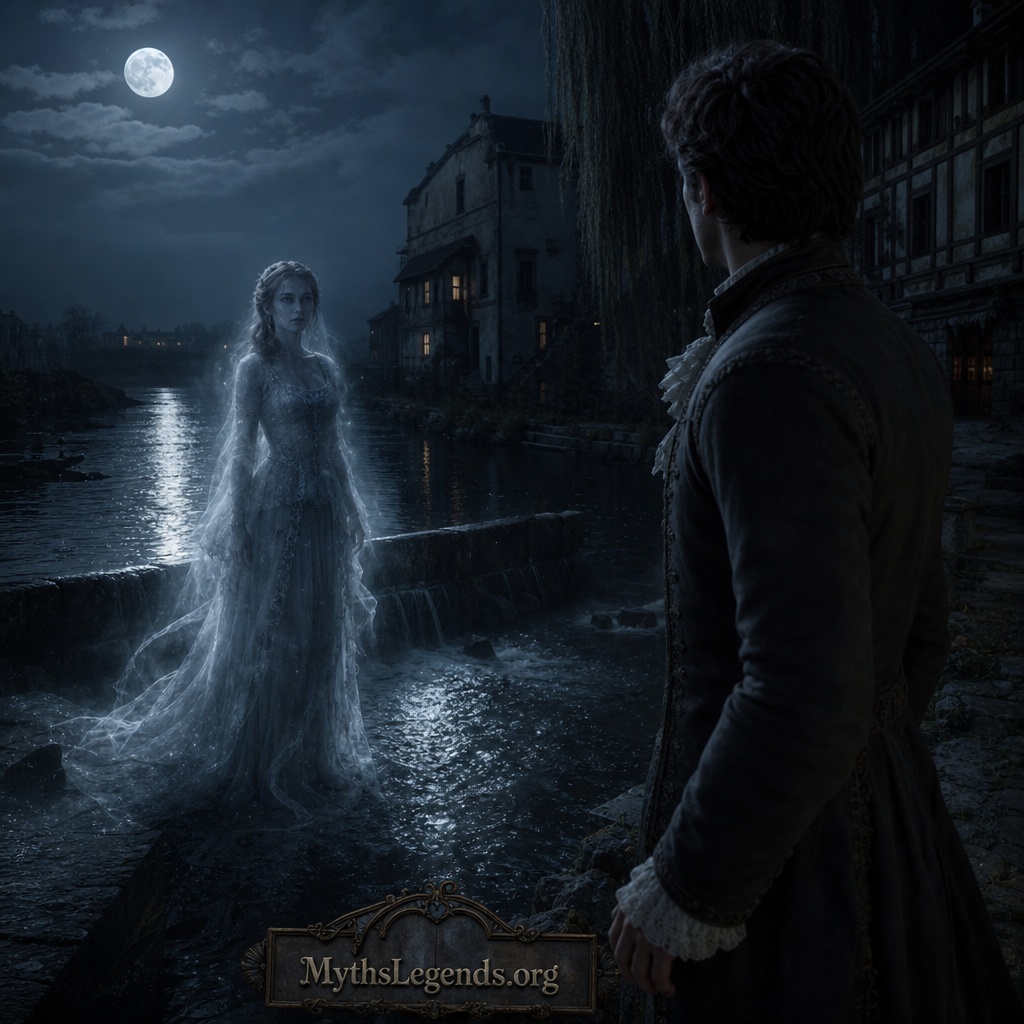
The Apparition at the Elster Weir – One night, many years after the young woman’s death, the merchant’s son returned home late. His path took him along the Elster Weir, a place that was still quite untouched at the time on the outskirts of the city, where the Elster flowed through various canals. It was a dark, quiet night, and the moon was reflected in the water like a silver ribbon. Suddenly, the man noticed a strange figure at the weir. A cold shiver ran down his spine, for this figure looked just like his former bride from Venice. Her face was pale as the moon, her eyes stared at him, and a ghostly light seemed to flicker around her body. The merchant’s son stood rooted to the spot, unable to move or say a word. The apparition began to speak, in a voice full of sorrow and disappointment. “You have forgotten me,” lamented the ghost, “you have broken your promise. I have waited for you, but you never came.” The words struck the man like a blow. Suddenly he remembered the promise he had once made, and the love that had bound him to this woman. The pain and remorse were overwhelming, yet it was too late. The apparition slowly vanished into the mist of the night, leaving him alone—with feelings of guilt that would never let him go.
The Origin of a Name – Since that night, the merchant’s son is said to have been a broken man. He never recovered from his encounter with the ghost of his bride. From then on, the Elsterwehr was called the “Hochzeitswehr” by the people of Leipzig—in memory of the tragic story of a love that shattered over a broken promise.
Even today, the legend of the Hochzeitswehr is told, especially among romantics and history buffs who are fascinated by the city’s mysteries. Many even claim to have felt a cold breeze or a strange sensation during a nighttime stroll along the Elster—as if the bride’s spirit still lingered there, searching for her fiancé who had betrayed her.
Historical Context and Cultural Significance – Although the story of the Hochzeitswehr has primarily been passed down as a legend, it reflects fundamental themes of universal significance. The legend addresses not only the power of love but also the consequences of failure and the repercussions that broken promises can entail. Leipzig itself is a city with many bridges and fortifications that have always played an important role in the urban infrastructure. Today, the Hochzeitswehr is a popular spot for walkers and nature lovers who enjoy the tranquility and atmosphere. For those familiar with the legend, however, this place takes on an additional mystical dimension and serves as a reminder of how important it is to uphold honesty and fidelity.
The romantic yet tragic legend of the Hochzeitswehr shows that love and responsibility should go hand in hand. It is a story that reminds us that words and promises can significantly influence our lives—regardless of whether they are kept or broken. In Leipzig, this legend remains part of the city’s cultural heritage and helps preserve the historical depth and mystical atmosphere that make it so special.
Perhaps it is worth visiting the Hochzeitswehr yourself and reflecting on the stories we tell in our own lives—and on the promises we should keep. For who knows? Perhaps the spirit of the Venetian bride still roams the nights to remind us that love must never be forgotten.










Post Comment