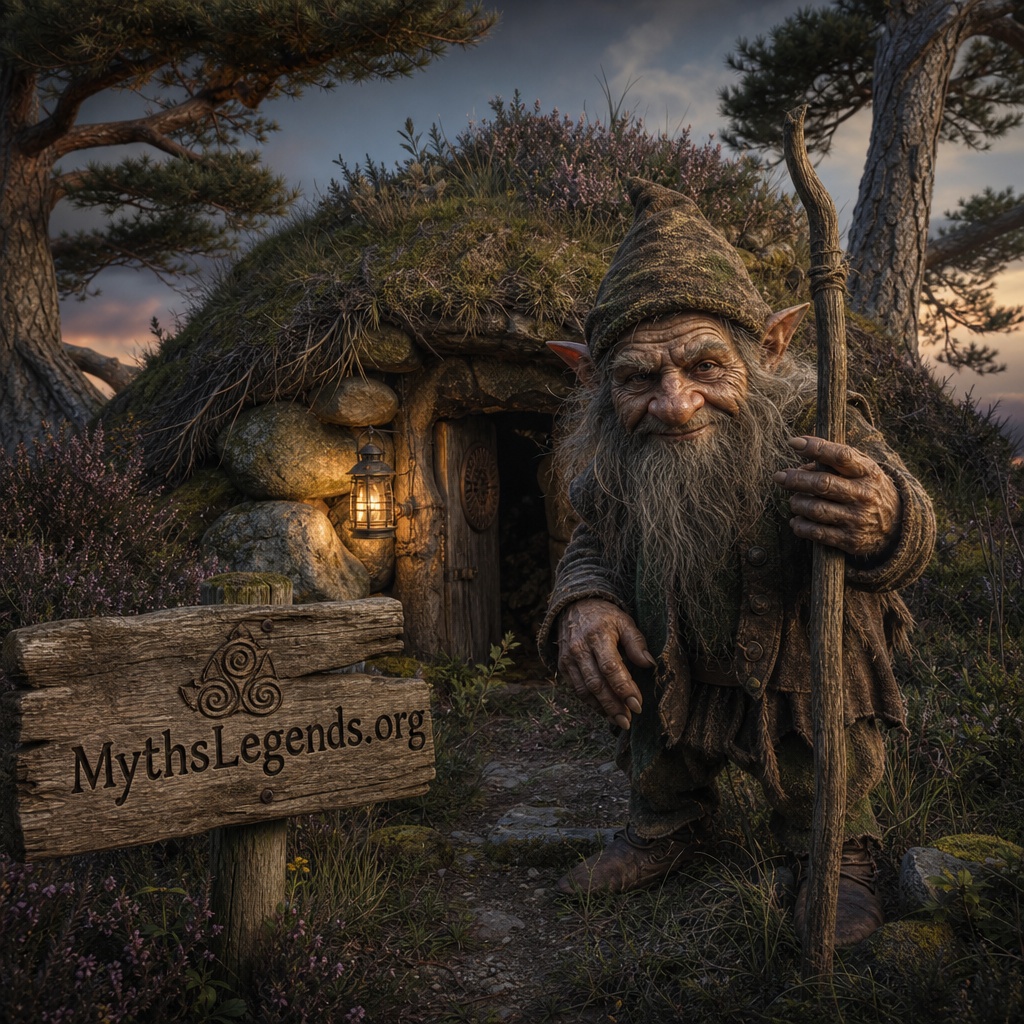
The Mysterious Oterbaankin: Myths and Legends of Föhr
The North Sea island of Föhr is known for its picturesque landscapes, Frisian culture, and eventful history. But beyond the postcard-perfect tourist attractions and vibrant traditions, fascinating stories and legends also surround this island. One of the region’s deeply rooted myths revolves around the Oterbaankin—small, gnome-like creatures said to live in the heath, beneath burial mounds, and in other remote corners of the island. Their stories stretch far back into the past and reflect a belief in the supernatural that once played an important role in many Nordic cultures.
Who are the Oterbaankin? – The Oterbaankin, often described as a kind of small nature spirit, are considered the mysterious inhabitants of the island of Föhr, who usually elude the human eye. Their appearance is described differently in the tales. Some say they resemble dwarves with weather-beaten faces and gnarled hands, while others speak of shadowy beings that dart back and forth among the heath bushes at night and are almost impossible to catch. At their core, however, all descriptions share the image of a small, clever, and mischievous creature that is closely connected to nature. According to the tales, their dwellings are said to be hidden beneath the ancient burial mounds, remnants from the Bronze Age that are abundant on Föhr. While these mounds are genuine relics of bygone eras, their connection to supernatural beings like the Oterbaankin illustrates how historical sites are often intertwined with mythological concepts.
The Origin of the Myth – Belief in such beings is by no means limited to Föhr. On the contrary, similar legends about nature spirits, goblins, or dwarves exist in many parts of Europe. In the Scandinavian countries, for example, trolls and elves are often associated with untouched nature. In Germany, too, there is a long tradition of belief in beings such as gnomes and mountain spirits. The Oterbaankin could therefore be a local adaptation of these widespread beliefs—a symbol of the close connection between the people of Föhr and their surroundings, as well as their history. The origin of the name “Oterbaankin” remains unclear, which further enhances the mystique surrounding these figures. Linguists speculate that it could be a combination of old Frisian terms or a reference to local dialects and folk expressions. However, the Oterbaankin are rarely mentioned in historical documents, which is why knowledge of them has been passed down primarily through oral tradition. It is thus the stories of the islanders in particular that keep this myth alive.
Their Role in the Legend – In the tales of the people of Föhr, the Oterbaankin appear as multifaceted beings whose character fluctuates between good-natured and mischievous. Sometimes they help people, for example by tracking down hidden treasures or guiding travelers through the fog of the heath. On the other hand, they can also cause mischief, such as by hiding tools or frightening livestock and children. They are often described as masters of disguise who can make themselves invisible or appear in animal form, which further reinforces their reputation as elusive beings. A central theme in many stories about the Oterbaankin is the pact between humans and nature. Some legends tell that these small beings will only help if one shows them respect and protects their habitats. Anyone who disturbs their sanctuaries—for example, through deforestation or trampling the heath—may incur the wrath of the Oterbaankin. This motif reflects an ancient wisdom: respect for nature and its mysteries was of crucial importance to many earlier societies.
Legendary Encounters – One of the best-known stories tells of a farmer who got lost in the heath one evening. A thick fog had settled, and the man no longer knew where he was. Suddenly, he heard a soft chuckle, and a small, stocky creature appeared before him with a face that seemed both friendly and mischievous. The Oterbaankin offered to show the farmer the way back to his farm—on the condition that the man would never harm it and would farm his land in a way that preserved nature. The farmer agreed, and the little creature led him safely through the fog. Since then, the story goes, the farmer always kept his promise, and his fields thrived magnificently. Other stories tell of children who encountered the Oterbaankin while playing on the heath. The creatures posed riddles to the children or gave them small gifts, usually in the form of shiny stones or unusual flowers. Such encounters always ended peacefully, as long as the children treated the creatures with respect.
The Connection to Nature – What makes the Oterbaankin particularly interesting is their strong connection to the nature of the island of Föhr. The stories surrounding these beings serve as a reminder of how much people once depended on their environment and how this dependence fostered a deep understanding of nature. This understanding was evident not only in agriculture but also in mythology: nature and the supernatural were often intertwined. At a time when nature is coming under increasing pressure, the stories of the Oterbaankin could serve as a reminder to treat the environment with respect. They warn that destructive behavior toward nature can not only have physical consequences but also lead to the loss of the magic and beauty that these places once radiated.
The Significance of the Myth Today – The stories of the Oterbaankin are known today primarily among the island’s older residents. Nevertheless, they live on, whether in tales told on long winter evenings or through their mention in regional books and on guided tours. For tourists visiting Föhr, the legends offer a fascinating insight into the island’s cultural distinctiveness. Especially in an age when old stories often fall into oblivion, such legends play an important role in preserving cultural heritage. They also spark interest in the island’s historical sites, such as the burial mounds, which are truly spectacular reminders of the past. The blend of myth and real history is what makes the Oterbaankin so fascinating: they breathe life into the stone remnants of the past and make us wonder what stories might lie behind them.
Whether the Oterbaankin actually exist or are merely a product of human imagination, no one can say for certain. What is certain, however, is the cultural significance of this myth for the island of Föhr. The stories about these little nature spirits reflect a deep connection between humans and the environment, as found in many cultures. They invite us to see the world through different eyes—as a place full of secrets and wonders that deserves our respect. And perhaps, if you stand very still and look closely, you might catch a fleeting glimpse of a tiny creature darting back and forth among the heather bushes.



Post Comment