
The Tüfelskänzeli near Mammern: How a rock became the setting for a fertility myth
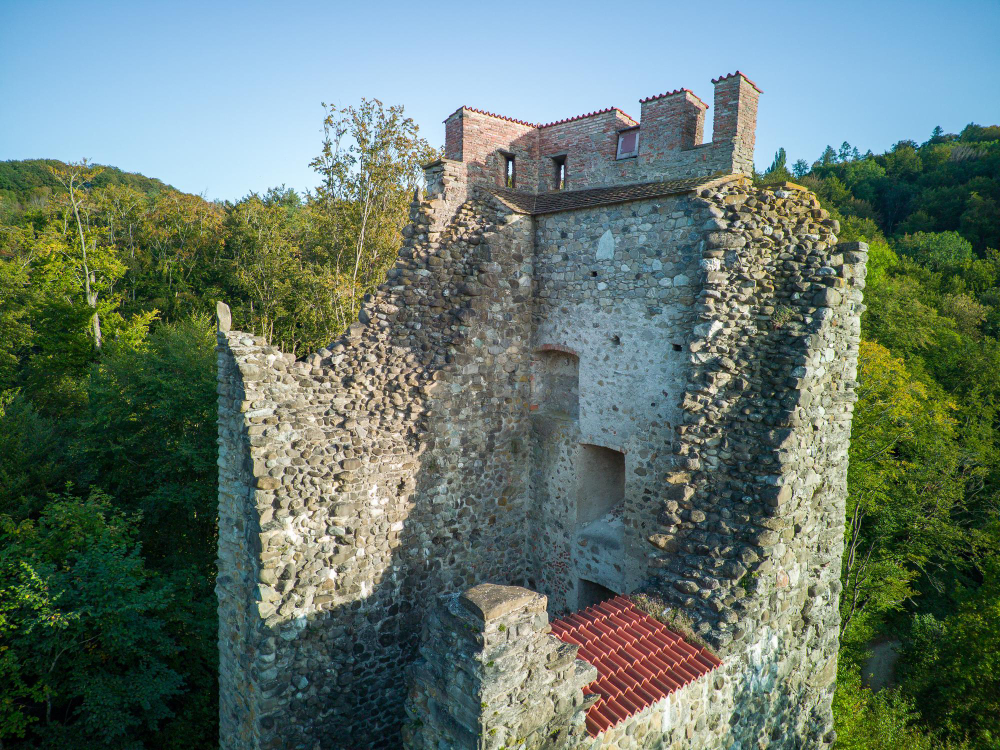
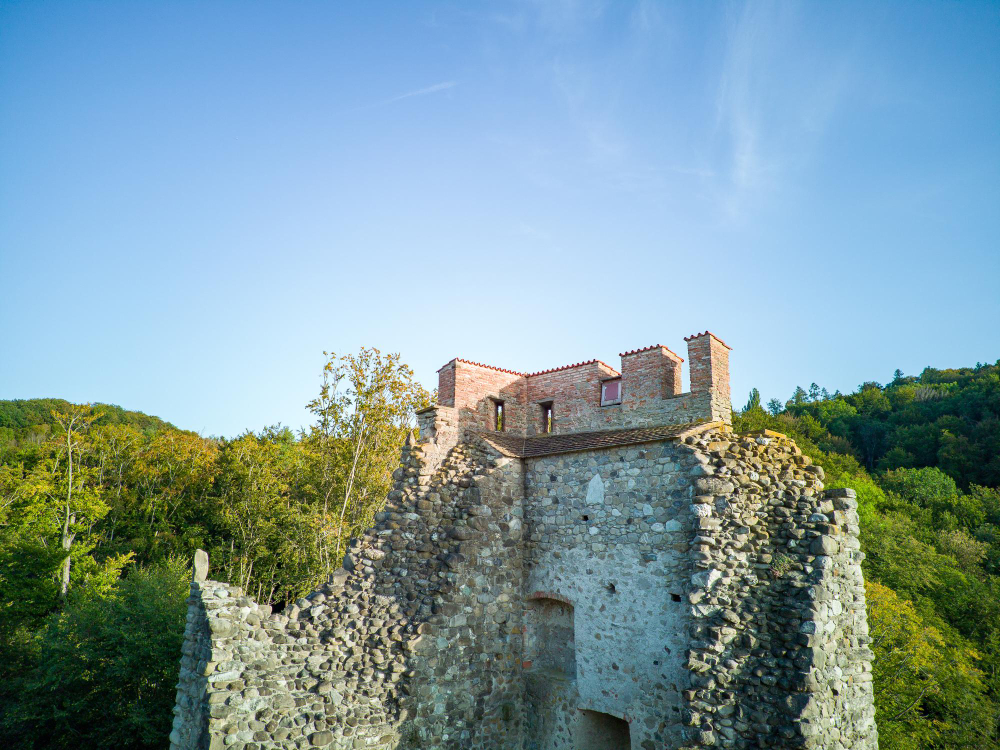
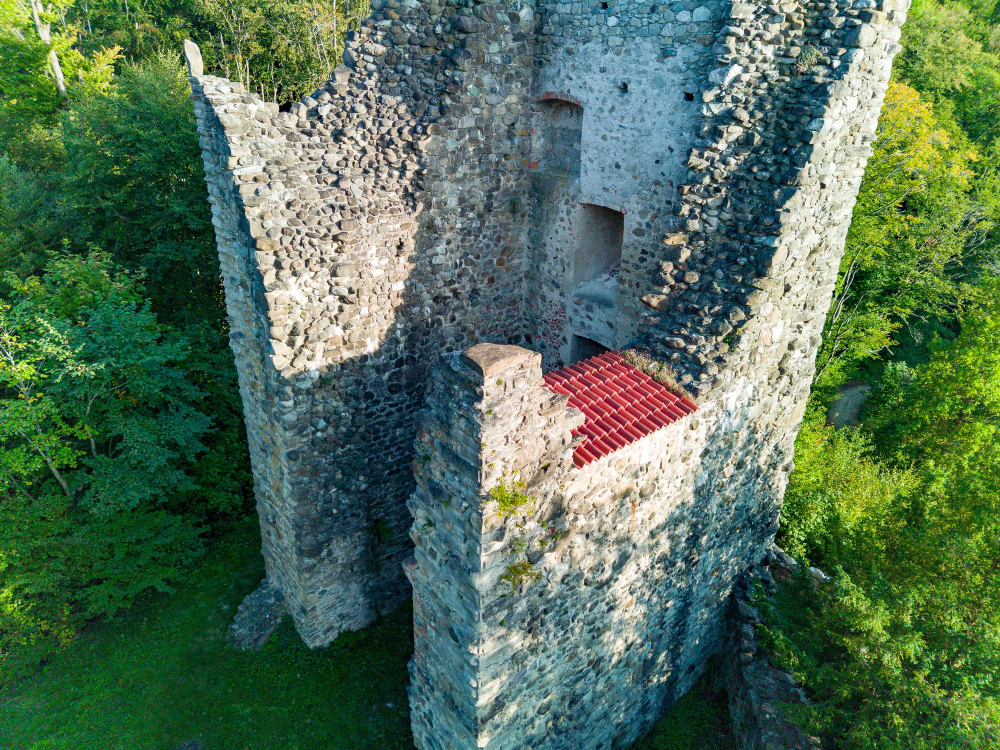
High above the Untersee, nestled amongst woodland, vineyard slopes and the remains of medieval strongholds, lie the ruins of Neuburg near Mammern in the canton of Thurgau. Anyone taking the footpath to the castle complex will encounter not only the remains of the walls but also a sweeping view across the Lake Constance countryside. Nearby is also a striking rocky outcrop which local lore calls the ‘Tüfelskänzeli’ – sometimes also the ‘Hexenkänzeli’. A particularly striking legend surrounds this place: women are said to have slid across the rock there with their backsides exposed in order to overcome their unfulfilled desire to have children. From today’s perspective, the tale seems at once strange, crude and fascinating. It combines sexuality, fertility, folk beliefs and the mysterious aura of a remote natural spot. But what can actually be said about this myth? And why do such stories arise precisely in places such as a castle ruin or a striking rock formation? It is important to distinguish between verifiable history and folklore. Neuburg Castle itself forms part of the region’s medieval history. The ‘Tüfelskänzeli’, on the other hand, and the associated fertility narrative belong to the realm of oral tradition. Such stories can provide valuable insights into past ways of thinking – but they do not automatically prove that the rituals described actually took place regularly or in exactly this form.
A rock between castle, forest and lake – The ruins of Neuburg lie above Mammern on the Untersee, a western part of Lake Constance. Its location was strategically advantageous: from the ridges, one could survey the transport routes and the surrounding area. Like numerous castles in what is now Thurgau, the site is a reminder of a time when nobility, land ownership and feudal rights shaped the landscape. Stories have often been passed down in the vicinity of such ruins. Over the centuries, crumbling walls, hard-to-reach wooded areas, rocky outcrops and gorges have provided fodder for the imagination and interpretation. Where concrete memories of former inhabitants faded, stories emerged about knights, hidden treasures, ghosts, witches or the devil. The striking rock near Neuburg thus acquired a name that emphasises its special position in the landscape: a ‘Känzeli’, meaning a small pulpit or projecting platform, associated with the Devil or with witches. These very names reveal a great deal about the cultural significance of the place. Names containing ‘devil’ and ‘witch’ are widespread in German-speaking regions. They were frequently used for rocks, caves, gorges or unusual landforms. They often mark places that were perceived as dangerous, eerie or extraordinary. Not necessarily because an alleged witches’ sabbath or an apparition of the Devil is said to have taken place there, but because the natural formation itself cried out for an explanation.
The legend of sliding down the rock to fulfil a wish for children – The tradition surrounding the Tüfelskänzeli is clear and dramatic: women longing for children are said to have slid down the rock with their bare bottoms. Sliding down was believed to bring fertility or to help fulfil a wish for children. Such motifs are not confined to Mammern. Folklore research has documented tales from various regions of Europe concerning stones, springs, caves, trees or chapels to which fertility-enhancing properties were attributed. In some traditions, women sit on specific rocks, slide across smooth stone surfaces, touch a spring or perform symbolic acts at special sites. The specific sequence of events varies from case to case. What they have in common is the belief that natural sites may possess a special power. Sliding, in particular, has a symbolic dimension. It is a physical act that establishes closeness to the stone and involves a downward movement. In a mythical interpretation, this can be linked to notions of transition, conception, birth or renewal. However, it would be unsound to infer from this a clearly verifiable pre-Christian cult. The idea that every fertility custom automatically stems from a pagan ritual of the distant past is regarded as problematic in modern folklore studies. Many customs and legends have been altered over time, retold or only recorded in writing at a later stage. The ‘Tüfelskänzeli’ should therefore be understood less as archaeological evidence of an ancient fertility cult than as part of regional narrative culture. This is precisely where its value lies: the legend shows how people linked existential experiences – hope for offspring, fear of childlessness, shame and sexuality – to a specific place in their surroundings.
Childlessness as an existential experience – To understand the significance of such a myth, one must bear in mind the realities of life in earlier centuries. For many families, children were not only emotionally important, but also of great economic and social significance. They were regarded as a labour force in the household and in agriculture, as potential heirs and as a safeguard in old age. At the same time, infant and child mortality rates were high, and pregnancies and births carried considerable risks. When pregnancy failed to materialise or children died young, those affected sought explanations and ways to influence the situation. Medical knowledge was limited, and in many cases the causes of involuntary childlessness could not be identified. Furthermore, social responsibility for this was often placed solely on women – even though, medically speaking, infertility can have causes in both women and men. In this context, religious practices, pilgrimages, blessings, healing springs and folk rituals offered a form of hope. The journey to a particular rock could be more than just a ‘magical’ ritual. Such actions provided structure to uncertainty. They brought to light a problem that was difficult to influence and gave people the feeling that they could take active steps to address it. At the same time, they created a framework within which topics that were otherwise characterised by shame and silence could be discussed or at least symbolically addressed.
Between Christian faith and folk belief – In everyday European life, beliefs about fertility were often not simply at odds with Christianity. Rather, official religious practice, local traditions and individual hopes overlapped. People prayed to saints, visited churches and places of pilgrimage, but at the same time made use of springs, herbs, blessings or nature-related customs. The boundaries between religion, folk medicine and superstition were often blurred in everyday life. The names ‘Tüfelskänzeli’ and ‘Hexenkänzeli’ may point to a Christian-influenced reinterpretation. Practices that were regarded as offensive, incomprehensible or outside the church’s order were, in retrospect, associated with witches or the devil. It was precisely the nudity – or rather, the baring of the buttocks – that is likely to have contributed to the provocative nature of the legend. In a society shaped by moral conventions and social control, such an act outside the private sphere was conspicuous. Attributing it to witches or the Devil made the narrative both understandable and cautionary. Whether the name came first and the fertility legend was added later – or whether both elements arose together – cannot be determined without precise, early-dated sources. Oral traditions change. Storytellers embellish, abridge, shift the emphasis or adapt stories to the tastes of their time. This is precisely why local legends should not be read as verbatim accounts.
What can be substantiated in the story – and what remains open to interpretation – The historical location can be substantiated: the ruins of Neuburg above Mammern and the striking rock in the surrounding area, known locally as the ‘Tüfelskänzeli’ or ‘Hexenkänzeli’. It is also verifiable that fertility myths and wishes associated with natural sites are widespread in European folklore. However, it cannot be asserted with the same certainty that women actually performed a firmly established ritual at the Tüfelskänzeli over a long period of time. This would require contemporary written accounts, official records, sermons, travelogues or other historical sources. In the absence of such evidence, the story remains a legend – a tradition that may well have originated from real events, but could just as easily have arisen from later embellishment. This uncertainty does not detract from the narrative. On the contrary: it draws attention to its true significance. Legends are not history books, but they tell history in a different way. They reveal which places people considered special, what fears and hopes drove them, and how they interpreted the unknown.
A place that raises questions – The Tüfelskänzeli near Mammern is more than just a curious footnote along the hiking trail to the Neuburg ruins. The legend of sliding down the rock to fulfil a wish for a child delves right into themes that still resonate today: the desire for a child, attitudes towards physical intimacy, social expectations and the search for stability in uncertain life situations. The rock does not, however, speak of any scientifically verifiable healing power. It speaks of hope. Of the idea that a special place might offer help when everyday life provides no answers. And it shows how landscape is transformed into memory: a protruding rock becomes the Devil’s Pulpit, the witches’ gathering place – and a symbol of a deeply human desire. Anyone visiting the Neuburg ruins therefore encounters more than just medieval masonry. The surrounding area also holds a piece of intangible cultural heritage: a regional history that lies somewhere between truth, belief and legend. Precisely because it cannot be conclusively proven, it remains fascinating – as a narrative of how people imbue their landscape with meaning.









Post Comment