The Headless Knight of Milazzo: The dark secret behind Sicily’s fortress walls
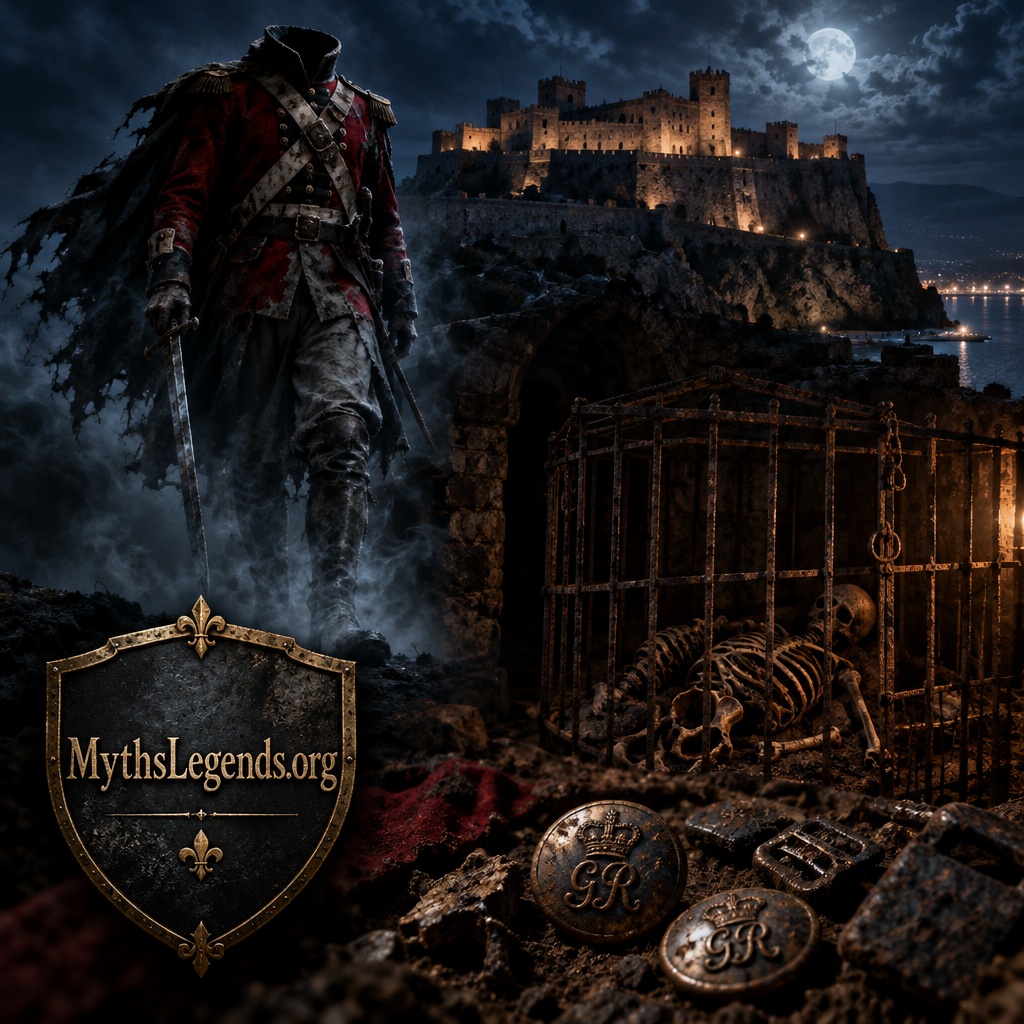
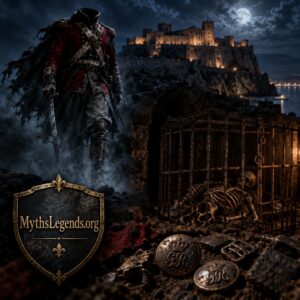
When the wind from the Tyrrhenian Sea sweeps over the walls of the Castello di Milazzo at night, this mighty complex on Sicily’s north-east coast seems like a place from another era. Over the centuries, the fortress has been extended, besieged, fought over and shaped by successive rulers. Today it is an important historical monument – yet in local folklore it is also the setting for a particularly eerie ghost story. Near an old English cemetery, a man in an old uniform is said to wander about, holding his severed head in his hands. The legend of the ‘headless knight’ or English soldier is one of the best-known eerie tales surrounding the Castello di Milazzo. Its core is not merely a figment of the imagination: it is linked to a discovery that is said to have been made inside the fortress in 1928. Inside an iron cage, prisoners came across human remains – a skeleton missing its limbs, accompanied by buttons attributed to a British uniform. This macabre discovery lent new weight to a ghost story that was already doing the rounds.
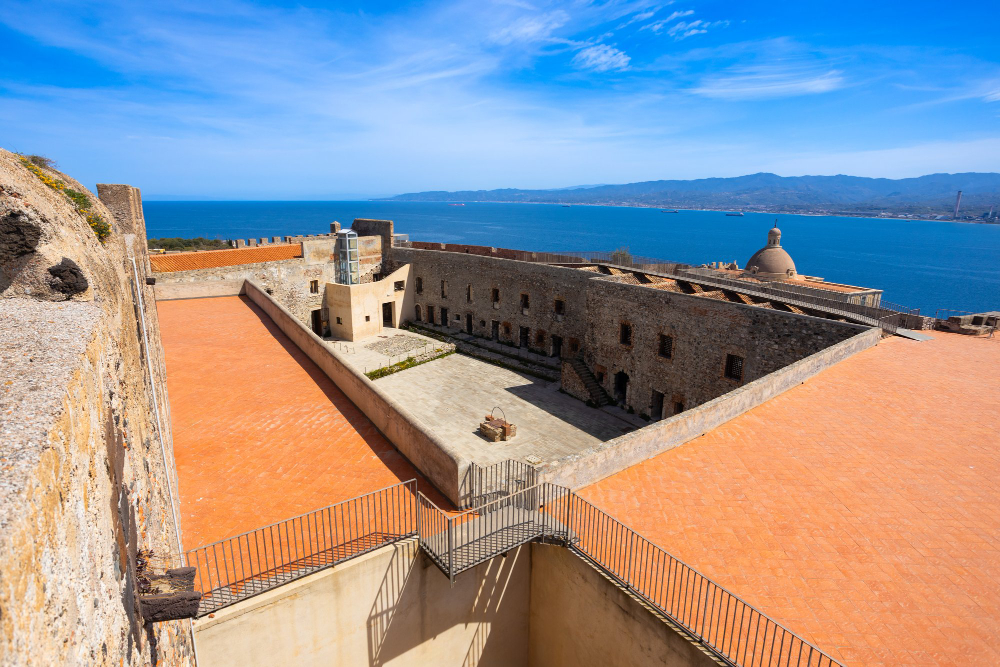
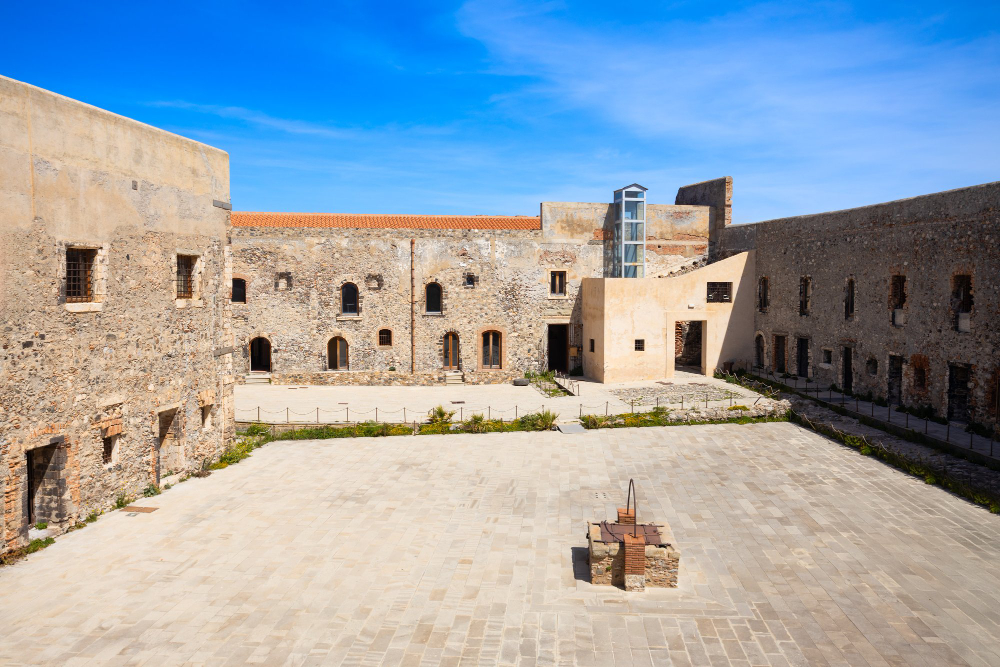
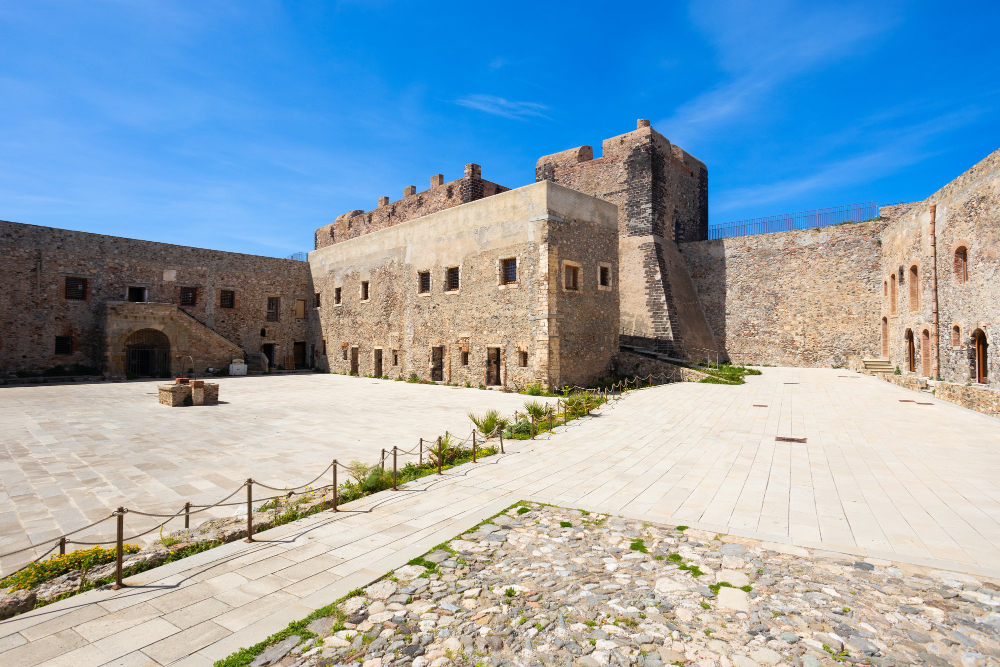
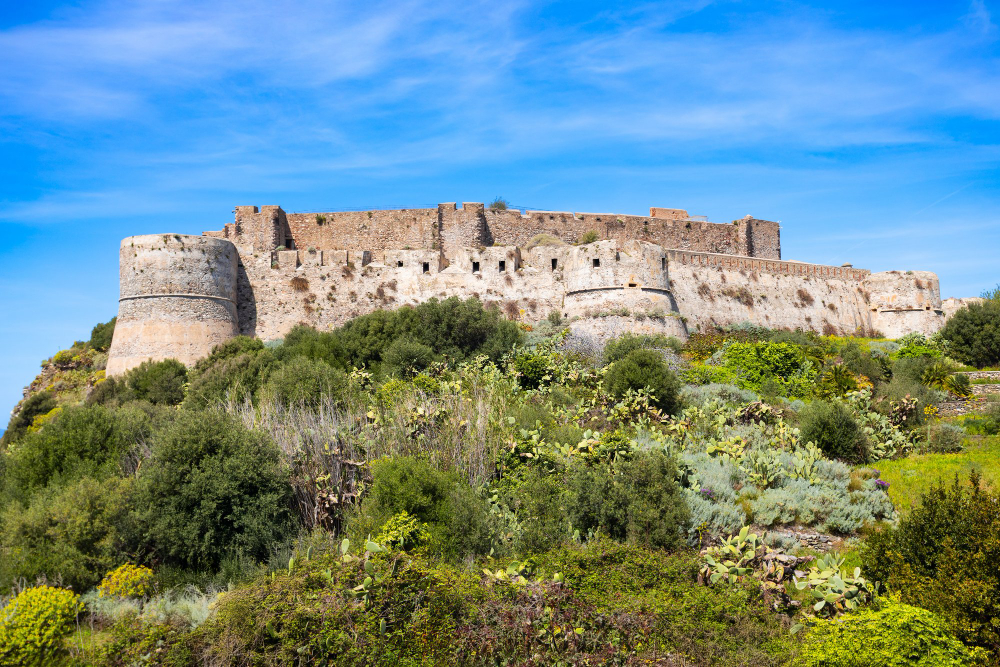
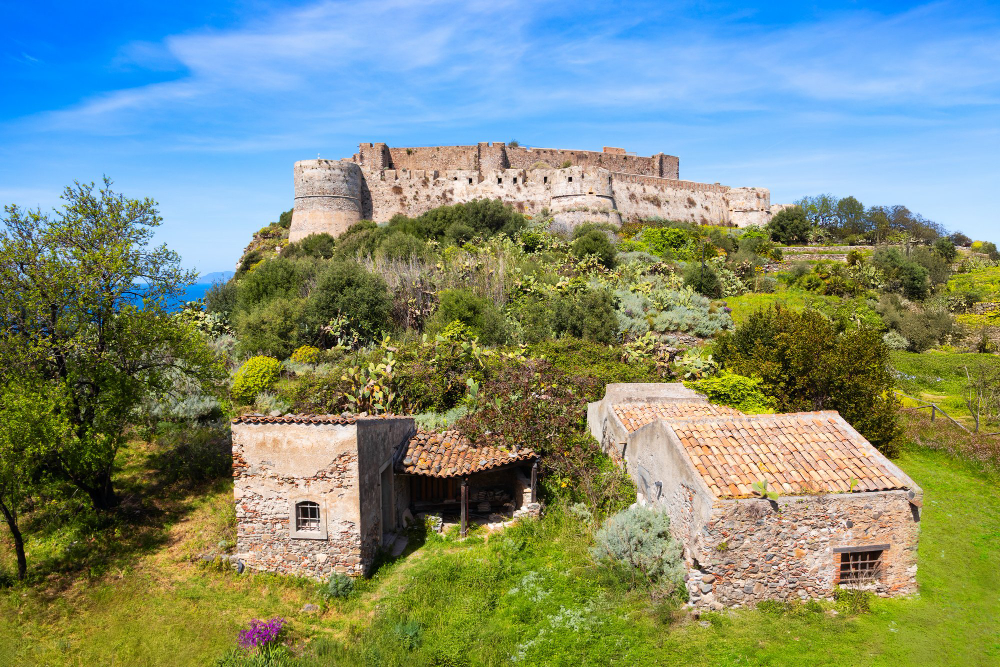
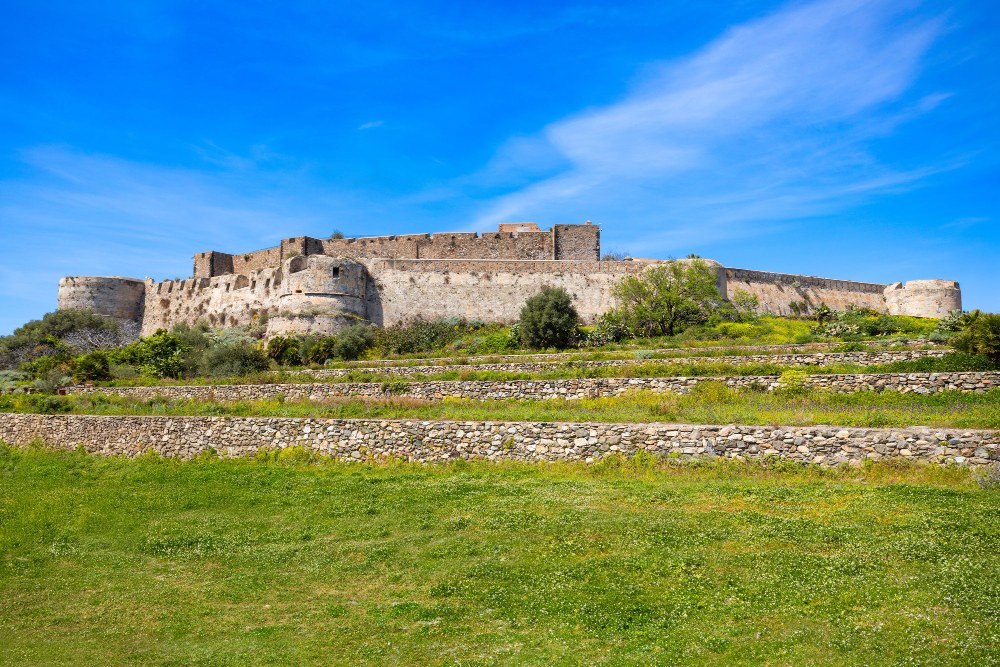
A fortress overlooking the sea – The Castello di Milazzo stands on a rock above the town of the same name. Its location was of strategic importance: from here, it was possible to control the coastline, as well as the shipping routes towards the Aeolian Islands. The complex is regarded as one of the largest fortified sites in Sicily. Its history spans many eras: the Byzantines, Arabs, Normans, Staufers, Aragonese and Spaniards all left their architectural and military mark. The fortress does not consist of a single structure, but of several defensive rings, walls, bastions, courtyards and buildings dating from different periods. It is precisely this complexity that defines its character. Anyone walking through the complex is journeying through centuries of changing rule and a history of conflict. Within its walls, soldiers were quartered, prisoners were held and military decisions were made. Places with such a past provide fertile ground for legends – especially when historical documents leave gaps. The tale of the headless soldier centres on the area of an old English cemetery within, or close to, the fortress complex. The exact details of the legend vary: at times the figure appears as a knight, at others unmistakably as a British soldier. What remains constant, however, is the eerie image of a man carrying his own head in front of him or holding it in his hands.
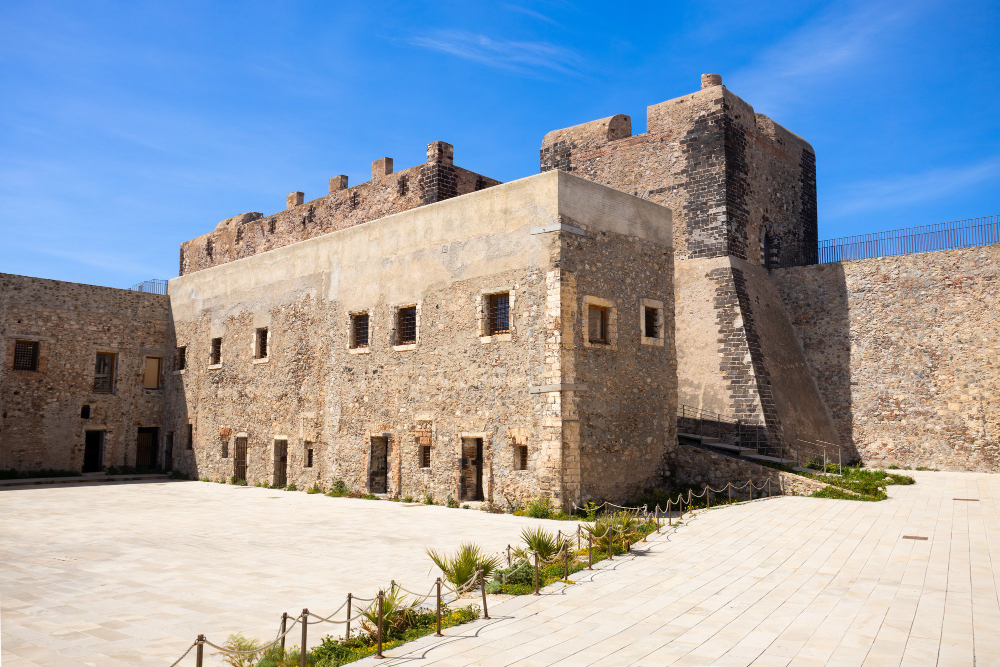
The discovery of 1928 – At the heart of the tradition lies an event from 1928. According to the locally passed-down story, prisoners were working in the castle courtyard when they came across an iron cage. It is said to have contained the remains of a man. The skeleton was reportedly missing several limbs. Particularly striking were the buttons from a British military uniform that were discovered amongst the bones. The details of this discovery remain difficult to interpret with certainty to this day. In popular accounts, it is often portrayed as the story of an executed English deserter. According to this version, the man may have fallen victim to a particularly cruel form of punishment during a military occupation or a conflict. The idea that a person was displayed, imprisoned or kept in an iron cage after their death is consistent with the grim penal practices of earlier centuries, when public deterrence was a means of exercising power. However, the common accounts do not provide a definitive, scientifically documented identification of the skeleton. Caution is therefore warranted: the assumption that this was indeed a British deserter remains a plausible interpretation within the oral tradition, not a biographical fact proven beyond doubt. The attribution of the uniform buttons also plays a central role in many retellings, yet without a publicly accessible forensic report, it is impossible to reconstruct with certainty to whom they belonged or from what period they dated. It is precisely this uncertainty that heightens the impact of the legend. Where sources are silent or fragmentary, oral tradition fills in the gaps – with images that become ingrained. The headless soldier is thus not only a ghostly figure, but also a symbol of an unknown dead man whose fate has not been fully elucidated.
British soldiers in Milazzo: historical background – The fact that parts of British uniforms are associated with Milazzo is not fundamentally implausible from a historical perspective. In the 18th and 19th centuries, Sicily was part of a politically and militarily contested Mediterranean region. The island gained particular strategic importance for Britain during the Napoleonic Wars. Britain supported the Bourbon Kingdom of Sicily against French expansion and maintained a military presence on the island. British troops were stationed in various parts of Sicily during this period. Milazzo’s proximity to Messina and to the region’s key sea routes made the entire coastal area militarily significant. However, this does not automatically mean that the deceased described in the legend was verifiably a British soldier from that era. The historical presence of British units provides the context, but does not replace concrete, individual evidence. The term ‘English cemetery’ must also be viewed in a nuanced way. In common parlance, cemeteries for foreigners or burial grounds of Protestant or British origin were often simplistically referred to as ‘English’. In predominantly Catholic regions, such places frequently evoked additional notions of otherness and mystery. The association of an old cemetery with a restless figure was therefore a natural fit for the narrative tradition.
The Head in His Hands – The pivotal scene of the legend is unsettlingly precise: a soldier or knight appears headless, carrying his own head. This motif is found in many European ghost stories. The headless horseman, decapitated nobles or slain soldiers usually embody a violent death, unatoned guilt or the impossibility of finding peace after death. In the case of Milazzo, the discovery of bones and uniform buttons gives the image a local anchorage. The legend does not merely claim that a ghost haunts an old castle somewhere. It links the apparition to a specific place, a military past and a reported discovery. As a result, historical memory and folk narrative become blurred. However, it is important not to confuse these levels. There is no verifiable historical evidence for ghost sightings. Reports of the headless soldier form part of the region’s folklore and cultural memory, not of established historiography. The discovery of 1928, as it has been handed down, is the story’s real point of reference – the nocturnal figure remains part of the legend. Furthermore, the fact that people in old fortresses perceive unusual noises, shadows or a sense of threat can be explained without resorting to the supernatural. Narrow passageways, shifting light, the sound of the wind and knowledge of a gruesome history all influence perception. Particularly in places associated with death, imprisonment and war, an atmosphere easily arises in which every step on ancient stone seems significant.
Between History, Tourism and Legend – Today, the Castello di Milazzo is regarded as a historic site and has been developed for tourism. Visitors come for the views, the architecture and the fortress’s long history. Legends such as that of the headless knight also contribute to its special appeal. They transform the walls and ruins not merely into a monument, but into a stage for stories. However, this presents a dilemma. Dramatic ghost stories can make historical sites popular, but they must not take the place of verifiable facts. The story of a soldier who was presumably executed calls for particular restraint. Behind the legend could lie the fate of a real person – a prisoner, a deserter or an unknown victim of a violent era. His possible tragedy should not be treated merely as a means of creating a sense of horror. The Fortress of Milazzo serves as a reminder that history is rarely neatly concluded. Some names disappear from archives, some of the dead remain anonymous, and some finds are recorded only in brief reports. What remains are fragments: an iron cage, human bones, uniform buttons, an old cemetery and the tale of a headless figure.
A ghost as a reminder of the unresolved – Whether a headless English soldier ever actually walked the paths of the Castello di Milazzo cannot be proven. What is certain, however, is that the fortress has a long military and political history and that numerous legends have sprung up around its walls. The tale of the soldier carrying his own head distils this past into an image that is almost impossible to forget. Perhaps the true power of the story lies not in the question of whether a ghost exists. It lies in what the ghost represents: violence, punishment, alienation and a death without a clear explanation. The alleged discovery in 1928 gave this memory a tangible, harrowing face – or, in the logic of the legend, precisely the loss of a face. When darkness falls over Milazzo and the fortress walls stand out black against the sky, the Castello remains, above all, a place steeped in history. Yet for many, this history also includes the nameless man in the old cage – and the legend that he has still not found peace.







Post Comment