The Enchanted Field of Bunratty: The Legend of the Norman Knight and His Hidden Gold
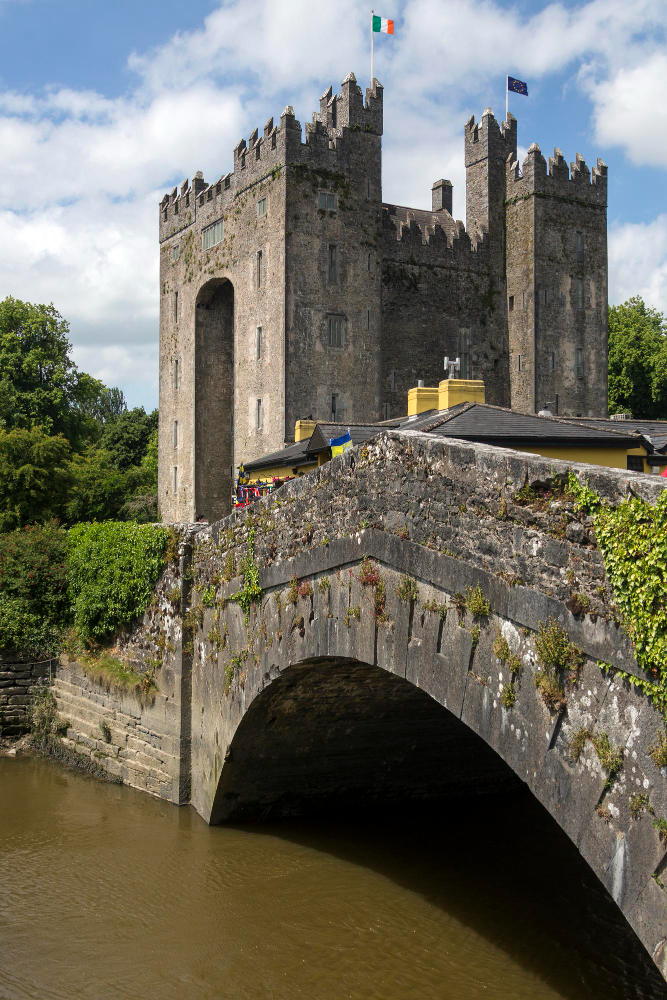
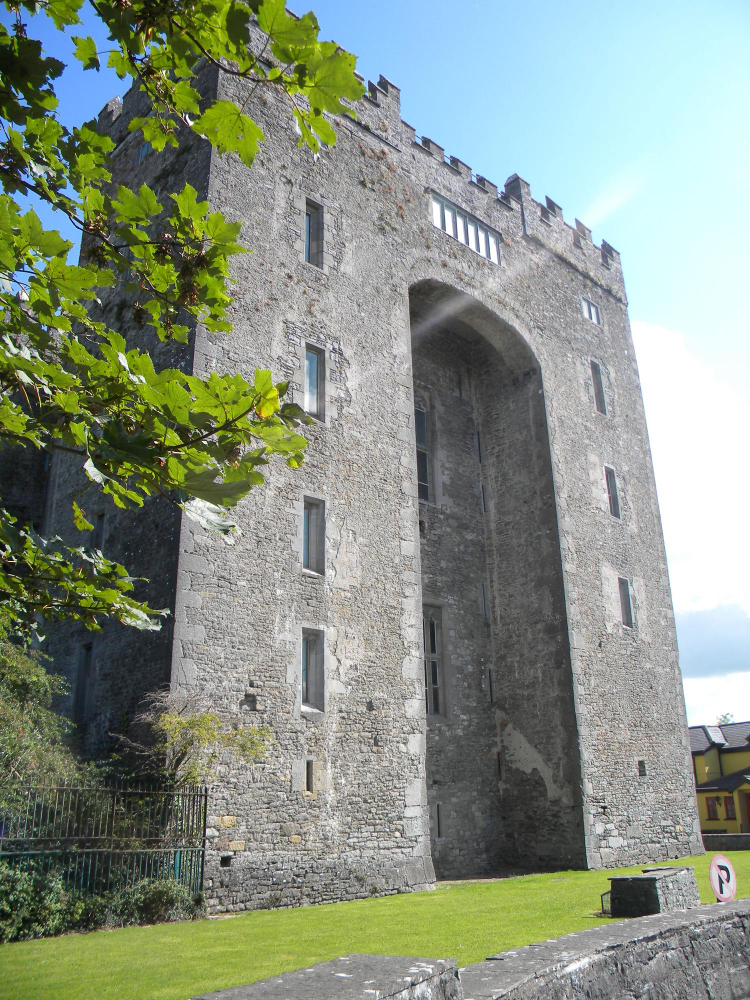
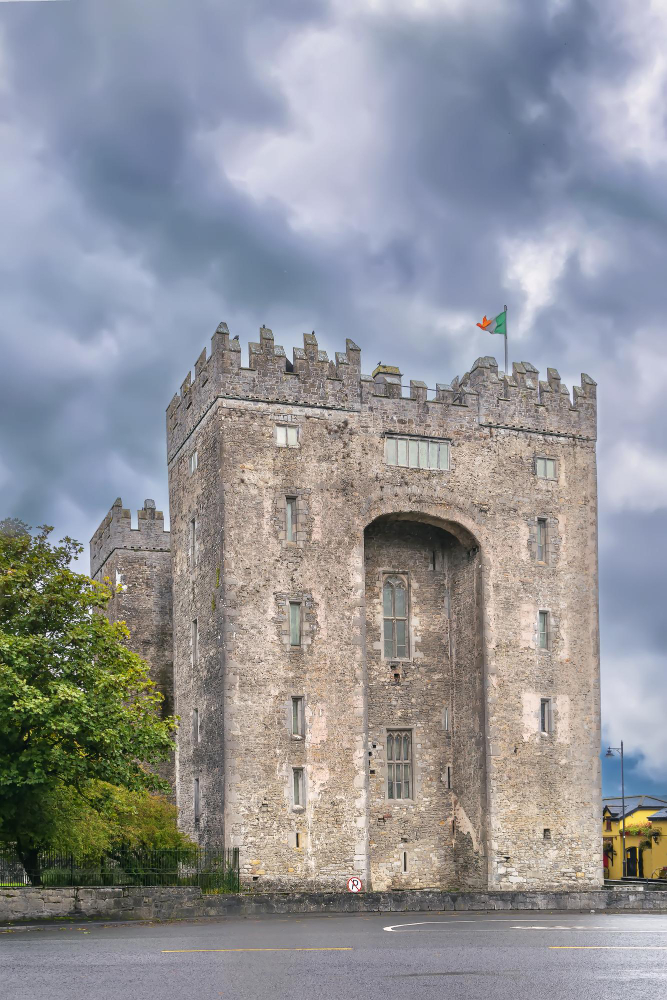
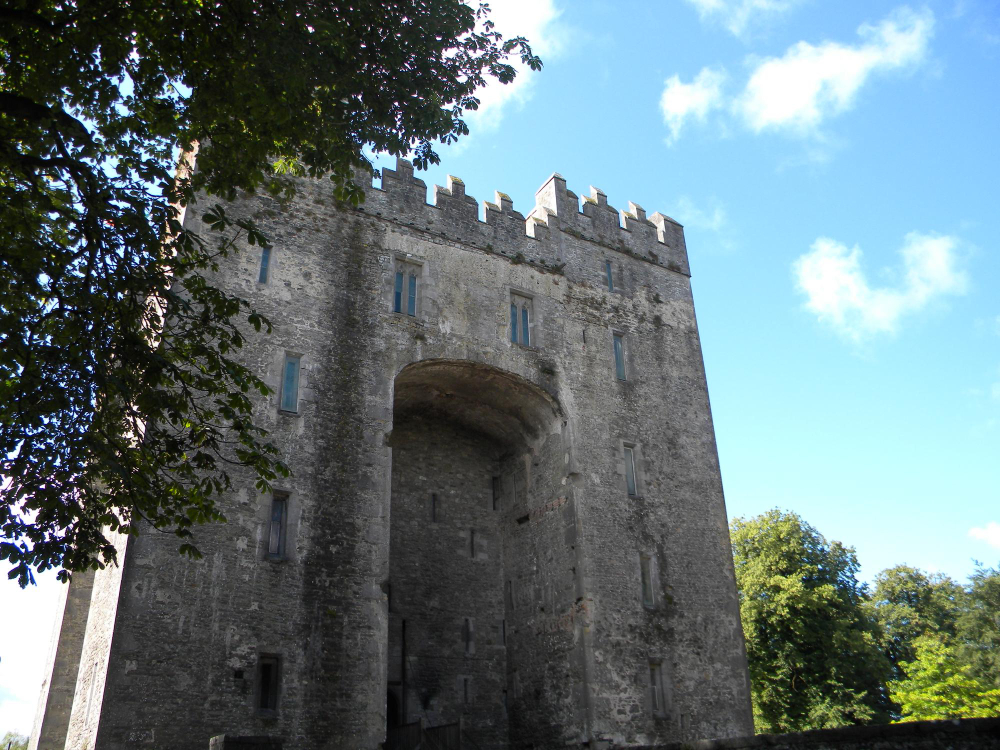
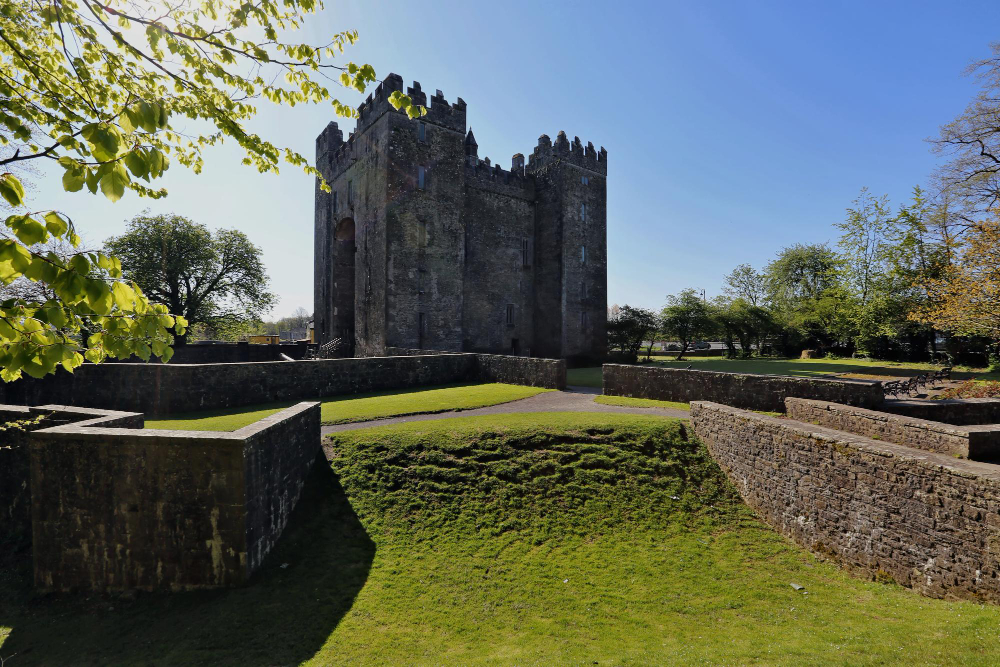
Anyone visiting Bunratty Castle in the Irish county of Clare is first greeted by one of the country’s most impressive medieval castles. The imposing complex towers over the valley of the River Ratty, not far from the Shannon estuary. With its thick walls, narrow staircases, battlements and dark chambers, it still conveys a sense of just how unsafe and violent life in medieval Ireland could be. Yet alongside the well-documented history of rule, sieges and political conflicts, there exists a second, more mysterious dimension: the world of legends.
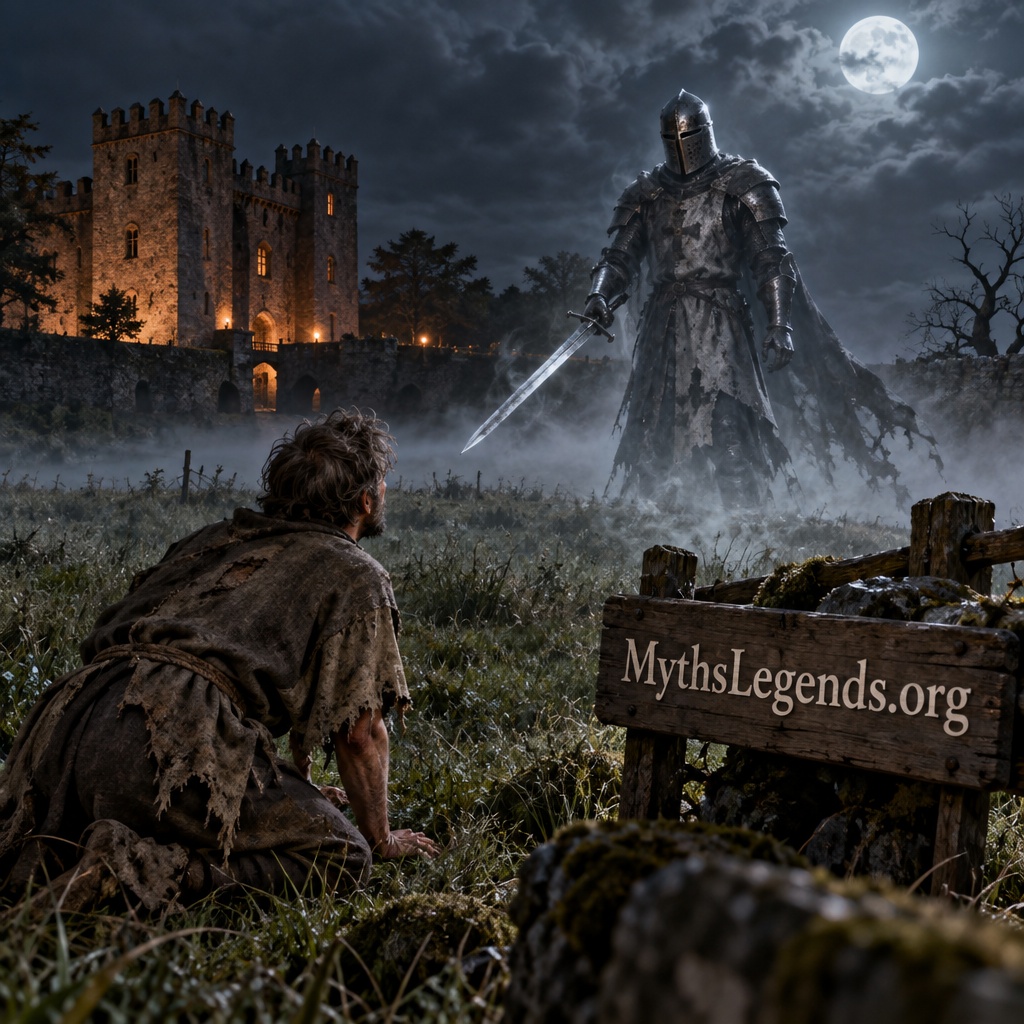
One of the best-known tales from the Bunratty area concerns a field near the castle. According to tradition, people avoided this place after dark. There, it was said, a ghostly Norman knight patrolled with his sword drawn. His appearance was regarded as both a warning and a threat. Nobody wanted to encounter him. Yet it was precisely a man who had nothing left to lose who is said to have attained wealth through his fearlessness. The story of the ‘enchanted field of the Norman knight’ brings together central motifs of Irish folklore: buried treasure, restless dead, dangerous places and the notion that courage or indifference towards the supernatural can alter a person’s fate. There is no historical evidence to substantiate this specific incident. It forms part of the oral tradition surrounding Bunratty Castle – a castle whose actual past is already dramatic enough.
A castle in a strategic location – Bunratty Castle is situated in County Clare in the west of Ireland, near the present-day village of Bunratty. The location has been of great strategic importance for centuries. The River Ratty flows into the Shannon, Ireland’s longest river, and the region was thus connected to trade and transport routes. Whoever controlled this location wielded influence over the routes between the interior, the coast and the settlements along the Shannon. The core of the present-day castle dates back to the 15th century. It is generally associated with the MacNamara family, a prominent Gaelic clan in the region. However, Bunratty had previously been the scene of Norman and English power struggles. Fortifications were first built on this site as early as the 13th century, and were subsequently destroyed, abandoned or rebuilt on several occasions. This turbulent history explains why so many tales of battles, losses and restless spirits are woven around Bunratty. Following their landing in Ireland in 1169, the Normans had increasingly pushed inland. They built castles, founded settlements and sought to consolidate their rule in various regions. Yet, particularly in areas such as Clare, their control remained contested. Local Gaelic rulers, shifting alliances and repeated attacks made life in the borderlands precarious. In such an environment, real-life experiences of violence and fear could easily be transformed later into tales of ghosts and cursed places.
The knight who roamed the field at night – ccording to legend, there was a field near Bunratty Castle that was shunned by the local inhabitants. It is said that no one dared set foot on the field, particularly at night. The reason was a knight in Norman armour who roamed there with his sword drawn. Whether he was a fallen soldier, a former lord of the castle or a nameless guardian is not clearly explained in the various accounts. It is precisely this ambiguity that is part of the legend’s character. The knight represents not so much a clearly identifiable historical figure as the memory of a turbulent past. His armour alludes to the Norman era, his sword to war and dominion. In the tale, the field does not appear as an ordinary piece of countryside, but as a liminal space: a realm between the world of the living and that of the dead. In many Irish legends, certain places are associated with supernatural dangers. Old paths, burial mounds, ruins, bogs and lonely fields are regarded as places where the ordinary order of things may be suspended. People are advised to approach such places with caution, especially at night. The field near Bunratty follows this pattern. It is not simply a piece of land, but a space marked by a history of horror.
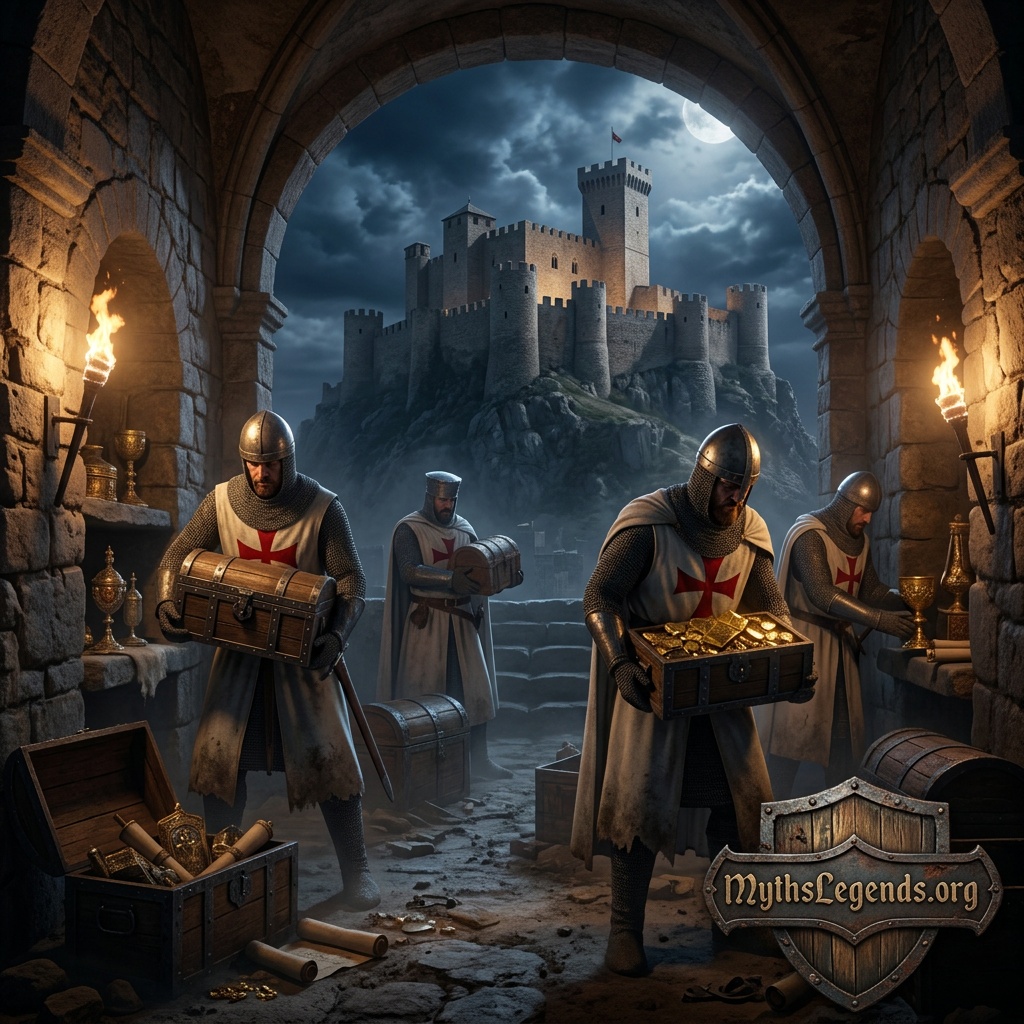
A Man Without Hope – At the heart of the tale, however, is not the knight, but a poor, desperate man. He is said to have been in great distress and to have entered the field because he wished to end his life. His poverty and sense of hopelessness were evidently so great that he no longer felt any fear of the ghostly knight. This motif is crucial. The other people avoid the field because they fear the ghost. The desperate man, on the other hand, no longer feels any fear – not out of any particular heroism, but because his personal distress overshadows every other fear. In some versions of the story, it is precisely this attitude that is portrayed as the turning point: the knight realises that the man has not come out of curiosity, greed or recklessness. He is not in search of treasure and does not wish to challenge the ghost. Instead of attacking him, the ghostly warrior rewards him. The knight leads the man to a chest full of gold buried in the ground. From that moment on, the man who was once destitute is said to have lived a rich and happy life. The tale thus ends on an unusually hopeful note. Many ghost stories set in European castles deal with revenge, guilt, murder or a curse without redemption. Although the legend of Bunratty contains elements of fear and the proximity of death, it ultimately leads to salvation and prosperity. The supernatural does not appear solely as a threat. The ghost becomes a sort of guardian who tests whether a person is worthy of receiving the hidden gold.
Gold in the ground: an ancient motif in folklore – The treasure in the field is no mere coincidence. Buried gold is one of the most common themes in European, and particularly Irish, legends. Treasures are often guarded by ghosts, animals, fairy creatures or the souls of the dead. They are usually not easily obtained through force or greed. Those who seek them often fail. On the other hand, those who happen to find themselves in an extraordinary situation or who are distinguished by a particular quality may be rewarded. In the Bunratty legend, it is neither cunning nor wealth that saves the man. It is his utter fearlessness in the face of an apparition that terrifies everyone else. However, the story also carries a darker interpretation: the man is not brave because he is an adventurer, but because he is desperate. His good fortune begins at a point where he himself can see no way out. The tale can therefore be read as a folk story of hope. It does not claim that poverty is always overcome by miraculous treasures. But it shows that even in a seemingly cursed place, a turn for the better is possible. The enchanted field thus becomes a symbol of how something unexpected can lie hidden in the darkest moments.
Bunratty: a place of living stories – Today, Bunratty Castle is known primarily as a tourist attraction. The castle is one of Ireland’s most visited historical sites. Together with the Bunratty Folk Park, it offers insights into different eras of Irish everyday life and architectural history. Visitors can explore the rooms of the Tower House, including the great hall, living quarters and defensive areas. The castle is also a place where history is re-enacted and recounted – for example, during the famous medieval-style banquets.Such places almost inevitably attract legends. Ancient walls, narrow spiral staircases and the memory of centuries of warfare create the perfect backdrop for tales of apparitions and lost souls. Bunratty Castle is by no means an isolated case: in Ireland, historic ruins and castles are frequently associated with tales of ghosts. These stories form part of the region’s cultural memory, even if they cannot be verified in the same way as historical documents or archaeological finds. This is precisely why it is important to distinguish between verifiable history and folklore. The existence of Bunratty Castle, its phases of construction, its changing rulers and its strategic importance are historically documented. The knight in the field and the chest full of gold, on the other hand, belong to the realm of folklore. Their significance lies not in their verifiability, but in what they reveal about people’s beliefs: about fear, poverty, the past and the longing for a happy turn of fate.
Between History and Mystery – The enchanted field of the Norman knight thus remains one of the most evocative tales associated with Bunratty. The legend lends an extra dimension to the landscape surrounding the castle. It serves as a reminder that historical sites are not merely made up of stone, dates and names; they also thrive on stories passed down through the generations. Whether a desperate man ever actually encountered a ghostly knight cannot be proven. What is certain, however, is that Bunratty Castle is rooted in a real, conflict-ridden past – a past in which Norman conquerors, Gaelic clans and successive rulers vied for influence. The legend distils this history into a nocturnal image: a knight with a gleaming sword guards a field, whilst a treasure lies waiting beneath the earth. Perhaps this is the source of the story’s enduring power. It transforms a field near an old castle into a place where the past has not entirely faded away.


Post Comment