The Dream of Gold: The Legend of the Golden Goat and the Golden Billy Goat of Monleón
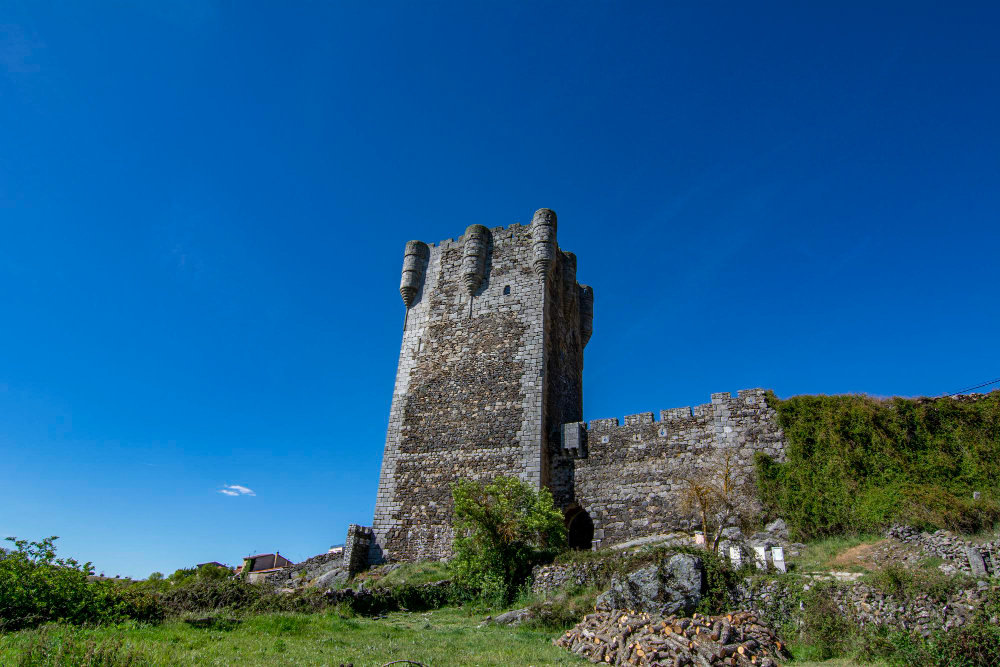
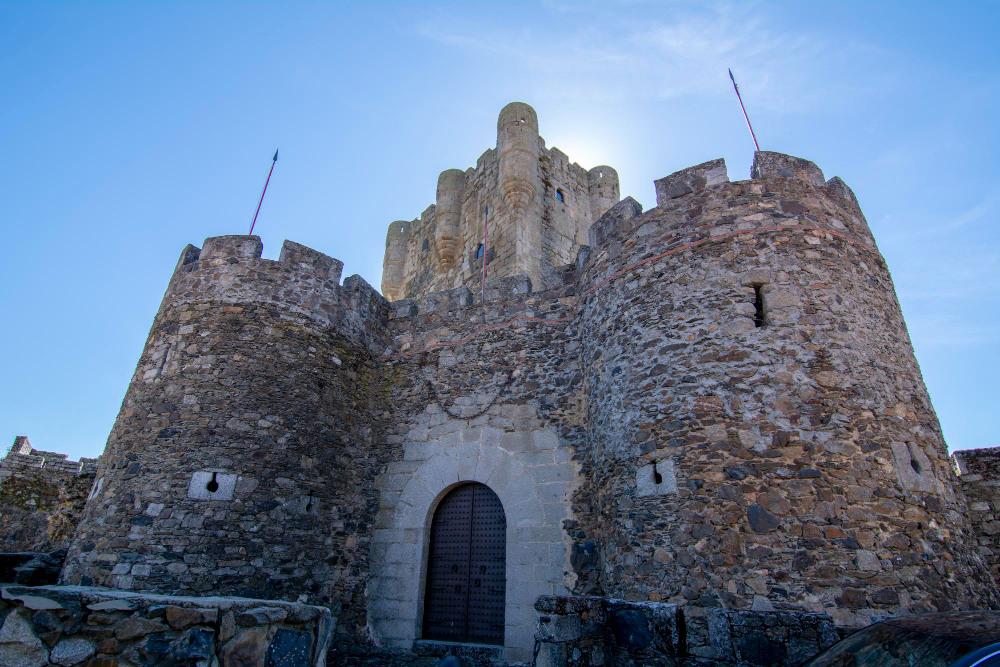
High above the small village of Monleón in the Spanish province of Salamanca stands a medieval castle complex, whose walls tell of an eventful past. Today, the Castillo de Monleón is regarded as one of the region’s most striking historical buildings. Yet it is not merely its military significance, its location and its architecture that have kept the place alive in people’s memories over the centuries. Just as vivid is a folk tale in which a simple weaver, recurring dreams and an extraordinary treasure play the leading roles: the legend of the golden goat and the golden billy-goat. The story forms part of the cultural heritage surrounding Monleón. It combines motifs found in many European folk tales – the poor, honest finder, a hidden treasure, the test of power and wealth, and the reward for honesty. At the same time, it is closely linked to the town’s history: According to tradition, the proceeds from the golden horns of a goat are said to have enabled the construction of the town walls and the castle. There is no historical evidence for this miraculous funding. As a legend, however, it impressively explains how a small settlement could become a fortified town – and why the walls of Monleón meant far more to the population than mere stones.
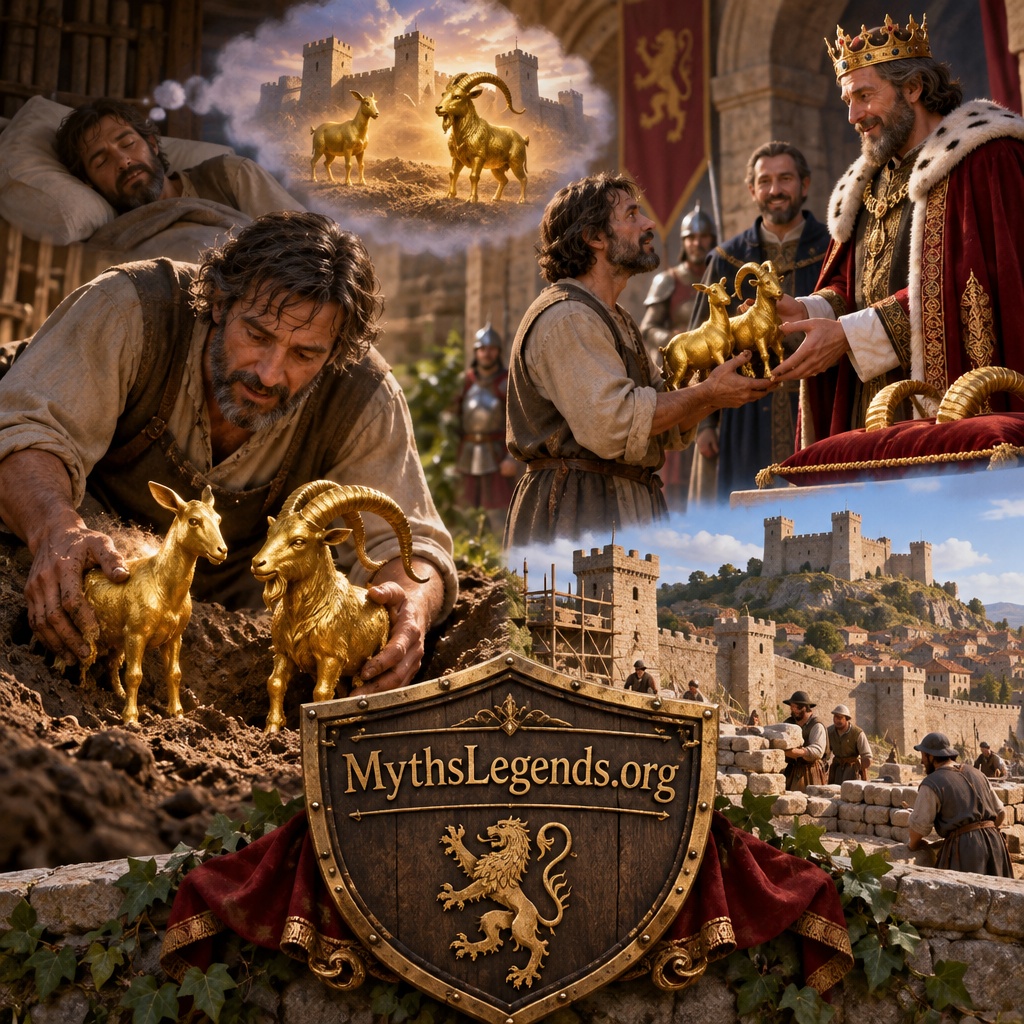
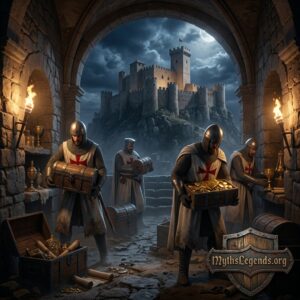
A treasure beneath the walls – At the heart of the legend is a weaver from the Monleón area. He was no knight, no nobleman and no wealthy landowner, but a man of humble origins. It is precisely this starting point that is crucial to the story. The treasure is not acquired through violence, inheritance or political influence, but through perseverance and a willingness to follow a mysterious sign. The weaver is said to have had the same dream repeatedly. In this dream, he was given a clue to a treasure hidden near the castle walls. There, according to tradition, were a golden goat and a golden billy-goat. The repetition of the dream lends the story its particular suspense: a single dream might be a coincidence, but a recurring image is understood in folk tales as a call to action. The weaver eventually begins to believe that the vision might be more than just a nocturnal figment of his imagination. He sets out on his search. The legend describes this part briefly, yet that is precisely where its charm lies. The location of the hiding place is not described in detail, and the question of exactly how the weaver found the spot also remains unanswered. Only one thing is certain: he digs and actually uncovers the precious figures. A goat and a billy goat, made entirely of gold – a find that could have instantly transformed the life of a simple craftsman. It is no coincidence that the golden animals take centre stage. Goats and billy goats were familiar farm animals in rural communities. They were part of everyday life, providing milk, meat and hides, and were regarded as adaptable. By transforming precisely these ordinary animals into gold, the legend links rural reality with fairy-tale wealth. What is valuable does not appear in the form of a crown or a sword, but in the guise of animals familiar to every inhabitant of the region.
The Test of Honesty – The decisive moment of the legend comes only after the discovery. The weaver does not keep the treasure for himself. Instead, he takes the golden goat and the golden billy goat to the king. This action makes him the moral hero of the tale. The figure of the king remains largely undefined in the widely circulated versions of the legend. His name is not mentioned, nor is a precise date given. This vagueness reflects the nature of the story: it is not intended to be a chronicle, but a moral tale. The king embodies the secular authority against which the weaver’s conduct must stand the test. The finder does not opt for secret wealth, but for honesty and loyalty. The king recognises this virtue. As a reward, he gives the weaver the goat’s golden horns. This leads to a surprising twist: the weaver gives up an immeasurably valuable find, yet is not left empty-handed. His honesty pays off – though in a way that benefits more than just himself. For, according to tradition, the horns were so valuable that the weaver was able to use the proceeds to finance the construction of the city walls and the castle of Monleón. A personal find thus becomes a benefit to the community. In the legend, one man’s dream leads to the protection of an entire city.
Why the horns, of all things? – The fact that the king gives the weaver the horns, of all things, is a striking detail. Horns carry strong symbolic significance in numerous traditions. They can represent strength, prosperity, fertility or abundance. In ancient imagery, for example, the cornucopia is a symbol of wealth. In Christian-influenced medieval symbolism, too, horns could express power and strength, though depending on the context they could also take on ambivalent meanings. In the legend of Monleón, the horns are above all a sign of extraordinary value. They form part of the treasure, which is large enough to grant the weaver a reward without the king having to part with all the golden figures. At the same time, they establish a direct link to the local architectural history: gold becomes stone; personal righteousness becomes walls and towers. It is precisely this transition that gives the story its enduring impact. The inhabitants could look upon the fortifications and imagine that their origin lay in a miraculous, yet morally deserved, treasure. The castle and the city walls thus became not only defensive structures, but also visible monuments to a local narrative.
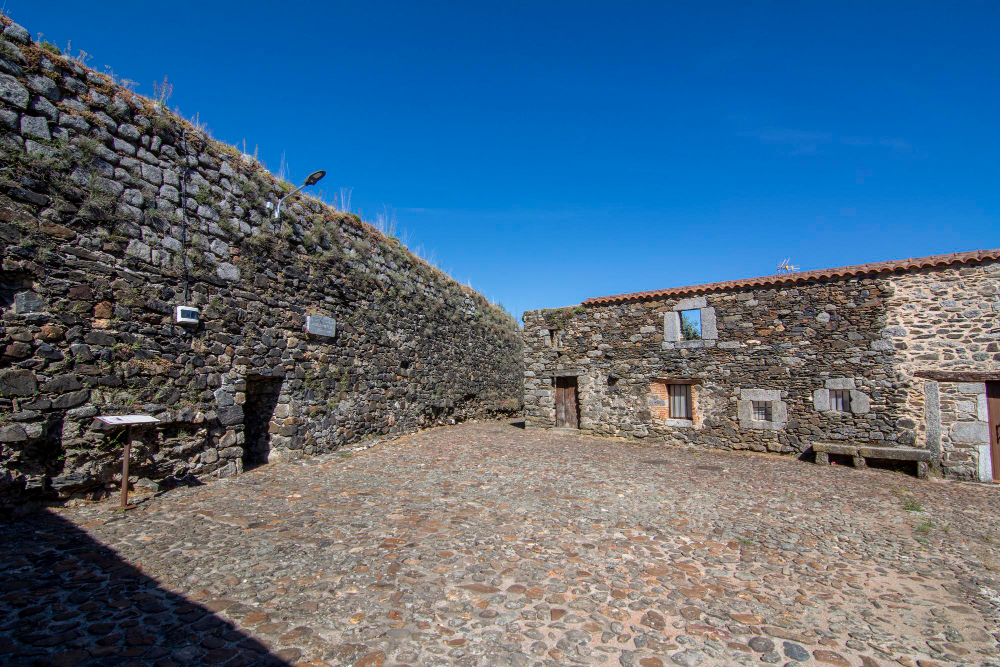
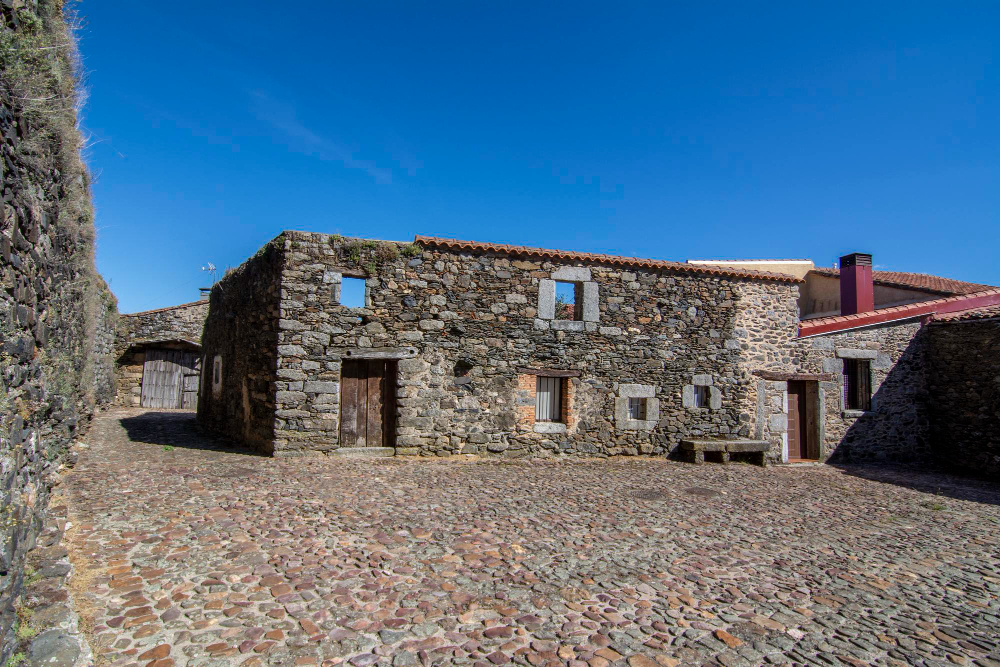
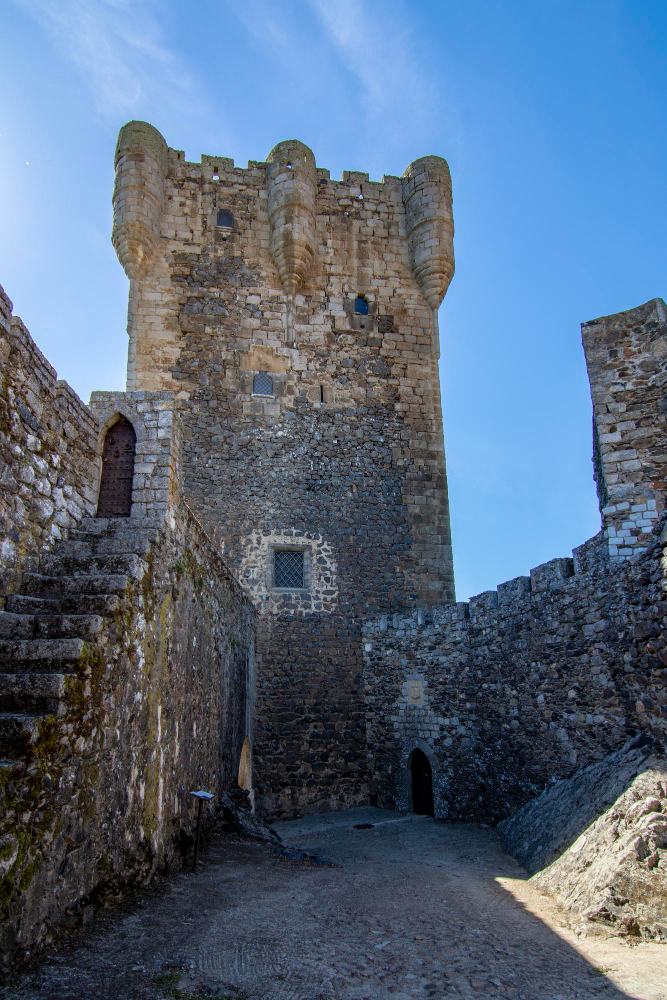
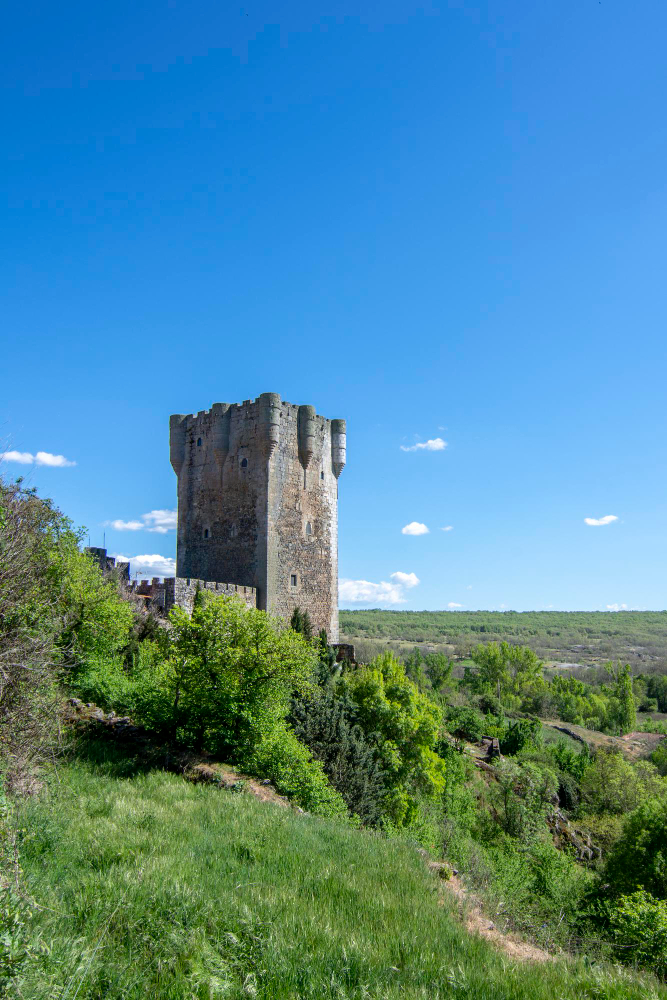
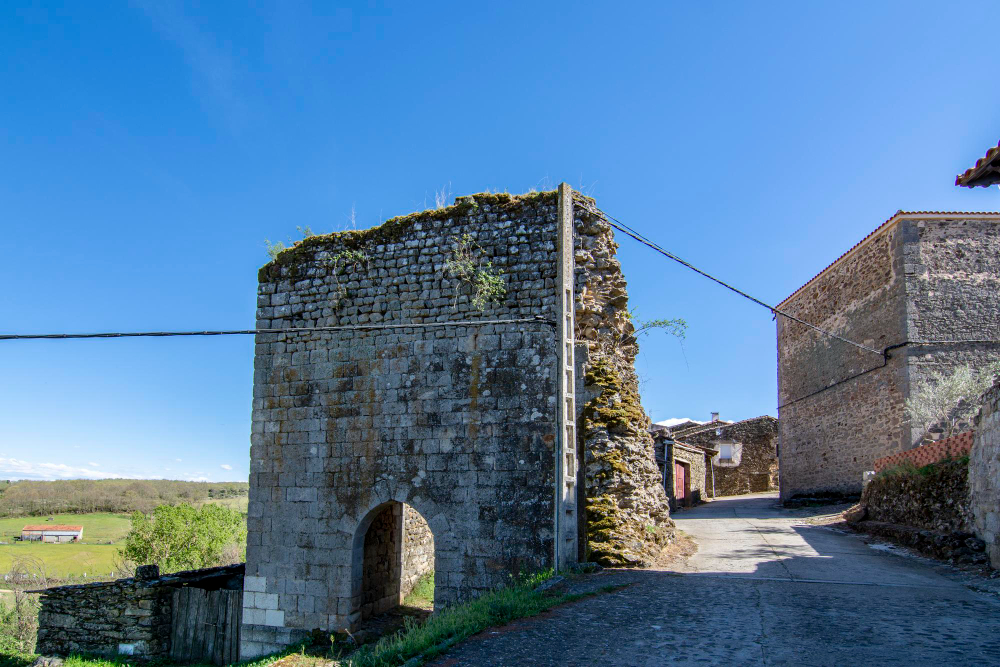
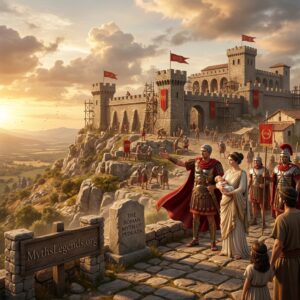
Monleón: A Border Town and Fortified Settlement – The historical development of Monleón provides a backdrop against which such a legend becomes understandable. The town lies south of the city of Salamanca, in a landscape that was characterised in the Middle Ages by shifting borders, resettlement and the securing of strategic routes. Monleón Castle was part of a fortified complex that also included sections of the town walls. Its position on high ground facilitated control of the surrounding area and offered military advantages. The remains visible today show that Monleón was once more heavily fortified than its current size would suggest. The complex comprises elements of medieval defensive architecture: walls, towers and a castle gate dominate the view. In regional history, such structures were not merely symbolic. They served to protect the population, supplies and transport routes at a time when political rule and territorial security were by no means a given. However, the origins and design of the fortifications cannot be attributed to the weaver’s donation of gold mentioned in the legend. Architectural history generally follows complex processes: commissions from the ruling powers, local labour, taxes, military requirements and alterations spanning several generations all shaped the form of a castle. The legend replaces this complicated reality with a memorable image. It distils many possible historical factors into a single, easily understandable cause: a righteous man found gold, and this brought security for all.
Legend, local memory and historical sources – For an objective assessment, it is important to distinguish between verifiable history and oral tradition. The golden goat and the golden billy-goat are not finds verified by archaeology. Nor is there any historical document among the known sources of the castle’s history that would unequivocally confirm the weaver, the king or the financing of the walls through golden horns. The tale must therefore be understood as a folk legend, not as a verifiable factual account. This does not diminish its cultural value. On the contrary: legends provide insight into how communities interpret their surroundings. They explain special places, link the landscape and buildings to human destinies, and convey values. In the case of Monleón, the central message is clear: honesty does not lead to loss, but to recognition and prosperity. At the same time, wealth is not portrayed as a means of private self-enrichment, but as the foundation for a communal endeavour. The story thus ties in with a widespread narrative pattern. Hidden treasures feature in many local traditions across the Iberian Peninsula. They are often associated with castles, ruins, caves or ancient walls. Such places stimulate the imagination because they visibly preserve traces of bygone eras, whilst much remains unknown about their inhabitants and the events that took place there. Where historical gaps exist, narratives emerge. Monleón provides a particularly suitable setting for this process. The castle complex is real, its walls are tangible, and the medieval character of the place is unmistakable. The legend lends this historic setting an additional dimension. Anyone walking through the narrow streets or gazing up at the castle encounters not only architecture, but also the image of a man who trusted in a dream and thereby – at least according to tradition – became a benefactor of his town.
A fairy tale with a sobering message – The legend of the golden goat and the golden billy-goat is fascinating not merely because of its treasure motif. Its essence lies in a decision. The weaver could have hidden the golden animals. Instead, he hands them over to the king. His reward is great, yet it remains tied to his integrity. Without honesty, there would be neither the golden horns nor the walls of Monleón in this story. This sets the legend apart from many treasure tales, in which gold primarily brings about greed, misfortune or betrayal. In Monleón, the treasure becomes the catalyst for a positive development. The gold brings not destruction, but protection; not loneliness, but the common good. Whether the characters ever actually existed is not the crucial point. What matters is what they mean to the place. Thus, Monleón Castle remains a historical monument with genuine medieval roots – and, at the same time, the setting for a tale that is still passed down to this day. Within its stone walls and towers, the belief lives on that an extraordinary treasure was once hidden beneath the ground. And that a weaver, who valued his duty more than his own gain, turned a dream into a legacy for an entire town.



Post Comment