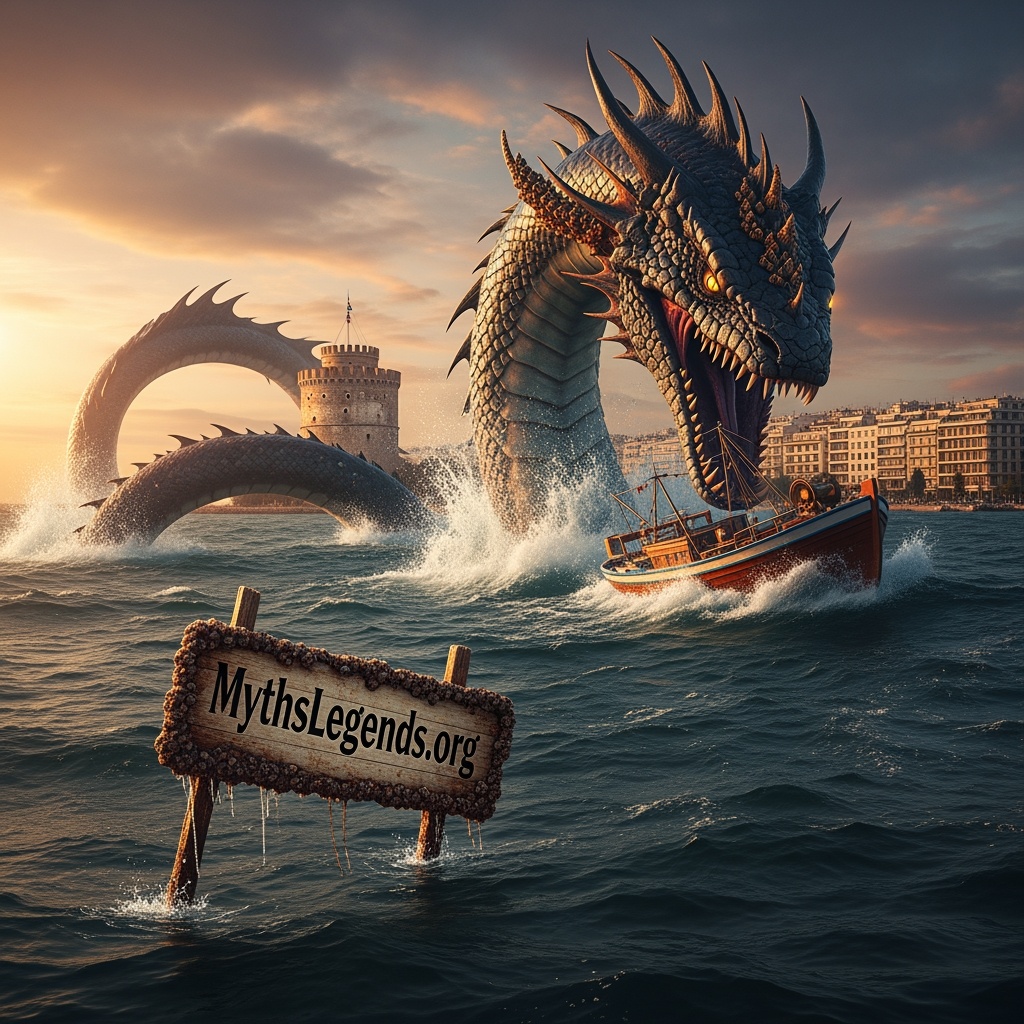
A Gigantic Monster: The Myth of the Thermaic Gulf Lives On
Thessaloniki, the vibrant metropolis of Northern Greece, is known for its lively cultural scene, its rich history, and, not least, its myths and legends. One of the most fascinating stories revolves around a gigantic sea monster that is said to lurk in the depths of the Thermaic Gulf and has been striking fear into the hearts of fishermen and sailors for centuries.
For generations, stories about this mysterious creature have been told in the heart of Thessaloniki. It is said that this monster was already known in the time of Alexander the Great and has been capturing people’s imaginations ever since. Numerous fishermen are said to have encountered the sea monster; some even claim that entire boats have been swallowed by the giant creature. The stories are based on eyewitness accounts and oral traditions passed down over centuries, and still send a shiver down the spines of locals today.
But what is really behind these stories? Scientists and historians are skeptical, yet the tales cannot be dismissed so easily. There are reports of unusual wave phenomena and unexplained currents in the Thermaic Gulf that may have formed the basis for these legends. Archaeologists have found the remains of ancient shipwrecks at the bottom of the gulf that could indicate violent destruction—though whether this was caused by natural forces or by something inexplicable remains unclear.
Modernization and technological advances in the fishing industry have led to a decline in sightings over the past few decades, yet reports still surface from time to time, reviving the legend. The most recent example dates back to 2018, when a fisherman captured a shaky video of a large, unidentified creature in the water. The footage caused quite a stir and sparked renewed interest in the ancient legend.
Some enthusiasts and researchers are relying on modern technology to solve the mystery. Using underwater drones and sophisticated sonar equipment, they hope to explore the depths of the Thermaic Gulf and find definitive proof of the legendary monster’s existence. So far, however, their efforts have been unsuccessful, which only fuels the speculation even further.
In addition to technological efforts, cultural and historical aspects are also being investigated. The region’s mythology is rich in stories about sea creatures and gods that inhabit the sea. Some experts suspect that the sea monster of the Thermaic Gulf could be an embodiment of these ancient belief systems, which live on in the collective memory of the people. The connection between humans and the sea is deeply rooted in Thessaloniki, and the monster could be a symbol of the ocean’s unpredictable power and the dangers of seafaring.
Yet such stories are not found only in Thessaloniki. Similar legends exist all over the world, whether it be the Loch Ness Monster in Scotland or Ogopogo in Canada’s Okanagan Lake. These global parallels suggest that this is a universal phenomenon deeply rooted in the human psyche.
The fascination with the unknown, the fear of the uncontrollable, and the longing for something greater and more mysterious captivate people everywhere in equal measure.
The tourism industry in Thessaloniki has long embraced the myth and offers special boat tours and museums that introduce visitors to the legend. Souvenirs, books, and films about the sea monster are extremely popular and help ensure that the story lives on and is preserved. For many, the legend is not just an exciting story, but a living piece of cultural heritage that helps shape the city’s identity.
Yet whether the story of the sea monster is ultimately truth or fiction remains unclear. The only certainty is that the myth lives on and continues to fascinate people. Perhaps the gigantic monster of the Thermaic Gulf will remain a mystery forever, a symbol of our planet’s undiscovered secrets and humanity’s endless curiosity.
In a world increasingly shaped by scientific knowledge and rationality, such legends offer a welcome escape into the realm of fantasy and mystery. They remind us that there is still much we do not know, and that the world is full of wonders and secrets just waiting to be discovered.




Post Comment