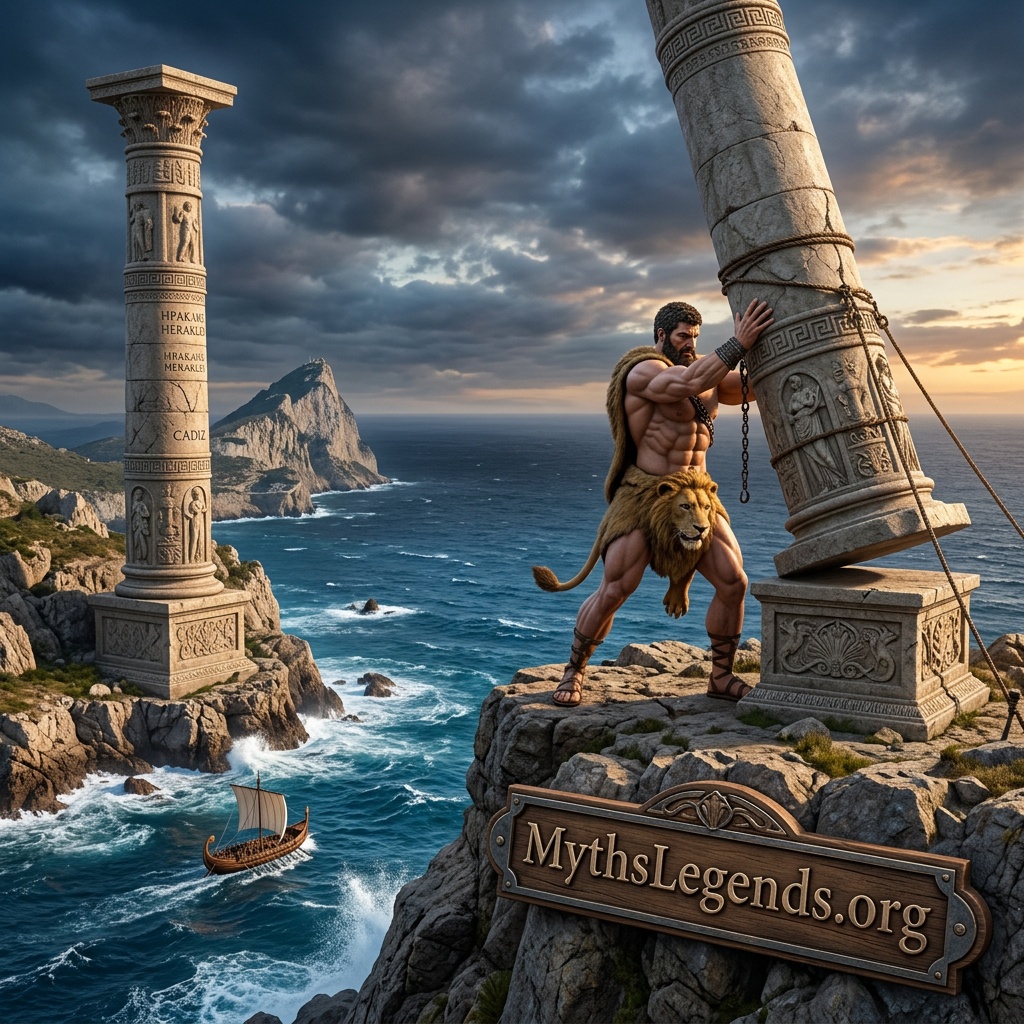
The Pillars of Hercules – A Journey into the World of Mythology and Legends of Cádiz
Cádiz, one of the oldest cities in Europe, is not only known for its rich history and breathtaking coastline. The city is also a treasure trove of myths and legends that have captured people’s imaginations for centuries. Among these legends, the story of the mythological hero Hercules holds particular significance, as it links Cádiz to one of the most fascinating chapters of antiquity. The ‘Pillars of Hercules’, said to have been erected by this legendary demigod, remain to this day a symbol of a spirit of adventure, courage and the boundary between the known and the unknown. But what lies behind this fascinating story, and what connection does Cádiz have to this myth?
Hercules and his twelve labours – Hercules, known from Greek and Roman mythology, was famous not only for his superhuman strength but also for the twelve labours imposed on him by King Eurystheus. These labours tested not only his physical abilities but also his ingenuity and courage. One of these labours took Hercules to the westernmost frontier of the then-known world – to the edge of the Strait of Gibraltar. According to legend, Hercules was tasked with retrieving the cattle of the three-headed giant Geryon from the distant region of Erytheia, an island often associated with modern-day Cádiz. In ancient mythology, Erytheia was considered part of the Hesperides, a legendary archipelago beyond the Pillars of Hercules. To reach this place, Hercules had to cross the treacherous strait connecting the Mediterranean Sea with the Atlantic Ocean. On his journey, he erected two imposing pillars, which later became known as the ‘Pillars of Hercules’.
The ‘Pillars of Hercules’ – myth or reality? – Over the centuries, the ‘Pillars of Hercules’ have not only captured people’s imagination but have also sparked numerous debates amongst historians and geographers. According to legend, the pillars marked the boundary of the known world at that time. Everything beyond this boundary was uncharted and mysterious territory. The concept of the Pillars of Hercules became a symbol of the discovery of the unknown and the overcoming of boundaries – both physical and metaphorical. References can be found in ancient literature suggesting that the pillars may have symbolised real geographical features. Many historians and archaeologists believe that the Pillars of Hercules can be identified with the two prominent landmasses at the Strait of Gibraltar: the Rock of Gibraltar on the European side and Jebel Musa on the African side. Visually, these two points form a kind of gateway leading out into the open sea – ideal for a mythological representation.
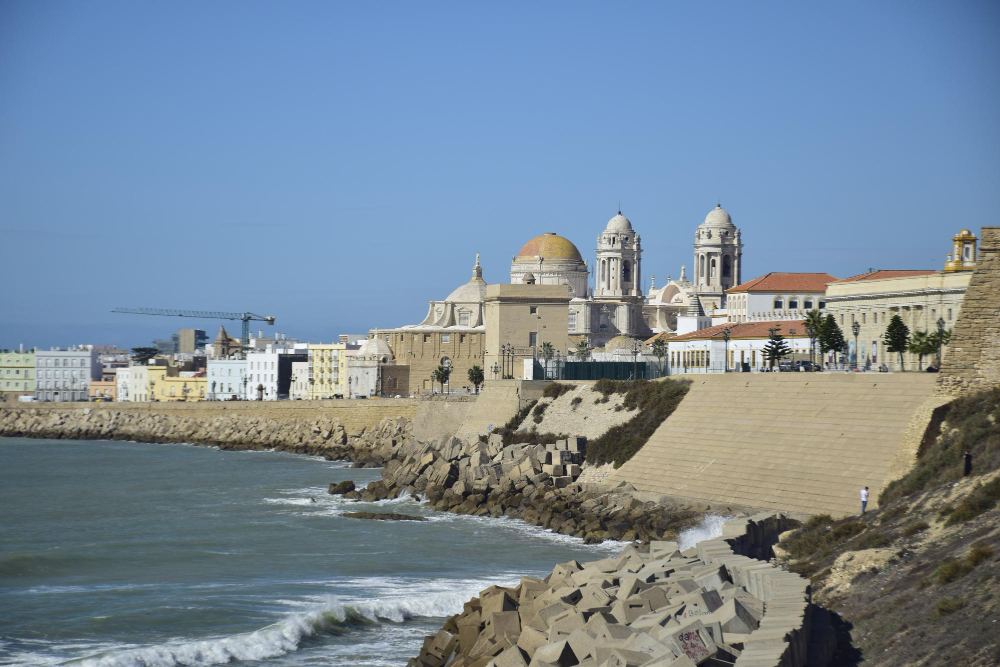
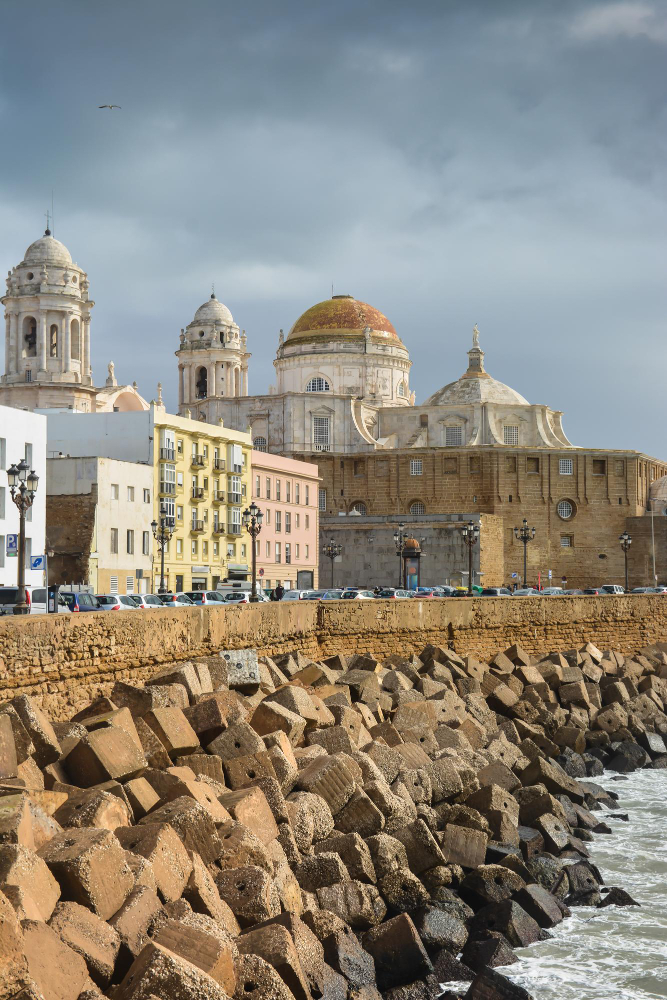
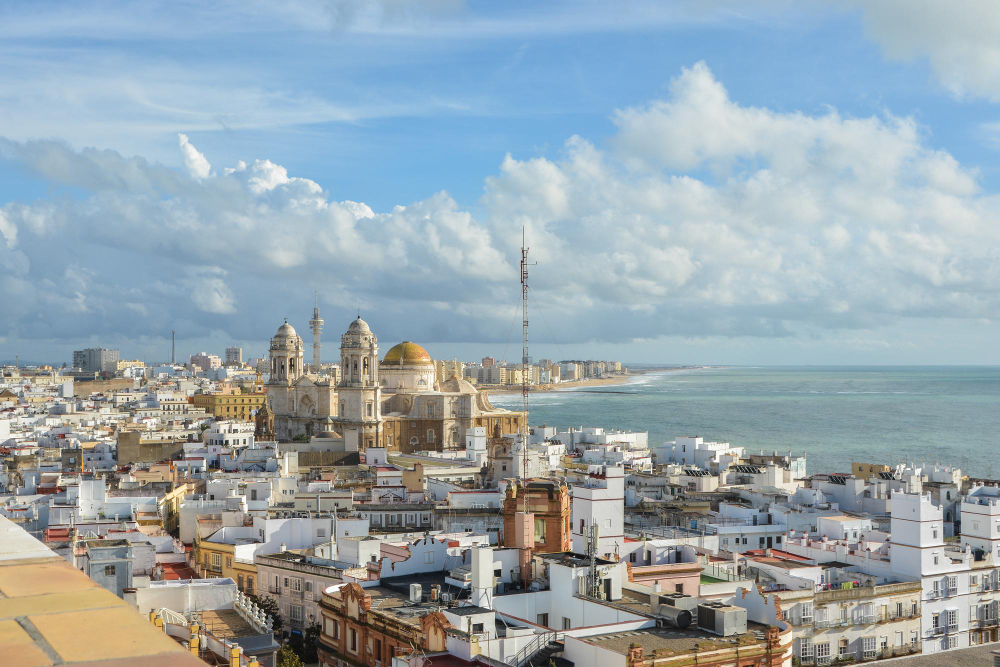
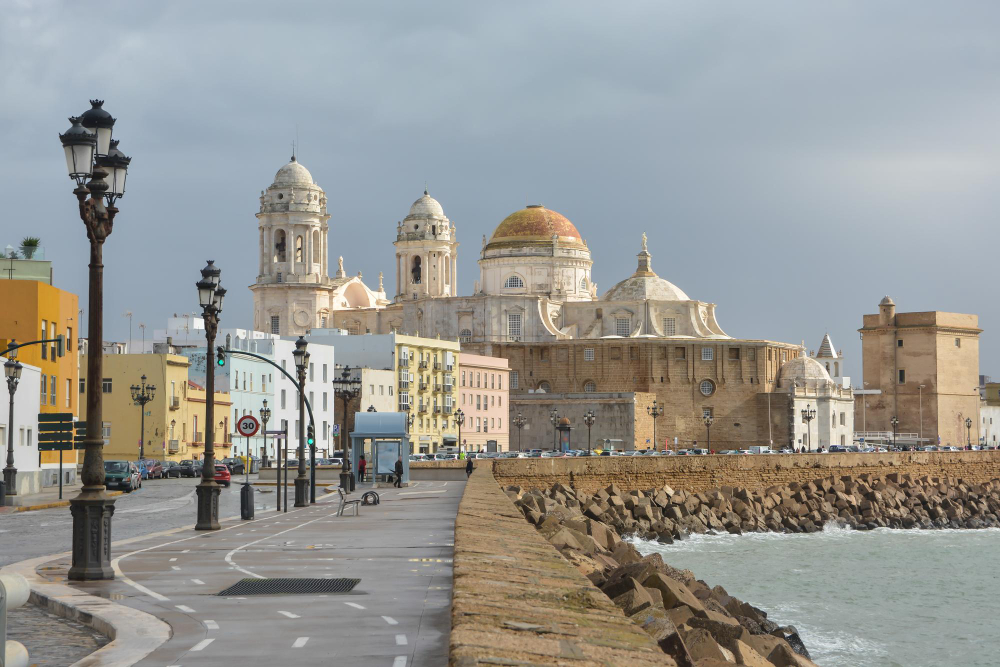
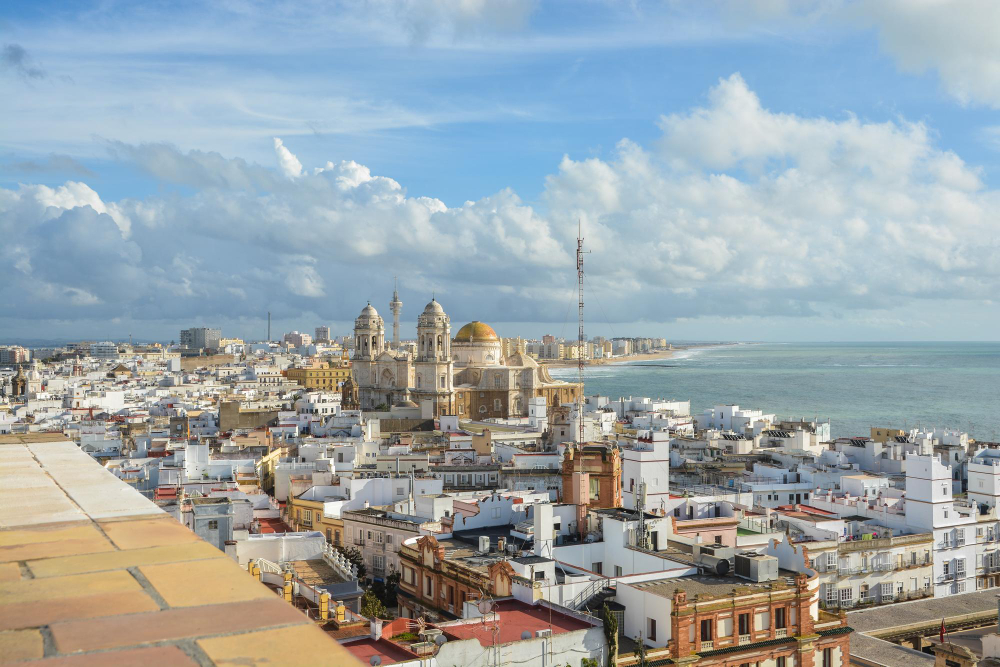
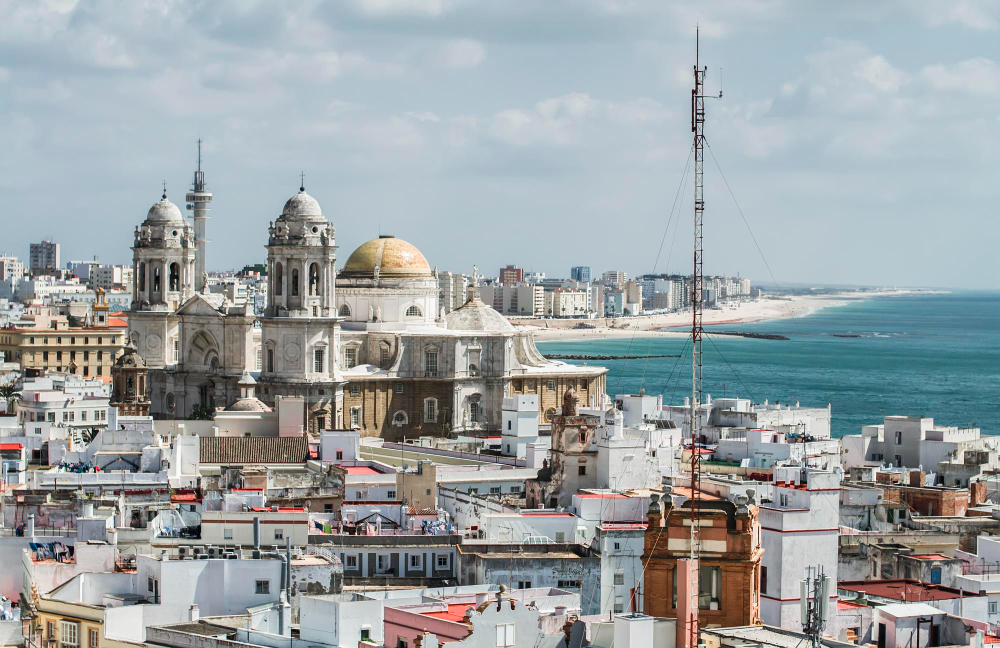
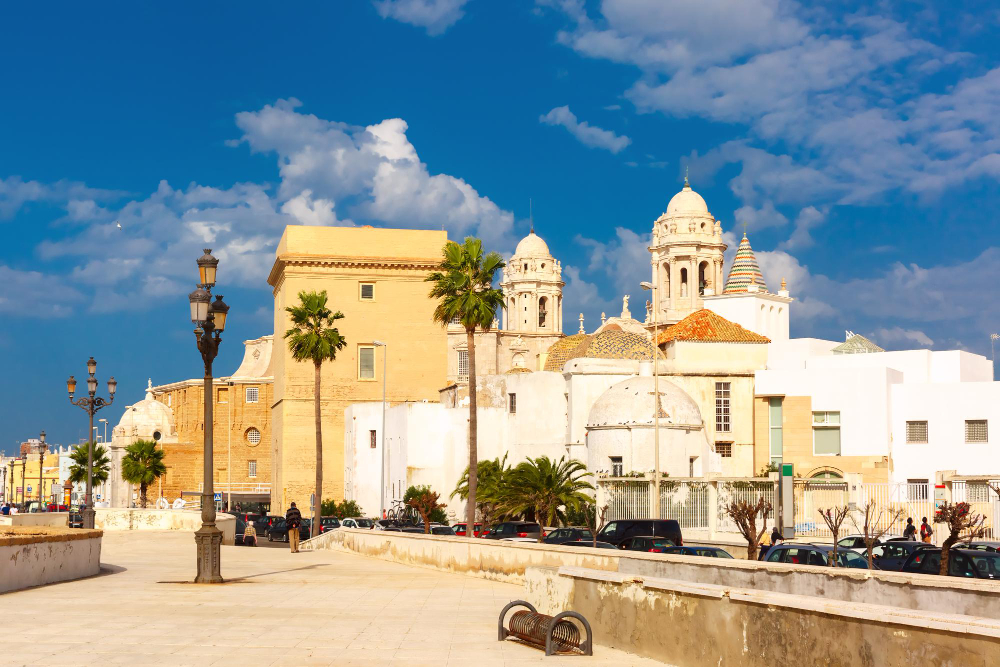
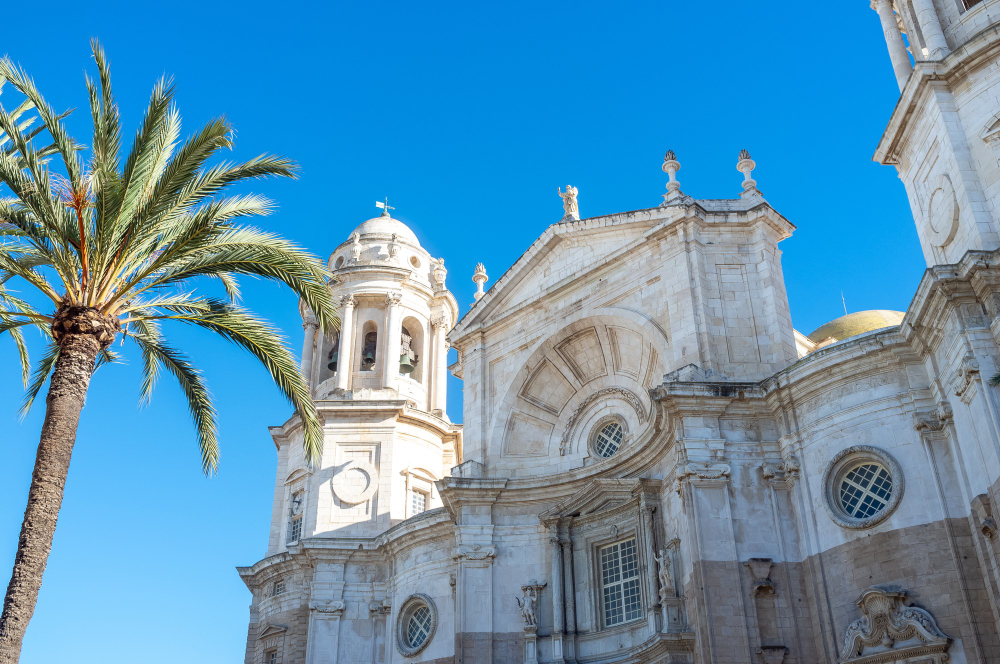
Cádiz and its connection to Hercules – The city of Cádiz itself is closely linked to the legend of Hercules. This connection stems not only from Greco-Roman myths, but also from archaeological finds and historical traditions. Some historians believe that Hercules may have been the mythical founder of Cádiz, as the city is geographically close to the island of Erytheia, which plays a key role in mythology. Furthermore, Cádiz looks back on a long history as a centre of trade and seafaring. The city was founded by the Phoenicians and later conquered by the Romans, who used it as a base for their voyages of discovery to the West. The connection to the legend of Hercules could therefore also have symbolic significance, as Cádiz was regarded as a gateway to the unknown world – much like the Pillars of Hercules. Another interesting detail is that several temples dedicated to the mythological hero have been found in the region around Cádiz. The most famous of these is the Temple of Melkart, a Phoenician deity often equated with Hercules. This temple, of which only ruins remain today, is said to have been an important place of worship and may have formed the basis for the later legend of the Pillars of Hercules.
The significance of the legend today – Although the story of Hercules and the Pillars is now regarded as a myth, it has lost none of its fascination. It continues to inspire writers, artists and historians who seek to unravel the origins of the legend. Of particular interest is the symbolic significance of the Pillars for humanity: they represent the urge to cross boundaries, to tread unknown paths and to explore the unknown. The Pillars of Hercules have even found their way into Spain’s modern coat of arms. There, they are depicted as vertical structures entwined by a ribbon bearing the inscription ‘Plus Ultra’ – a clear indication that Spain has crossed these symbolic boundaries and discovered new worlds. This message serves as a powerful reminder that courage and curiosity are fundamental traits of human nature.
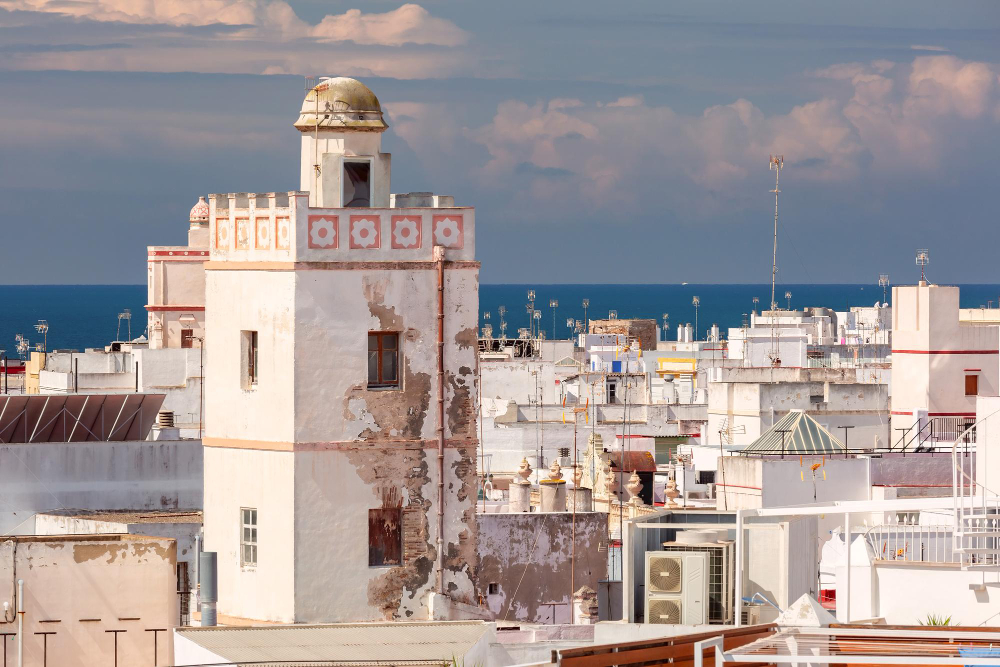
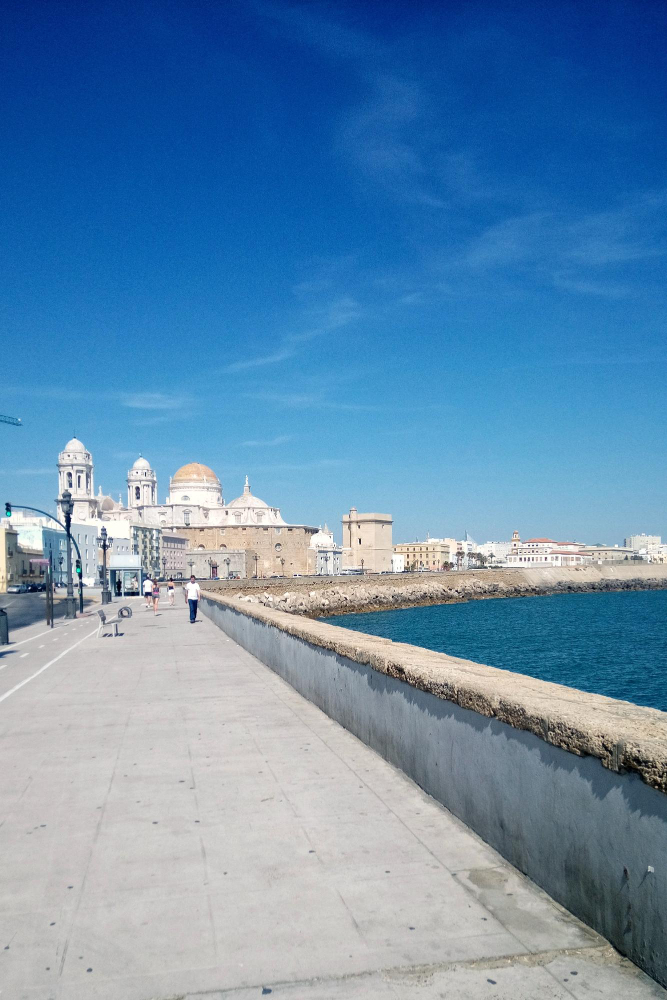
The Connection Between Myth and Reality – What makes a legend such as that of the Pillars of Hercules so timeless and significant? On the one hand, it is the combination of adventure, heroism and the idea that there is always something beyond what we already know. On the other hand, it is the fascinating possibility that the story is based on real events and geographical locations. Cádiz, with its rich history and historic sites, is the perfect place to explore this myth further. Tourists and history enthusiasts can embark on a journey through time here, whilst enjoying the cultural and scenic beauty of the region. From the ruins of ancient temples to the breathtaking views of the Strait of Gibraltar, Cádiz offers ample opportunity to bring the legend to life.
The legend of the Pillars of Hercules is far more than just an old fairy tale. It is a symbol of how stories and myths can shape the worldview of an entire society. Cádiz and the region around the Strait of Gibraltar are deeply rooted in this myth and offer a tangible link to a past in which fact and fiction intertwine. Even though it is likely that the Pillars were never actually erected by Hercules, their symbolic power remains undiminished. They remind us that there is always something waiting to be discovered – beyond the boundaries of the known. Thus, the legend invites us not only to reflect on the history of Cádiz, but also on how myths can inspire us to overcome our own limitations and take on new challenges. Whether as a mythological adventure, a historical mystery or a source of inspiration for modern explorers – the Pillars of Hercules remain a source of fascination that captivates both Cádiz and the whole world. Perhaps they also invite us to reflect on an ancient motto: ‘Plus Ultra’ – ever onwards.





Post Comment