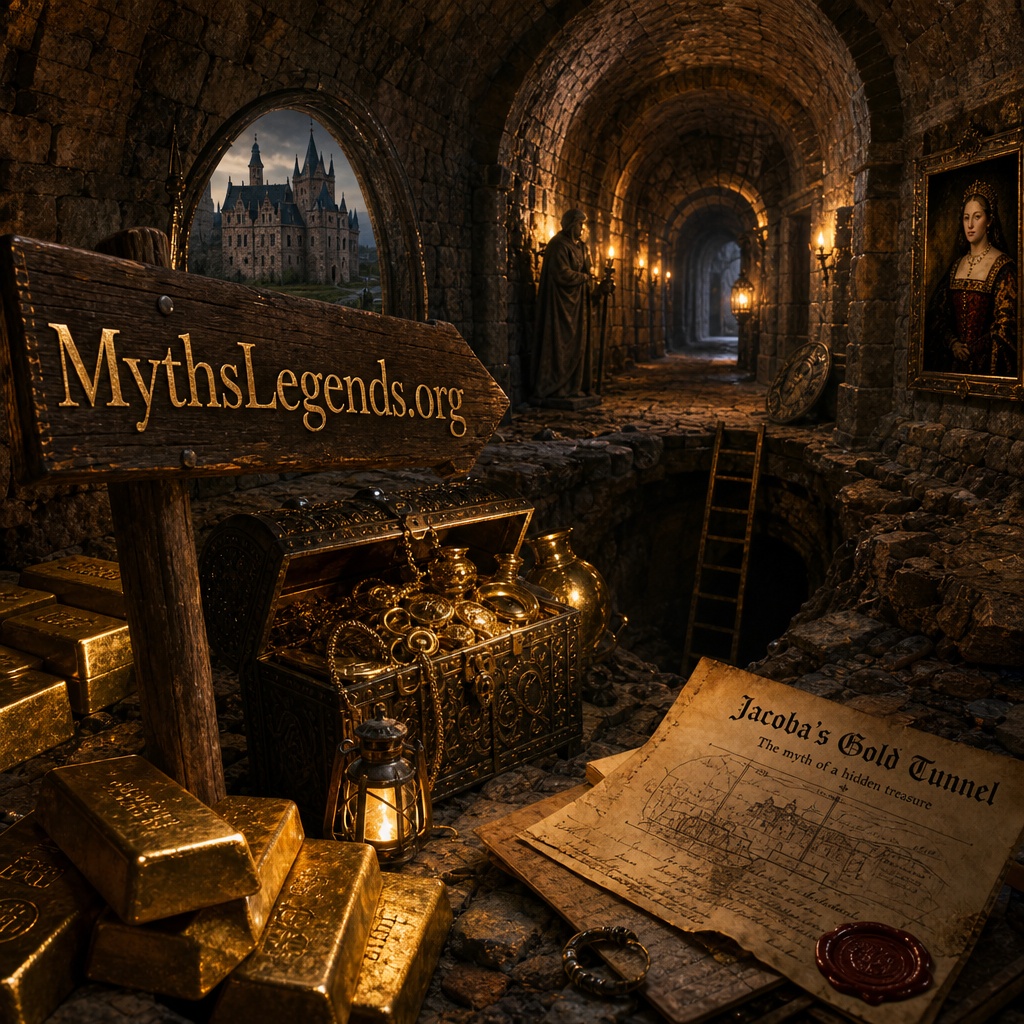
The Legend of Jacoba’s Gold Tunnel: Myth, History and the Search for Clues in the Legend-Shrouded Town of Gouda
The Dutch city of Gouda is known worldwide for its eponymous cheese, but beyond its culinary delights, a mysterious legend has been circulating for centuries about the historical figure of Countess Jacoba van Beieren – known in German as Jakobäa von Bayern – and a hidden gold tunnel said to lie deep beneath the walls of a former castle. This legend combines history, myth and the enduring human fascination with hidden treasures. In this article, we take you into the world of this fascinating legend, shed light on its historical background and follow the trail of the secret tunnels – without any fiction, but with well-researched sources and exciting details.
Who was Jacoba van Beieren? – Jacoba van Beieren (1401–1436) came from the prominent line of Bavarian dukes and was one of the most colourful figures of the late Middle Ages in the Netherlands. She was Duchess of Bavaria-Straubing and Countess of Holland, Zeeland and Hainaut. Her reign was marked by fierce political conflicts and disputes over inheritance, which made her an iconic figure in Dutch history. Jacoba led an eventful life full of intrigue, power struggles and personal tragedies. Following the death of her father, Gerhard VI, she fought bitterly for control of her estates against several rivals, including the Habsburgs and other noble families. She was regarded as a shrewd and resolute ruler, whose influence continued to be felt long after her lifetime. Historical records confirm that Jacoba held various residences, including castles in what is now the south-western region of the Netherlands.
The castle on the outskirts of Gouda – reality and legend – At the heart of the legend lies a castle that Jacoba of Bavaria is said to have owned on the outskirts of Gouda. Indeed, there is evidence to suggest that the countess used fortified structures in this region to secure her power. Gouda itself was an important trading town in the Middle Ages, strategically situated between larger principalities. However, there is no definitive proof of the actual existence of that castle on the very outskirts of the town. Archaeological finds and historical documents do, however, point to fortified residences from that period which may be regarded as the starting point for the legend. The legend tells that this castle was not only a seat of power, but also housed the entrance to an underground network of tunnels – a secret hiding place for gold and treasures.
The Gold Tunnel – The Myth of a Hidden Treasure – At the heart of the legend lies an extensive system of secret underground passages and tunnels which, according to tradition, stretched beneath the castle. A trusted servant of Countess Jacoba is said to have hidden precious gold bars and other valuables there – presumably to protect them from enemies or future claimants. The idea of such hidden escape routes and treasure caches is not unique to the medieval nobility, but is found in numerous European legends. Yet ‘Jacoba’s Gold Tunnel’ in particular has captured the imagination of many generations in Gouda. Time and again, chronicles and oral traditions tell of mysterious trapdoors, collapsed shafts and buried documents that might provide clues to the treasure. Although the existence of the tunnel has not been archaeologically confirmed, the legend is regarded as part of the town’s cultural heritage. Over the centuries, it has been revisited time and again – by local historians, treasure hunters and amateur archaeologists who have searched for the hidden passages beneath the town using metal detectors and excavations.
Ancient manuscripts and coded clues – A particular allure of the legend lies in the mysterious documents which researchers and residents repeatedly consult in their quest to find the supposed treasure. Several old manuscripts dating from the 15th century, preserved in archives across the region, contain cryptic notes, drawings of map fragments and descriptions that suggest the existence of secret passages. These include, for example, letters from the Countess’s contemporaries containing allusions to hidden passages, or diary entries by servants who speak literally of ‘gold that must be kept safe’. Whilst many such sources are difficult to understand and ambiguous, their very existence fuels the hope of genuine discoveries. A combination of historical research and modern science – such as geophysical surveys of the ground and the use of ground-penetrating radar – is now being employed to put the legend to the test. Some experts suspect that the so-called ‘Gold Tunnel’ was less a treasure hideaway than an escape route designed to protect the Countess during periods of political unrest.
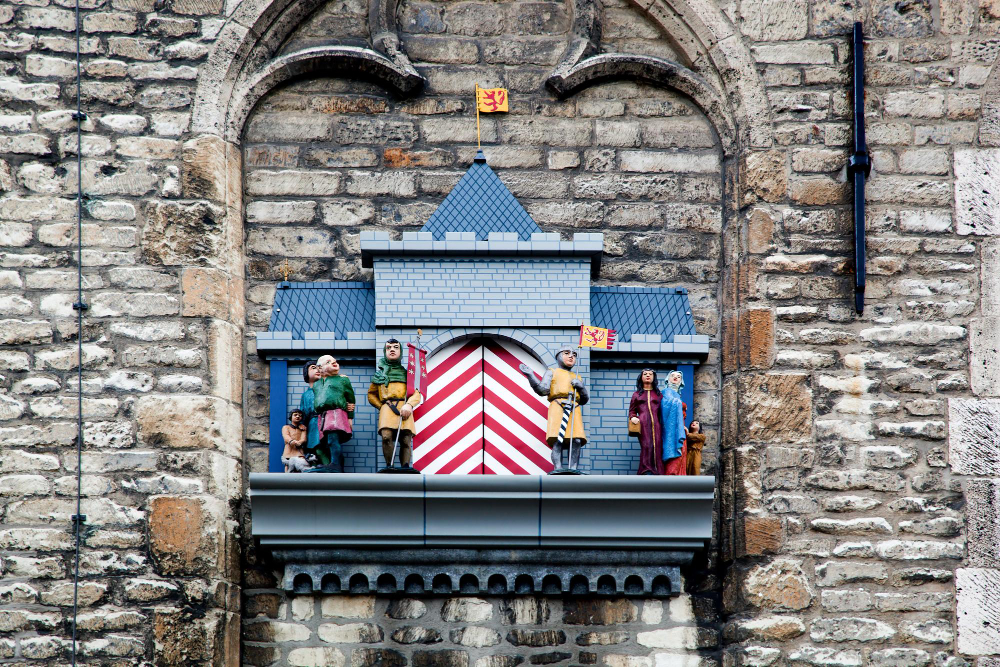
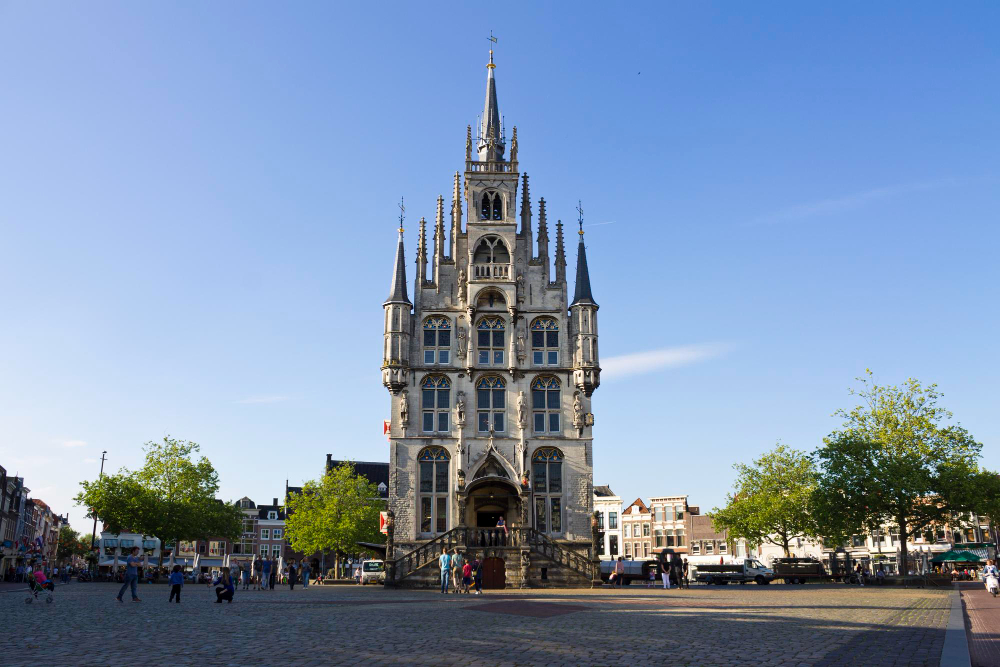
Scientific Perspectives and Local Significance – Historians and archaeologists are generally sceptical about the legend, but regard it as an important part of regional identity. The castle itself was destroyed in the centuries that followed, possibly to make way for new urban development. Nevertheless, numerous written records attest to the existence of a fortified house belonging to Jacoba van Beieren near Gouda. The myth of the gold tunnel is also featured in local history and tourism. Guided tours of the historic districts, exhibitions in museums such as the Museum Gouda, and events on medieval history repeatedly take up the theme to draw attention to the region’s fascinating past.
A myth that brings history to life – The legend of Jacoba’s Gold Tunnel is a defining element of the cultural memory of Gouda and its surroundings. Although the existence of a real underground treasure has not yet been confirmed, the legend embodies a fascination with history, adventure and the search for hidden truths. It reminds us how closely myth and history are often intertwined and how exciting it can be to follow the traces of times gone by – whether in ancient texts, beneath underground walls or in the collective narratives of a community. As long as the Gold Tunnel has not been discovered or definitively disproved, the legend remains a living part of Dutch history and a magnet for those who dream of the splendour of bygone eras. Who knows, perhaps secret entrances and valuable treasures still lie waiting in Gouda today, just waiting to be found by a brave explorer.








Post Comment