King Arthur: Secrets and Mysteries of the Legendary Ruler of Camelot
The legend of King Arthur and Camelot is one of the most fascinating stories in medieval literature and continues to capture the imagination of storytellers, researchers, and adventurers to this day. Despite centuries of research, much remains shrouded in mystery. What do we really know about this mythical ruler and the legendary kingdom of Camelot?
The Origins of the Legend – The myth of King Arthur goes back a long way in history. Its origins can be traced back to the end of the 5th century AD, a time when Britain was shaken by the aftermath of the Roman withdrawal and the invading Saxon tribes. During this period, the country was in desperate need of a hero who could bring stability and unity. Many scholars believe that the character of Arthur is based, at least in part, on a historical warrior who may have fought against the invading Anglo-Saxons. The earliest references to Arthur can be found in the writings of the 12th-century historian Geoffrey of Monmouth. In his work Historia Regum Britanniae, Arthur is portrayed as an idealized ruler with extraordinary abilities. Geoffrey mixed historical facts with fables, creating a figure who was revered for both his bravery and his wisdom.
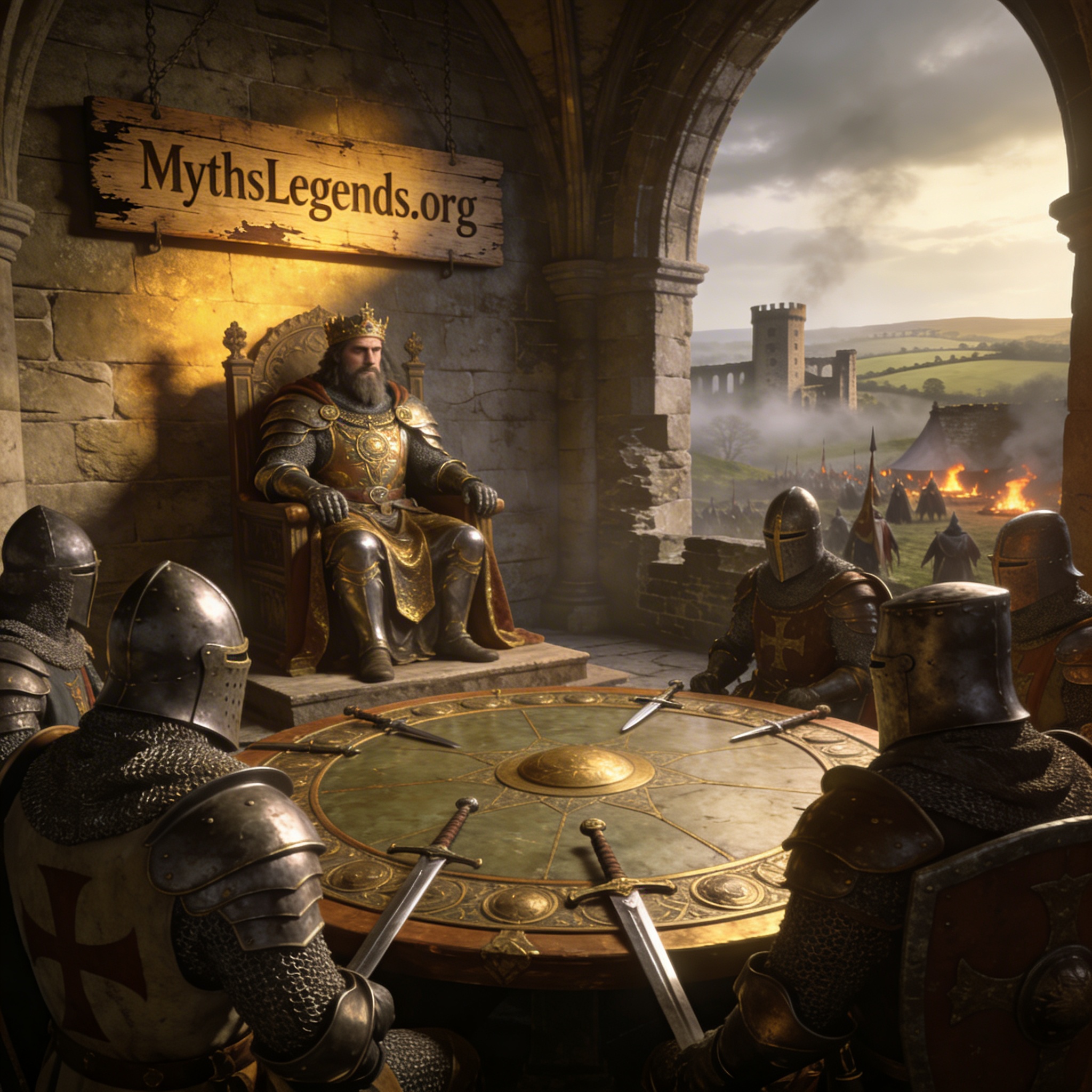
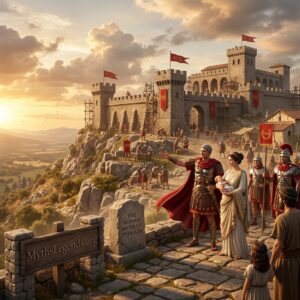
The magical Camelot – One of the central aspects of the Arthurian legend is his court at Camelot. But where is this mystical place located? Historians disagree and have found no concrete evidence of its existence. Some suspect that Camelot may have been inspired by historical places such as Winchester or Caerleon. Others believe it is a pure invention, created to provide a setting for the fantastic adventures of the Round Table. In the stories, Camelot is described as a place of unparalleled splendor and cultural flourishing. The famous Round Table, at which Arthur’s knights sit as equals, symbolizes ideal conditions for justice and camaraderie. This idea inspired the Romantics of the Middle Ages and often served as a metaphor for political goals such as harmony and unity.
Merlin the Wizard – No myth about King Arthur would be complete without mentioning his legendary advisor, Merlin. Merlin is a mysterious wizard and symbolic figure, often depicted as a hybrid between a human and a supernatural being. His role in the legend varies from mentor to mysterious alchemist, playing a crucial role in the king’s birth and upbringing. More recent interpretations of the character Merlin suggest that he may be based on models from Celtic mythology. Figures such as the Welsh Myrddin may have helped shape the prototype of the wise but also dangerously curious wizard. In modern pop culture, Merlin remains a popular figure who is constantly being reinterpreted, whether as a wise man or a cunning manipulator.
The Quest for the Holy Grail – Another fascinating aspect of the Arthurian myth is the quest for the Holy Grail. This quest symbolizes the ultimate spiritual and moral test that the knights must undergo. The Grail, a vessel of divine power, symbolizes the pursuit of perfection and salvation. The quest for the Grail has not only inspired philosophers and theologians, but also prompted them to discuss the meaning of faith and sacrifice. There are also theories that postulate that the Grail could represent an actual religious relic that was incorporated into the legend to reinforce Christian values.
Arthur’s tragic end – Like any great legend, the story of King Arthur does not end with a triumphant victory. The betrayal by his nephew Mordred and the ensuing battle lead to the king’s defeat and death. This tragic turn of events has always served as a reminder of the fragility of human greatness. The place where Arthur found his final resting place remains a mystery. Avalon, the mysterious island to which his body is said to have been taken after the Battle of Camlann, is still described in poems and stories as a utopian place beyond our world. This idea that Arthur is waiting to return to save Britain in its darkest hour keeps the legend alive and relevant.
The enduring fascination of the Arthurian legend – What makes the legend of King Arthur so fascinating even after centuries? It is the universal appeal of stories about heroism, honor, love, and loss. These themes appeal to human nature across generations and make Arthur a timeless icon. In addition, the legend offers a wealth of characters and motifs that continue to influence modern pop culture and literature. From movies to television series, from books to video games, each new attempt to tell Arthur’s story helps to further expand the myth and bring it to new audiences and readers.
Even though King Arthur may never have existed, he is one of those historical figures who have been immortalized by the flourishing imagination and storytelling. His legend, full of Gothic romances, epic battles, and supernatural mysteries, serves as a canvas for our own dreams and values. As long as there are questions about leadership, justice, and the pursuit of a better life, the figure of Arthur will retain his place in the human imagination and continue to inspire and challenge. The story of Camelot and its noble knights will live on as long as people want to tell stories.

Post Comment