The origin of the doughnut: a culinary legend in Vienna
In the cobbled streets of 17th-century Vienna, amid bustling markets and fragrant bakeries, a culinary myth was born that continues to delight our taste buds to this day. The story of the Krapfen, known in other parts of the world as a Berliner or jelly donut, is one of passion, ingenuity, and a touch of domestic drama.
Our legend revolves around a spirited baker named Cäcilia (or perhaps Cäcilie; historical records differ on her exact name), who was known not only for her baking skills but also for her fiery temper. The tensions in Cäcilia’s life had reportedly been building due to the daily pressure of running a busy bakery in Vienna’s competitive gastronomic scene.
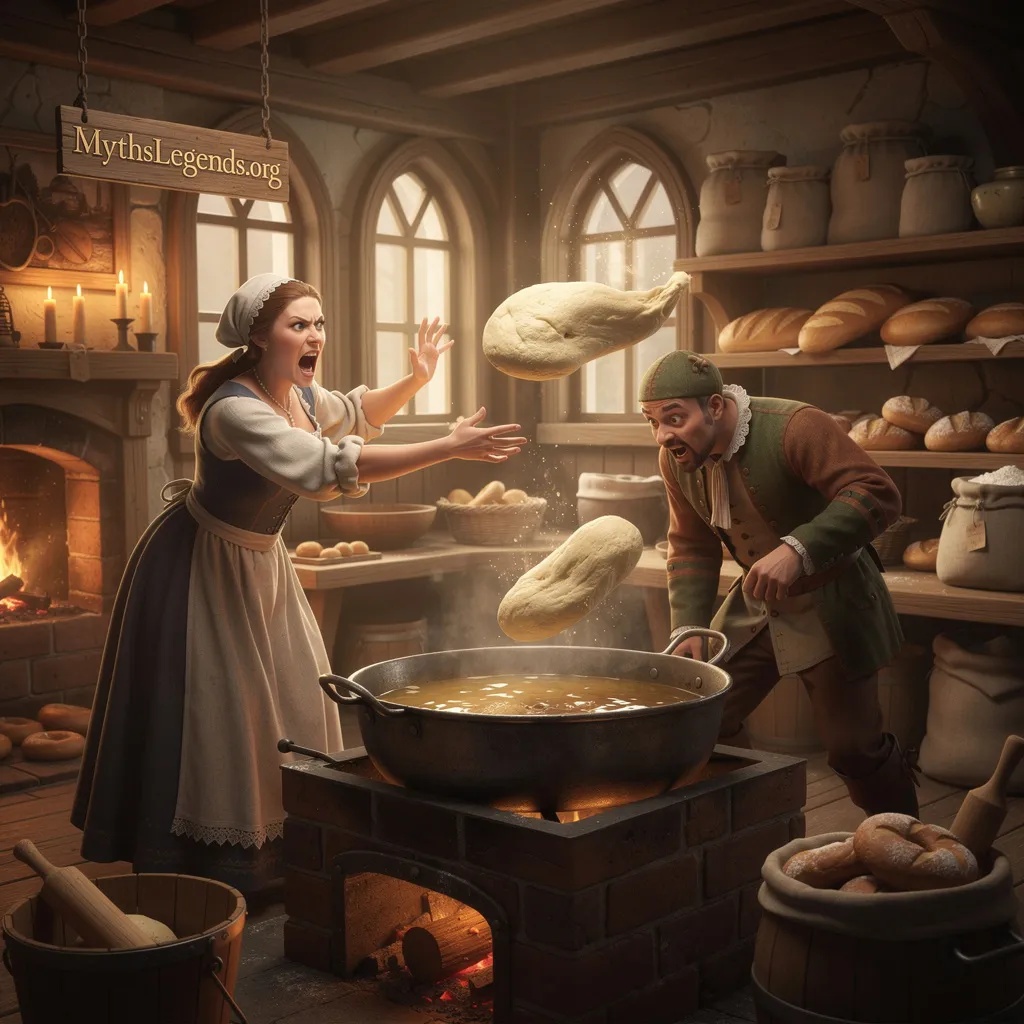
On one particularly fateful evening, a heated argument broke out between Cäcilia and her husband. The details of their dispute are not known, but the decisive moment came when Cäcilia, in a fit of rage, grabbed a lump of dough and threw it at her husband. Her husband was quick on his feet and dodged the unexpected projectile. Instead of splattering uselessly against a wall, the dough landed with a satisfying sizzle in a cauldron of boiling lard—a staple in every Viennese bakery at the time.
As the dough simmered and golden bubbles formed on its surface, a new creation emerged from the oil. Cäcilia, who was probably still boiling with rage, noticed the curious result of her outburst and fished out the pastry with the skilled hand of an experienced baker. She sprinkled it with sugar, cautiously tried a bite, and suddenly it dawned on her. This accidental creation was no mishap—it was a delicacy in the making.
The crispy shell enveloped a light, soft interior and offered a contrast of textures that could only be described as divine. Soon, Cecilia began to perfect her process, adding sweet fillings such as fruit jams or vanilla cream. The doughnut quickly became a popular treat, spreading throughout Vienna and beyond, celebrated at carnivals and festivals.
While this story could be dismissed as mere folklore, the cultural and historical significance of the doughnut in the European pastry tradition cannot be denied. Similar fried dough specialties exist in various cultures around the world, each with its own twist, suggesting that the basic idea of the doughnut has universal appeal.
Interestingly, doughnut-like baked goods existed even before Cecilia’s legendary toss. Cooks in ancient Rome prepared a primitive version called “globuli,” small pieces of dough that were fried and dipped in honey. In the Middle Ages, the technique of frying dough was widespread throughout Europe, as can be seen in Spanish churros and Italian zeppole, which bear a striking resemblance to the doughnut.
Although the exact origin of the doughnut will probably remain a mystery forever, it is clear that it is a lasting legacy and brings great joy to all who indulge in its golden, sugary deliciousness. The story of Cecilia is more than just a curious anecdote; it is proof of the random nature of culinary innovations.
To this day, doughnuts in their many variations remain very popular in cafés and bakeries, especially during Fasching, the Austrian and German pre-Lent festival similar to Carnival. During this time, doughnuts are consumed in large quantities, filled with everything from traditional apricot jam to more modern fillings such as chocolate cream and vanilla pudding. Modern variations and culinary creativity have brought this humble pastry to the world stage.
In Poland, paczki are eaten on Faschingsdonnerstag, the last Thursday before Lent. In North America, the jelly donut has become a staple of café and bakery displays. Each variation brings a regional touch that enriches the multifaceted history of this delicious treat.
The cultural significance of the doughnut goes beyond mere taste. It represents human ingenuity, the ability to turn a mistake into a moment of triumph. Whether through the story of Cecilia or the countless adaptations that followed, the doughnut reminds us of the power of creativity and the sweet potential that lies in every mishap.
So the next time you enjoy a delicious doughnut, think of the spirited baker from Vienna. While we may never know the whole truth behind the legend, the magic of the myth lives on in every sugar-sweet bite. Perhaps it will inspire you to embrace your own moments of accidental brilliance and turn everyday stumbles into something wonderful and unexpected.










Post Comment