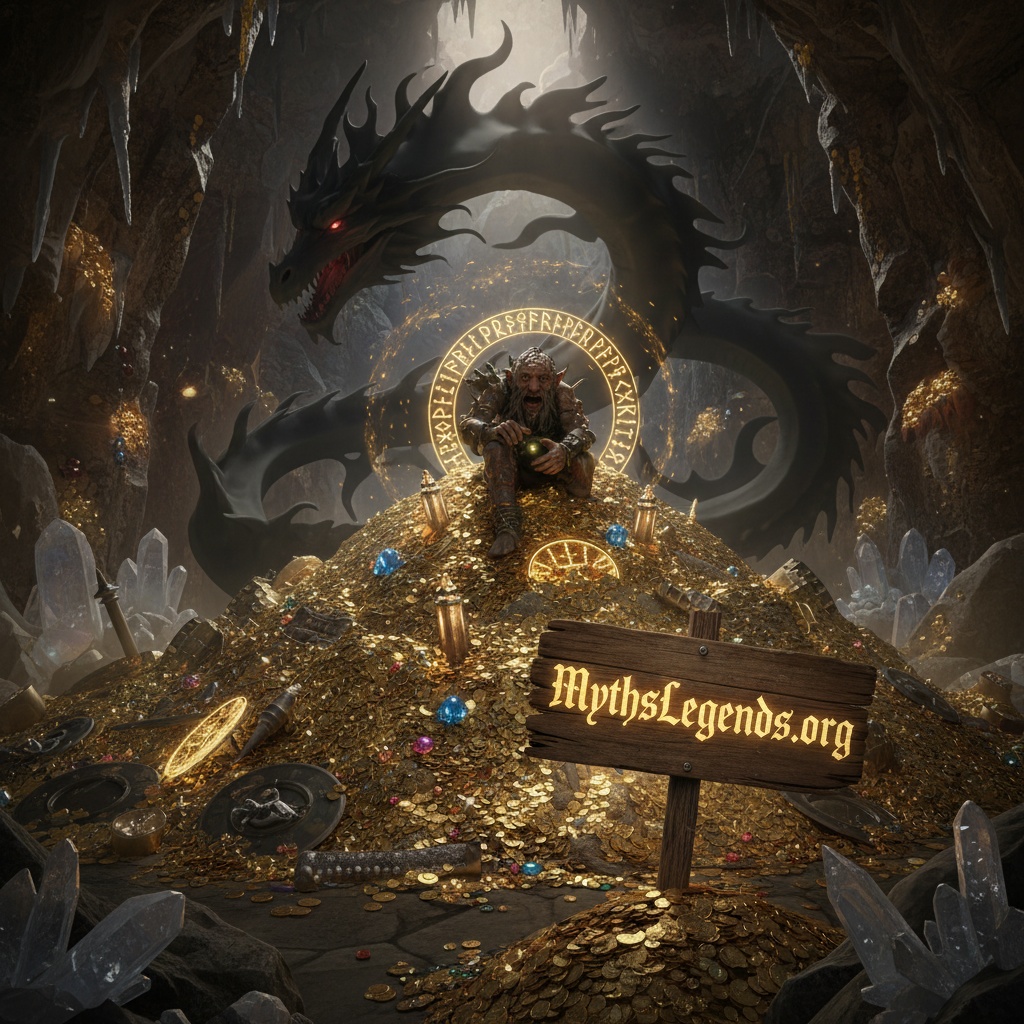
The mystery of the Nibelung treasure: a legend full of secrets
For centuries, the legendary Nibelung treasure has fascinated and baffled historians, adventurers, and treasure hunters alike. This mysterious treasure, which has its roots in medieval mythology, is said to be of immeasurable value and is often compared to other legendary treasures such as King Solomon’s mines or El Dorado. However, what makes the Nibelung treasure so fascinating is not only its alleged wealth, but also the aura of mystery and drama associated with its legend.
The story of the Nibelung treasure comes primarily from the “Nibelungenlied,” a medieval epic that tells the saga of betrayal, revenge, and supernatural possessions. According to this epic, the treasure originally belonged to the Nibelungs, a mythical dwarf people who had amassed it through their skills in mining and alchemy. The treasure was cursed to bring ruin to its owner—a detail that only adds to its fascination.
At the center of this narrative is Siegfried, a heroic figure whose exploits included slaying a dragon and bathing in its blood, rendering him invulnerable except for a spot on his back. Siegfried eventually gains control of the treasure by defeating the dwarf Alberich, the guardian of the treasure. However, Siegfried’s betrayal and murder lead to the treasure falling into the hands of the Burgundian kings, who themselves ultimately meet a tragic fate.
Beyond the “Nibelungenlied,” historical records vaguely hint at the existence of a considerable treasure. The Roman historian Tacitus wrote about Germanic tribes known for their wealth, possibly alluding to such a treasure. In addition, some researchers suspect that parts of the treasure may have been lost during the migrations and invasions of the early Middle Ages. Archaeological excavations in the Rhine Valley have unearthed artifacts that point to the wealth and trade networks of the time, but no clear evidence of the Nibelung treasure has been found.
Adding to the mystique are numerous reports from past centuries claiming to have found or seen the treasure. Various explorations around the Rhine, particularly near the Loreley rock—a navigational hazard rooted in legends of sirens luring sailors to their deaths—have yet to yield any tangible results. Nevertheless, this has not deterred the brave from venturing on dangerous expeditions, driven by dreams of untold riches or perhaps simply by the thrill of the search.
Modern interpretations embed the story in a broader folkloric context, linking the Nibelung treasure to themes such as greed and power, universal motifs that cut across cultures and eras. Some theorists offer psychological readings, suggesting that the treasure symbolizes the destructive nature of greed and humanity’s propensity for conflict over material gain. A deeper examination of cultural studies reveals parallels between this myth and other legends around the world, finding resonance with narratives such as the Norse sagas or the Indian epics, which may explain its enduring popularity and adaptability.
Beyond literary and academic circles, the treasure has also inspired countless artistic works, from Richard Wagner’s monumental opera cycle “Der Ring des Nibelungen” to modern film adaptations. Each interpretation adds new layers to the original myth and reflects the prevailing attitudes and concerns of its time. Wagner, for example, made the treasure a central element of his exploration of power and fate, influencing everything from German nationalism to the development of modern storytelling. While the actual existence of the Nibelung treasure remains a fascinating question mark, its influence on culture and society is undeniable.
It is a testament to humanity’s eternal fascination with mystery, wealth, and the supernatural. For many, the enduring appeal of the Nibelung treasure lies not in the excavation of gold or jewels, but in the discovery of something far more valuable—an understanding of our shared past, shaped by stories and myths that transcend time and place.
In summary, the question of whether the Nibelung treasure exists outside the annals of mythology is perhaps less relevant than the incredible stories it has inspired. In a sense, the true treasure lies in its ability to spark the imagination and inspire each new generation to embark on a quest for meaning and wonder. As history evolves, the Nibelung treasure remains a shimmering mirage at the intersection of myth and reality, a symbol of what humanity longs for but may never fully comprehend.











Post Comment