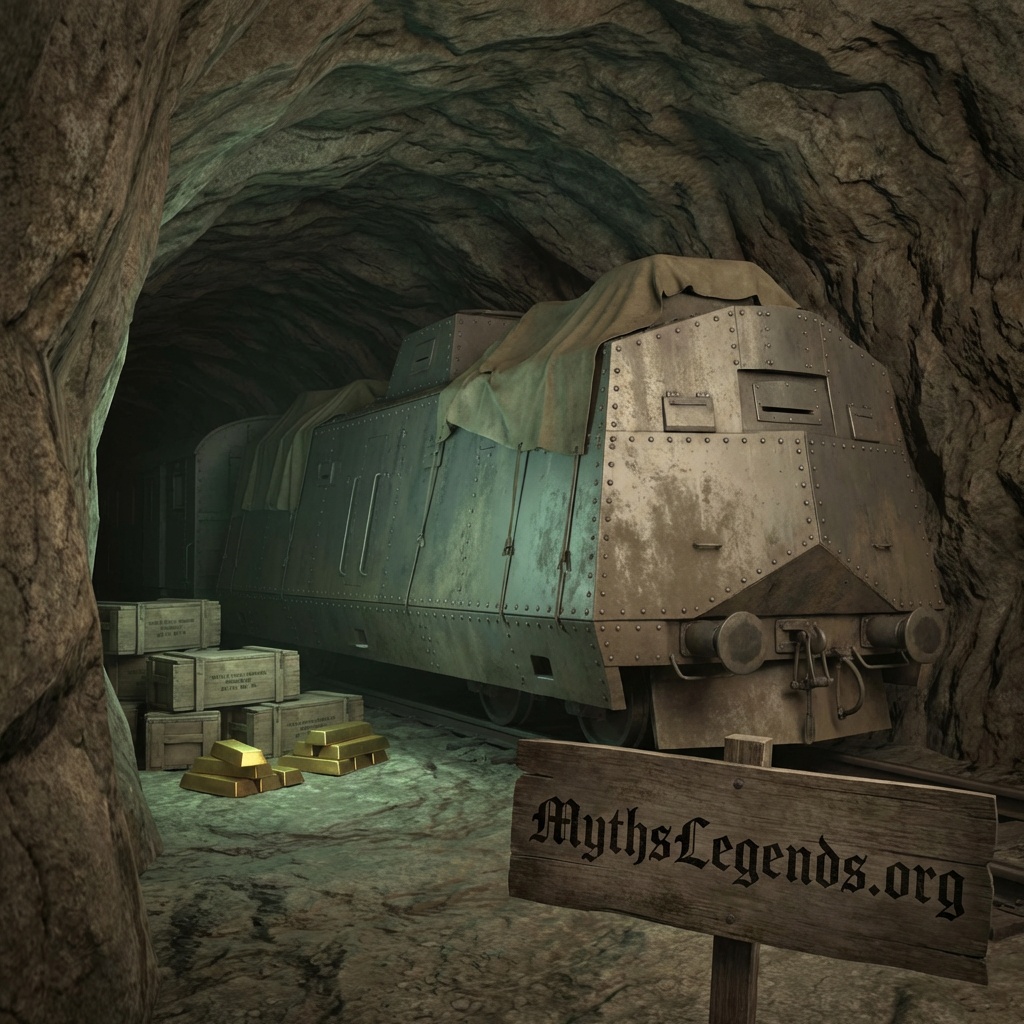
Buried underground: The mysterious story of the Nazi gold train
The mysterious legend of the Nazi gold train, which is said to be loaded with untold treasures, continues to capture the imagination and spark heated debate. Folklore has it that this armored train lies hidden deep in the mountains of Lower Silesia, which today belongs to Poland. As enticing as these stories are, they remain shrouded in speculation, historical intrigue, and whispered promises of undiscovered riches.
The origin of the legend – In the final days of World War II, as the Allies advanced and the Third Reich collapsed, Nazi officials allegedly attempted to hide their stolen riches from imminent defeat. The train, believed to be loaded with gold, artworks, and other valuable artifacts, is said to have departed from Breslau, now Wrocław, bound for a secret destination.
Historical reports suggest that the train never reached its destination and disappeared somewhere along its route into the mountainous terrain. This event gave rise to the myth of the “Nazi gold train,” a story marked by greed, power, and desperation.
Historical context – The legend has its origins in the cruel reality of the extensive looting carried out by the Nazi regime throughout Europe. Works of art, gold, and valuables were systematically confiscated in order to realize Hitler’s plan to establish a large museum or, as some believe, to secure the financial means for a possible Nazi resurgence after World War II. As the Axis powers began to falter, these stolen goods had to be hidden or transported to safer locations.
Eyewitness accounts from this period, though rare and often contradictory, mention heavily guarded convoys departing from Breslau. However, the chaos of war provides ample opportunity for exaggeration and distortion, making it difficult to separate fact from fiction.
Modern search efforts – The lure of potential riches has led many treasure hunters and historians to embark on expeditions into the dense forests and rocky expanses of the Owl Mountains. In recent years, technological advances such as ground-penetrating radar have promised new insights into the whereabouts of the legendary train. However, despite numerous claims of breakthroughs, concrete evidence remains elusive.
One of the most notable investigations took place in 2015, when two treasure hunters, Piotr Koper and Andreas Richter, claimed to have found the train near the city of Wałbrzych. Their claims sparked an international media frenzy, but subsequent government-funded excavations led only to disappointment, as no traces of the train or its contents were found.
Further myths – The narrative of the Nazi gold train is further enriched by local folklore and stories passed down through generations. Villagers near Wałbrzych tell of mysterious tunnels and secret wartime operations related to Project Riese, a massive, unfinished Nazi construction project that aimed to create an underground network of bunkers and tunnels for military purposes.
These stories suggest that the train, if it exists, may have been deliberately sealed in one of these tunnels—a strategic measure to prevent its capture by the Allies. The complex and dangerous landscape of the region adds to the aura of mystery and provides the perfect hiding place for such secret undertakings.
Skepticism and criticism – Despite widespread fascination, skeptics claim that the Nazi gold train is merely a product of collective imagination, fueled by historical myths and economic incentives. Some historians point to the lack of verifiable documents and inconsistencies in witness accounts as evidence against the train’s existence.
Furthermore, the politicization of the search for the train raises ethical concerns. Critics argue that the sensationalism surrounding this search may overshadow important discussions about reparations for war crimes and the rightful return of stolen property to its original owners or their descendants.
The wider implications – Although the physical existence of the Nazi gold train remains unproven, its enduring legacy says a lot about human nature and our relationship with history. The story serves as a powerful reminder of the atrocities committed during the war and highlights the complexity of reclaiming lost heritage.
Furthermore, the myth illustrates our inner desire to uncover hidden truths and search for tangible connections to our past, regardless of the odds. It also highlights the ongoing challenges faced by countries grappling with the remnants of war booty.
Ultimately, the story of the vanished Nazi gold train buried deep in the mountains is more than just a search for lost riches. It is a saga interwoven with mystery, history, and the indomitable pursuit of discovery by the human spirit. Even if modern technology may eventually provide new clues or confirm long-held assumptions, the legend itself lives on, fueling dreams, debates, and the imaginations of adventurers and historians alike.
As the world continues to explore its hidden corners, the myth of the Nazi gold train remains a profound symbol of unsolved stories and the eternal fascination with the unknown. Until conclusive evidence emerges, the depths of the mountains will keep their secrets and challenge us to distinguish truth from myth and legend from reality.













Post Comment