Český Krumlov: The Mysterious Legacy of Alchemy and Mysticism
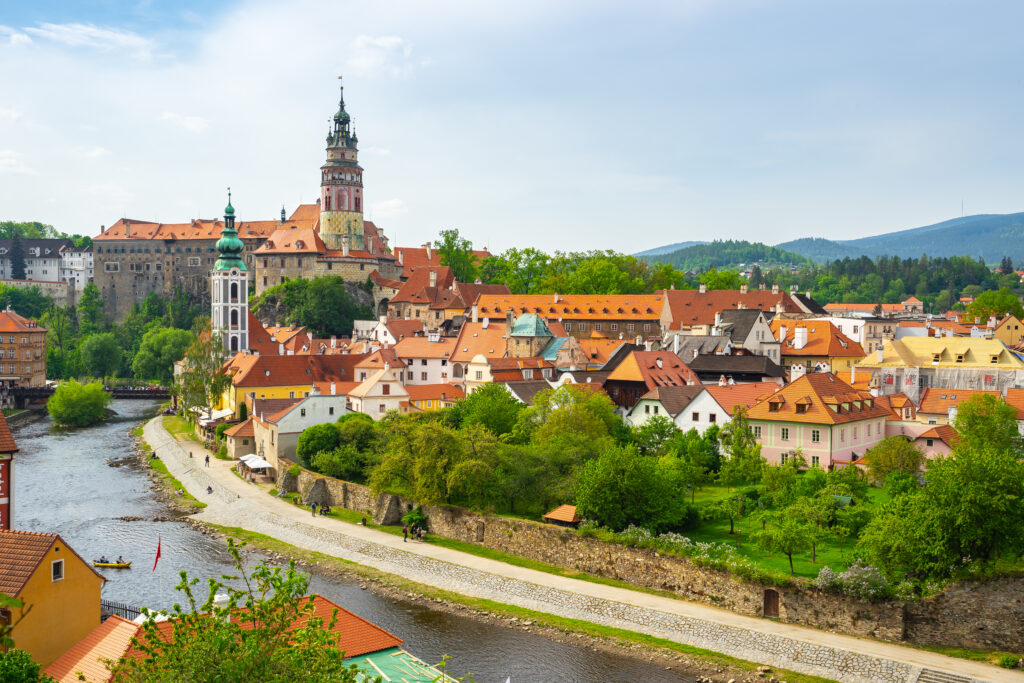
Located in the heart of the Czech Republic, Český Krumlov is a town that captivates visitors with its enchanting beauty and rich history. However, behind its picturesque streets and breathtaking architecture lies a history full of secrets and alchemy. Český Krumlov Castle has long been associated with esoteric practices, making this charming town a center of Renaissance alchemy.
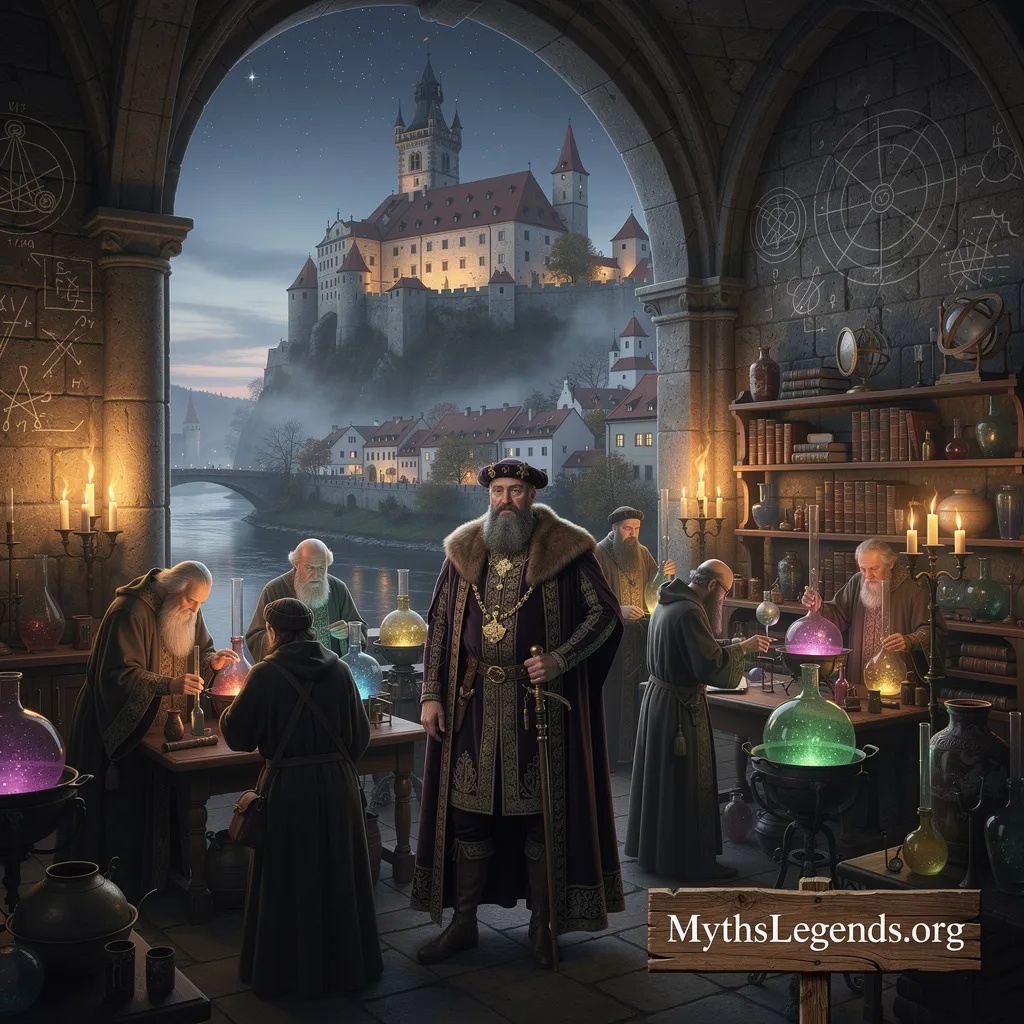
The story begins with Wilhelm von Rosenberg, a respected nobleman and passionate lover of the mystical arts during the Renaissance. His fascination with alchemy, particularly the transmutation of metals and the elusive quest for the philosopher’s stone, transformed Český Krumlov into a center of alchemical activity. Under his patronage, the castle attracted numerous alchemists, sages, and researchers, all drawn by the promise of unlocking the secrets of the universe.
Wilhelm von Rosenberg’s interest in alchemy was not just a whim, but reflected the intense curiosity of the time towards nature. At its core, alchemy sought to understand the transformation of substances with the aim of turning base metals into precious ones such as gold. More importantly, it symbolized the spiritual journey to enlightenment and perfection. The philosopher’s stone, which supposedly promised eternal life and immeasurable wealth, became the Holy Grail of alchemists.
In Český Krumlov, the castle laboratories were bustling with activity as alchemists conducted their experiments. The air was filled with the smell of sulfur and mercury, and the walls bore witness to countless attempts to unravel the secrets of nature. These endeavors were often shrouded in mystery and fueled by encrypted manuscripts and cryptic symbols that protected the alchemists’ knowledge from prying eyes.
But alchemy was not only a scientific endeavor; it was also intertwined with mysticism and occult philosophy. Alchemists believed that each element contained a spirit and that the process of transmutation mirrored the purification of the soul. The intricate rituals performed within the castle walls were considered steps toward connecting with the divine and achieving inner perfection.
Wilhelm von Rosenberg’s devotion to these enigmatic practices attracted many famous figures of the time. Among them was John Dee, an English mathematician, astronomer, and advisor to Queen Elizabeth I. Dee’s expertise in alchemy and his scientific works on the occult reinforced Český Krumlov’s reputation as a haven for mystical exploration. His collaboration with other alchemists at the castle cemented the town’s status as an intellectual and spiritual refuge.
Historical records point to the existence of secret chambers and hidden passages within Český Krumlov Castle, where alchemical experiments were conducted away from the public eye. These secret activities added to the castle’s mysterious aura. It is said that Rosenberg himself had a hidden laboratory, accessible only to a select few, where he spent hours studying ancient texts and performing alchemical transmutations.
The legacy of alchemy in Český Krumlov extended beyond the era of Wilhelm von Rosenberg. As the Renaissance gave way to the Enlightenment, the castle remained a center for scientific thought and experimentation. The intersection between alchemy and emerging fields such as chemistry and physics paved the way for modern scientific methods. However, the mystical elements of alchemy retained their fascination, captivating both historians and contemporary visitors alike.
Today, Český Krumlov preserves its alchemical heritage and attracts tourists who are fascinated by its mysterious past. Guided tours of the castle often highlight the stories of the alchemists and their quest for wisdom and power. The town’s museums and exhibitions display Renaissance artifacts, including alchemical tools, manuscripts, and illustrations that offer insights into the mysterious world that once flourished here.
In the quiet corners of Český Krumlov, the past still echoes, reviving the spirit of the alchemists who sought to unravel the mysteries of existence. The castle is a testament to human curiosity and the relentless pursuit of knowledge, combining history, myth, and legend into an irresistible work of art.
Český Krumlov’s connection to alchemy and mysticism is more than a historical footnote; it is a narrative that inspires wonder and reflection. As visitors roam the castle grounds, they may pause to reflect on the dedication and imagination of people like Wilhelm von Rosenberg. In doing so, they engage with a chapter of history that bridges the gap between science and magic, reason and faith.
In a world often defined by technological advances and empirical evidence, Český Krumlov serves as a reminder of the enduring fascination with the unknown and the timeless quest to understand the mysteries that elude our comprehension. Whether one views the stories of alchemy as mere folklore or profound truths, the legacy of Český Krumlov remains an enchanting invitation to explore the depths of human ingenuity and the boundless horizons of wonder.






Post Comment