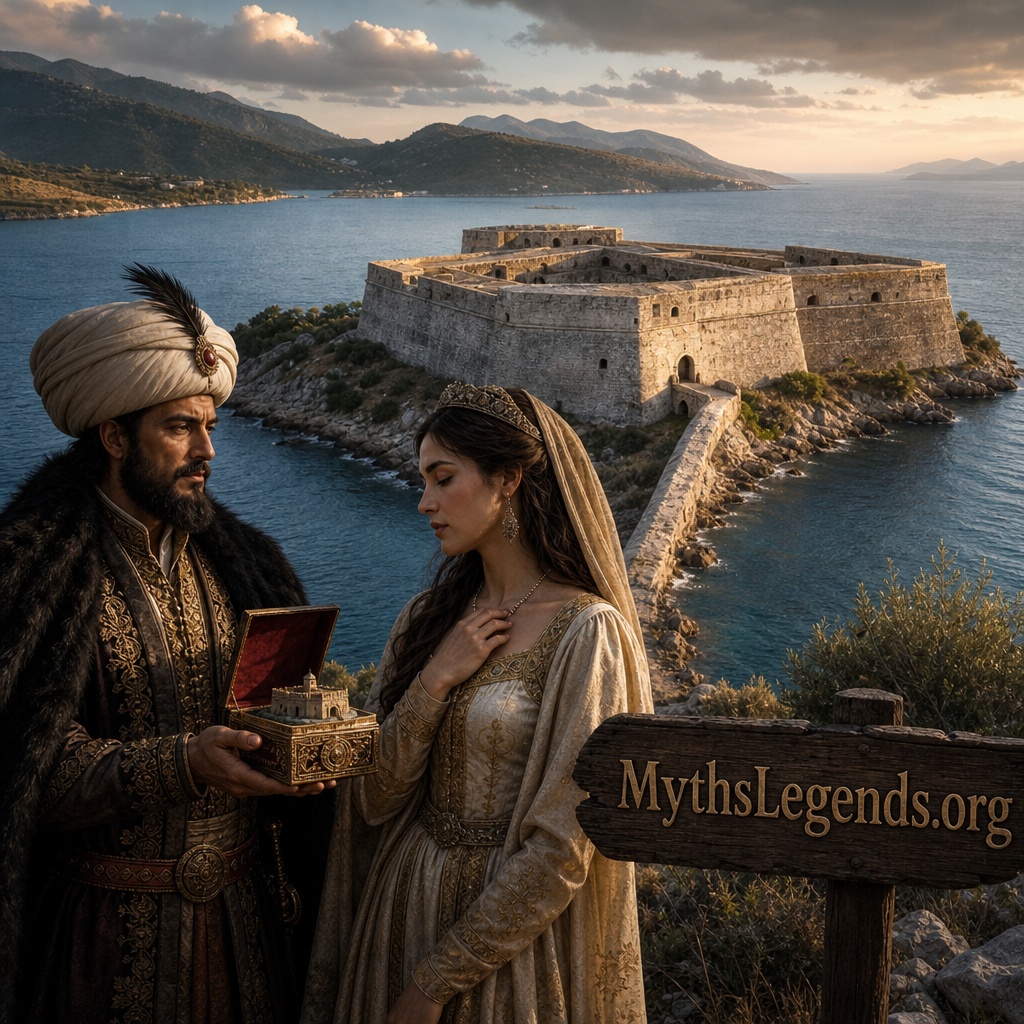
Porto Palermo: The fortress, the gift of love and the legend of Vasiliqia
On the Albanian Riviera, between the coastal towns of Himara and Qeparo, a massive, triangular fortress towers over a narrow peninsula jutting into the bay of Porto Palermo. Even from a distance, Porto Palermo Castle looks like a structure from another era: tall, light-coloured stone walls, narrow entrances, dark interiors and an unobstructed view across the Ionian Sea. Hardly any other place on Albania’s southern coast combines landscape, history and legends as powerfully as this fortress. One romantic yet sombre tale in particular has stood the test of time: Ali Pasha of Tepelena, the powerful Ottoman ruler of Ioannina, is said to have built the castle as a token of love for his young Greek Orthodox wife, Vasiliqia – usually known as Basiliki. The story fits the image of an influential, yet feared and enigmatic regional ruler. Yet the historical reality is more complex than the legend. The fortress is not merely the setting for a love story, but above all a testament to military power politics, regional rivalries and Ottoman rule at the turn of the 18th to the 19th century.
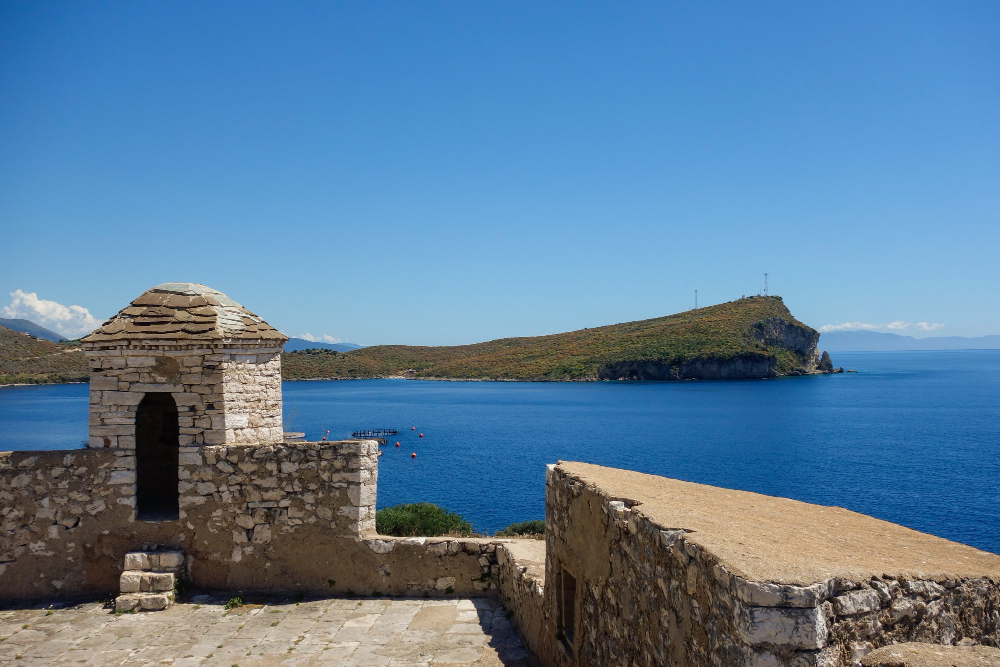
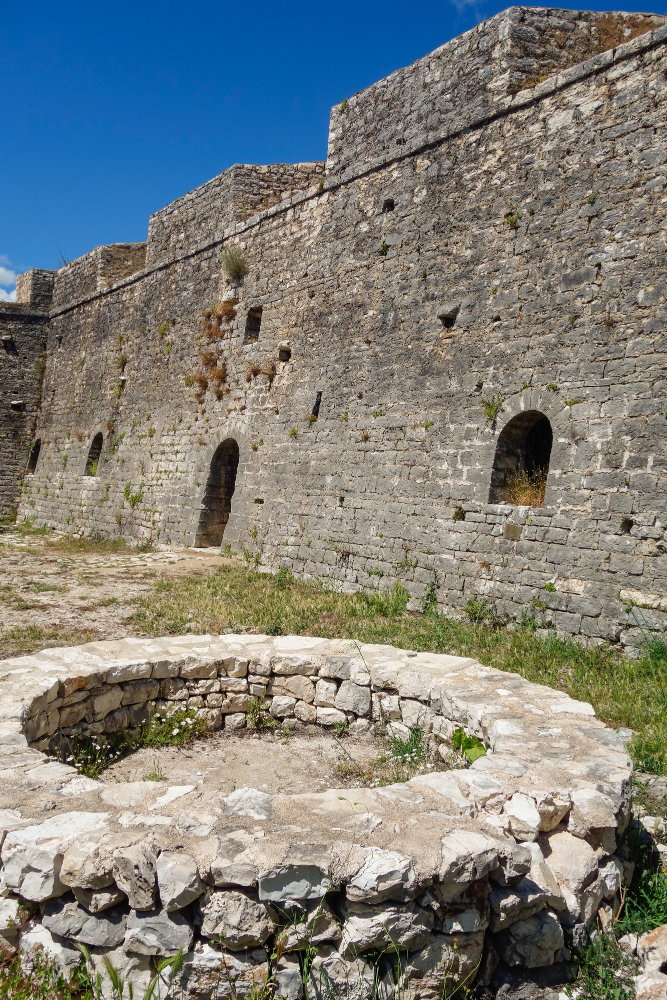
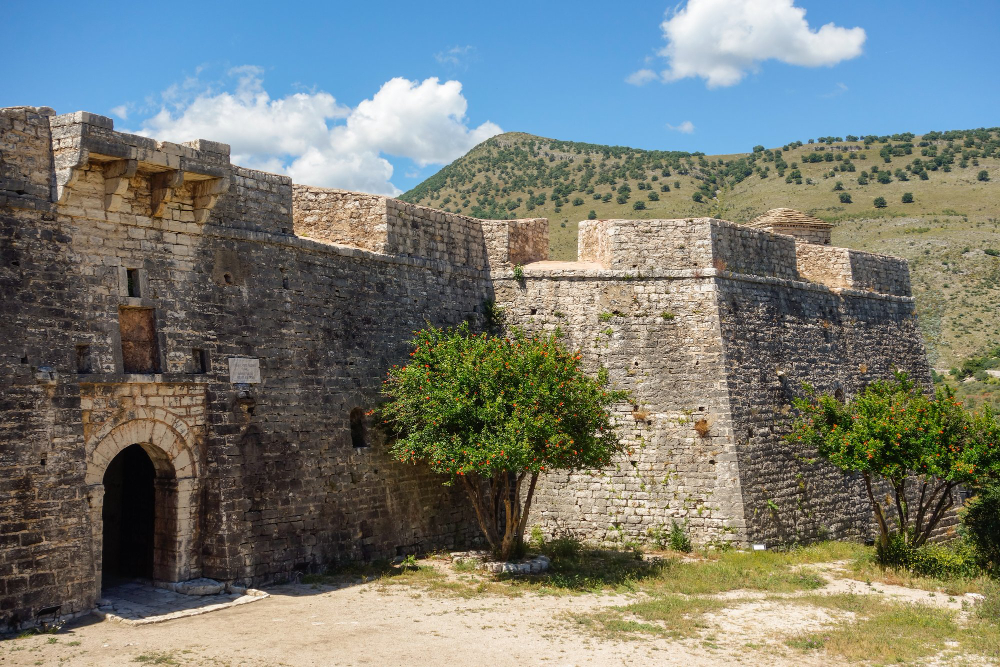
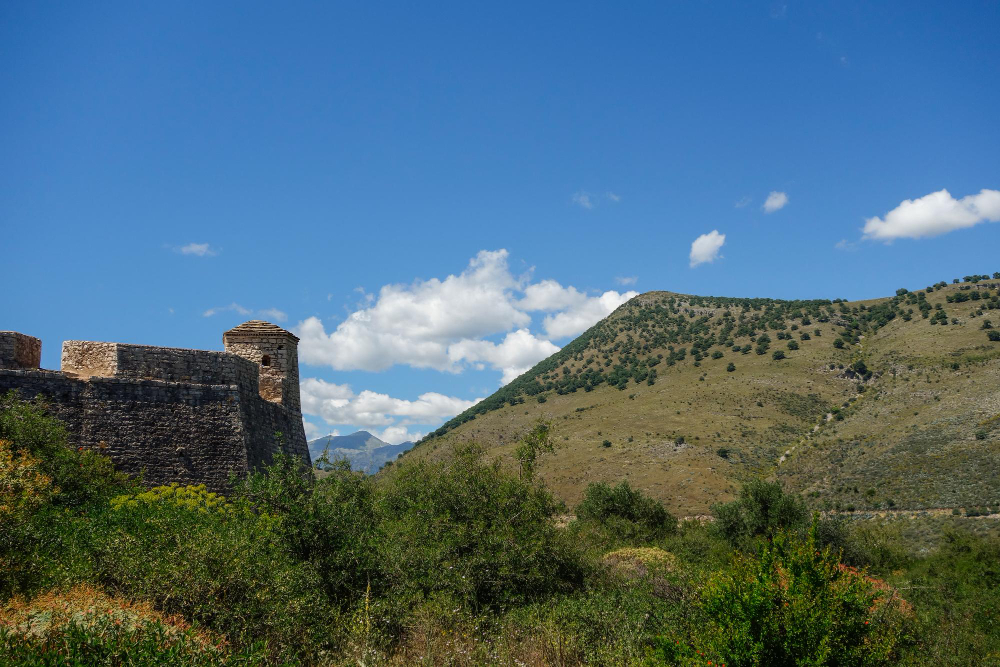
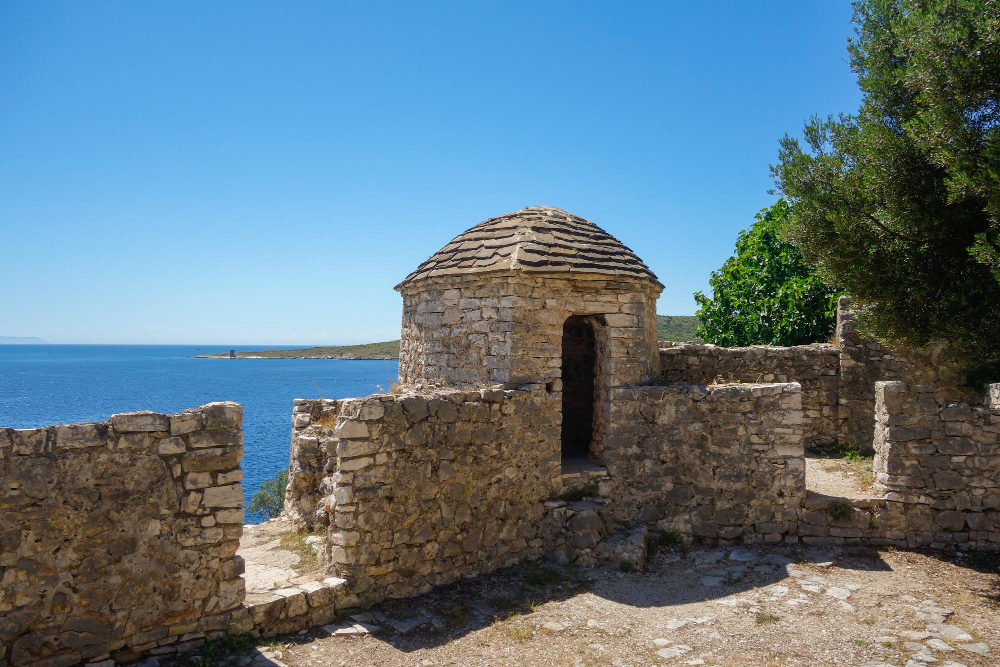
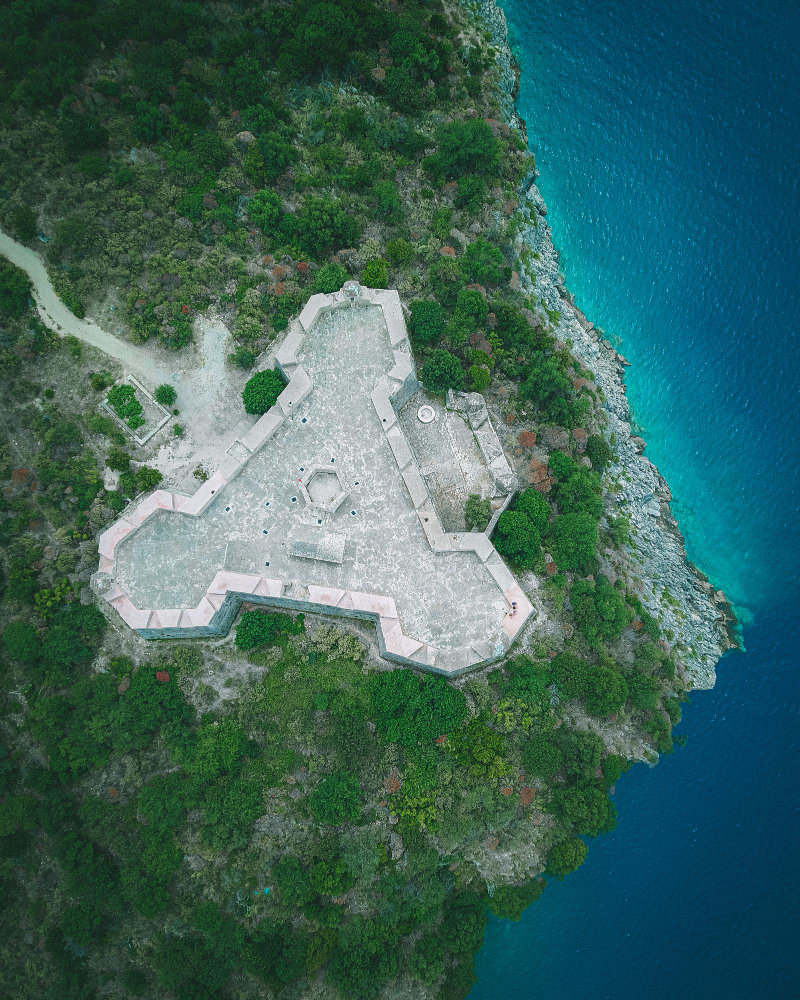
A castle between the sea, the mountains and history – Porto Palermo lies in a sheltered natural bay on the SH8 coastal road, one of Albania’s most spectacular routes. The castle stands on a small headland – or island – which is now accessible via a narrow causeway. Its location was strategically ideal: from here, the bay could be controlled, whilst at the same time offering ships shelter from the wind and rough seas. The name Porto Palermo reflects the long and eventful history of the Mediterranean region. The area was shaped by Greek, Roman, Byzantine, Venetian and Ottoman influences at various times. The complex visible today is predominantly attributed to the era of Ali Pasha, that is, the early 19th century. Its architecture is typical of a compact coastal fortress: thick walls, bastion-like projections, controllable gates and a layout designed to enable defence even with a relatively small number of soldiers. The fortress is roughly triangular in shape. At its corners are bastion-like sections from which attackers could be fired upon from several sides. Behind the outer walls lie vaulted rooms, corridors and inner courtyards. It is precisely this labyrinthine layout that contributes to the site’s mysterious character. Light enters the interior only in patches through narrow openings; some rooms feel cool and gloomy even during the day. Today, the fortress is a major attraction on the Albanian Riviera. Unlike many well-known Mediterranean castles, it has not been extensively modernised or turned into a museum. This understated presentation reinforces the impression of standing before a largely original site – even though the building itself has, of course, undergone changes and sustained damage over the centuries.
Ali Pasha of Tepelena: Ruler between Istanbul and the West – To understand the legend of Vasiliqia, one must be familiar with the figure of Ali Pasha. Ali Pasha of Tepelena, also known as Ali Pasha of Ioannina, lived from around 1740 to 1822. He was one of the most powerful Ottoman provincial rulers of his time. From Ioannina, in what is now north-western Greece, he established a far-reaching sphere of influence that encompassed parts of present-day Albania, Greece and North Macedonia. Formally, Ali Pasha was an official and dignitary of the Ottoman Empire. In reality, however, he ruled his territory with a great deal of autonomy for long periods. He led military campaigns, forged alliances, maintained relations with European powers and controlled key trade and transport routes. Contemporary accounts paint a contradictory picture: Ali Pasha is portrayed as a skilful power politician, a patron of the arts and a promoter of economic interests, but also as a ruthless ruler who resorted to violence, intimidation and repression. His era was characterised by profound upheavals. The Ottoman Empire was under external pressure and, at the same time, had to curb the growing autonomy of regional elites. Ali Pasha eventually came into open conflict with the Sublime Porte in Istanbul. In 1822, he was killed following a siege in Ioannina. His demise also marked the end of his largely autonomous project of rule. The fortress of Porto Palermo forms part of this political landscape. It was intended not merely to provide residential comfort, but to ensure security, control and a military presence. The bay was situated in an area of strategic importance for maritime links and coastal surveillance. Whoever possessed fortified strongholds here could monitor movements along the coast and exert influence over trade, shipping and local power dynamics.
Vasiliqia or Basiliki: The Woman Behind the Legend – The woman associated with Porto Palermo is referred to in various spellings: Vasiliqia, Vasilikia or Basiliki. She is Basiliki Kontaxi, a young Greek Orthodox woman who married Ali Pasha. In many popular accounts, she is described as his favourite wife or as a particularly beloved spouse. However, compared with that of her famous husband, her biography has been handed down only in fragments and is often overlaid with later embellishments. It is precisely these gaps that have fostered the emergence of romantic tales. The notion of a powerful Muslim pasha presenting a young Orthodox Greek woman with a castle by the sea has all the makings of a historical narrative: love transcending religious and social boundaries, secluded spaces, political dangers, and a monumental fortress as a symbol of personal affection. Local traditions attribute a special role to Basiliki in Porto Palermo. Some versions of the legend claim that Ali Pasha had the castle built especially for her so that she could live there in safety and seclusion. Other interpretations portray the complex as a retreat or summer residence. Such stories are still passed down today through travel guides, tourist brochures and oral accounts. However, this interpretation of the fortress as a token of love is not historically substantiated with the same certainty as the fortress’s military function. Specialist and encyclopaedic accounts indicate that Porto Palermo is linked to Ali Pasha, whilst the specific claim that it was built exclusively as a token of love for Basiliki belongs primarily to the realm of local tradition and popular folklore. The legend is therefore not without value – it forms part of the cultural memory of the place – but it should not be confused with a documented building commission.
Romantic narrative, strategic reality – The tension between legend and history makes Porto Palermo all the more interesting. For the fortress tells two stories at once. The first is that of a personal relationship passed down through a dramatic era. The second is the story of a ruler who secured his power with walls, soldiers and controlled coastal access. It is by no means unusual for a fortress to be interpreted as a token of love. In many regions, monumental buildings come to be associated with individual destinies. A name, a wedding, an unusual resident or a local anecdote can be enough to imbue a building with emotional significance. In the case of Porto Palermo, the connection to Basiliki provided a particularly strong point of reference. The architecture itself, however, suggests a defensive structure rather than a private palace. Visitors will find no magnificent residence with decorative halls, gardens or luxurious living quarters, as one might expect from a purely ceremonial token of love. Instead, the fortress is dominated by massive stone walls, embrasures, vaults and functional rooms. The structure was designed to house a small garrison and repel an attack. This does not mean that Ali Pasha or his entourage never used the fortress as a residence. Military bases within the Ottoman sphere of influence could certainly also fulfil representative or personal functions. Yet the military logic of the complex remains unmistakable. Porto Palermo was, first and foremost, an instrument of territorial control.
A place with later chapters – The history of Porto Palermo did not end with Ali Pasha. In later times, the bay retained its strategic importance due to its sheltered location. During the communist rule in Albania in the 20th century, the coastal region was used for military purposes. Near the fortress, a facility for submarines and military vessels was built, which is mentioned in numerous travel accounts and historical accounts. This later use demonstrates that, over the centuries, the bay was perceived as a secure and militarily significant harbour. Today, Porto Palermo is one of those places where Albania’s eventful history is particularly vividly condensed. The sea, the mountainous landscape and the comparatively remote location create an atmosphere that could scarcely be replicated artificially. Anyone who steps through the gate and enters the dark vaults encounters not merely a tourist attraction, but the traces of different eras: Ottoman provincial rule, local memory, military planning and modern tourist discovery.
Why the myth lives on – The legend of the gift of love for Vasiliqia is therefore more than a mere tourist anecdote. It gives the fortress a human face. Behind the stone walls stands not only Ali Pasha as a powerful ruler, but also Vasiliqia as a figure straddling tradition and historical reality. Her story serves as a reminder that political power and private relationships were often closely intertwined in pre-modern systems of rule. At the same time, one should be wary of overly simplistic narratives. Porto Palermo was not a fairytale villa by the sea, but a fortress in a conflict-ridden border and coastal region. The romantic interpretation explains only part of its appeal. The other part lies precisely in its ambivalence: beauty and threat, love and domination, legend and verifiable history stand side by side here. Anyone visiting Porto Palermo should therefore not read the story of Vasiliqia as a definitive historical record, but as a local memory that lends an additional layer of meaning to a real place. The fortress walls bear witness to Ali Pasha’s claim to power. The legend recounts how people have interpreted this place over generations and associated it with emotions, longings and secrets. It is precisely this connection that makes Porto Palermo one of the most impressive historical sites on the Albanian Riviera.









Post Comment