Gran Castillo de Pedraza: The legend of Emperor Trajan – between local folklore and historical research
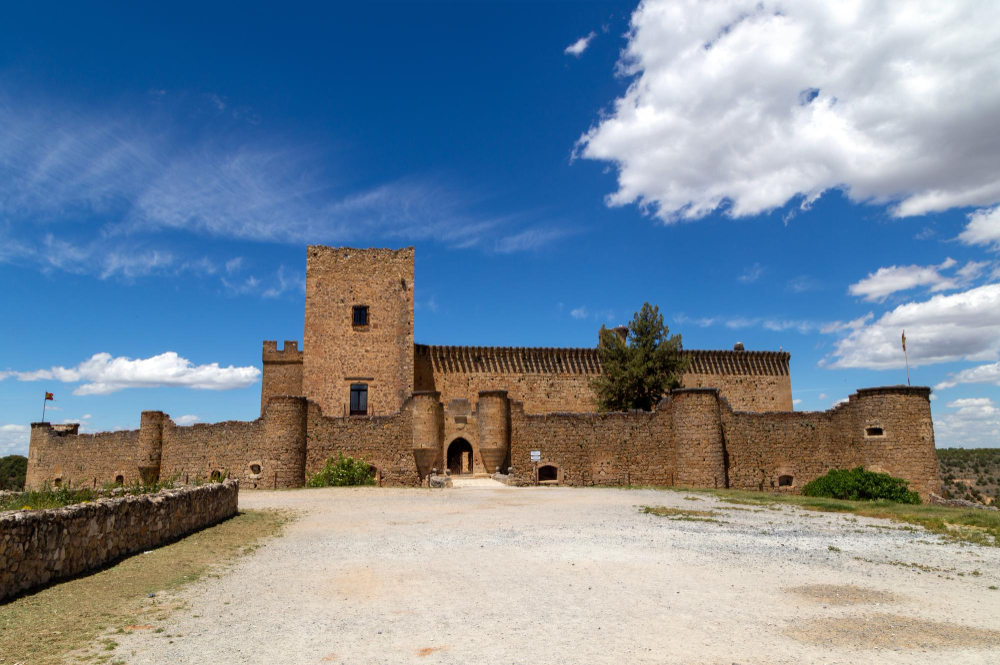
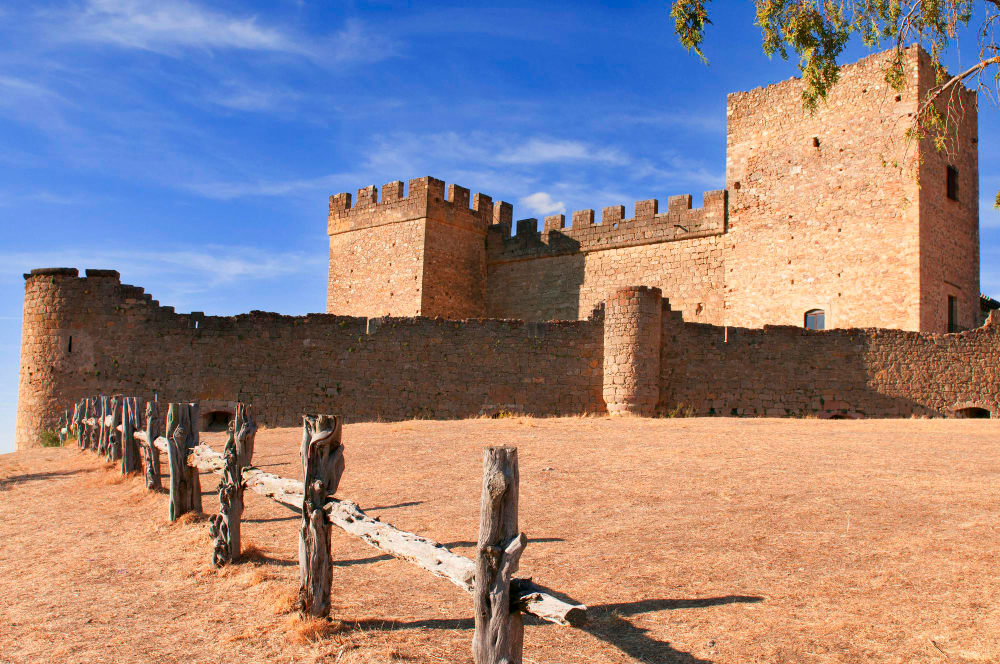
High above the Castilian countryside, on a striking rock in the province of Segovia, stands the Gran Castillo de Pedraza. Pedraza Castle is one of the most impressive historic buildings in central Spain. Together with the village’s medieval layout, which has been preserved almost in its entirety, it still conveys the impression of a fortified settlement from centuries past. Yet its history is not shaped solely by verifiable events, alterations and changes of rule. A particularly persistent local legend also surrounds Pedraza: the claim that the Roman Emperor Trajan was born here. The legend links this Castilian mountain village with one of the most significant figures of the Roman Empire. Trajan, who reigned from 98 to 117 AD, led the Roman Empire to its greatest territorial extent. It is historically established, however, that his family roots lay in Italica, a Roman city near present-day Seville in Andalusia. Pedraza cannot therefore be regarded as the emperor’s confirmed birthplace. Nevertheless, the story is revealing: it shows how places interpret their past, how traces of the Romans become part of local memory, and how legends can endure for centuries.
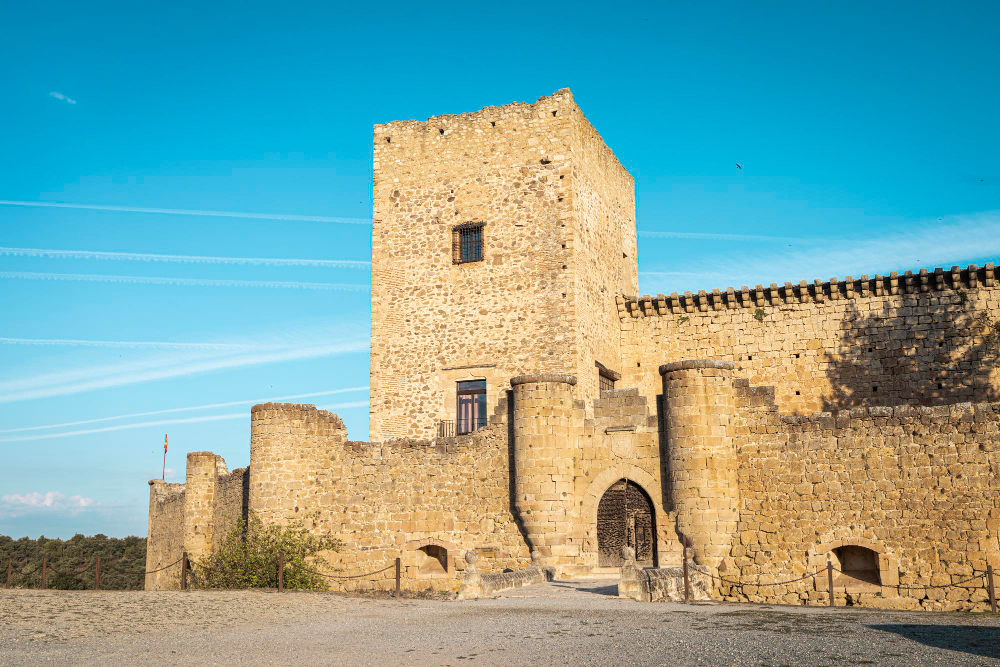
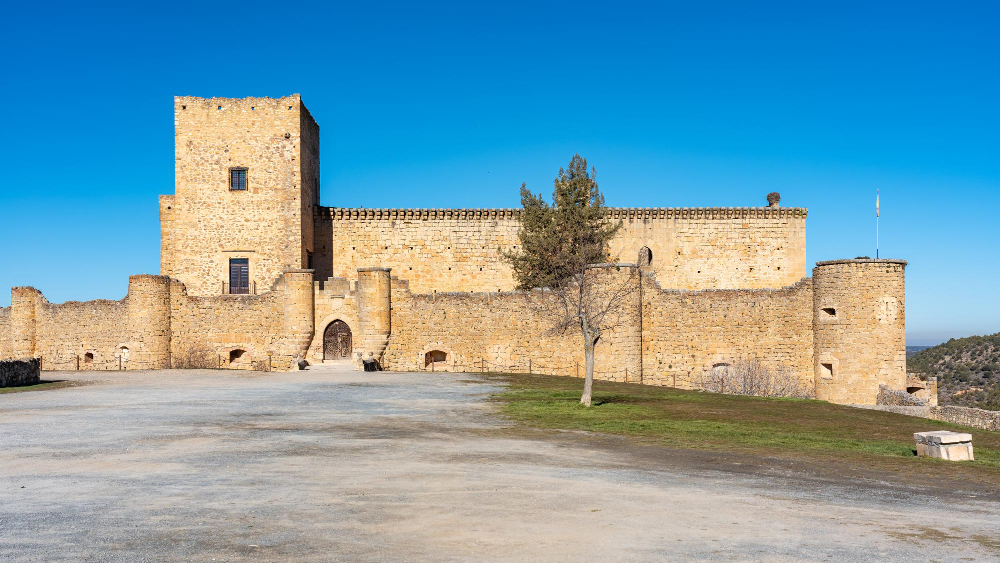
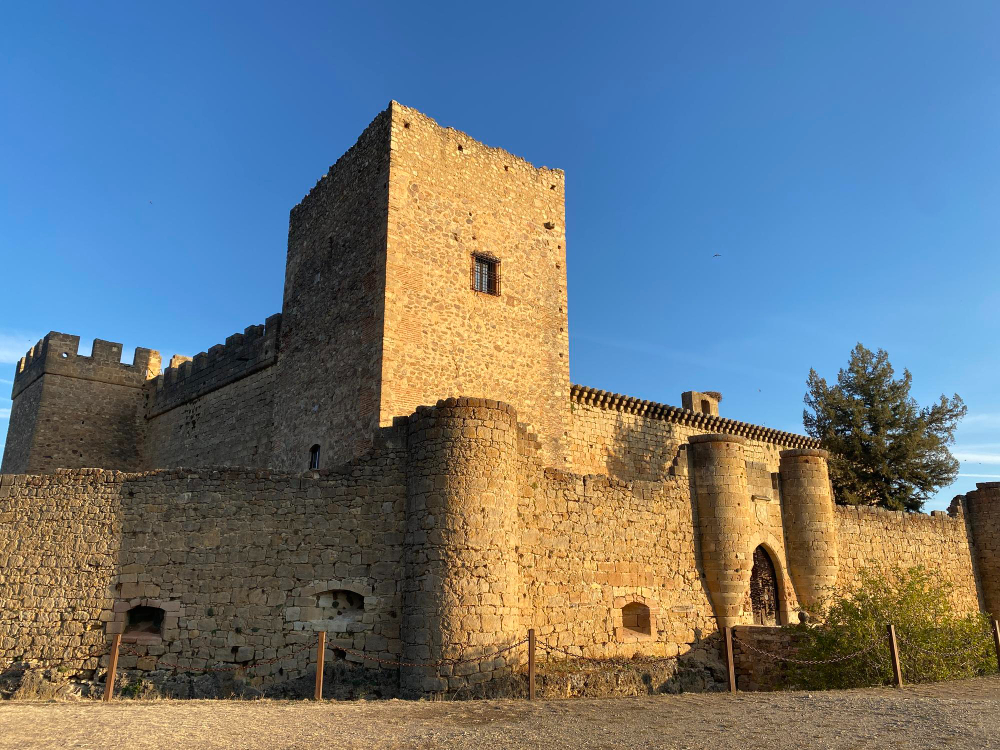
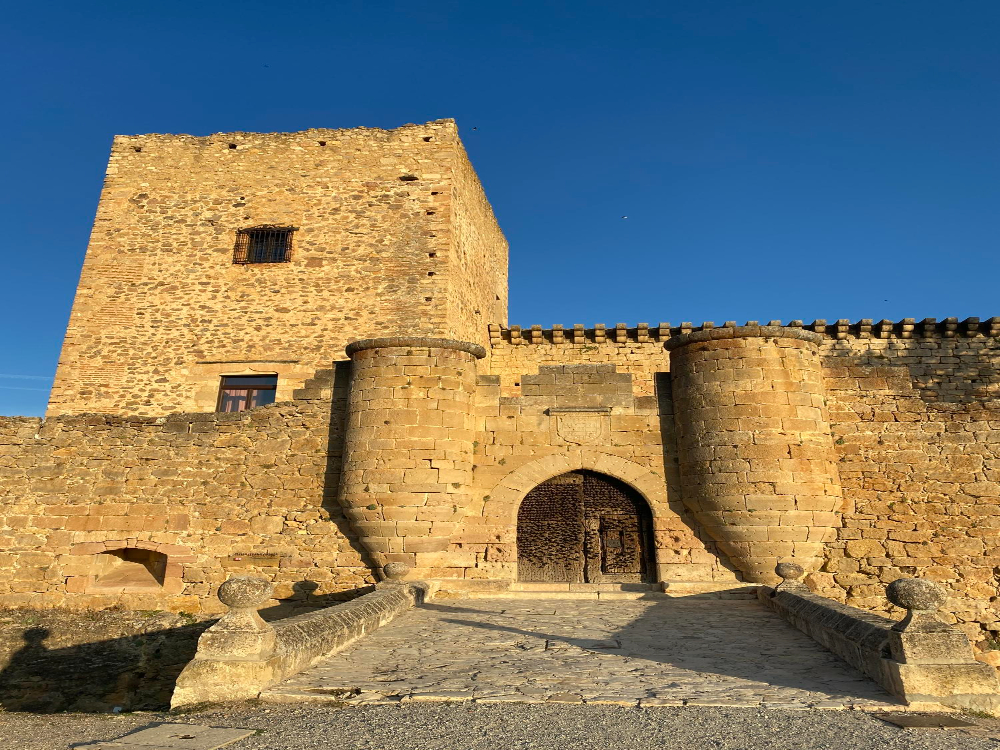
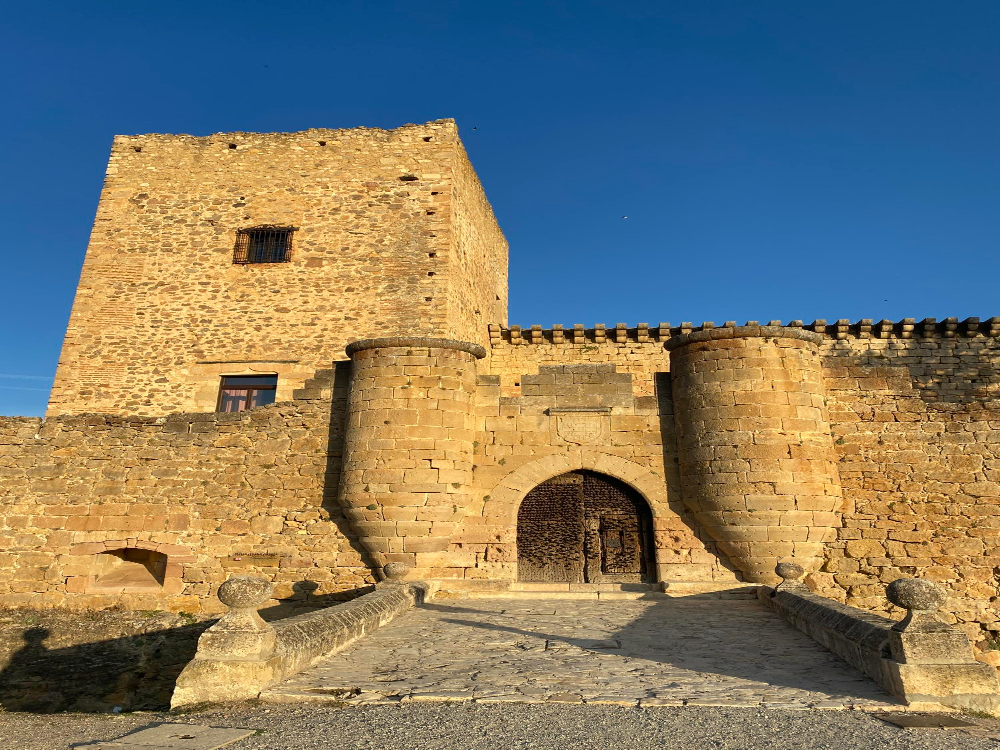
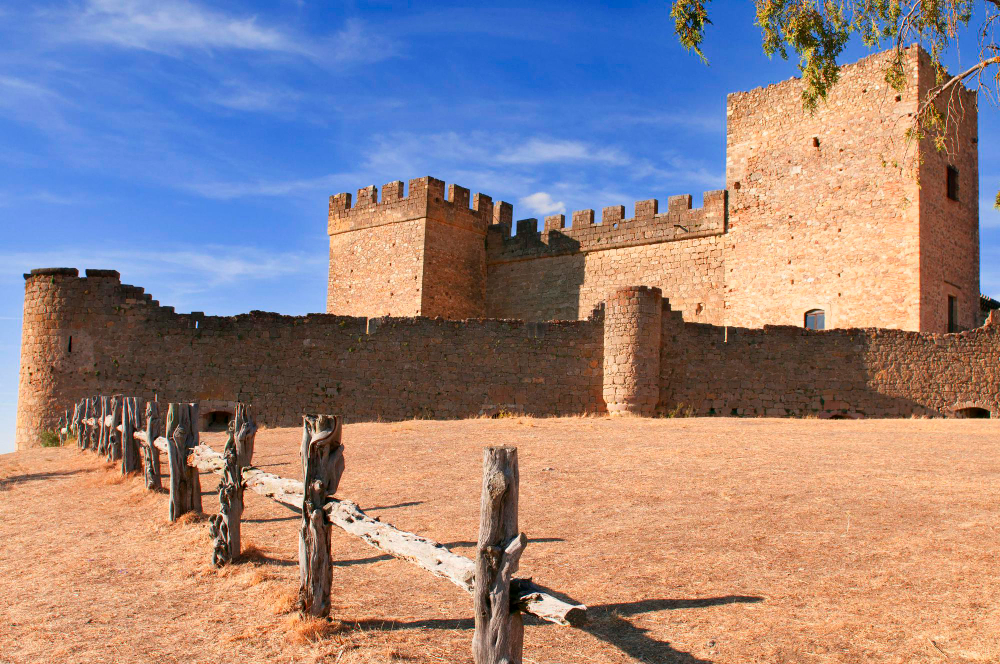
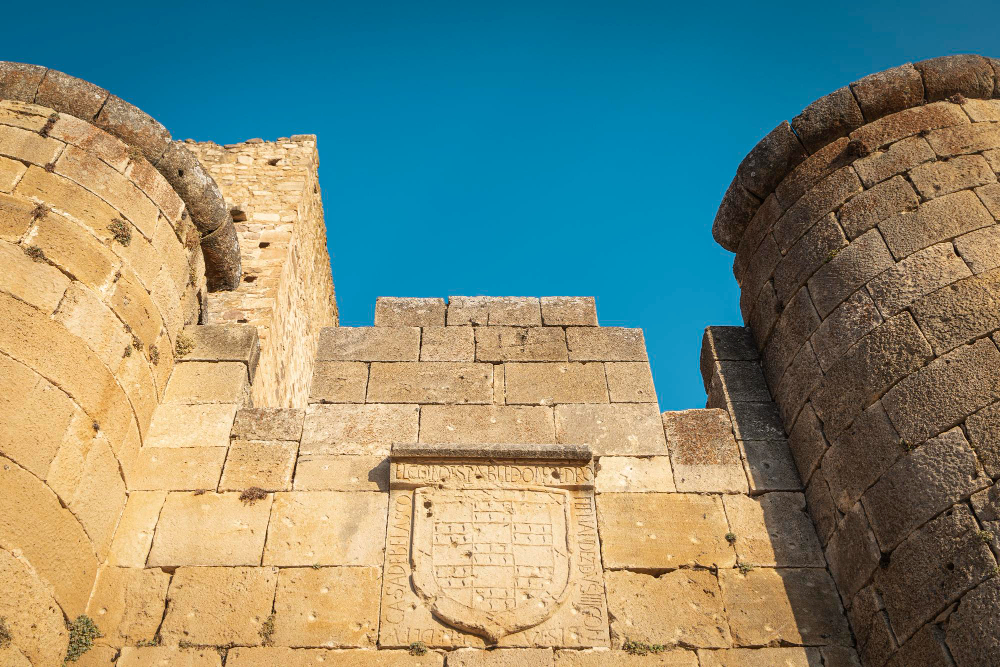
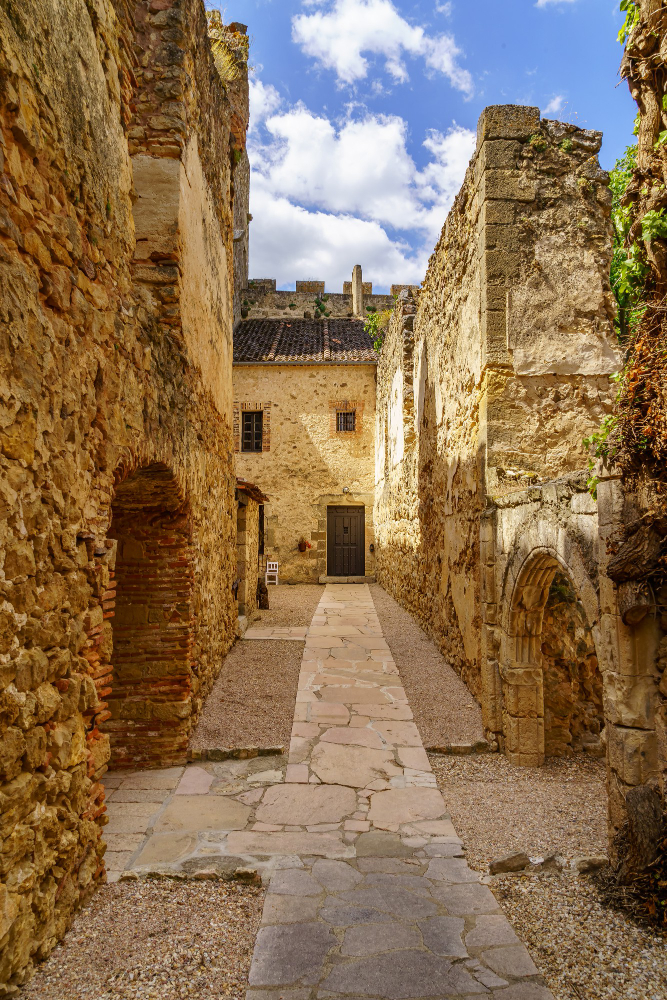
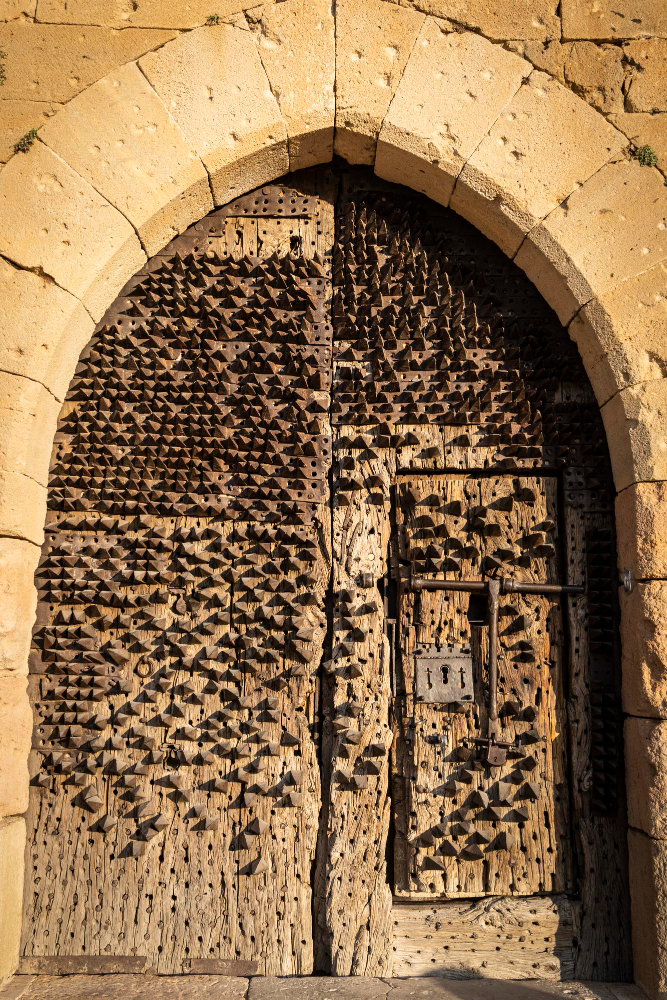
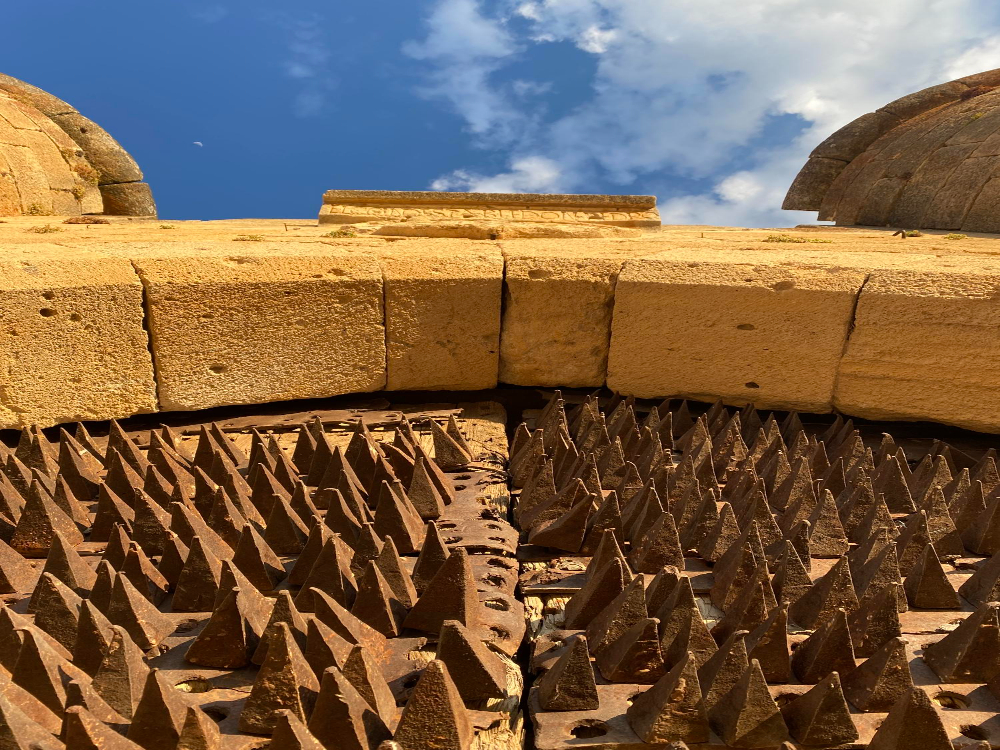
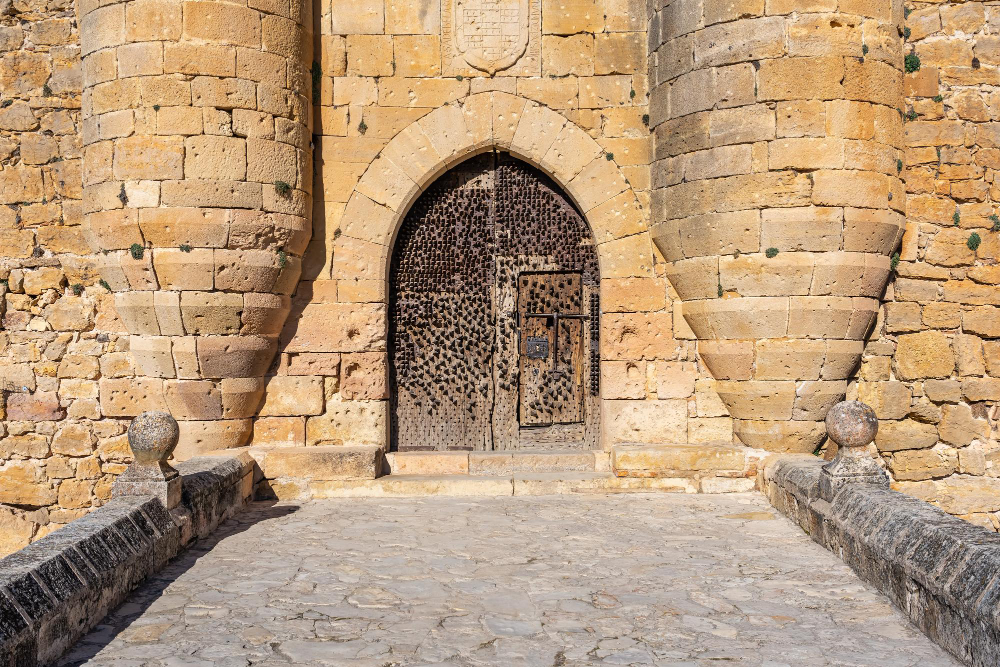
A castle on a strategic rock – Pedraza lies around 40 kilometres north-east of Segovia and today forms part of the Autonomous Community of Castile and León. The village is situated on an elongated, rocky ridge. This location was ideal for a fortification: steep slopes offered natural protection, whilst access to the settlement could be controlled. The castle stands at the edge of the town centre and, together with the city walls, gatehouses and narrow streets, forms a historical ensemble of great cohesion. The castle visible today dates primarily from the medieval and early modern periods. Its form did not emerge in a single construction phase, but developed over the course of centuries. The complex was altered and reinforced on several occasions and adapted to the military and administrative requirements of the time. Particularly striking are the massive walls, the fortified towers and the location overlooking the surrounding countryside. In the Middle Ages, Pedraza was an important local seat of power. Like many places in Castile, the settlement was caught between the need to secure the border, the power of the nobility and the economic exploitation of the surrounding countryside. The castle was not merely a military refuge; it also served as a residence, an administrative centre and a visible symbol of dominion over the region. Today, the Gran Castillo de Pedraza is known primarily as a cultural landmark. Its rooms house, amongst other things, the Zuloaga Museum, dedicated to the painter Ignacio Zuloaga. The artist acquired the castle in the 20th century and used it as a studio and retreat. As a result, the building has come to play an important role in modern Spanish cultural history, alongside its medieval past.
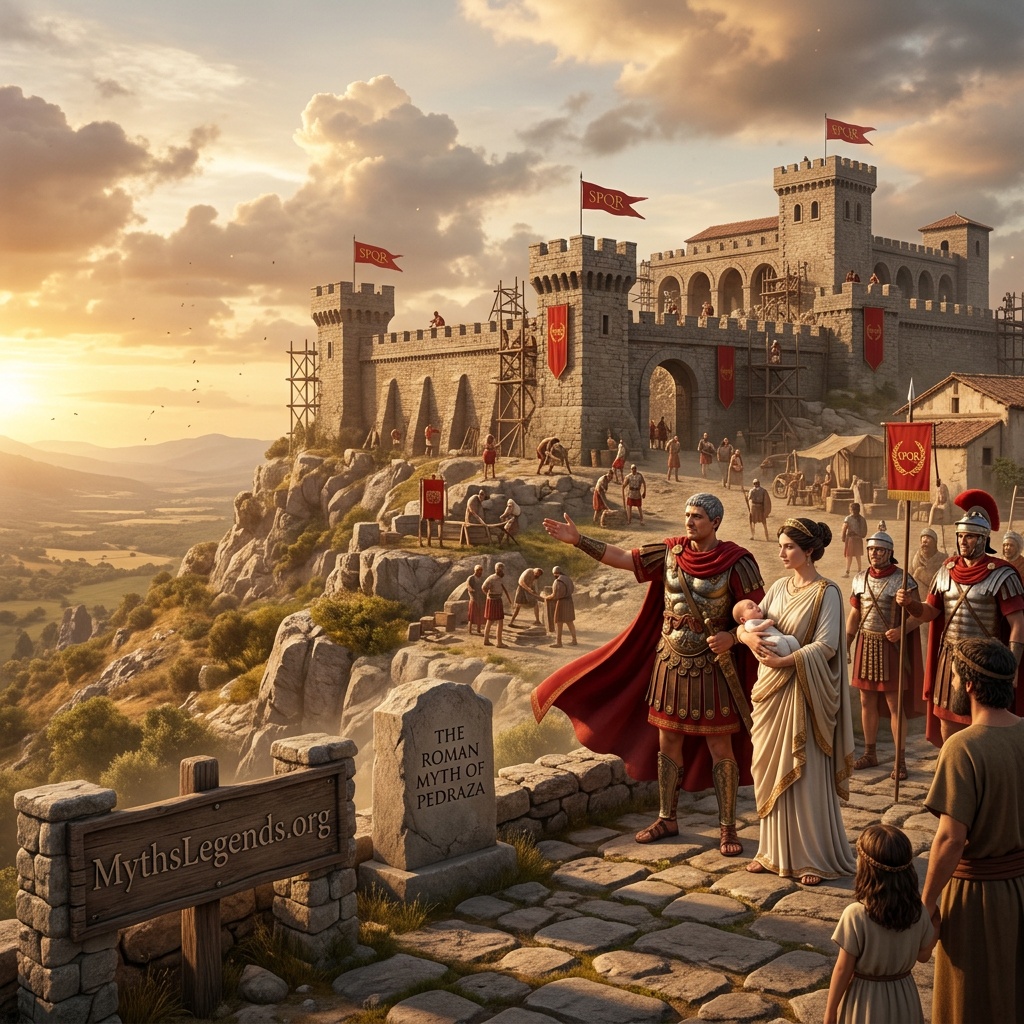
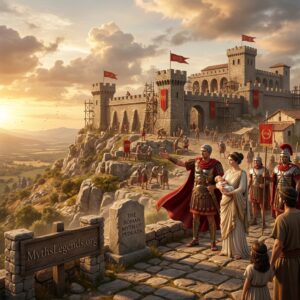
The Roman Myth of Pedraza – Alongside the well-documented medieval history, there is an older, less certain narrative. Local traditions link Pedraza to an ancient Roman fortification. According to these accounts, the castle and village are said to have been built on or near the remains of an earlier Roman structure. It was apparently from this notion that the legend developed that Emperor Trajan was born in Pedraza. Such stories are by no means unusual in Europe. Many medieval towns and castles were built on sites that had already been settled or used for strategic purposes in earlier eras. Roman roads, remains of settlements, coin finds or simply the memory of an ancient past could later become the starting point for far-reaching interpretations. Particularly in the case of fortified hilltop sites, it is reasonable to assume that a place may already have been of military or strategic importance in antiquity. However, it is crucial to distinguish between a possible Roman use of the site and the specific claim that Trajan was born there. There is no reliable evidence in the authoritative ancient sources or in modern historical research to support the claim that the emperor was born in Pedraza. Neither inscriptions nor contemporary accounts nor reliable later sources support this attribution. The legend therefore does not rank as a historical fact. Rather, it forms part of the local culture of remembrance. Precisely because Trajan was regarded as one of Rome’s most successful rulers, the association with his name lends the place a particularly prestigious aura. The story tells us less about the emperor’s actual place of birth than about the need to inscribe one’s own landscape into the grand history of the Roman Empire.
Trajan: The Emperor from Hispania – Marcus Ulpius Traianus, known as Trajan, was probably born on 18 September in the year 53 AD. Scholars associate his birthplace with Italica, a Roman town near present-day Santiponce, close to Seville. The city had been under Roman influence since the time of the Second Punic War and developed into an important centre in the province of Hispania Baetica. Trajan came from a distinguished senatorial family. His father, Marcus Ulpius Traianus, had enjoyed a successful political and military career. The family thus belonged to the Roman ruling class, but had its roots in Hispania. Trajan was not the first emperor with ties to the provinces, but his origins underscored the growing importance of the Romanised elites outside Italy. Following the death of Emperor Nerva, Trajan succeeded him in 98 AD. His reign is regarded in many ancient and modern accounts as a period of military strength, administrative activity and extensive building projects. The historian Cassius Dio reports in detail on the Dacian Wars, through which Rome gained vast territories north of the Danube. With the annexation of Dacia, the Empire gained not only strategic advantages but also access to significant deposits of raw materials. Later, Trajan led campaigns against the Parthian Empire in the east. Following successes in Armenia and Mesopotamia, the Roman Empire reached its greatest territorial extent under his rule. However, these conquests could not be held permanently: his successor, Hadrian, relinquished part of the eastern territories. Trajan was also an emperor renowned for his architectural achievements. During his reign, the Forum of Trajan, the Markets of Trajan and the Column of Trajan – which remains famous to this day – were erected in Rome. These monuments served not merely to beautify the capital. They visibly symbolised imperial authority, celebrated military victories and conveyed the image of an emperor who acted for the good of the state. Social measures, too – such as support for children in need through the so-called alimentary system – contributed to his later reputation as an exemplary ruler.
Why Trajan in particular? – Against this backdrop, it is understandable that Trajan, of all people, came to be associated with Pedraza. He was the first Roman emperor whose origins were clearly linked to Hispania. For many regions of the Iberian Peninsula, his biography offered an attractive opportunity to link their own history to the centre of the Empire. Where Roman traces were suspected or proven, a legend surrounding Trajan could take root particularly easily.
Added to this is his extraordinary posthumous fame. Even in antiquity, Trajan was widely idealised. The Senate is said to have expressed the wish to later emperors that they might reign ‘more happily than Augustus and better than Trajan’. Whether this formula was in fact regularly used in precisely this form is a matter of debate amongst scholars; it is undisputed, however, that Trajan was regarded in Roman memory as the benchmark of good governance.In the Middle Ages, his image even took on a surprising Christian interpretation. A widespread legend recounted that Pope Gregory the Great had prayed for the soul of the pagan emperor because of Trajan’s justice. The story has been handed down in various versions and also found its way into literary works, such as those of Dante. It demonstrates how far Trajan’s reputation extended beyond ancient historiography.
For a place like Pedraza, the connection to such a figure therefore held particular symbolic power. It linked local identity, Roman heritage and the notion of a long, extraordinary past. However, such a narrative is no substitute for historical evidence.## Between source criticism and cultural heritage
The history of Pedraza Castle should therefore be considered on two levels. The first is verifiable history: a medieval castle complex in a strategic location, nestled within a remarkably well-preserved Castilian village and later associated with the painter Ignacio Zuloaga. The second level is tradition: the assumption of an ancient predecessor building and the legend of Trajan’s birth.Both form part of the site’s cultural significance, but must not be equated. Historical research relies on verifiable sources, archaeological findings and critical analysis. Local legends follow different rules. They preserve the memories, hopes and interpretations of a community. It is precisely in this that their value lies – not as a substitute for facts, but as part of the history that people tell about their place.The Gran Castillo de Pedraza thus remains a fascinating example of how architecture, landscape and legend reinforce one another. Visitors to the castle encounter, first and foremost, the Middle Ages of Castile. Yet in the background lies the much grander narrative of Rome, Hispania and an emperor whose name still resonates today far beyond his actual birthplace.

Post Comment