Whispers in the Mist: The Gloomy Legend of the Erlkönig from the Saale Valley
In the shadowy countryside around Jena, in the heart of the idyllic Saale Valley near the Grüne Tanne, eerie tales and mystical legends have been circulating for centuries. Among them, the legend of the Erlkönig stands out in particular – a sombre tale that not only shapes regional folklore but also inspired Johann Wolfgang von Goethe to write his world-famous ballad. But what lies behind this fascinating legend? Where do its roots lie? And why does it continue to fascinate generations of readers and listeners to this day? In this in-depth article, we delve deeply into the origins, cultural context and multi-layered meaning of the Erlkönig legend, supplemented by various sources and background information.
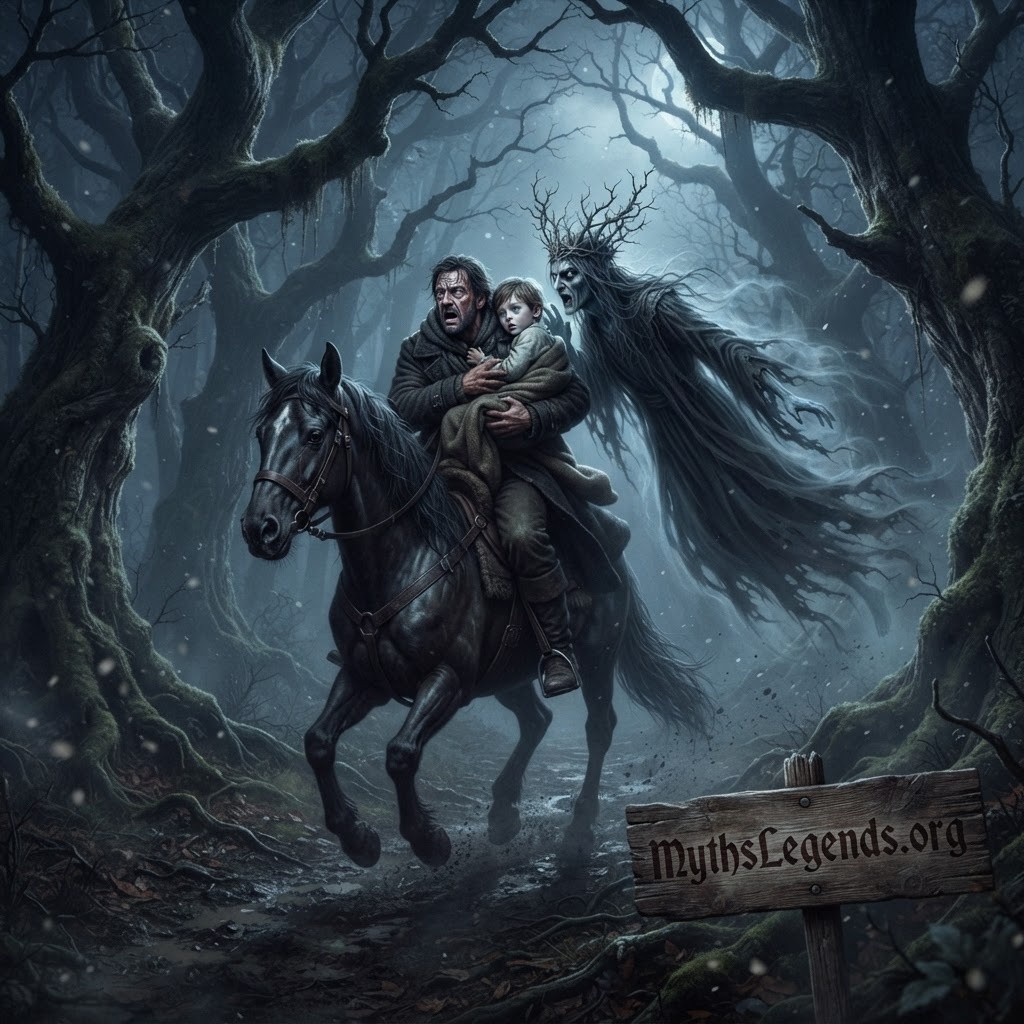
The Legend of the Erlkönig – Origin and Development – The story of the Erlkönig tells of a mysterious, supernatural being who dwells in dark forests and, with a beguiling voice, lures children or travellers into his realm, ultimately leading them to their doom. Typically, the legend describes how a father rides through the forest on horseback with his sick child, whilst the Erlkönig attempts to draw the child to him with seductive words. Despite the father’s warnings and entreaties, the child eventually succumbs to the influence of the mystical being and dies. This tale has been passed down through the ages and adapted in various regions of Europe. However, its best-known literary version was brought to the public’s attention by Goethe – his ballad ‘Erlkönig’, published in 1782, remains a masterpiece of German literature to this day.
Local Roots: Jena and the Saale Valley – The Saale Valley, with its distinctive landscape, dense forests and rolling hills, has always provided an ideal breeding ground for legends and fairy tales. In particular, the area around Jena and the ‘Grüne Tanne’ is traditionally regarded as the origin of the Erlkönig legend. Historians and folklorists speculate that the dense, impenetrable forests and the often mist-shrouded atmosphere in this region fired people’s imaginations. The ‘Grüne Tanne’ itself – whether an ancient tree or the place that gave the legend its name – is repeatedly associated with the magical aura of the legend. Older chronicles and oral traditions contain references to unusual phenomena observed here, such as sudden flickering of the light, eerie voices in the wind or even apparitions, which later became part of the concept of the Erlkönig. Natural phenomena, such as harsh winds and misty evening atmospheres, created an environment that was ideal for the legend to emerge.
Historical and cultural context – To understand the deeper meaning of the Erlkönig legend, it is worth taking a look at the social conditions and the spirit of the age in which it originated. In the late 18th century, Central Europe was characterised by a mixture of the Enlightenment and superstition. Whilst the emphasis on reason increasingly favoured scientific explanations, numerous folk beliefs and mystical notions continued to hold sway amongst the rural population. In his ballad, Goethe drew on a folk tale that is presumably much older and was partly drawn from Celtic and Germanic myths. The ‘Erlkönig’ is not merely a villain here, but also symbolises the unstoppable power of nature and fate, which eludes human control. The child in the poem stands metaphorically for the vulnerability of life, the struggle between reality and imagination, and the fear of the unknown. Over time, several authors and ethnologists have drawn parallels between the Erlkönig and other European mythical figures, such as the Danish ‘Elverkonge’ (Elf King) or French fairy creatures. These are often seducers or deadly beings who abduct children into the otherworld at night. Such archetypes reflect ancient fears of the forces of nature, illness and death.
Goethe’s ballad as a literary masterpiece – Goethe’s ‘Erlkönig’ condenses these elements into a suspenseful poem that builds tension through concise verses and dramatic dialogue. The frantic journey through dark forests, the Erlkönig’s voice with its enticing words, and the father’s desperate attempts to reassure his child are masterfully staged. The ending remains open-ended and, at the same time, terrifying: the child dies – a final escalation of the supernatural threat. The ballad’s success lies in its ambiguity: it leaves room for various interpretations – be it as a nature myth, an allegory for illness and death, or an expression of a child’s fear. At the same time, the reader is emotionally captivated – the oppressive atmosphere, the rhythm and the imagery create an unsettling mood that has lost none of its impact to this day.
Modern Reception and Significance for Tourism – Nowadays, the legend of the Erlkönig and its connection to Jena form an integral part of the region’s cultural heritage. Guided tours and literary events actively incorporate the story, enabling visitors not only to experience the scenic beauty but also to immerse themselves in the sombre world of the legend. In doing so, emphasis is often placed on how closely the natural landscape is interwoven with the origins of the story. This tradition also promotes sustainable tourism and raises awareness of the need to protect nature as a source of experience and inspiration. Many walking trails in the Saale Valley bear names or feature stops with Erlkönig motifs, keeping the legendary atmosphere alive.
A lasting legacy in the shadow of the Green Fir – The legend of the Erlkönig is more than just a spooky tale – it is a mirror of the human soul, of how we deal with fear, loss and the power of nature. Its roots in the Saale Valley near Jena show just how closely landscape, history and myth are interwoven. Thanks to Goethe’s poetic adaptation, the tale has taken on a new dimension and remains a fascinating chapter in German cultural history to this day. Anyone who sets out today to seek the whisper of the Erlkönig in the forests of the Grüne Tanne embarks on a journey into a mythical world – a world in which light and shadow, reality and fantasy wrestle with one another, and ancient stories remain alive. The legend reminds us to treat nature with respect and to accept our fears as part of the human condition. Thus, the whisper of the Erl-King still echoes through the valleys and forests of Thuringia today – a sombre melody that leaves no one unmoved and reflects the unforgettable connection between humanity, nature and myth.










Post Comment