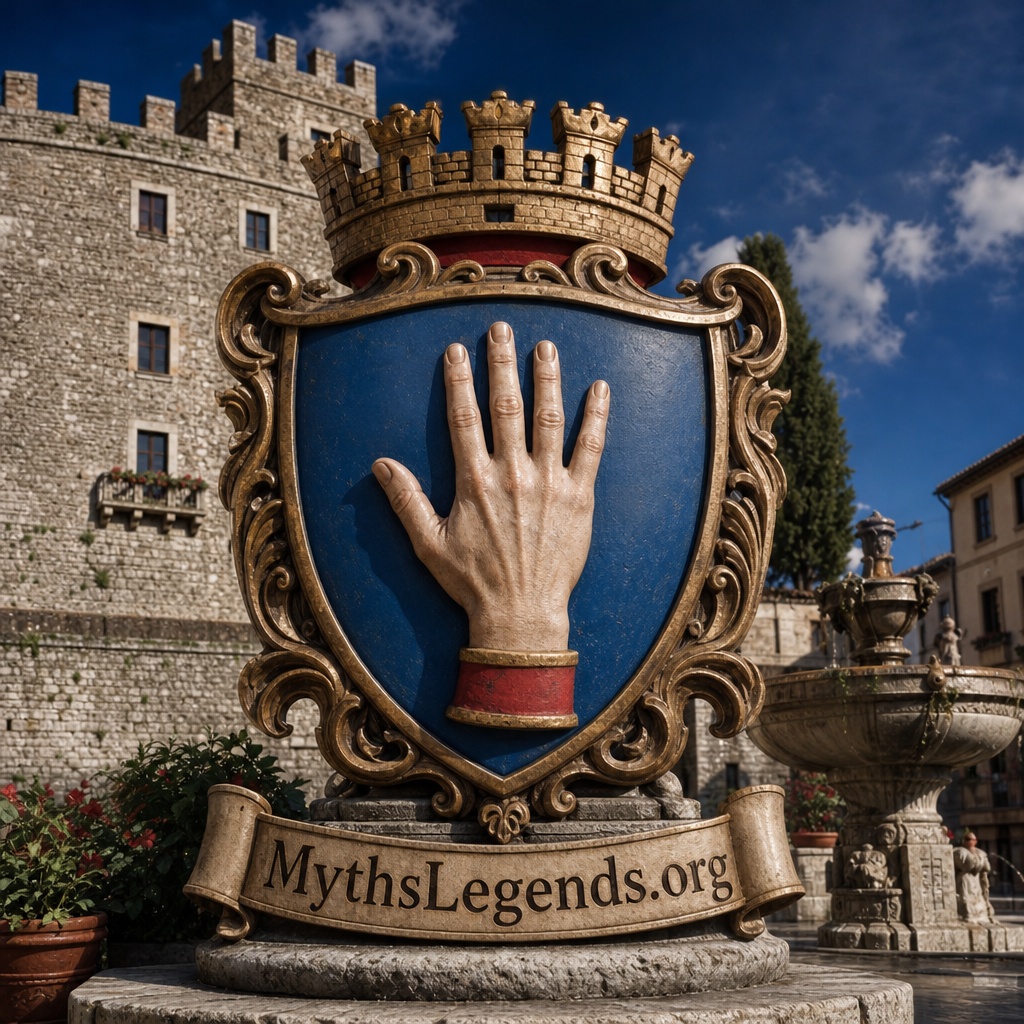
The mystery of the left hand in Manciano’s coat of arms: humour rather than heroism
Anyone visiting the charming Tuscan town of Manciano will pass a magnificent fountain in Piazza Garibaldi, which is not only an architectural gem but also features the town’s official coat of arms: a single left hand, depicted proudly yet appearing somewhat enigmatic. This unusual symbol raises questions, leaves room for speculation and offers an exciting opportunity to discover Italy’s history, language and culture – away from great battles and heroic deeds.
A Symbol to Marvell at: Manciano’s Left Hand – At first glance, it seems almost banal or even mysterious: why a single left hand? No sword, no crown, no lion – just the left hand. Historically speaking, coats of arms are usually an expression of power, lineage or significant events. They tell of fierce battles, heroic deeds, family secrets or regional traditions. Yet Manciano’s coat of arms is different – and that is precisely what makes it so fascinating.
The most common myths and legends – Over the centuries, many myths have developed around the left hand. Some told of bloody battles in which the first man to strike with his left hand immortalised a severed hand as a sign of victory. Others suspected secret messages or ritual significance behind this symbol. Given the region’s long history, marked by power struggles between noble families such as the Aldobrandeschi, the notion of such a bloody symbol offered an obvious, yet incorrect, explanation. Even within heraldry itself, the depicted hand has a wide variety of interpretations. For instance, the hand can be used as a symbol of strength, justice or loyalty. In Celtic and Christian symbolism, the hand often stands for protection, blessing or divine grace. Yet all these historical and symbolic interpretations are only partially applicable to Manciano, as sources and local history demonstrate.
The true story: humour as the basis – The actual reason for the left hand in the coat of arms is far more down-to-earth and offers a wonderful insight into Italian humour and pragmatism in the Middle Ages. The municipality of Manciano, like many other towns, was required to adopt an official coat of arms. Choosing a symbol was often difficult, as the aim was to find something memorable that reflected the town’s identity. The key lies in the name itself: ‘Manciano’ sounds very similar to the Italian word ‘mancino’, which means ‘left-handed’. This phonetic connection led to a simple yet ingenious decision: instead of an elaborate legend or a dramatic symbol, they simply chose the left hand – a play on words as a visual identity. This humorous solution stood in stark contrast to the long treatises on virtues, bravery or divine protection that were otherwise customary. It was a playful gesture which was, at the same time, a clever marketing ploy to raise the town’s profile through an easily memorable and original representation.
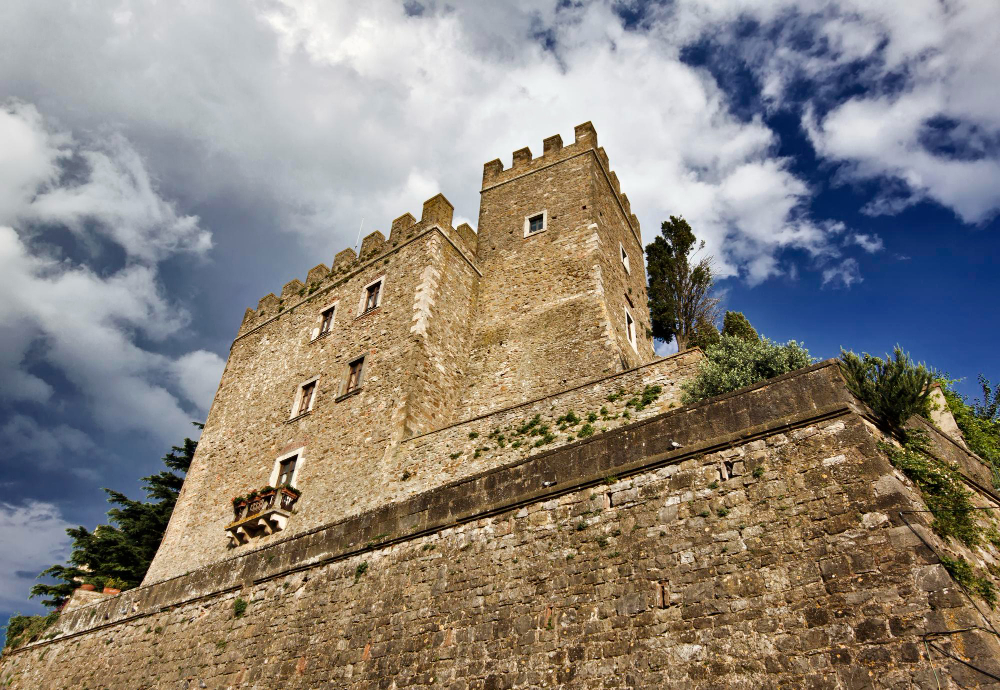
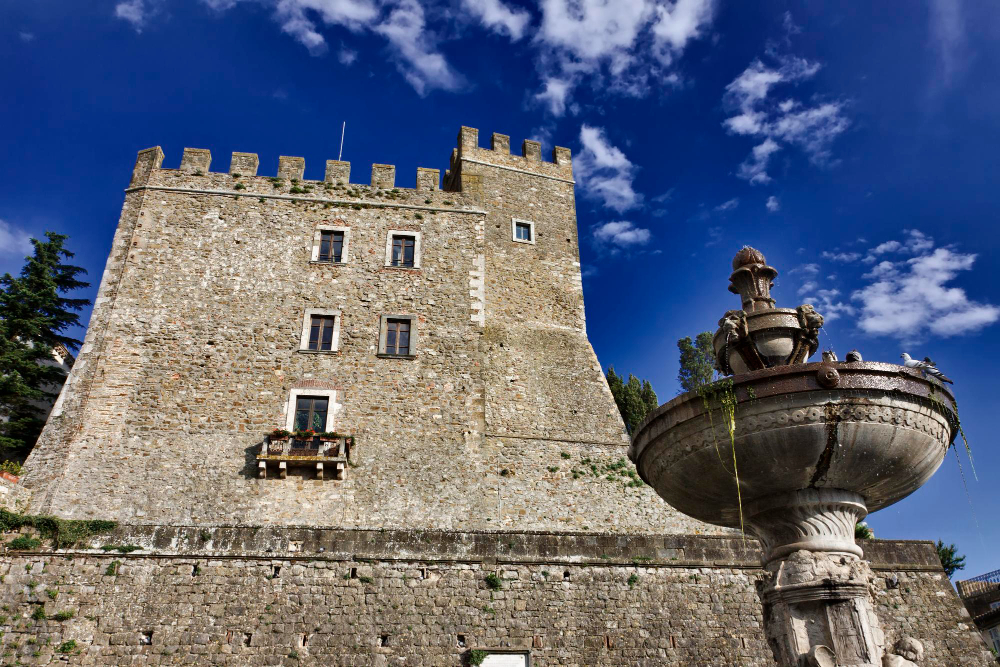
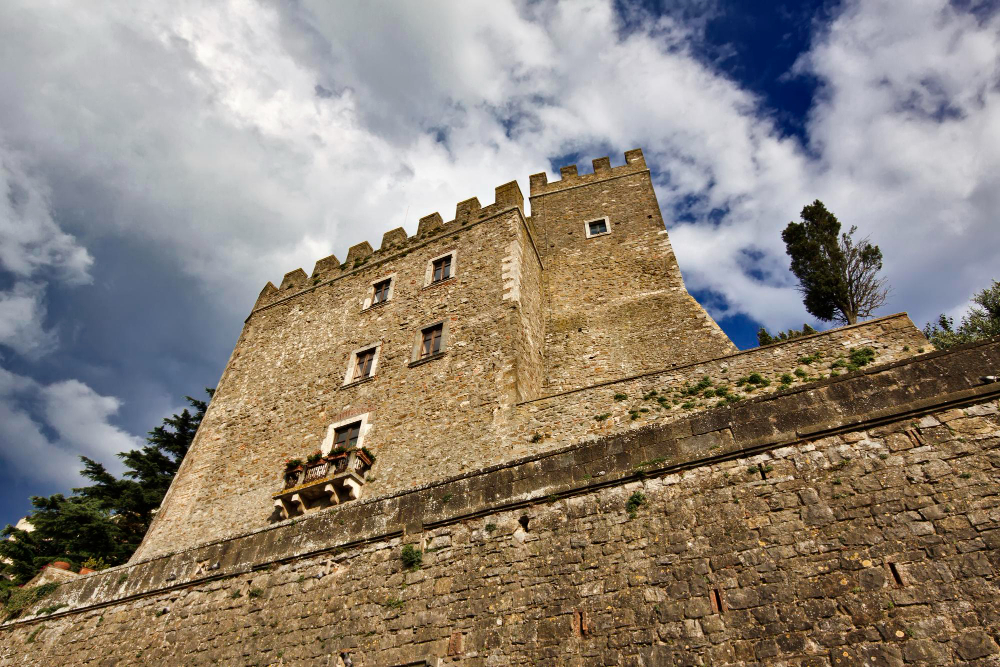
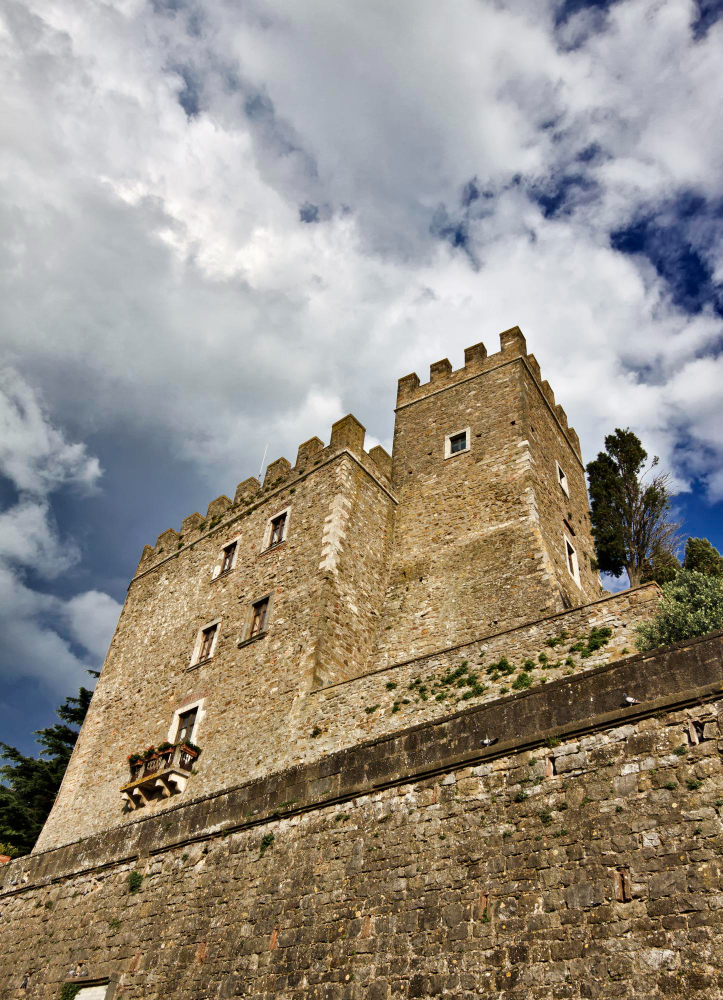
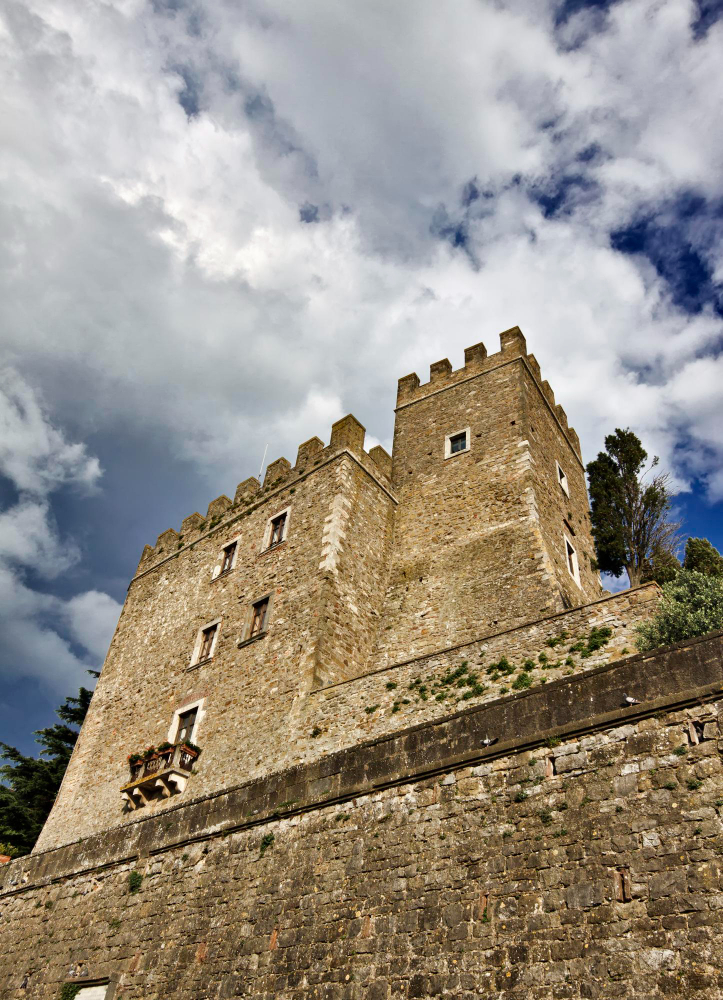
Historical Background and the Significance of the Coat of Arms – The coat of arms of Manciano was designed during the reign of the Aldobrandeschi family, one of the most powerful noble houses in Tuscany from the 10th to the 14th century. The Rocca Aldobrandesca castle, which still towers over Manciano today, stands as an impressive testament to that era. Although the Aldobrandeschi family coat of arms usually features other elements (such as eagles or lions), the town’s coat of arms remained distinct, drawing less on military power and more on local characteristics. In the Middle Ages, the use of coats of arms was closely linked to pride in one’s community or family. The fact that Manciano deliberately chose such an unconventional symbol speaks to the independent spirit of its inhabitants and their sense of irony. This fits well with the Italian tradition of integrating humorous wordplay as an integral part of everyday life and language.
The cultural context: wordplay in the Italian Middle Ages – Wordplay was certainly significant in medieval Italy. Alongside political and military conflicts, art, literature and even town identities were characterised by linguistic wit. The choice of a coat of arms symbol based on phonetics and humour reflects this cultural context. Manciano thus demonstrates how historical communities were defined not only by power or force, but also by creativity and a zest for life.
A coat of arms with a twinkle in its eye – The ‘mystery of the left hand’ in Manciano’s coat of arms impressively demonstrates that history is not always told through epic battles or tragic legends, but is sometimes also shaped by small gestures and wordplay. The simple symbol of the left hand is more than just an emblem – it is a bridge between language, culture and community. For visitors to Manciano, the coat of arms offers a memorable introduction to the region’s rich history, whilst also serving as an invitation to reflect on the meaning of symbols and traditions – and to smile at the subtle Italian humour that is still reflected in the town’s identity today.




Post Comment