The Dogs of Zorita: How a medieval legend gave a Spanish castle its name
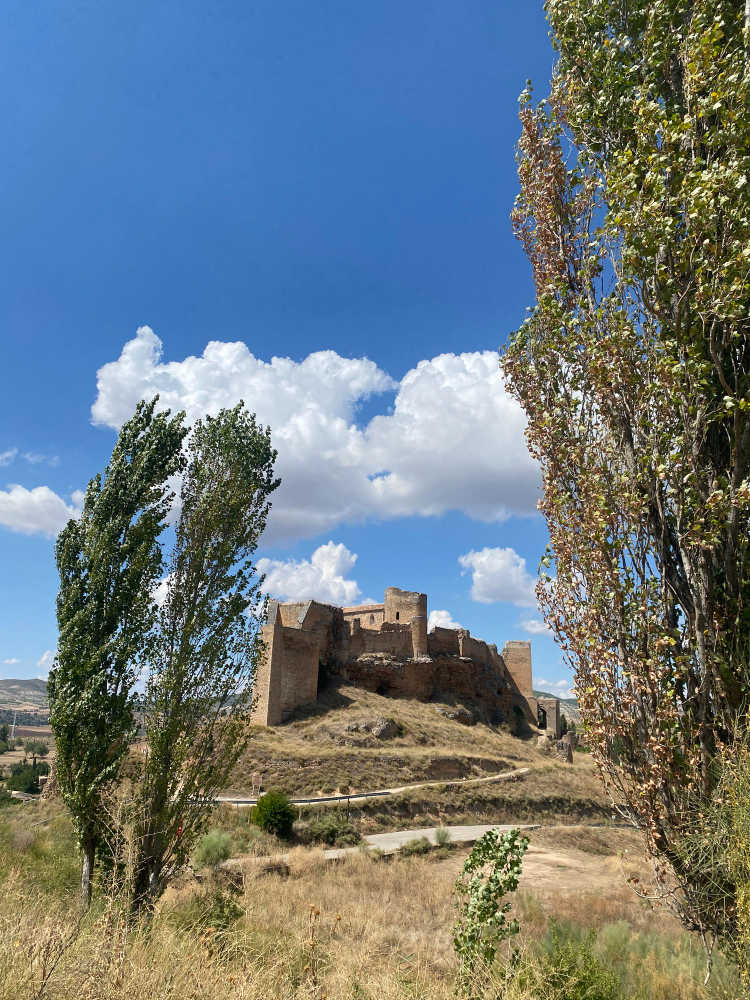
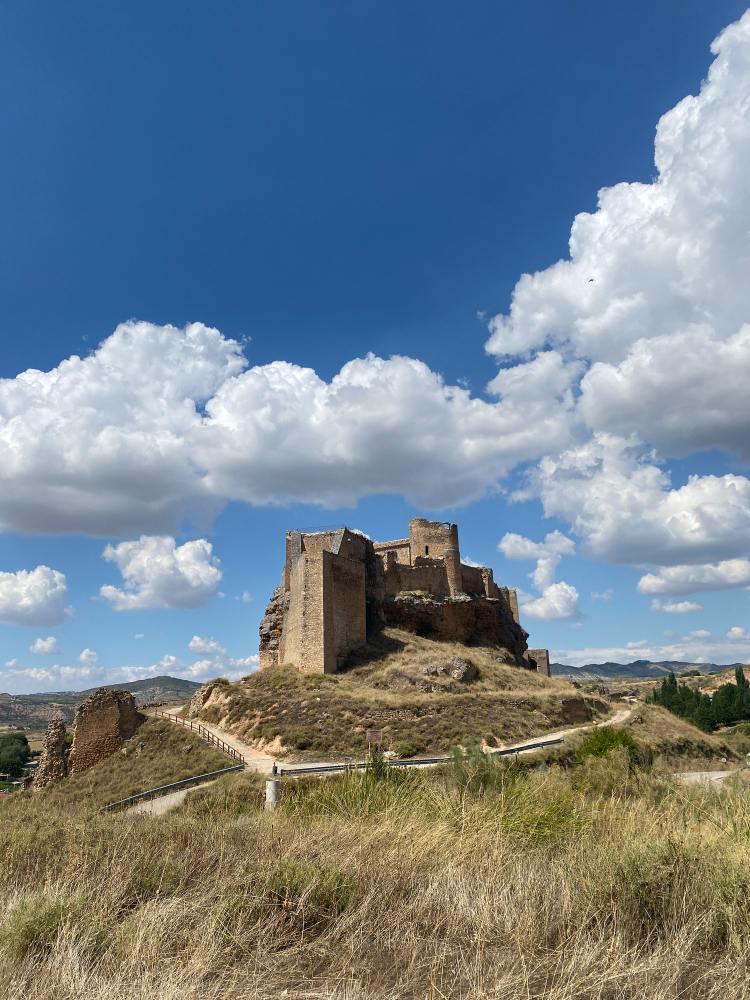
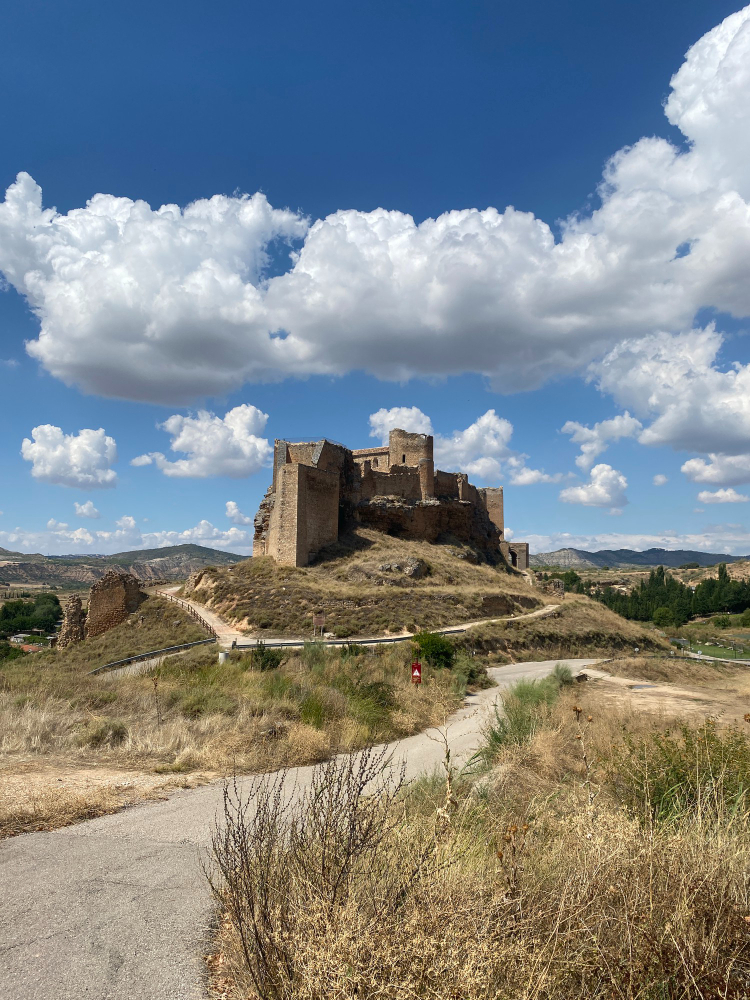
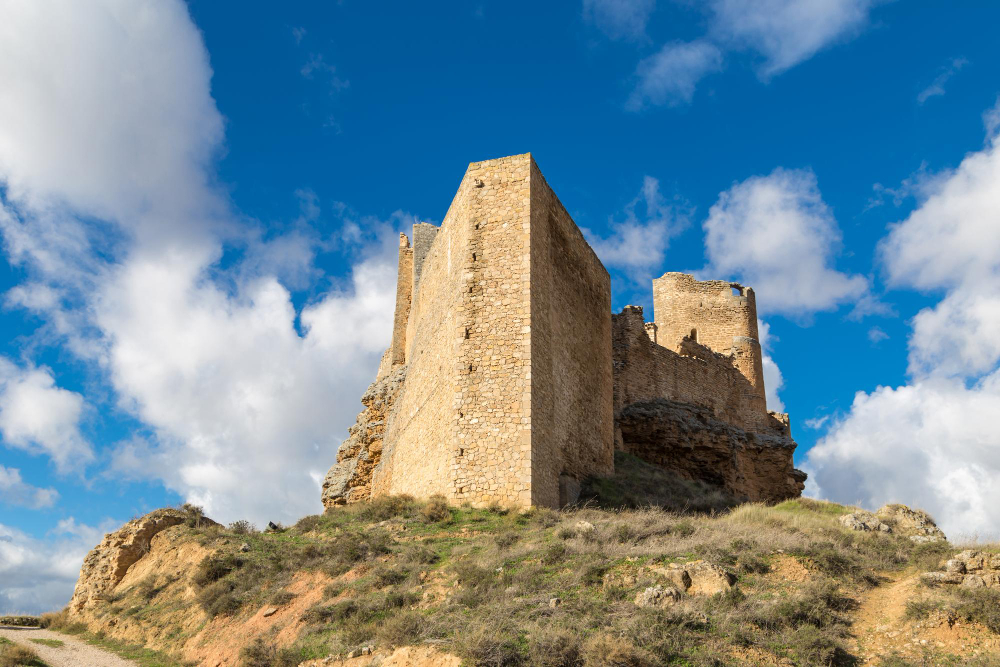
High above the River Tagus, in the Castilian province of Guadalajara, lie the ruins of Zorita de los Canes Castle. The complex, whose origins date back to the Islamic period on the Iberian Peninsula, was a key strategic stronghold on a contested border for centuries. Yet it is not only its walls, towers and spectacular location on a rocky outcrop that make it remarkable. The place name ‘de los Canes’ – ‘of the dogs’ – is linked to one of the most striking legends of the Reconquista: the story of dogs to whose bodies torches were allegedly attached in order to strike fear and confusion into the fortress’s defenders. Whether the episode took place exactly as described cannot be historically proven. Written sources from the time of the alleged conquest do not unequivocally confirm the event. Nevertheless, the tale is firmly rooted in local folklore and explains why the place still bears the suffix ‘de los Canes’ to this day. The legend combines military stratagem, medieval border history and the memory of a castle that long oscillated between Islamic and Christian rule.
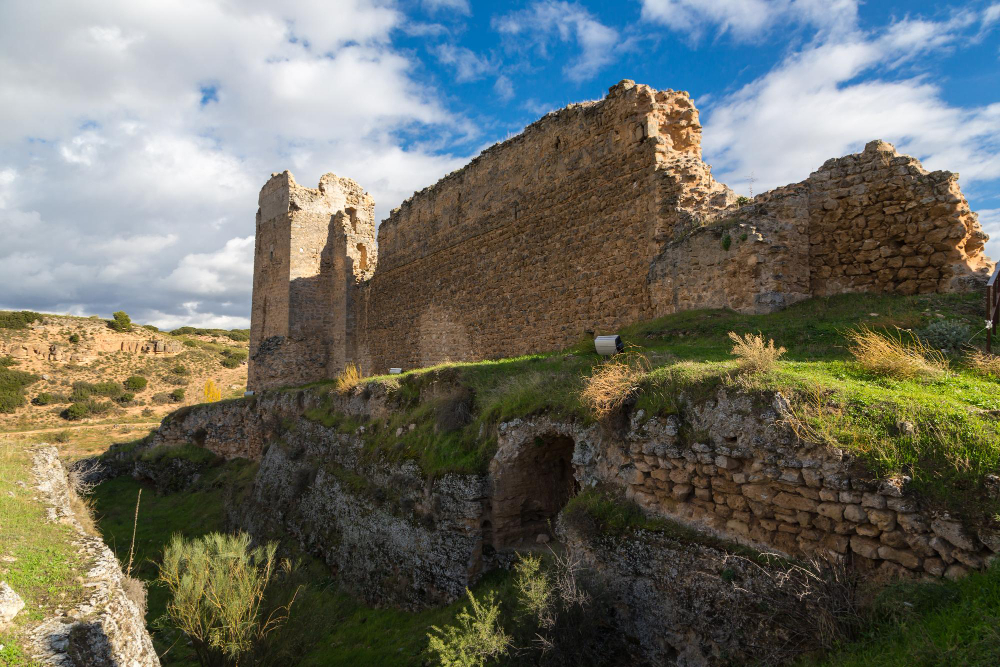
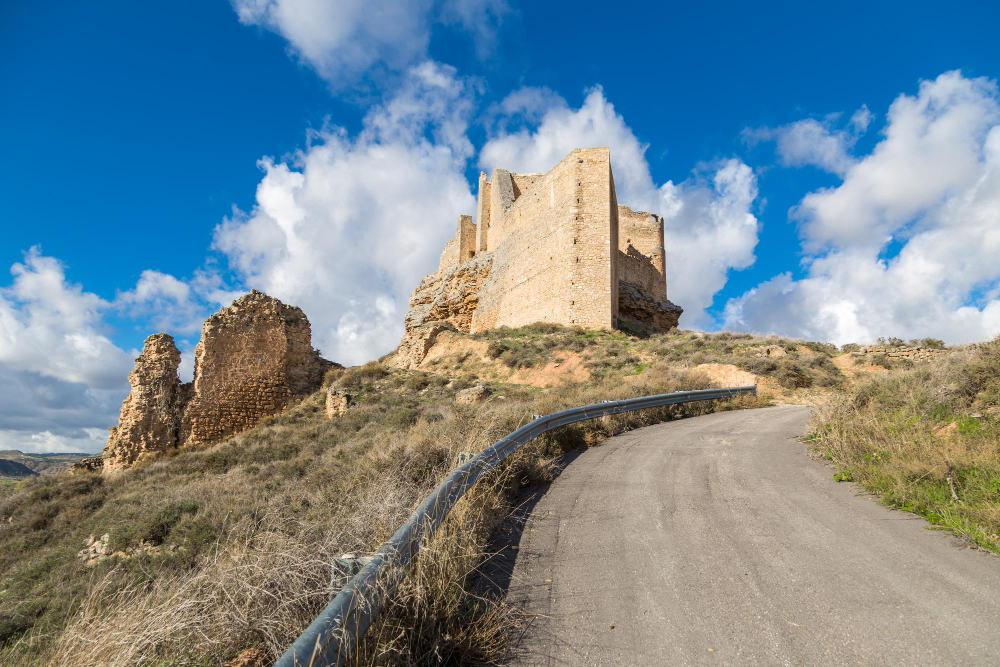
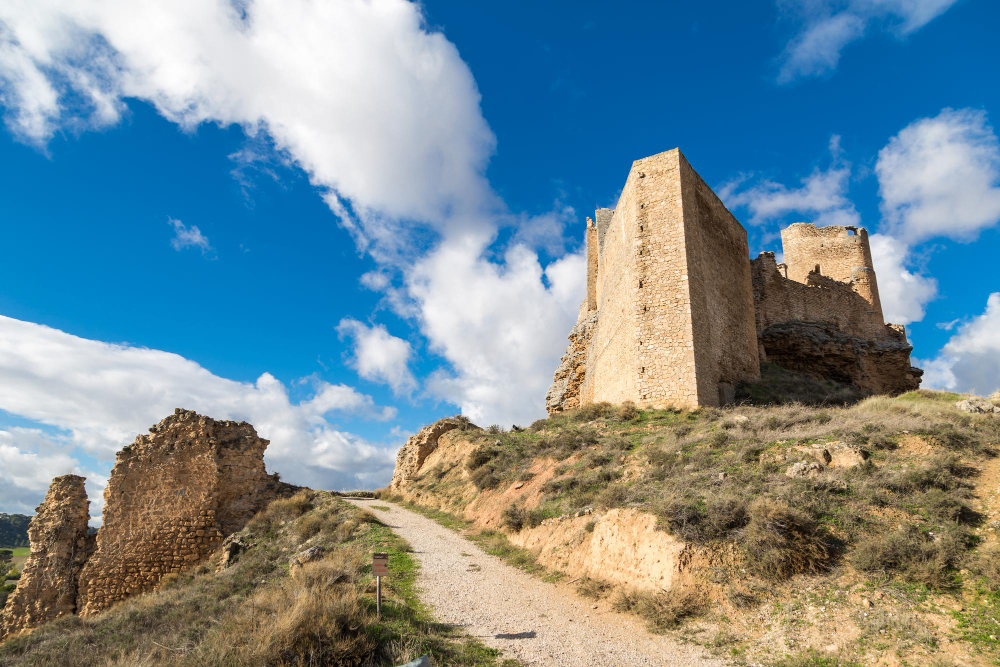
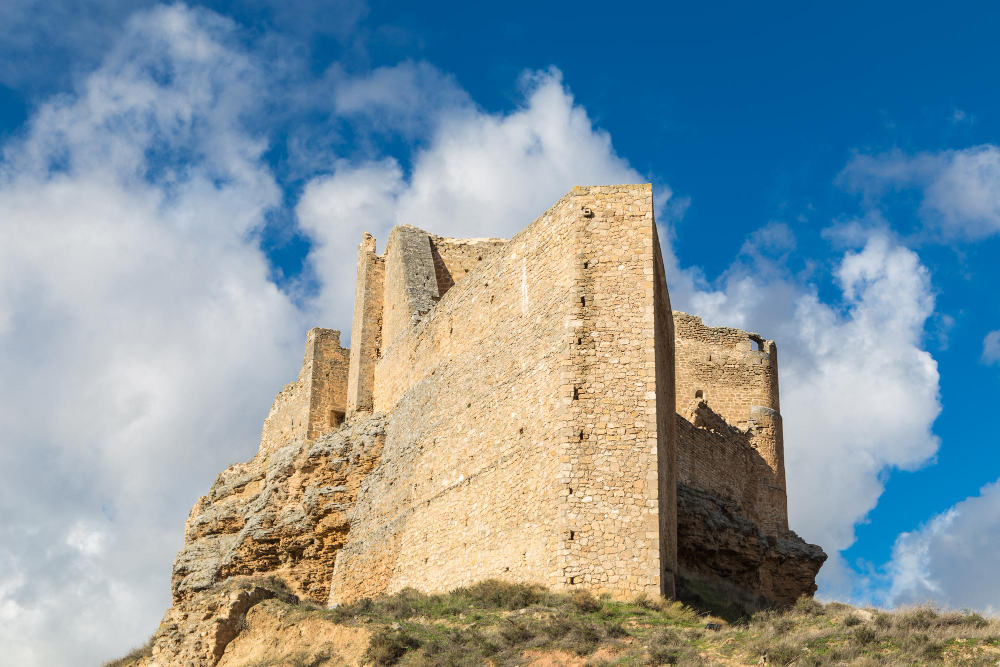
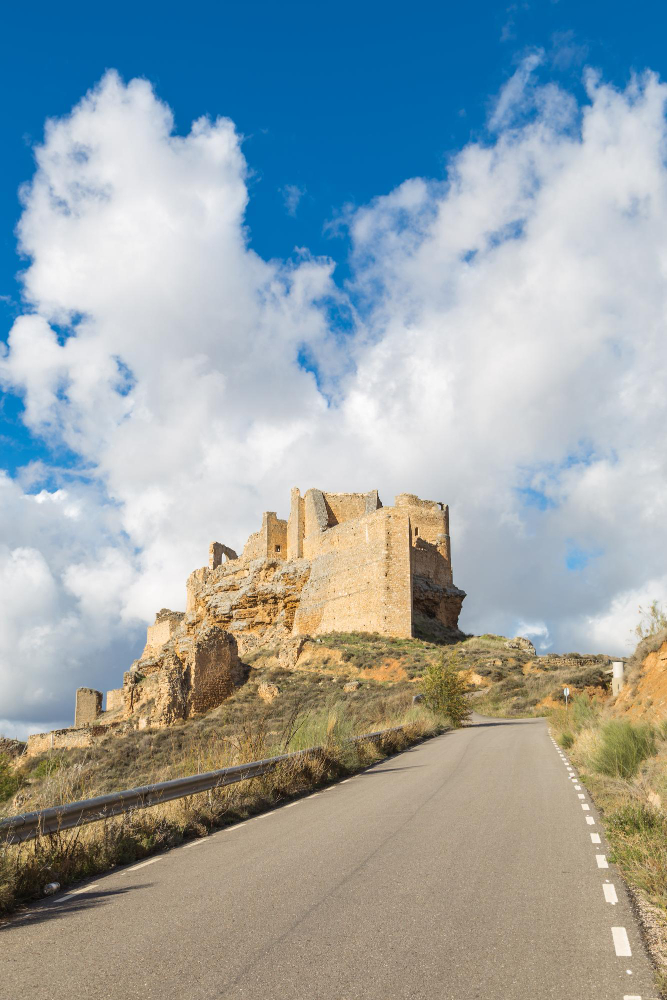
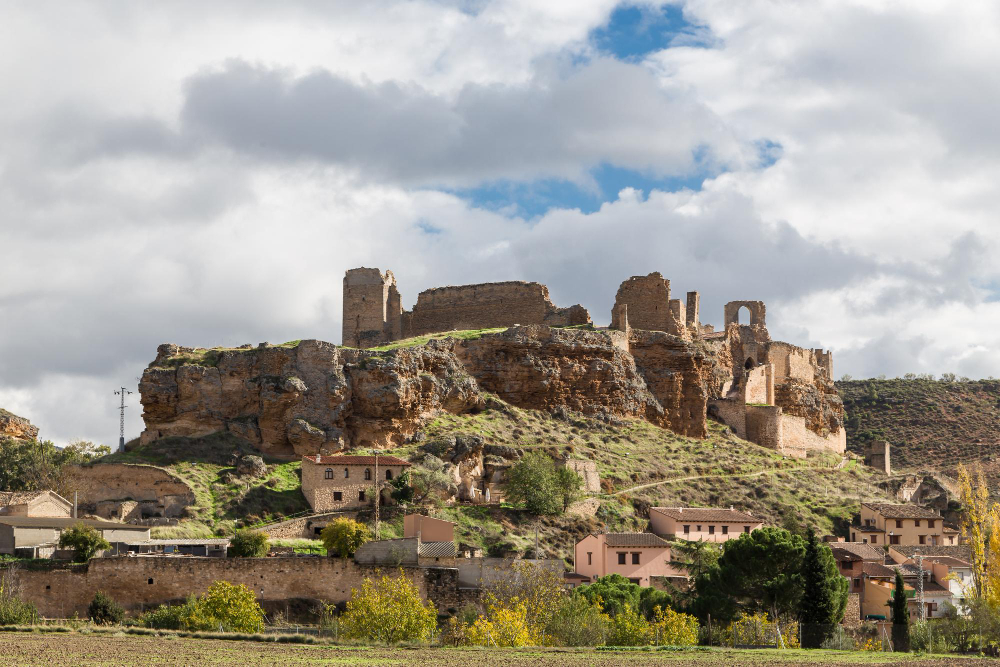
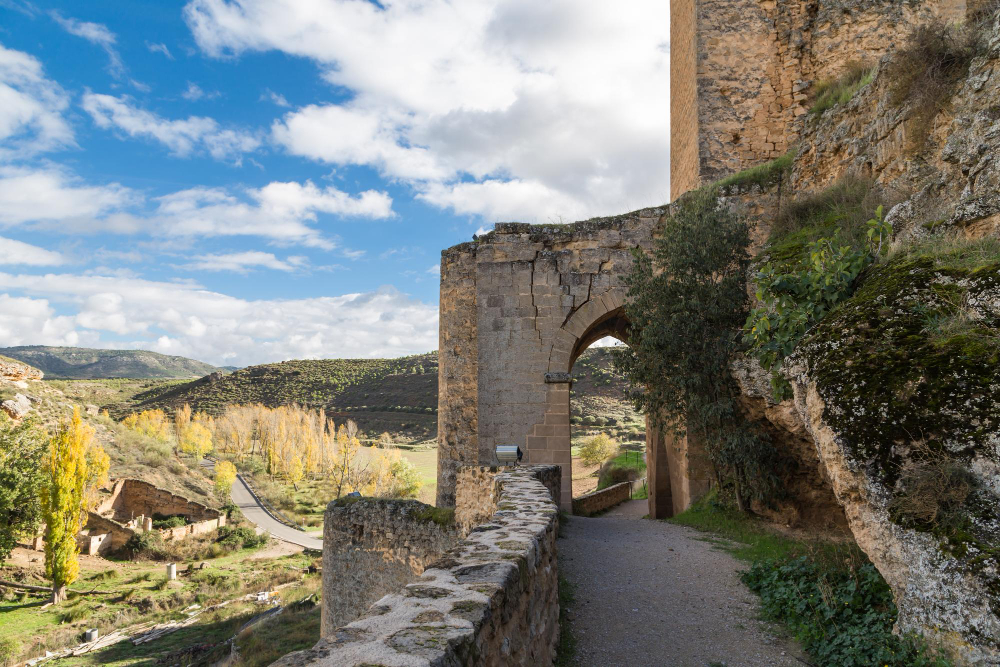
A fortress overlooking the Tagus – Zorita de los Canes is situated in the south of the province of Guadalajara, not far from the settlement of Pastrana, which later became significant. The castle rises above the valley of the Tagus, one of the longest rivers on the Iberian Peninsula. Its location was by no means chosen at random: from these heights, it was possible to monitor paths, river crossings and movements in the surrounding area. Whoever controlled Zorita had a military observation and defence post in a region that repeatedly became a border area during the Middle Ages. The complex has often been referred to as the Alcazaba de Zorita. The term ‘Alcazaba’ derives from Arabic and refers to a fortified castle or citadel. Its earliest architectural origins are generally dated to the period of Muslim rule on the Iberian Peninsula. Following the Arab-Islamic conquest from the early 8th century onwards, fortifications were erected in many parts of al-Andalus, combining administration, protection and military control. Zorita was more than just a remote mountain fortress. It gained in importance during the centuries of political fragmentation and shifting borders. Particularly following the collapse of the Caliphate of Córdoba in the 11th century, numerous smaller territories, the so-called Taifa kingdoms, emerged across the peninsula. In this complex situation, fortresses became key instruments of power. The steep slopes surrounding the fortress made a direct assault difficult. Walls, towers and the natural topography complemented one another. It is precisely this seemingly impregnable position that forms the core of the later story of the dogs: if the castle could scarcely be taken by brute force, then – according to tradition – its conquest had to be achieved through deception.
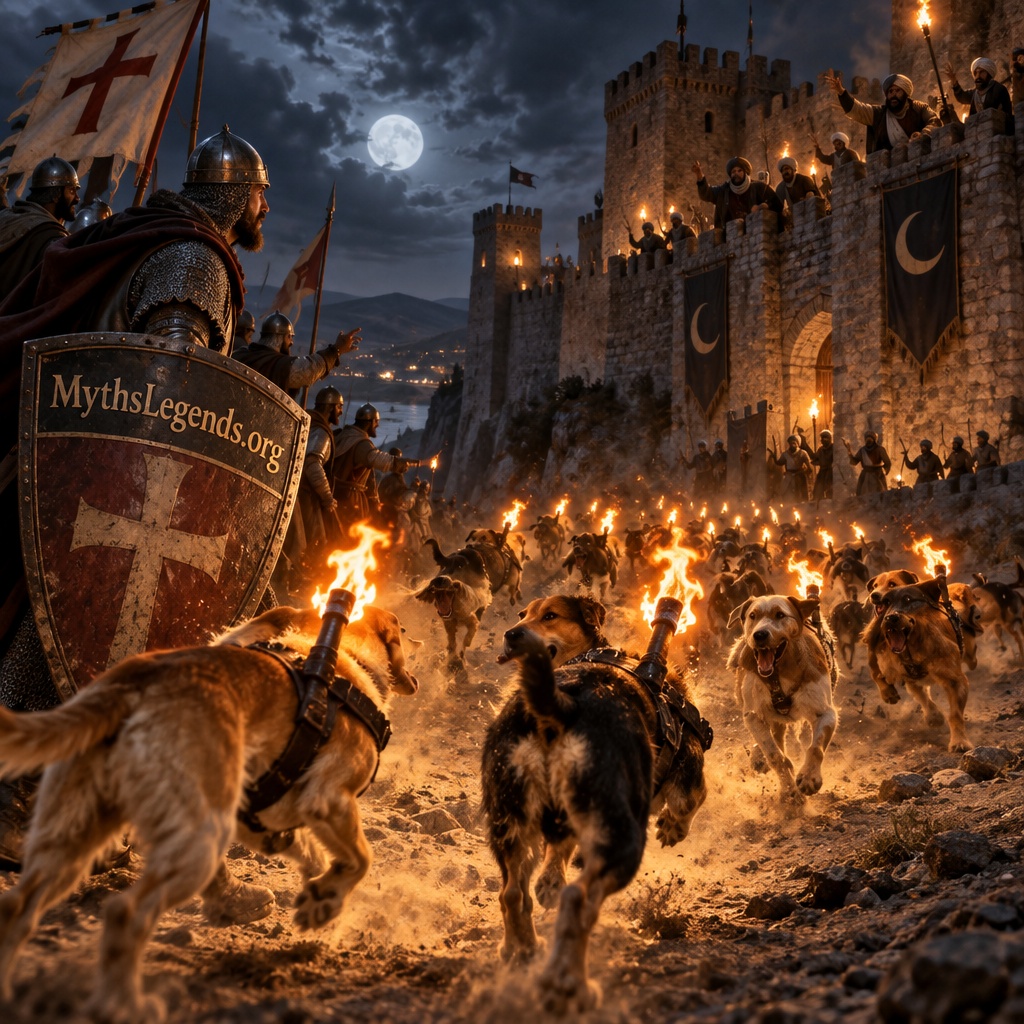
The Legend of the Torch Dogs – According to local tradition, Christian troops laid siege to the Moorish-occupied castle of Zorita. In some versions of the tale, the conquest is associated with Álvar Fáñez. In Castilian tradition, Fáñez is regarded as a close companion of the legendary national hero Rodrigo Díaz de Vivar, better known as El Cid. Historically, Álvar Fáñez is documented as a Castilian nobleman and military commander of the late 11th and early 12th centuries, though many of the heroic deeds attributed to him are intertwined with later legends. The castle is said to have been so well defended that an open attack offered little prospect of success. Particularly at night, the Christians are therefore said to have resorted to an unusual tactic: they tied burning torches to a large number of dogs – depending on the version, to their necks, bodies or tails – and drove the animals towards the fortress. From a distance, in the impenetrable darkness of the night, the numerous moving lights are said to have looked like the torches of a vast army. According to the legend, the Muslim defenders assumed that a numerically superior force was launching an attack. Confusion and fear are said to have gripped the garrison. Either parts of the garrison fled, or the defences were so weakened that the Christian attackers were able to capture the castle. The story contains all the elements of an effective medieval siege legend: an impregnable fortress, a cunning military commander, a night-time attack, and the overcoming of military strength through ingenuity. Precisely for this reason, it must be read critically. It should not be treated as a verified factual account, but as a motif from local tradition that has shaped the history of the place over the centuries. From a modern perspective, the idea of setting animals alight and driving them up a slope in a state of panic seems cruel. Even setting aside the question of its historical accuracy, the tale illustrates how differently violence, war and the use of animals were portrayed in medieval legends. The animals do not appear as beings in their own right, but as tools of a stratagem. For modern commemorative culture, this is an inevitably problematic aspect of the tradition.
Where does the name ‘de los Canes’ come from? – The name Zorita de los Canes is usually associated with this legend. ‘Canes’ is an older or more formal Spanish term for dogs, derived from the Latin *canis*. The suffix thus effectively means ‘Zorita of the dogs’. The town’s coat of arms also alludes to this tradition: the dog features there as a symbol. This is a typical example of how local stories can forge political and cultural identity. Even if an event is not fully documented by contemporary records, its narrative can become so influential over the centuries that it lives on in names, heraldic symbols and tourist promotion. The first part of the name, ‘Zorita’, is often associated with Arabic or pre-Arabic linguistic influences; however, its exact interpretation is less clear-cut than the popular explanation of ‘de los Canes’. One thing is certain: the present-day place name links the long history of a border town with a narrative that has become deeply ingrained in the local collective memory.
The Reconquista: History and Concept – The legend is set against the backdrop of the Reconquista, that long series of conquests, alliances, reconquests and changes of rule on the Iberian Peninsula. The term ‘Reconquista’ is used in historical scholarship today in a more nuanced way than in the past. It can give the impression that, over almost eight centuries, there was a unified, straightforward Christian plan for ‘reconquest’. In reality, the medieval situation was considerably more complex. Although Christian and Muslim rulers were often engaged in military conflict, they also formed alliances, concluded truces, traded with one another and exploited political divisions on the opposing side. Followers of different religions lived side by side in many regions, albeit under very different legal and social conditions. Zorita was situated in an area where these tensions were particularly evident. Following the Christian capture of Toledo in 1085, the balance of power in central Spain shifted permanently. Castles to the south and east of Toledo became important strongholds in securing the new border regions. The conquest or control of Zorita must be viewed within this broader context, even if the exact sequence of individual events and the role of specific individuals cannot always be reconstructed beyond doubt.
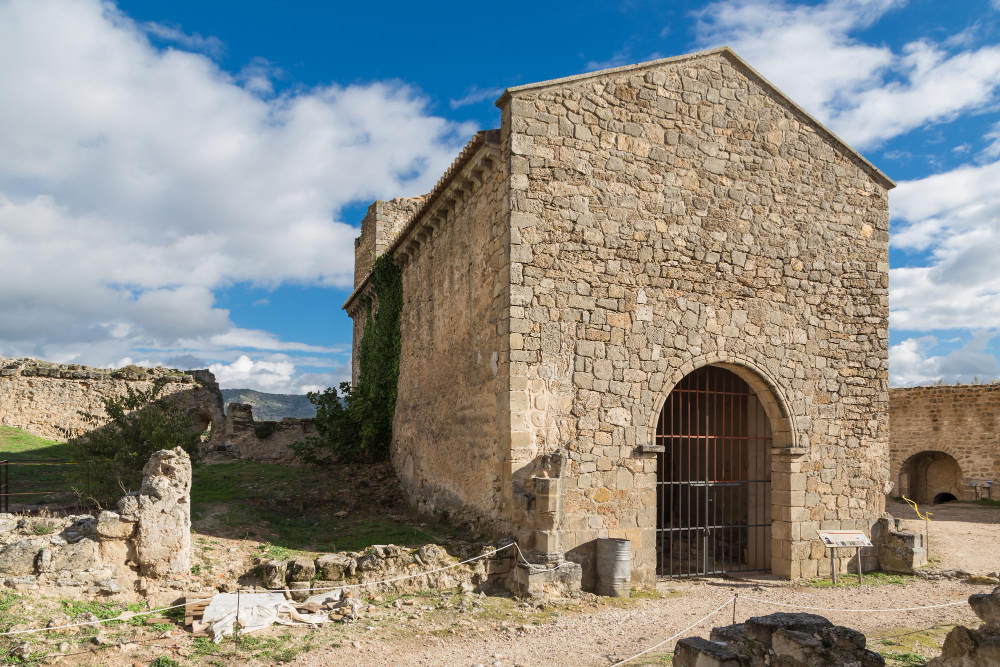
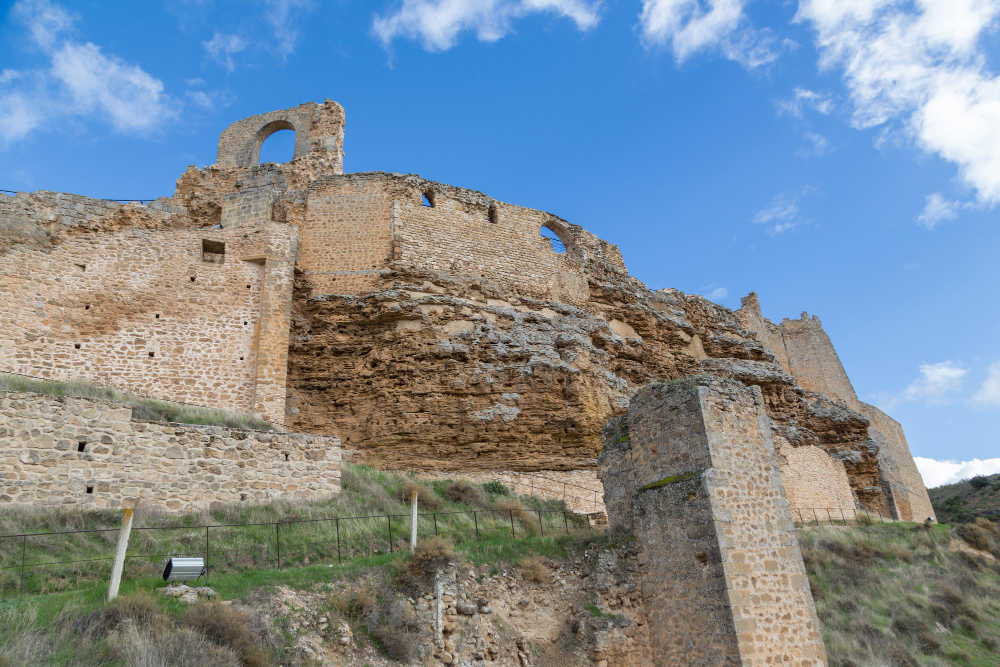
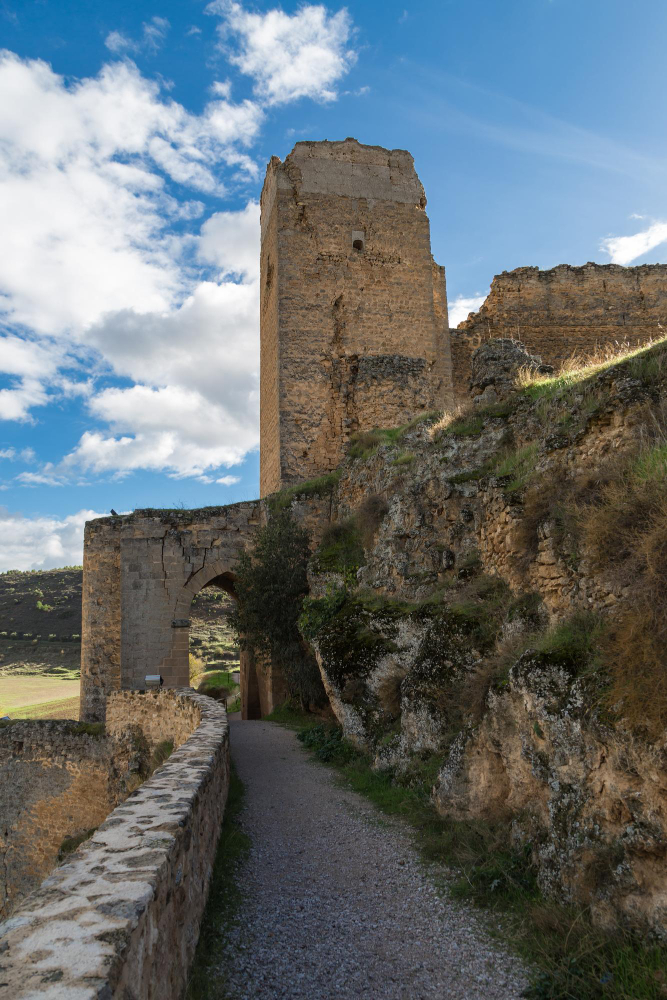
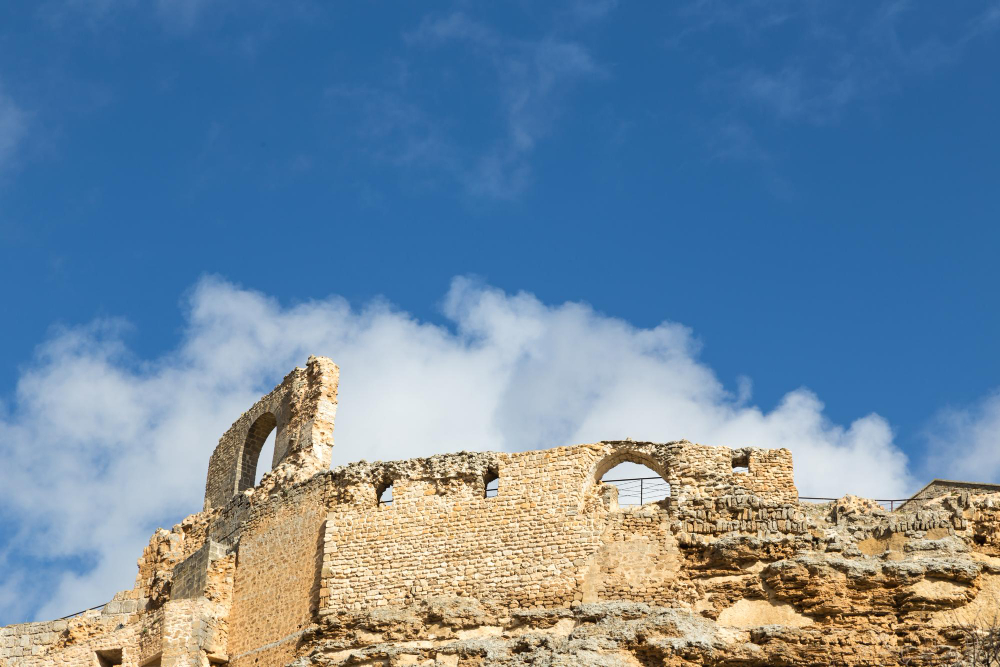
The castle under the Order of Calatrava – The history of Zorita did not end with its presumed Christian conquest. In the 12th century, the fortress became closely associated with the Order of Calatrava. This religious order of knights was founded in Castile in the context of military conflicts with Muslim rulers and was intended to secure border regions. The knights combined religious devotion with military duty – much like other significant orders of the Middle Ages, such as the Knights Templar or the Knights Hospitaller. Zorita was, at times, an important seat of the Order of Calatrava. The castle was expanded and adapted to the requirements of a Christian border fortress. Among the notable parts of the complex is a church linked to the Order’s history. Later, however, the centre of the Order shifted to Calatrava la Nueva, a more heavily fortified site situated further south in what is now the province of Ciudad Real. The architectural remains of Zorita reflect this long history of use. Within them, Islamic and Christian phases of construction overlap. It is precisely these layers that make the castle historically valuable: it stands not merely as a symbol of a single military victory or a legend, but of centuries of shifting power, religious affiliation and regional development.
Between tradition and verifiable history – When it comes to the history of the ‘Dogs of Zorita’, the distinction between the documented past and folk tales is crucial. The castle itself, its strategic role, its Islamic origins and its later connection to the Order of Calatrava are historically verifiable aspects. The existence of Álvar Fáñez is also documented. The specific episode involving the torch-bearing dogs, on the other hand, belongs to the realm of tradition, the details of which cannot be reliably verified. This does not render the legend meaningless. On the contrary: legends often reveal how communities wish to understand and recount their past. The story conveys an image of the attackers’ courage and cunning, explains the unusual place name and lends the ruins a dramatic setting. At the same time, it shows how medieval history was later embellished, simplified and linked to heroic motifs. For visitors, therefore, Zorita de los Canes is a place with two dimensions. On the one hand, there is the real castle: an archaeological and architectural testament to the history of al-Andalus, Castile and the orders of knights. On the other hand, there is the castle of legend – the nocturnal fortress where countless lights suddenly appear on its walls, accompanied by the noise of a pack of dogs.
A small village, a great legacy – Today, Zorita de los Canes is a small village whose fame extends far beyond its population. The castle dominates the landscape and shapes the identity of the place. From its heights, the view opens out over the Tagus valley and a landscape that was a contested border region in the Middle Ages. The legend of the dogs offers a vivid insight into this past, but must not be confused with a verified historical account. Its true significance lies in the fact that it links history, the place name and collective memory. It tells of a castle said to have been so difficult to capture that an army was allegedly forced to rely on unusual assistance. Whether the ‘torch dogs’ ever actually ran through the night in Zorita remains an open question. One thing is certain, however: their story has survived. In a place name, in a coat of arms and in the image of a castle whose walls still stand today above the Tagus, bearing witness to a turbulent medieval past.




Post Comment