
The Sleeping Army of Doblen: Legend, History and Myth of a Teutonic Order Castle
In the heart of Latvia, in the historic region of Semigallia, stand the ruins of Doblen Castle – a place that is more than just a dilapidated medieval fortress. For centuries, mysterious tales have surrounded the remains of this venerable castle, reflecting the region’s rich and often turbulent history. Arguably the best-known and most fascinating of these is the legend of the ‘sleeping army’ – warriors who rest in a magical slumber deep beneath the castle’s moss-covered stones, ready to awaken in times of greatest need to defend their land. But how did this legend come about? What historical context lies behind the legend? And how is it interpreted today? This article takes an in-depth look at the mysterious Sleeping Army of Doblen and sheds light on the history, culture and significance behind this captivating tale.
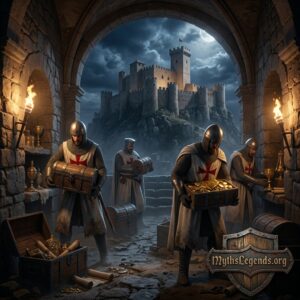
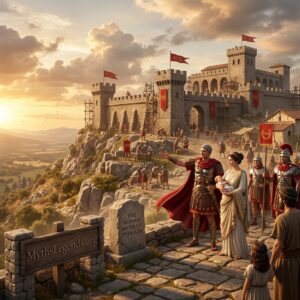
Doblen Castle – History and Strategic Importance – Before delving into the legend, it is important to understand the historical context of Doblen Castle. The castle was built in the 14th century by the Livonian Order, a branch of the Teutonic Order, which sought to spread Christianity and establish military control in the Baltic Sea region. Doblen, situated in the central Latvian part of the historic region of Semigallia, was a key location for monitoring trade routes and providing protection against rebellious local tribes as well as foreign powers. The Order’s castle provided protection and served as an administrative centre. Its massive walls and towers symbolised power and stability. Over the centuries, the castle repeatedly became the scene of various conflicts – ranging from local uprisings to armed conflicts arising from shifts in the balance of power in Europe, such as during the Livonian Wars in the 16th century. Following the decline of the Order, Doblen gradually lost its military significance and, over time, fell into ruin, now standing as a testament to times gone by.
The Legend of the Sleeping Army – Content and Symbolism – The legend itself depicts a magical group of invisible warriors who sleep deep beneath the moss-covered stones and amidst the ruins. These soldiers, fully armed with swords and armour, rest in a deep, almost timeless slumber. They are not bound by death or injury, but sealed by magic or a curse – a typically medieval conception of sacred, fateful power. According to the legend, they will only awaken when Latvia faces an existential threat. Then – so the story goes – they will rise from their slumber to defend their homeland with unshakeable strength. The tale serves as a metaphor for unwavering patriotism, the solidarity of the Latvian people and the belief in a hidden force that emerges to protect them in times of crisis. This kind of ‘sleeping army’ myth is not a unique phenomenon. Similar stories can be found throughout Europe, such as the legend of the ‘Sleeping Knights of Kyffhäuser’ in Germany or the ‘Sleeping Heroes’ in other Baltic countries. Such myths often reflect communities’ need to draw hope and strength from the past, particularly in times of uncertainty or foreign rule.
Historical and cultural background of the legend – It is no coincidence that this legend originated in Doblen. The region was contested on numerous occasions over the centuries. Latvians, Lithuanians, Germans, Swedes, Poles and Russians have all left their mark on the region’s culture and history. The difficult period of foreign rule, particularly under the Russian Empire in the 18th and 19th centuries, led to a growing sense of national identity amongst Latvians. During the age of National Romanticism in the 19th century, people began to reinterpret old castles and ruins. The stories and legends, which had previously been passed down orally, took on new significance as symbols of national identity and resilience. The Sleeping Army of Doblen has thus become a symbol of the Latvian soul – an embodiment of the indomitable spirit that has never been extinguished, despite centuries of foreign rule.
The Origin and Spread of the Legend – The earliest written references to the Sleeping Army of Doblen come from folk collections of Latvian myths dating from the late 19th and early 20th centuries. Historians and folklorists such as Krišjānis Barons collected and documented these stories as part of the Latvian cultural movement, which systematically promoted the preservation of ancient legends alongside collections of songs. Locally, the story was often passed down orally as a warning and a sign of hope. There were reports from walkers and researchers who, particularly in the evening, felt a mysterious sensation upon entering the ruins. Some even claimed to have heard the clang of swords or the clatter of horses’ hooves, even though the castle had long been uninhabited. The legend continued to gain popularity in the 20th century, particularly during the Latvian independence movement and the subsequent Soviet era. The idea of a dormant force embodying national spirit struck a deep chord with many Latvians.
Similar myths in Baltic and European tradition
As already indicated, the sleeping army of Doblen forms part of a wider cultural tradition. Similar examples include:
– The Knights of Kyffhäuser (Germany): Emperor Barbarossa and his knights are said to rest beneath Kyffhäuser Mountain and will awaken to save the empire.
– The Sleeping Warriors of Tannenberg (Poland/Lithuania): There, tales are told of slumbering soldiers who took part in a great battle.
– Baltic legends of sleeping heroes: Legends of warriors resting under a magical spell also exist in Estonia and Lithuania.
These stories often share themes of patriotic salvation, the magical preservation of the nation, and faith in unimagined powers from the past.
Academic Perspective and Interpretation – From a historical and academic perspective, the legend is regarded as a symbolic myth. Archaeologists and historians emphasise that there is no actual sleeping army beneath the ruins; rather, it is the centuries-old memories and the cultural context that fuel the myth. Modern interpretations see the narrative as a manifestation of the Latvian national spirit. Particularly in times of political oppression or social upheaval, such legends helped to strengthen cohesion – an intangible shield that offered hope.
The ruins today – tourism and cultural heritage – Today, Doblen Order Castle is a significant cultural monument in Latvia. The site attracts many visitors who not only wish to experience the history of the Baltic Knights’ era but are also fascinated by the mystical aura of the sleeping army. Local groups regularly organise guided tours and historical talks that keep the legend alive. Furthermore, artists, writers and historians repeatedly draw on the legend as a source of creative inspiration, whether in literature, theatre or the visual arts. The story bridges the past, present and future and remains a living part of Latvia’s cultural heritage.
Myth and identity united in the Sleeping Army of Doblen – The Sleeping Army of Doblen is far more than just an old fairy tale – it embodies a multifaceted connection between Latvia’s history, culture and national identity. Set in the medieval world of the Teutonic Knights and shaped by centuries of political upheaval, the legend stands today as a symbol of courage, strength and hope. It serves as a reminder that true power lies not solely in weapons and walls, but in the spirit of a people who rise anew time and again. In times of need – as the legend teaches us – the ‘Sleeping Army’ will awaken. Not as a bloodthirsty fighting force, but as an inner strength that carries Latvia through every challenge. The legend of the Sleeping Army of Doblen stands as a fascinating example of how history and myth can intertwine to shape and preserve the soul of a country. Visitors to the ruins are invited to see in these stories not merely an ancient legend, but the living pulse of a nation that never sleeps for good.


Post Comment