
The Literary Prince and the Legends of El Conde Lucanor: Don Juan Manuel and the Castillo de Almansa in the Context of the Middle Ages
In the shadow of the imposing walls of the Castillo de Almansa, a fascinating interplay between history, literature and legend unfolds. In the 14th century, Don Juan Manuel, a powerful prince and literary pioneer, not only shaped the military architecture of his time but also left behind a literary legacy that is still regarded today as a milestone in Spanish literature: El Conde Lucanor. This article sheds light on the prince’s multifaceted background, his significant literary contributions and the fascinating stories surrounding the Castillo de Almansa.
Don Juan Manuel – A Prince Between War and the Art of the Word – Don Juan Manuel (1282–1348) was a grandson of King Alfonso X and one of Castile’s most influential nobles. His life was marked by political intrigue, military conflicts and a cultural Golden Age. As a prince, he owned considerable estates, including the Castillo de Almansa, which he had significantly expanded in the 14th century. Today, the castle is one of Spain’s most impressive defensive structures and stands as a symbol of Don Juan Manuel’s power and influence. Yet the prince was not only an experienced warrior and politician, but also one of the most significant authors of the Spanish Middle Ages. His work El Conde Lucanor (English: The Count Lucanor) is a collection of moral fables and instructive tales, now regarded as classics of Spanish literature. The texts combine practical wisdom with a profound exploration of human virtues and vices – themes of great interest in the medieval context.
El Conde Lucanor – Moral fables of timeless value – El Conde Lucanor was first published in 1335 and consists of a series of conversations between the young Count Lucanor and his counsellor, Patronio. Each story presents a problematic situation, to which Patronio responds with an appropriate parable. This is followed by the moral of the story, which concludes with a pithy rhyme. Whilst this didactic form was widespread in the Middle Ages, Don Juan Manuel stands out for his linguistic elegance and the diversity of the themes he addresses. The stories deal with honesty, loyalty, betrayal, diplomacy and even supernatural phenomena. These stories often reflect the author’s own experiences; from his castles, such as the Castillo de Almansa, he exercised political power whilst also finding time for his literary pursuits. Some scholars believe that it was precisely the seclusion and security of these structures that provided him with the inspiration needed to explore the complex social and ethical issues of his time through literature.
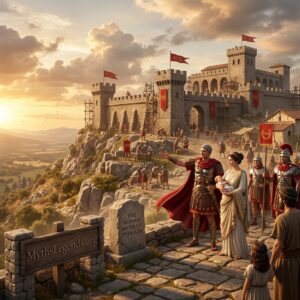
The Castillo de Almansa – A castle steeped in history and stories – The Castillo de Almansa is situated in the town of the same name in the province of Albacete, in what is now Castile-La Mancha. The castle’s origins date back to the Moorish period, but it owes its current appearance to extensive alterations carried out in the 14th century under Don Juan Manuel. The castle is an outstanding example of medieval defensive architecture, featuring thick walls, fortified towers and a complex defence system, and is strategically situated on a hill. Historical sources confirm that Don Juan Manuel transformed the castle into a residence that combined both ceremonial and functional elements. This blend of military strength and courtly culture reflected his dual role as a warrior and a scholar. Inside, there are said to have been numerous rooms and corridors where the prince could retreat from the rigours of politics – an ideal place for intellectual work and contemplation. To this day, numerous legends surround the Castillo de Almansa, some of which can be traced back to the stories recorded by Don Juan Manuel. There are tales of ghostly apparitions, secret passages and mysterious events that have cemented the castle’s reputation as the setting for thrilling stories. Although these legends are not historically substantiated, they nevertheless demonstrate how closely Don Juan Manuel’s work is interwoven with his surroundings.
Between Power, Myth and Literature – a Lasting Legacy – Don Juan Manuel and the Castillo de Almansa illustrate the interplay of political power, cultural creativity and regional history in medieval Spain. Whilst the castle is regarded as a symbol of royal rule and military strength, the prince’s literary work embodies an intellectual dimension whose influence extends far beyond his own time. The moral tales from El Conde Lucanor show how closely life at court was linked to literary creation. Not only do they provide insights into medieval ways of thinking, but they also continue to appeal to readers today, as they deal with universal values and human frailties. The legends surrounding the Castillo lend this historic site a mysterious aura that fascinates visitors and literature lovers alike.
Don Juan Manuel – The Prince as a Writer and Legendary Figure – The interplay between Don Juan Manuel’s literary work and his role as lord of the Castillo de Almansa paints a striking picture of a man who stood at the crossroads of history and literature. His stories from El Conde Lucanor are not only testimonies to medieval moral values, but also artfully crafted tales that have lost none of their appeal to this day. The Castillo de Almansa serves as a tangible symbol of this prince’s power and cultural significance. It evokes a time when castles were not merely military strongholds, but also places of inspiration and intellectual creativity. The legends surrounding the castle complement the image of a fascinating historical site where history comes to life. Anyone who visits the Castillo de Almansa or reads the writings of Don Juan Manuel can thus build a bridge between the past and the present, between fact and fiction – and in doing so, discover one of the most compelling literary princes of the Middle Ages.





Post Comment