
The Legend of ‘Juana la Beltraneja’ and the Castillo de Mombeltrán: A Myth of Power, Love and Intrigue
The Kingdom of Castile in the 15th century was marked by political unrest, bitter power struggles and personal scandals that continue to provide the stuff of legends to this day. One of the most famous stories from this period is the tragedy of Princess Joanna of Castile, better known as ‘Juana la Beltraneja’. Her fate is inextricably linked to the imposing Castillo de Mombeltrán in the province of Ávila – a fortress that is not only a testament to architectural mastery but also a symbol of political intrigue and family conflicts.
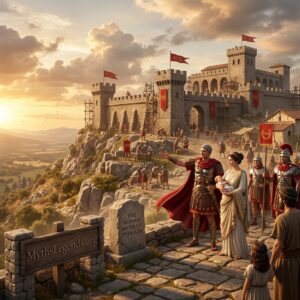
The History of the Castillo de Mombeltrán – The Castillo de Mombeltrán, also known as the Castillo de los Duques de Alburquerque, was built in the 15th century and stands proudly overlooking the Sierra de Gredos, a rugged mountainous region in the heart of Spain. It is one of the best-preserved examples of medieval architecture in the region and impresses with its massive walls, crenellated towers and a strategic location that once served to defend the surrounding area. Yet behind the stone walls lies more than just military history – here, personal dramas intertwine with the major political events of Castile. The castle was built by Beltrán de la Cueva, a nobleman who gained great influence through his close relationship with King Henry IV. Beltrán was not only one of the king’s closest confidants, but also a central figure in one of the greatest scandals of his time.
The scandal surrounding ‘Juana la Beltraneja’ – The central figure in this story is Princess Joanna of Castile, daughter of Henry IV, who was nicknamed ‘the Impotent’ due to his alleged impotence. This physical weakness was interpreted by many contemporaries as a sign of political and personal incompetence and led to an attack on his authority. The birth of his daughter Joanna posed a further challenge to the king’s already tarnished reputation. At court, nobles spread the rumour that Joanna was not the king’s biological daughter, but the result of an affair between Queen Joanna of Portugal and Beltrán de la Cueva. The handsome Beltrán was not only a close adviser to the king but also one of his favourite courtiers, which made him particularly vulnerable to such speculation. The consequences of these rumours were devastating, especially for the young princess, who was derisively referred to by the people as ‘Juana la Beltraneja’ (‘Joanna, Beltrán’s daughter’). To protect the reputation of his court, Henry IV decided to temporarily dismiss Beltrán de la Cueva. The king granted him extensive lands – including the Mombeltrán region – and commissioned him to build the impressive fortress now known as the Castillo de Mombeltrán. Historians suspect that this generous gift was intended not only as a reward for Beltrán’s loyal service, but also as ‘hush money’ to defuse the rumours about the alleged affair.
The War of Succession and Joanna’s Tragic Fate – The controversies surrounding Joanna’s lineage ultimately culminated in a bitter power struggle. Following her father’s death in 1474, Joanna laid claim to the Castilian throne. However, her aunt Isabella – later known as ‘Isabella the Catholic’ – also emerged as a pretender to the throne and quickly secured her position through skilful alliances and the support of influential nobles. Isabella skilfully exploited the rumours surrounding Joanna’s illegitimate birth to her advantage. Doubts about Joanna’s legitimacy became the basis of her propaganda, which she used to mobilise numerous supporters. Through her marriage to Ferdinand of Aragon, Isabella united the two most powerful kingdoms on the Iberian Peninsula and secured both military support and the backing of the Church. The War of Succession between the two women ended after several years with a decisive victory for Isabella. Johanna, on the other hand, was stripped of her claims and sent into exile. She spent the rest of her life in seclusion in a convent, whilst Isabella and Ferdinand laid the foundations for the unification of Spain and later went down in history as the ‘Catholic Monarchs’.
Historical interpretations of the legend – The legend of ‘Juana la Beltraneja’ is an example of how personal scandals and political intrigues are often inextricably linked in history. Juana is frequently seen as a victim of a system in which women had little autonomy and their roles were controlled by male-dominated power structures. The question of whether Beltrán de la Cueva was in fact Juana’s father remains unanswered to this day. Historians point out that the rumours were probably deliberately spread to further discredit King Henry IV, who was already in a weakened position. The truth may therefore be less scandalous than the legend suggests – yet it is precisely this uncertainty that has kept the myth alive over the centuries.
The Castillo de Mombeltrán as a Landmark – Today, the Castillo de Mombeltrán is not only an architectural masterpiece but also a symbol of the political and personal dramas of Castilian history. The castle attracts numerous tourists every year who wish to learn more about the legends and secrets hidden behind its walls. The complex impresses with its well-preserved structure and offers breathtaking views of the surrounding mountainous landscape. Visitors can explore the various areas of the fortress, including the defensive walls, the towers and the interior of the castle, which was once occupied by Beltrán de la Cueva. Historical guided tours shed light on the connection between the legend of ‘Juana la Beltraneja’ and the history of the fortress, focusing on the tragic events surrounding the Castilian War of Succession.
The story of ‘Juana la Beltraneja’ is a fascinating blend of politics, love and intrigue that shaped the Kingdom of Castile in the 15th century. Her fate – marked by scandals, power struggles and personal tragedy – reflects the dynamics of an era in which claims to the throne and family conflicts were often inextricably linked. The Castillo de Mombeltrán stands as a silent witness to these events, preserving the memory of a time when political decisions and personal relationships often had tragic consequences. It remains one of Spain’s most significant historical landmarks, offering not only architectural beauty but also keeping alive the stories and myths of a bygone era.





Post Comment