
The Hidden Treasure of the Reconquista: A Legend That Links the Past and the Present
The Iberian Peninsula is a place steeped in history, where myth and reality often merge. Over the centuries, this region has been shaped by a multitude of different cultures, including the Romans, Visigoths, Muslims and Christians. The era of the Reconquista, the Christian reconquest of Spain, has left a particularly deep mark – not only in the form of wars and political upheavals, but also in countless legends that continue to fascinate people to this day. One such story centres on the hidden treasure of the Reconquista, which is said to be concealed within the medieval Castillo de Almonacid.
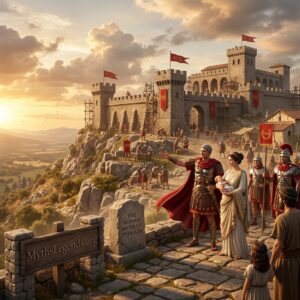
The Castillo de Almonacid: A symbol of power struggles – The Castillo de Almonacid is situated near the city of Toledo, a region that played a key historical role during the Reconquista. The castle is perched on a strategically situated hill and was once an important military stronghold. Originally built by the Arabs, it was later conquered by Christian forces and served as a fortress in the fight against the Muslim occupiers. The architecture of the Castillo de Almonacid reflects the diverse cultural influences that have shaped the region over the centuries. With its massive walls, tall towers and underground vaults, the castle stands as a testament to medieval military engineering. Yet public attention is focused less on the site’s architectural features or historical significance – and more on the legend of a vast treasure said to lie hidden in the depths of the castle.
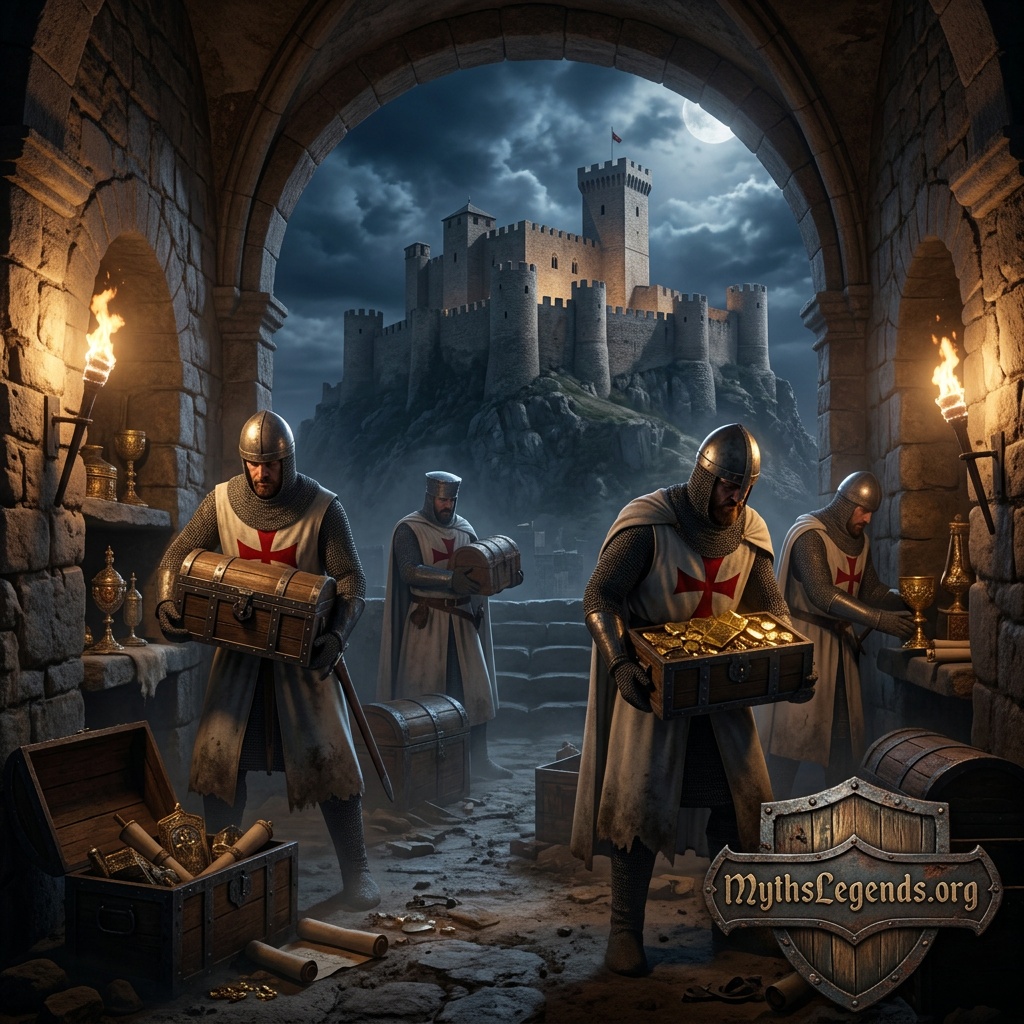
A chest full of gold and art treasures – The myth holds that, during the Reconquista, Christian knights hid a vast quantity of gold and valuable art treasures deep within the castle to protect them from the Muslim conquerors. The treasure chest is said to have been hidden in one of the underground vaults or possibly even in the brick-lined granaries. At that time, these silos were not only used for storing food but were also frequently used to keep valuable items safe. Local legends suggest that the treasure represents a legacy of religious and cultural significance. It is said to contain relics, ornately decorated weapons and perhaps even documents that hold important historical information. Despite centuries of searching, no one has yet found this treasure. The question remains: is this merely a captivating story, or could a hidden treasure actually exist?
Historical Background to the Treasure Legend – To better understand the legend, it is important to examine the historical context of the Reconquista in more detail. Between the 8th and 15th centuries, the Christian kingdoms of the Iberian Peninsula fought to drive back the Muslim rulers of the region of Al-Andalus. This conflict was not merely a military power struggle, but also had religious and cultural dimensions. In 1085, Toledo, the capital of the Taifa Kingdom of Toledo, fell to Christian troops led by Alfonso VI of Castile. The loss of this strategically important city marked a turning point in the Reconquista, and the Castillo de Almonacid, situated near Toledo, played a key role in securing the region. It is possible that the legend of the treasure dates back to this period, when the castle served as a crucial defensive stronghold between the front lines.
The myth lives on – The legend of the Reconquista treasure has inspired many historians, treasure hunters and adventurers. Despite numerous investigations and excavations, the mysterious treasure has not yet been discovered. One reason for this could be the underground labyrinths and hidden chambers, which remain sealed off or unexplored. However, some experts believe that the story may be purely symbolic in nature. The treasure may be less a physical object than a symbol of the Reconquista itself – an expression of victory and the religious devotion of the Christian knights. Nevertheless, the idea of an actual treasure continues to hold great appeal for the curious and the adventurous.
Archaeological finds and new insights – Although the treasure itself has not yet been found, archaeological investigations at the Castillo de Almonacid have yielded interesting results. Researchers have uncovered pottery shards, weapons and coins dating from the Reconquista, which are helping to shed light on the castle’s history. These finds confirm that the castle was an important military stronghold and was likely the scene of numerous battles. State-of-the-art technologies, including ground-penetrating radar and 3D scans, could help to examine the interior of the castle in even greater detail. Should any hidden chambers be discovered, this would breathe new life into the legend and potentially pave the way for the discovery of the treasure.
Similar legends in the region – Interestingly, the story of the hidden treasure is not an isolated case. Numerous ancient castles and fortresses on the Iberian Peninsula are associated with similar legends. For example, there are tales of treasures said to be hidden within the walls of the Alcázar of Segovia or in the depths of the Alhambra in Granada. These legends reflect the region’s wealth and cultural diversity, which have developed over the centuries, but also the enduring fascination with mysteries and lost artefacts.
Outlook: The Power of Legend – Whether the treasure of the Reconquista will ever be found remains uncertain – yet its story will certainly live on. It reminds us that history consists not only of facts, but also of the stories we tell. These stories have the power to imbue places with a special aura and to attract people from all over the world. The Castillo de Almonacid now lies in ruins, yet its walls still bear the traces of the past and the weight of legends. Visitors exploring this impressive structure can experience not only the historical significance of the site, but also the feeling of being part of a centuries-old story that blurs the line between reality and myth. The hidden treasure of the Reconquista remains a mystery – perhaps a physical artefact, or perhaps a symbol reflecting the emotions and ideals of a turbulent era. Whichever interpretation one follows, the legend will continue to capture the imagination and keep the stories of bygone times alive.






Post Comment