The Mysterious Mermaids of the Nixentumpf – Legends and Myths of an Enchanted Place
A mysterious legend surrounds the so-called Nixentumpf, a marshy area near Falkenhain that was once known for its mystical atmosphere and eerie tales. The site, which used to lie directly on the road to Weesenstein, was not only a scenic highlight but also the setting for numerous tales of water spirits said to roam there at night. Even though the marshland has now largely dried up, the legend of the mermaids lives on – a story that transports us into the fascinating world of myths and local folklore.
The Nixentumpf: A Place Between Reality and Myth – The area known as the Nixentumpf was once a wet meadow, criss-crossed by small streams and marshy ground. Such places have always held a special allure, as they were, on the one hand, dangerous and impassable, yet, on the other, exuded a certain magic. The damp air, the mist that spread across the moor after sunset, and the sounds of nature created an atmosphere that was simply perfect for storytelling. The name ‘Nixentumpf’ itself refers to the mythical creatures that are said to have inhabited this place: the water nymphs. These water spirits form part of Central European folklore and are often described as beautiful yet dangerous creatures. It is said that they lived in rivers, lakes and marshes and lured people into their world with their beguiling song – only to never let them leave again. The Nixentumpf near Falkenhain provided the perfect backdrop for imagining these mystical creatures.
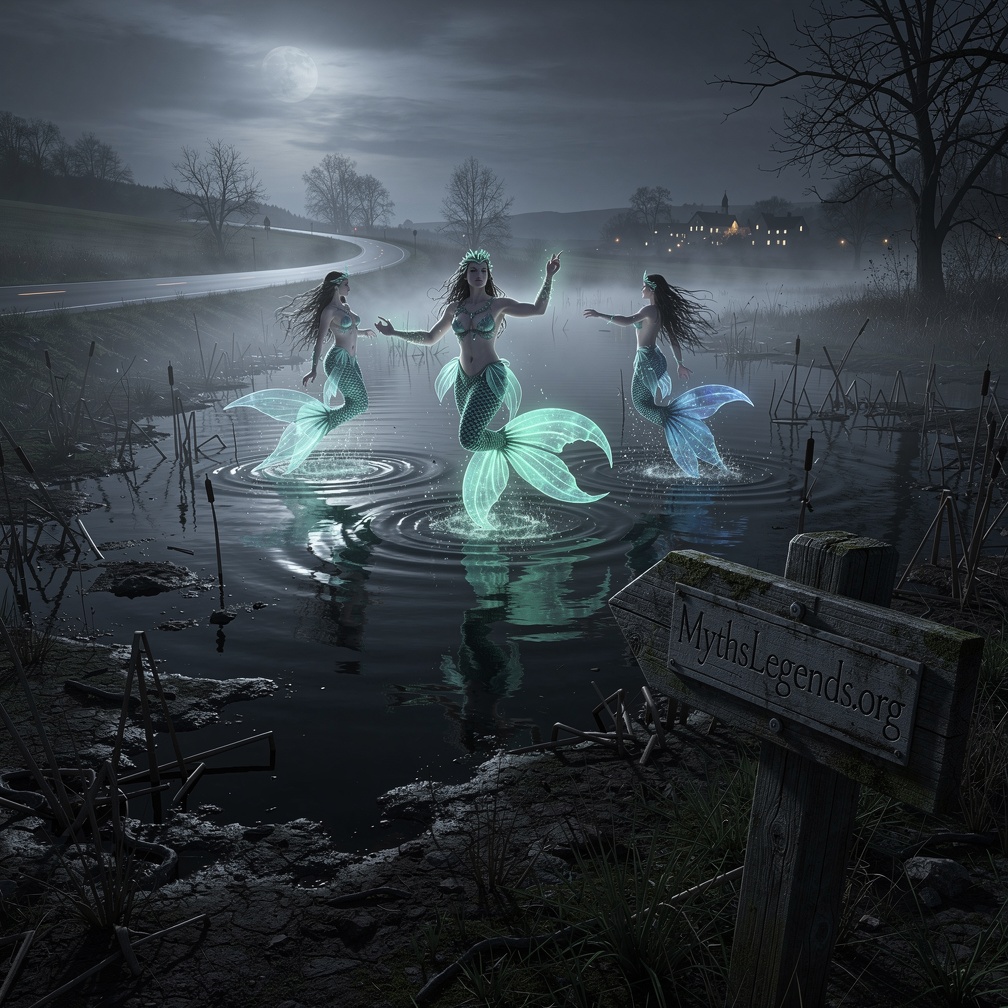
Mermaids dance at night – According to legend, the mermaids would emerge from their hidden realm at night, when all was quiet, and dance in the moonlight on the marshy meadows. Their dance is said to have been so enchanting that onlookers could scarcely tear their eyes away. Yet this seductive allure was not without danger. Anyone who ventured too far into the murky marsh to watch the mermaids up close – or even to make contact with them – risked never returning. The water spirits are said to have dragged their victims into the depths and held them captive there. It is said that the water nymphs were particularly visible on balmy summer nights, when the moon shone especially brightly. Their silhouettes are said to have moved gently through the veils of mist, accompanied by a melody that sounded as though it came from another world. Many tales tell of farmers, walkers or hunters who passed by the Nixentumpf at night and believed they had seen the spirits. Whether these encounters actually took place or were merely the product of the imagination of those influenced by the legend, however, remains uncertain.
The Nixentumpf today – a dried-up place full of memories – Today, the Nixentumpf has lost much of its original character. The once marshy terrain has largely dried up and bears little resemblance to the mystical place that was once the setting for legends. The natural changes to the landscape caused by drainage and agricultural use of the area have eliminated the conditions that may once have given rise to the legend. Nevertheless, some claim that the mermaids are still there – invisible, but present. Sometimes, locals report, you can hear strange sounds reminiscent of soft laughter or singing, or see shadows flitting across the site that defy explanation. These accounts help to keep the legend alive and ensure that the place continues to exude a certain mystique, even though the surroundings have changed.
The origins of mermaid legends: What lies behind the stories? – To better understand the legend of the Nixentumpf, it is worth taking a look at the cultural and historical roots of mermaid legends. Mermaids are an integral part of many regional narratives in Central Europe and appear in various forms and under different names in fairy tales and legends. In German-speaking regions, for example, they are closely related to the figures of the Undines or Nixen, which share a similar appearance and behaviour. Such stories often served to warn people of dangers. Marshy areas such as the Nixentumpf were dangerous, as one could easily sink into the soft ground and suffer serious injury or even lose one’s life. The legend of the water nymphs may therefore have been a kind of ‘moral tale’ intended to warn both children and adults alike to stay away from such places. At the same time, these stories reflect people’s fascination with nature and its inexplicable phenomena. Another possible origin of such legends lies in the psychological effect of eerie places. The combination of mist, darkness and sounds – such as the lapping of water or the rustling of grass – can distort perception and lead people to imagine things that do not actually exist. Thus, the notion of ‘dancing mermaids’ may well have arisen from the natural conditions of the Nixentumpf, amplified by people’s imaginations.
The role of mermaids in modern culture – Even today, mermaids and other mystical water creatures continue to hold a great fascination for people. In popular culture and literature, they regularly appear as fascinating yet ambivalent figures. They are at once seductive and deadly, human and otherworldly – qualities that make them perfect symbols of the union of beauty and danger. It is interesting to note that many modern depictions of nymphs and mermaids tend to be romanticised. In films, fairy tales and novels, they are often stylised as symbols of freedom, longing and love, whilst the original legends usually portray them as menacing creatures. This demonstrates how flexible traditional figures in folklore are and how they can change over time to adapt to new social notions.
A legend that never quite fades – The story of the water nymphs of the Nixentumpf may be less prominent today than it once was, but it has found its place in the region’s cultural memory. It is an example of the many myths and legends widespread in Germany that remain entertaining and fascinating to this day. Places like the Nixentumpf remind us of how closely nature and mythology are intertwined, and how deeply the landscapes shape our imagination. We may no longer see dancing water spirits today, but the legend encourages us to look more closely and to appreciate the beauty and mysteries of our surroundings. Whether you believe the stories or not, one thing is certain: the mermaids of the Nixentumpf remain a living example of the power of storytelling and the magic hidden within nature. Who knows – perhaps they are still waiting for someone to admire their dances.

Post Comment