
Petra tou Romiou: The mysterious birthplace of the goddess of love
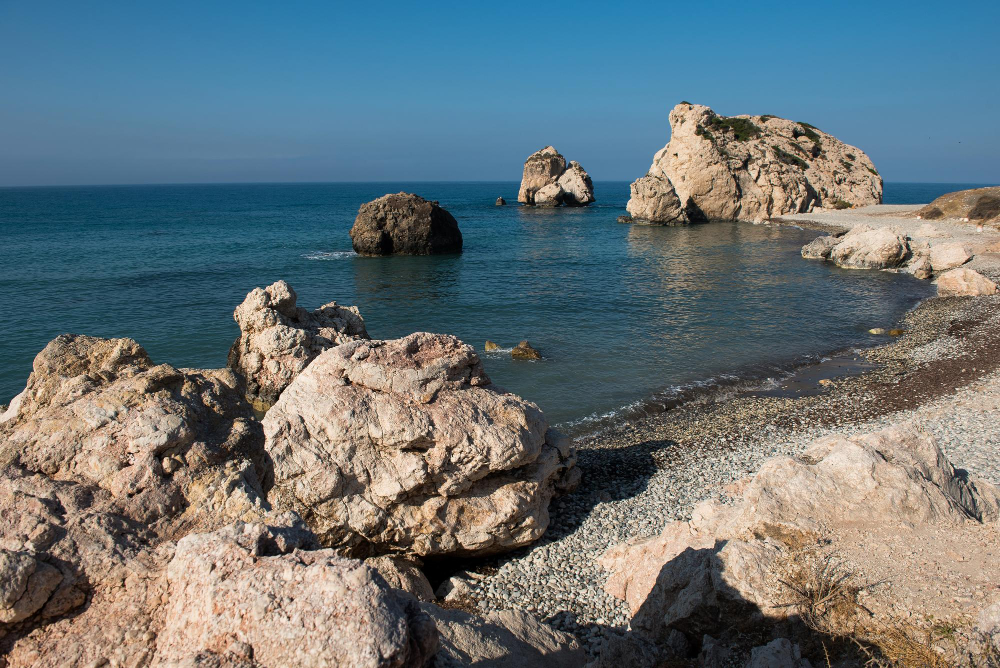
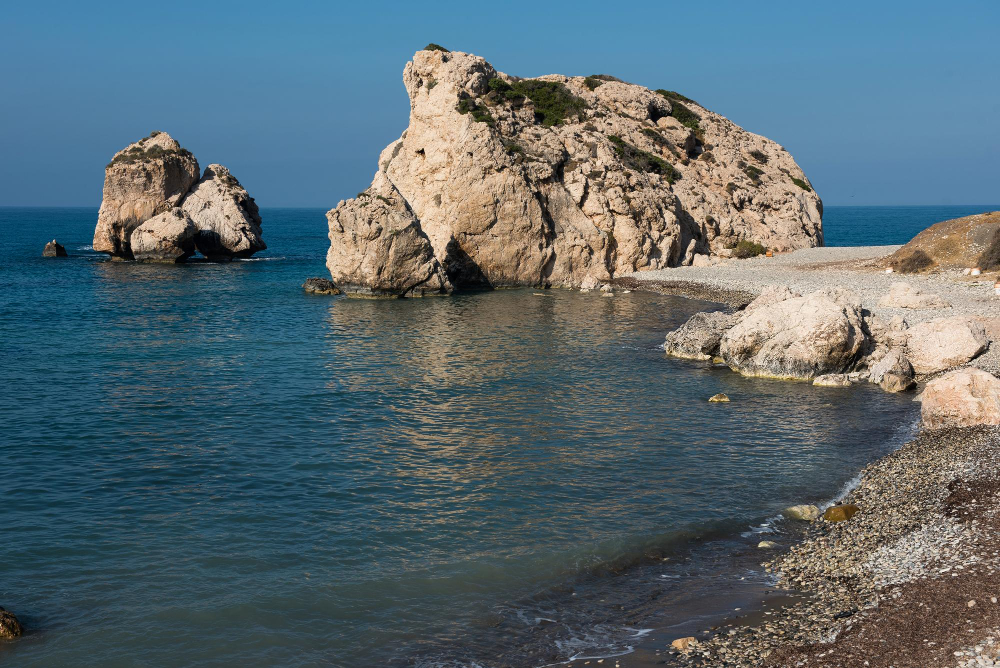
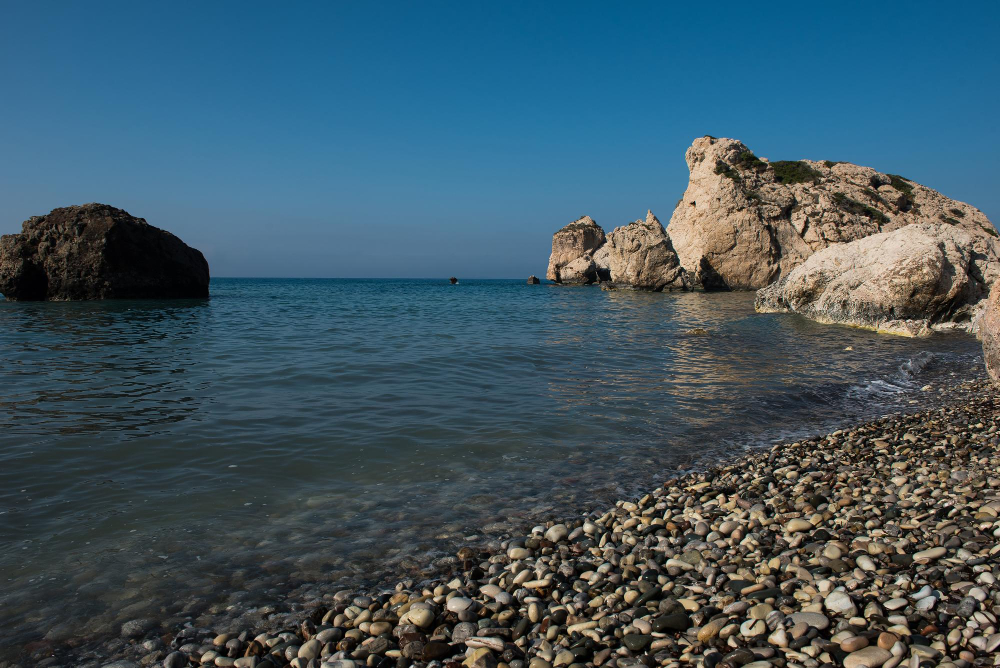
Like a jewel, an impressive rock formation rises above the coast of Cyprus, lapped by the gentle waves of the Mediterranean. ‘Petra tou Romiou’, the ‘Rock of the Roman’, is a place that attracts visitors from all over the world – and not just because of its breathtaking scenery. It also harbours a story that has fascinated and inspired people for centuries: the legend of Aphrodite, the Greek goddess of love, beauty and sensuality, who, according to mythology, was born here from the sea foam.
A goddess emerges from the waves: the legend of Aphrodite’s birth – The story of Petra tou Romiou begins with one of the best-known tales of Greek mythology, which already plays a central role in the epics of Homer and Hesiod. According to the myth, Aphrodite came into being in an extraordinary way. When Uranus, the father of the heavens, was castrated during a quarrel with his son Cronus, his severed body parts fell into the sea, and from the seething foam the goddess took shape. Accounts of exactly where her birth took place according to this tradition vary, but the coast of Cyprus is regarded as her place of origin – and the rock of Petra tou Romiou as the central setting. Aphrodite emerged from the waves, bathed in the soft, shimmering light of the sea, which emphasised her divine beauty. This is how one imagines her dramatic entrance: an apparition that united the sea, the sky and the earth, and changed the world forever. Her name, derived from ‘aphros’ (Greek for ‘foam’), still bears witness to her connection with the sea. As she glided towards her destination on a shell-shaped boat, it is said that the whole of nature blossomed with joy – a symbol of how love itself comes to life.
The magical aura of Petra tou Romiou – The rock, now revered as the legendary birthplace of the goddess, has acquired a unique significance over the centuries. It is not only a testament to an ancient myth, but also a place that continues to radiate mystical energy to this day. Many visitors come here to draw inspiration from the story or to feel a touch of the magic associated with Aphrodite. It is said that anyone who swims here receives a spark of the goddess’s beauty and youth. Folklore holds that the water surrounding the rock possesses magical properties and can be a source of rejuvenation and allure, particularly for women. Some even go so far as to claim that entering this stretch of sea brings eternal happiness in love. Although there is no scientific evidence to support these claims, the enduring popularity of the ritual shows just how much people long to incorporate the myth of Aphrodite into their lives.
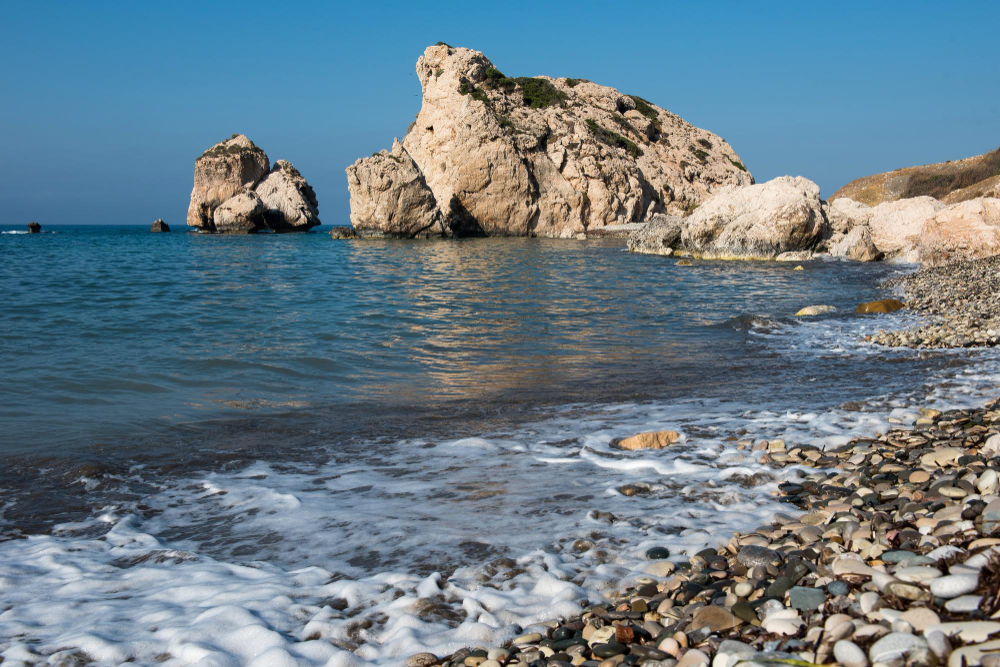
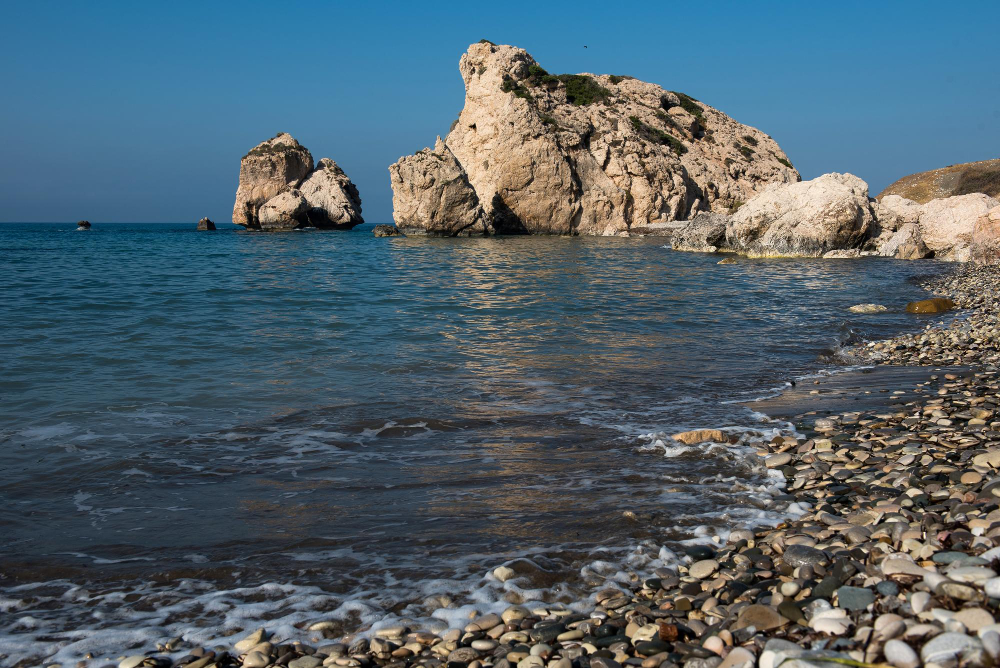
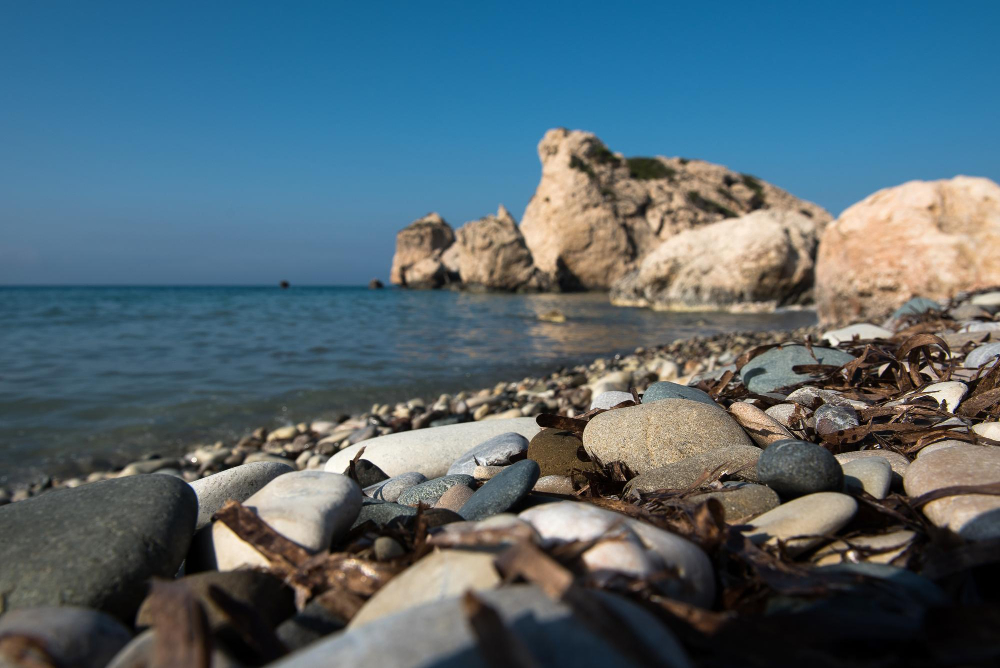
Geological beauty meets divine mythology – As well as its mythological significance, Petra tou Romiou impresses with its natural setting. The rock itself rises majestically out of the water and stands out clearly against the surrounding sandy and pebbly beaches. The landscape seems like something out of a dream: crystal-clear water shimmering in various shades of blue and turquoise, and rock formations sculpted by wind and waves. It is easy to see why this place was elevated in antiquity to the setting of a divine birth – the fusion of nature and myth seems particularly tangible here.
Aphrodite: More than just a goddess of love – Although Aphrodite is best known as the goddess of love and beauty, her influence extended far beyond that. She was the embodiment of passion, sensuality, fertility and creativity. Her worship went beyond romantic love and encompassed all aspects of human relationships and emotional bonds. As the patron goddess of women and marriage, she played a central role in ancient Greek society. Many ancient temples and altars were dedicated to the goddess, particularly in Cyprus, which is regarded as her spiritual home. The most famous of these temples was located in Paphos, just a few kilometres from Petra tou Romiou. People made pilgrimages here to offer sacrifices and express their wishes for love, beauty and prosperity. Even today, ruins and archaeological finds from this period remain in Cyprus, bearing witness to this time-honoured veneration.
The Myth Through the Ages – The legend of Aphrodite and her birthplace has endured over the centuries, undergoing constant changes and additions. In the Middle Ages, the region was given its present-day name, ‘Petra tou Romiou’, which may refer to another epic figure – a brave Roman warrior who defended the island. Yet the original connection to the goddess endured and was constantly nurtured through artistic depictions, poems and tales. Whilst academia regards the birth of Aphrodite as a purely symbolic narrative, mythology remains an integral part of Cyprus’s cultural identity. The rock is not only a tourist magnet, but also a place that tells stories – of a time when gods were still imagined in human form and nature itself provided a stage for the supernatural.
A journey full of magic and mystery – For travellers visiting the island of Cyprus, Petra tou Romiou is an absolute must-see. Many come here to enjoy the natural beauty of the coastline, take photographs or simply linger near the rock and lose themselves in the ancient legends. The evening hours, when the sun sets and bathes the sky in a reddish-golden light, lend the place a special magic that fires the imagination. The legend of Aphrodite not only makes this place unique, but also reminds us of the power and magic of myths. They are a window into the past, a mirror of human longings and hopes, and a testament to how close the connection between humankind and nature once was – and perhaps still can be.
A Living Legend – Petra tou Romiou remains a place where reality and fantasy intertwine. Whether one believes in the story of Aphrodite or not, this place possesses an unmistakable quality that penetrates deep into the soul and breathes new life into the idea of love and beauty. Perhaps it is the waves lapping gently against the rocks, perhaps the stories carried on the wind – or simply the magic inherent in the myth. What is certain, however, is that Petra tou Romiou is more than just a geological wonder. It is a symbol of the timeless power of love and the enduring beauty of nature.










Post Comment