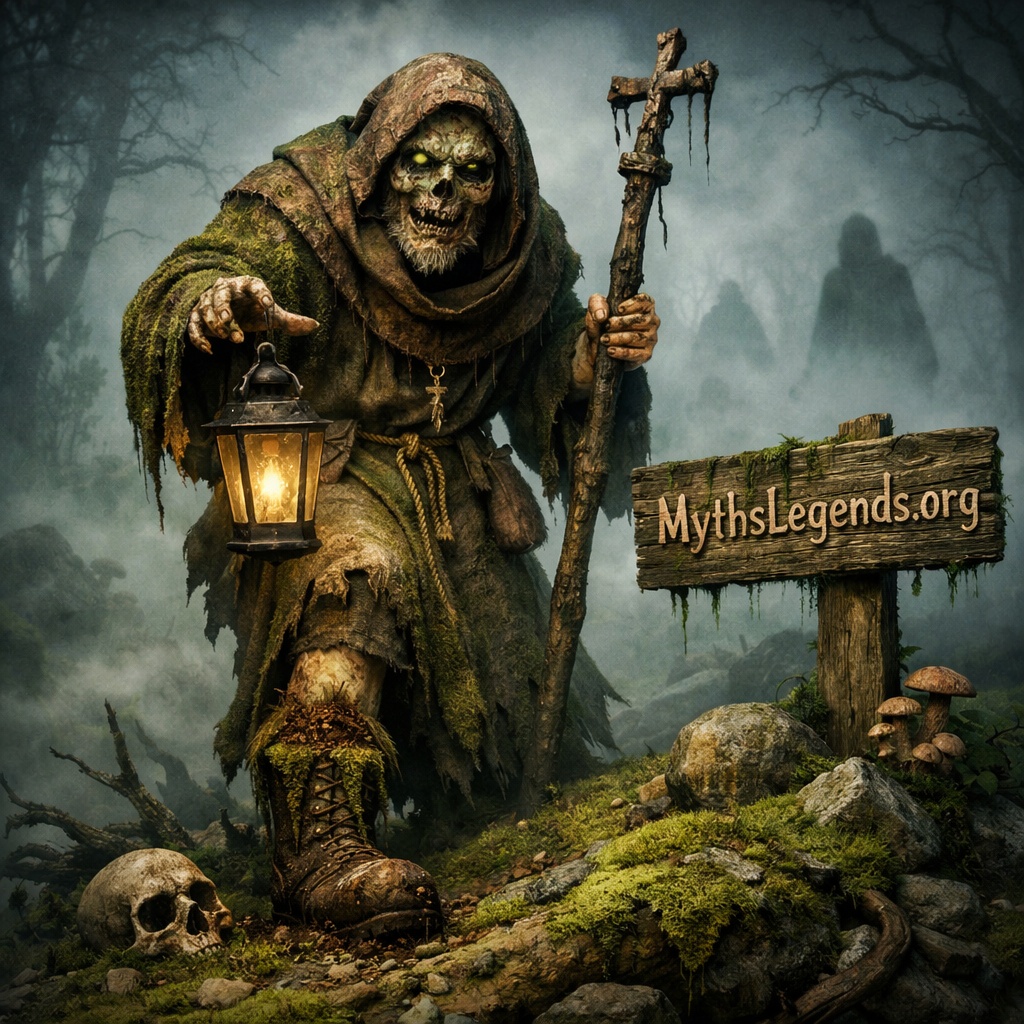
The Moospfaff – A dark legend from the Black Forest
The forests of the Black Forest are known not only for their unspoilt nature and mysterious mists, but also for the numerous myths and legends rooted within them. One of these dark tales tells of a terrifying ghost, the ‘Moospfaff’. This legend, which has its origins in Gengenbach and the surrounding area, is about guilt, punishment and an eternal quest.
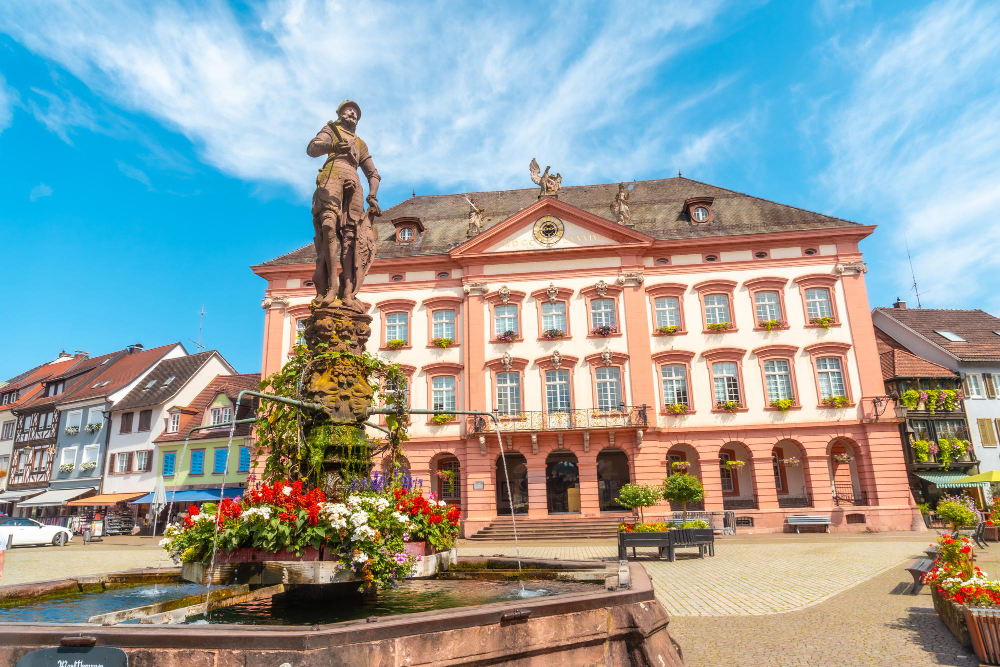
The Origin of the Legend – The Moospfaff is said to have once been an abbot of the monastery in Gengenbach, a man of power and influence. As a shrewd man and skilled orator, he was highly regarded by his congregation and among the clergy. Nevertheless, it is said that a weakness brought about his downfall: the greed for possessions. A dispute over forest boundaries is said to have led him to his moral downfall. The issue at stake was to which territory certain forests should be assigned – to the monastery or to a neighbouring community. To assert his claim, the abbot resorted to a ruse designed not only to preserve his secular power but also to strengthen his influence over the other clergy. In court, he swore false allegiance by employing a clever trick: he filled his boots with earth from the monastery garden. This allowed him to claim, whilst taking the oath, that he was standing on the ground of his monastery – a dishonest form of deception and a betrayal of the moral principles imposed on a member of a religious order. This defining moment marked the tragic turning point in his fate.
The Punishment: From Abbot to Restless Spirit – God, so the legend goes, did not let this deed go unpunished. As punishment, the abbot was condemned to wander eternally as a shadow of himself on the Mooskopf, a mountain near Gengenbach. There he has since appeared as a Franciscan monk and is known for leading people astray in the thick mists of the Black Forest. Yet the true essence of his torment lies not solely in his isolation and his ghostly apparitions. Rather, he is cursed to search for his lost soul for all eternity – that very soul which he had put at risk through his betrayal and deliberate deception. The figure of the Moospfaff perfectly embodies the aspects of a classic legendary figure: a being caught between guilt and atonement, a memorial to the mistakes people can make out of greed for power and selfishness.
Encounters with the Moospfaff – Those who feel brave enough to climb the Mooskopf may well come across traces of the Moospfaff themselves. Many hikers report hearing strange noises in the area or suddenly finding themselves surrounded by thick fog, even though the weather forecasts had given no such warning. Some even claim to have seen him: a shadowy figure in the distance, which, however, vanishes the moment one approaches it. It is also said that the Moospfaff deliberately leads astray those who treat nature too carelessly or disrespectfully. Anyone who roams the woods without caution or ignores the warnings of the locals runs the risk of being drawn by the Moospfaff into an endless cycle of wandering and searching. Only when those affected reconsider their attitude and make a serious effort at self-reflection do they find their way back.
The Moospfaff in cultural memory – Like many regional legends, the story of the Moospfaff has been passed down from generation to generation, often orally, supplemented by artistic depictions and written accounts. This legend has a particularly strong connection to the town of Gengenbach, whose monastery is regarded as the starting point of the tragedy. In some accounts, the Moospfaff is described not only as a dark spirit, but also as a kind of guardian of the forests. He is said to ensure that nature is respected and to punish those who harm it. This gives the legend an ecological resonance that could be particularly significant in today’s world, where environmental protection is receiving increasing attention.
Historical roots and interpretations of the legend – There is speculation as to whether the Moospfaff actually stems from a real person or event. Some historians suggest that the story serves as a metaphor for disputes between monasteries and communities in the region, which were not uncommon in the Middle Ages. At that time, land ownership was a valuable asset that often became the focus of conflicts. It is not implausible that someone might have resorted to deceitful means in such a dispute. However, the portrayal of the abbot as a ghost and his ominous transformation could also represent a moral lesson found in many European legends: The message that sins, particularly those born of a lust for power, can have serious consequences and often affect not only life on earth but also survival in the afterlife. The search for one’s own soul is likewise a symbolic act representing spiritual purification and the quest for redemption.
The Moospfaff in the modern day – Even today, the story of the Moospfaff continues to fascinate locals and tourists alike. It fits seamlessly into the mystical atmosphere of the Black Forest, whose landscape seems tailor-made for tales of ghosts, mythical creatures and other supernatural occurrences. Several guided tours and events in the region draw on the story and present it as part of the Black Forest’s cultural heritage. The legend also has the potential to remind people of the importance of honesty, humility and respect – not only in our dealings with others, but also with nature and ourselves. Particularly in an age of climate crisis and increasing environmental destruction, the story of the Moospfaff could inspire us to treat our world’s resources with greater care and to re-evaluate the values of solidarity and responsibility.
A timeless warning and a living piece of culture – The legend of the Moospfaff is far more than a simple ghost story. It is a mirror of human behaviour, a warning against greed and moral corruption, and at the same time a call to find the right path – whether in life or in the mist. With its dark, mystical atmosphere, it remains one of the most fascinating legends of the Black Forest and a living piece of regional cultural history. Whether one regards the Moospfaff as a real ghost or merely a product of human imagination, his story shows that legends sometimes contain more truth than we would like. And who knows? Perhaps the next trip into the misty forests of the Black Forest will lead not only to a beautiful experience of nature, but also to an unexpected encounter with the mysterious monk at Mooskopf.







Post Comment