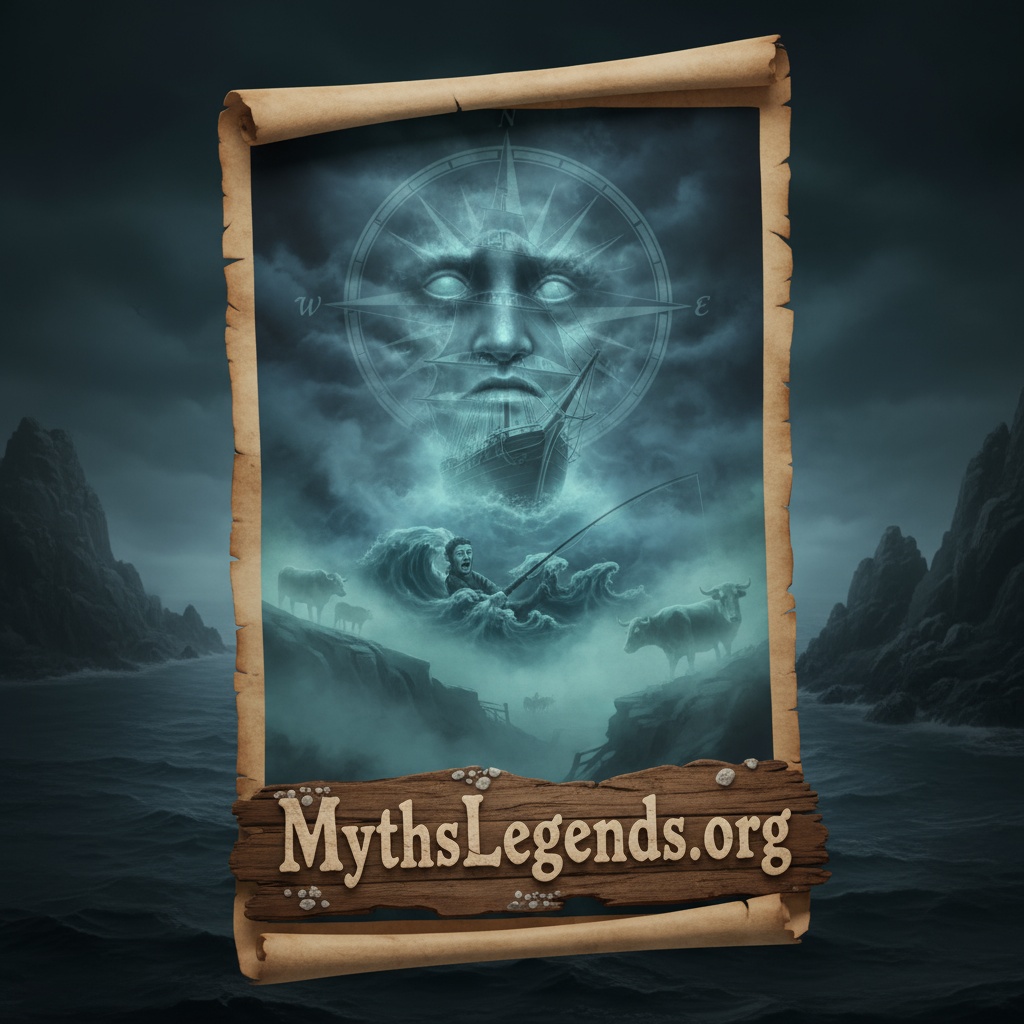
The phenomenon of wafers on the Baltic Sea: myths, legends, and historical accounts
The Baltic Sea is not only a sea of impressive natural beauty and economic importance, but also the setting for numerous myths and legends. One of these fascinating stories is about the so-called “waffles,” which are omens and apparitions that are said to indicate impending disasters related to shipping. In sailors’ language and in the stories of coastal dwellers, the word “waffles” refers to eerie omens of future misfortunes, especially shipwrecks, strandings, and drownings. These apparitions often manifest themselves as ghostly images of ships, people, animals, and even entire places that appear in gloomy mists. For example, one might see a ship that will soon be wrecked, a drowning fisherman, or the livestock of a farm that will soon be destroyed. Reports of waffles are numerous and can be traced back to the Middle Ages. Some chronicles and diaries from the Hanseatic period tell of these curious events. A 14th-century report describes how a fisherman off Greifswald one day saw a strange fog phenomenon: a ship that seemed to consist entirely of black smoke, with limp sails and tattered masts. A few weeks later, a merchant ship from Lübeck actually crashed exactly where the fisherman had seen the ominous apparition. Particularly impressive is the legend of the bells of sunken cities, which are said to ring underwater on Sundays. This story is widespread in many coastal villages and may have its origins in the numerous legends about sunken settlements, especially on the German Baltic Sea coast. It is said that in calm weather and with the right wind direction, you can hear the ringing of the church bells of Vineta, a legendary city that was supposedly punished for its sinfulness and sunk into the sea. The wafers are deeply rooted in the culture and traditions of the Baltic Sea coast’s inhabitants. These stories have been passed down from generation to generation, often as a warning of the dangers of the sea and as a reminder to treat nature with respect and caution. Fishermen and sailors took the wafers very seriously; they were considered unmistakable signs that should not be ignored. Many planned their sea voyages so as to avoid supposed wafers. Although wafers are now dismissed as folklore, there are some scientific theories that attempt to explain the phenomenon. Meteorologists and geophysicists suspect that certain atmospheric conditions and optical illusions such as mirages could cause these phenomena. Fog, refractions, and reflections can sometimes create bizarre and eerie images that can easily be misunderstood as supernatural. One of the most famous stories about wafers dates back to the Hanseatic League era, when a tall ship called “Die Goldene Hansa” disappeared under mysterious circumstances. Weeks earlier, fishermen had reported seeing a ghostly apparition of a ship in the morning mist that looked exactly like the “Golden Hansa.” When the ship actually disappeared at sea, it was clear to many that the wafers had predicted the disaster. Another famous case concerns the city of Danzig. In the late 17th century, a thick fog is said to have gathered over the city, in which the citizens could see images of future fires and destruction. Shortly afterwards, a large fire actually broke out, destroying large parts of the city. Although the age of technological and scientific progress has disproved many old myths, the wafers remain a living part of folklore on the Baltic Sea. Modern sailors and fishermen still report strange sightings and inexplicable phenomena from time to time. These stories continue to find their way into local art, literature, and even tourist attractions. The wafers are a remarkable example of how natural phenomena and human imagination can intertwine to create rich and captivating legends. They remind us that our ancestors had a deep and respectful relationship with nature and its whims, a relationship that found expression in myths and stories. Even though the scientific perspective has demystified many of these ancient tales, a fascination and a certain awe for the unknown remains. The wafers, these mysterious harbingers of doom, are a lasting part of the cultural heritage of the Baltic Sea coast and a window into the way people used to understand and interpret the world around them.








Post Comment