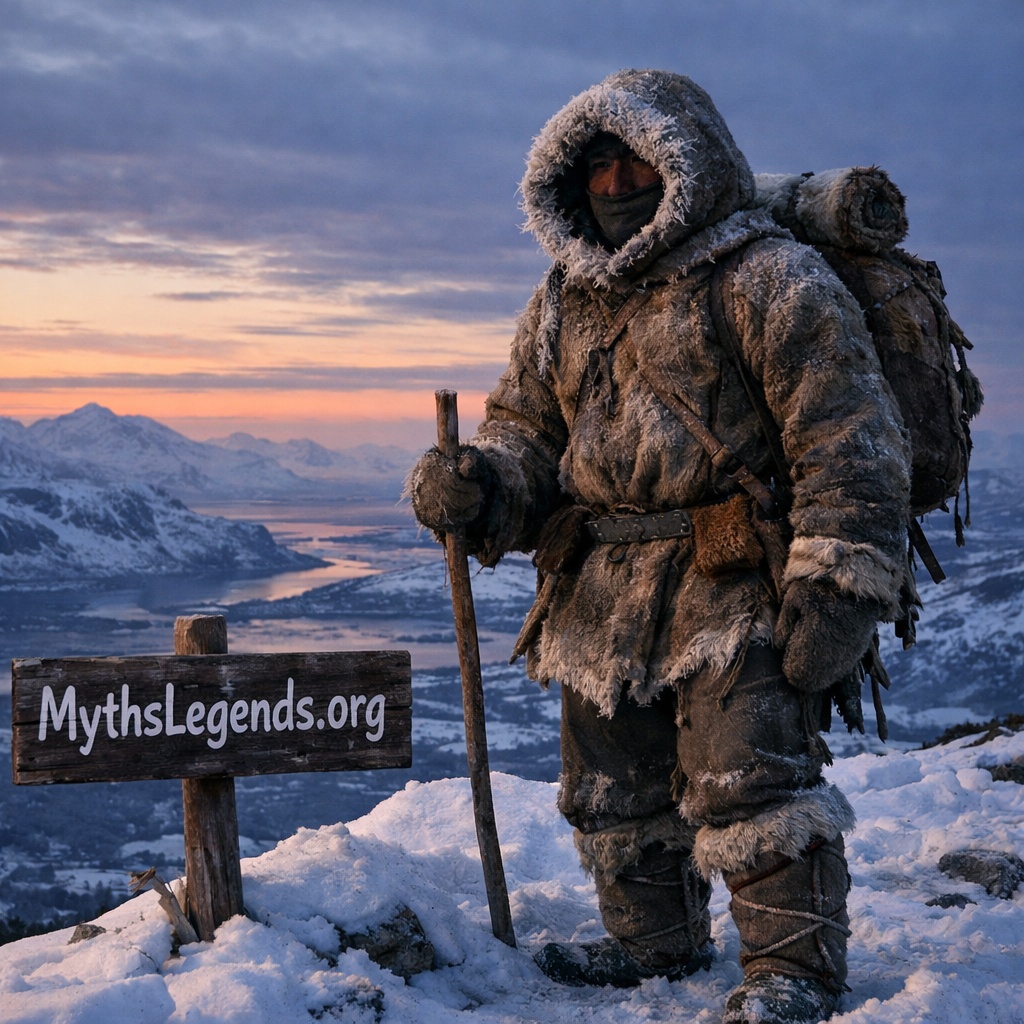
The mysterious legends of the Inuit: The story of the eerie Qivittoq
Nuuk, Greenland – Greenland’s icy expanses and dramatic landscapes conceal more than just wild beauty and untouched nature. Inuit legends are deeply interwoven with this harsh environment and rich with stories of ghosts, goblins, and other mystical beings. One particularly captivating and unsettling story is that of the “Qivittoq,” a lonely wanderer who roams the land after being cast out of society.
The origins of the Qivittoq myth – The legend of the Qivittoq is one of the most famous in Greenlandic folklore. It is deeply rooted in Inuit traditions and belief systems. A Qivittoq (plural: Qivittok) is described as a person who has been cast out of their community or who has left civilization of their own free will. These hermits seek refuge in the most remote corners of the Greenlandic wilderness, where the harsh climate and threatening environment transform them physically and psychologically. According to tradition, after many years of isolation, a Qivittoq transforms into a kind of superhuman and mystical being. Not only does their mind adapt to the extreme conditions, but so does their body. It is said that they eventually develop incredible powers—speed, strength, and endurance that exceed human capabilities.
Encounter with a Qivittoq – Encounters with a Qivittoq are rare and accompanied by a deep sense of unease. Eyewitnesses report large figures with terrifying eyes lurking through the tundra, silent shadows in the night. These beings are not only physically altered—their isolation has also driven them mad. It is therefore no wonder that the people in the remote villages of Greenland have passed down these legends for generations. Some believe that the Qivittok thirst for revenge and hunt those who once cast them out. Others, however, believe that these creatures simply seek peace in the wilderness, far away from the constraints of a society they no longer understand.
Parallels to other myths – Interestingly, the myth of the Qivittoq bears striking similarities to legends from other cultures. For example, Native American myths tell stories of so-called “windigos,” human-like beings who gain monstrous abilities through cannibalism and isolation. Scandinavian sagas also contain stories about creatures that roam the deserted wilderness, such as the “Huldra” or the “Nokken.” These parallel myths suggest that the story of the Qivittoq touches on a universal theme: the deep-seated fear of isolation and dehumanization, as well as the fascination with the transformation that people can undergo in absolute seclusion.
The Qivittoq in modern culture – Although the Qivittoq myth dates back to a time when life in Greenland was much harder, it has lost none of its relevance today. The figure appears repeatedly in literature, film, and art, often as a symbol of the ultimate challenges of human life in the wilderness. A well-known novel that deals with this myth is “Miss Smilla’s Feeling for Snow” by Peter Høeg. Here, Greenlandic culture is examined in depth, including the dark legends that permeate the country. Even in contemporary horror films and television series, the influence of the Qivittoq story can be seen, always as a warning about the dangers of isolation and untamed nature.
A living tradition – Despite technological advances and increasing globalization, the Inuit preserve their ancient stories and customs, which are an integral part of their identity. The legend of the Qivittoq is more than just a ghost story; it is part of the cultural heritage that connects Greenland’s past, present, and future.
Thus, the Qivittoq remains a symbol of the interrelationship between humans and nature, a reminder that despite all the achievements of civilization, the archaic forces of nature and the human spirit can never be completely overcome. Who knows, perhaps even today, in the silence of the polar night, lonely figures still wander through the vast plains of Greenland, their fate intertwined with the ancient earth beneath their feet.








Post Comment