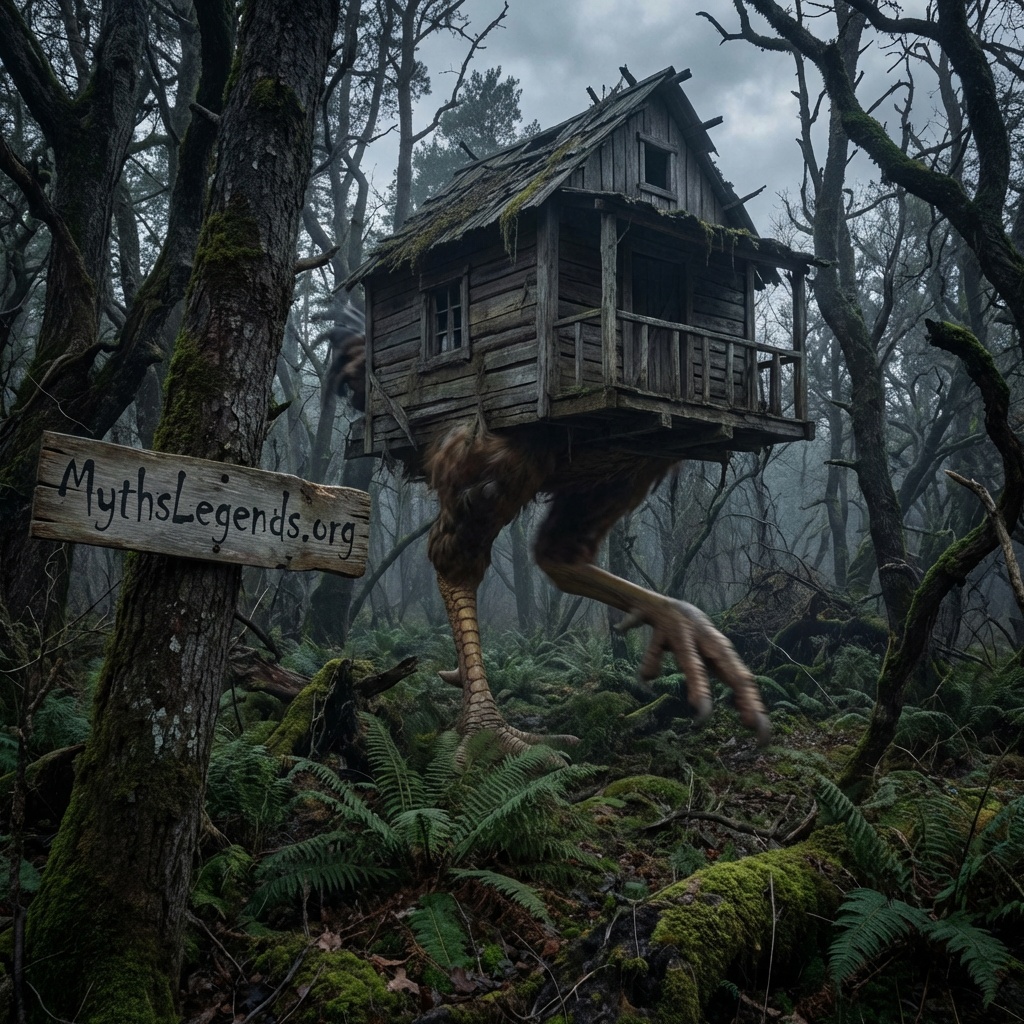
The mysterious Baba Yaga: witch or protector?
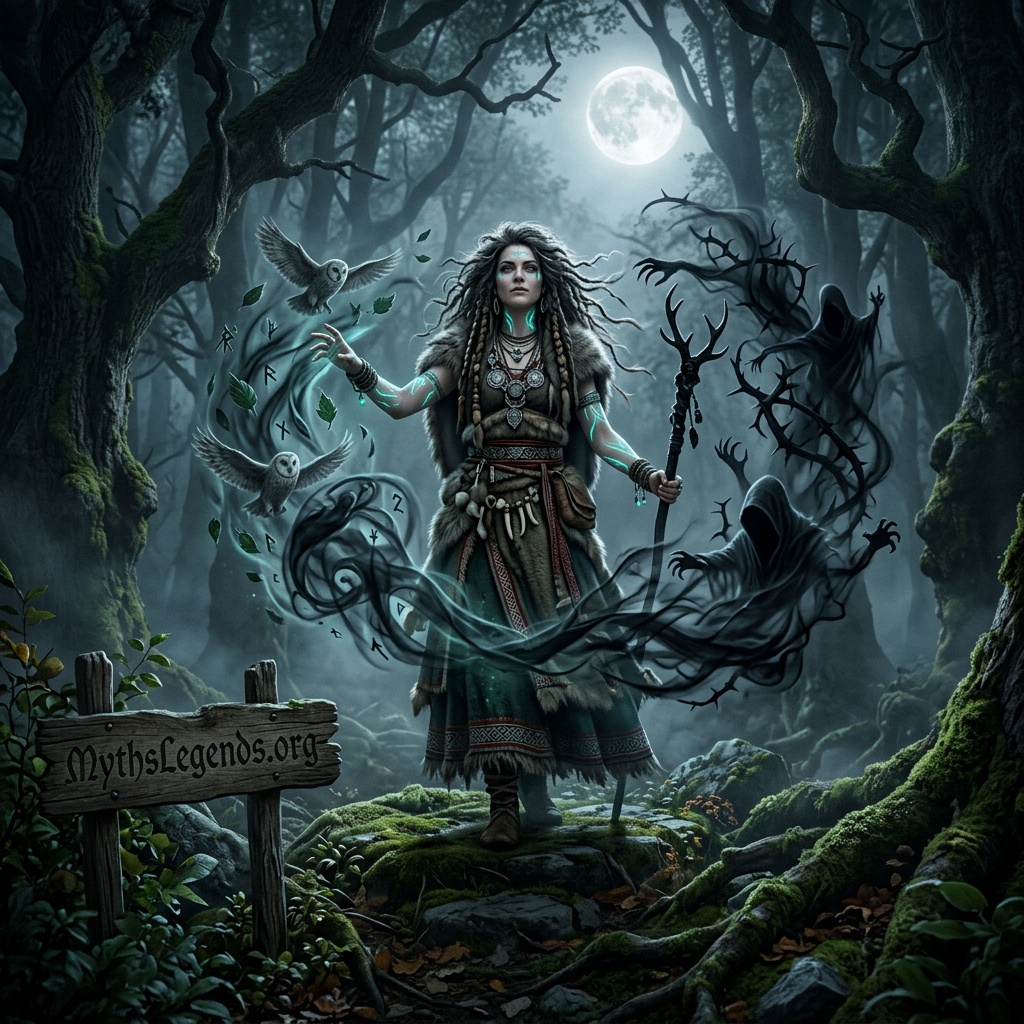
Deep in the dense, mysterious forests of Eastern Europe, hidden behind a veil of folklore and wonder, lives a figure who has fascinated, frightened, and captivated generations—Baba Yaga. Considered by many to be the epitome of the witch from Slavic mythology, Baba Yaga is much more than just a malicious old woman; she is an enigma, surrounded by myths and contradictions.
The dual nature of Baba Yaga – Unlike the one-dimensional evil witches of Western fairy tales, Baba Yaga is a complex figure who embodies both malice and wisdom. Her portrayal often fluctuates between a terrifying antagonist and a wise protector, reflecting the duality of human nature. According to some tales, Baba Yaga lives in a hut that stands on chicken legs and spins incessantly in the dark forest. This peculiar dwelling, which can move and shift according to her whims, adds to the mystique of her character. The hut is not only a dwelling, but also a symbol of transience and the cycle of life. In many stories, Baba Yaga is portrayed as a bone-gnawing witch who enjoys capturing unwary travelers and destroying those who cross her path. In other stories, however, she is a keeper of deep secrets and a dispenser of wisdom who helps those who are brave enough to entrust themselves to her guidance with an open heart.
Origins and Development of the Legend – The origins of Baba Yaga are shrouded in mystery, but it is believed that her myth dates back to pre-Christian pagan traditions. The name “Baba” means “old woman” or “grandmother” in most Slavic languages, while “Yaga” may be derived from the Old Russian word for ‘terror’ or “evil.” Taken together, Baba Yaga represents the feared but respected matriarch of the wilderness. Early mentions of Baba Yaga can be found in Russian folk tales from the 18th and 19th centuries. However, her story has evolved over time and has been shaped by different cultural perspectives and storytelling traditions. For example, some interpretations link her to the goddess Marzanna, a figure associated with death and winter.
Stories of horror and kindness – The stories about Baba Yaga’s interactions with humans range from scary to surprisingly uplifting. In “Vasilisa the Beautiful,” for example, Baba Yaga is a terrifying cannibalistic witch who ultimately helps the protagonist after being impressed by her courage and kindness. Vasilisa’s story is exciting not only because of its fairy-tale elements, but also because of its deeper moral lessons about bravery, integrity, and the power of compassion. In another story, “The Frog Princess,” Baba Yaga takes on the role of a wise old woman who assists the protagonist in his quest with valuable advice. Here, she is more of a guardian of knowledge than a menacing antagonist, highlighting her role as a bridge between the mortal world and the mystical realm. Furthermore, some scholars suggest that Baba Yaga symbolizes the forces of nature and the dangers that come with straying from the beaten path. Her unpredictability symbolizes the dual capacity of the wilderness to nurture and destroy.
Modern Interpretations – Baba Yaga continues to inspire the imagination in contemporary literature, film, and other media, where she is reinterpreted in various forms and contexts. In the world of comics, she has appeared in Neil Gaiman’s series “The Sandman” and Mike Mignola’s “Hellboy.” Director John Wick borrows her name to evoke an aura of invincibility and fear for his eponymous antihero. Furthermore, Baba Yaga’s legacy lives on in modern-day Russia and other Slavic countries, where she is a cultural icon. She is celebrated in art, theater, and festivals, representing a connection to rich Slavic heritage and the timeless appeal of folklore.
Beyond the stereotypes – While popular depictions often simplify her as a menacing witch, it is important to recognize Baba Yaga’s complexity. She embodies the archetype of the Crone, a phase of the Triple Goddess in pagan traditions that symbolizes wisdom, transformation, and rebirth. Her contradictory qualities—both good and evil—make her a symbol of the complex interplay between goodness and malice in nature. The hut on chicken legs, for example, has been interpreted as a liminal space, a boundary between the known and unknown worlds. It stands at an intersection, much like Baba Yaga herself, who mediates between life and death, terror and comfort.
Revealing the secrets – Despite her fearsome reputation, those who approach Baba Yaga with pure intentions often find a source of unexpected help. This fascinating aspect of her character encourages us to rethink our ideas of morality and wisdom. Perhaps Baba Yaga teaches us that wisdom often comes from unexpected sources and that true understanding lies in embracing complexity rather than seeking clear-cut answers. To understand Baba Yaga, one must embark on a journey into the heart of the forest, where shadows play tricks on the eyes and the line between safety and danger becomes blurred. It is a journey that forces us to confront our fears and prejudices, urging us to look beyond the surface and appreciate the depth of myths and legends.
A timeless enchantment – Baba Yaga remains a powerful figure in folklore due to her enigmatic nature and the timeless themes she represents. She is not just a character in stories told to scare children, but a profound symbol of the capriciousness of nature and the wisdom to be found in its depths.
As long as stories are told and forests remain mysterious, Baba Yaga will continue to fascinate and frighten us, reminding us of the fine line between fear and respect, wisdom and folly. Like the hut on chicken legs, her legend continues to spin, revealing new facets of an ancient enigma.






Post Comment