The mysterious Amber Room: lost treasure or hidden truth?
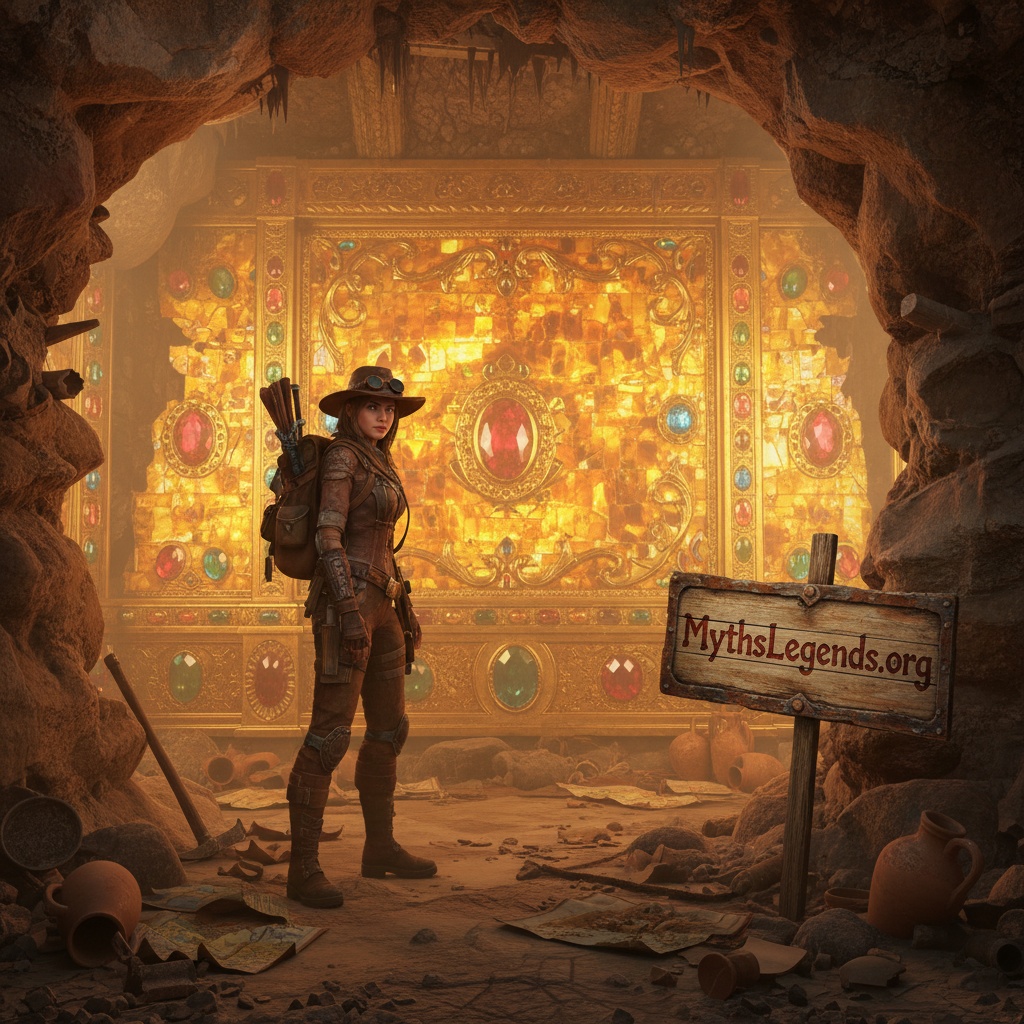
In the annals of history, there are few mysteries that capture the imagination quite like the Amber Room. Often referred to as the ‘eighth wonder of the world,’ this famous chamber was crafted entirely from amber, gold leaf and precious stones in the 18th century. It was originally designed for Charlottenburg Palace in Prussia. But as fate would have it, the room’s history took a different turn when it was presented as a gift to Tsar Peter the Great of Russia to symbolise diplomacy and art.
For over two centuries, the beauty of the Amber Room adorned the Catherine Palace near Saint Petersburg. Its walls shimmered in candlelight and fascinated those lucky enough to admire its splendour. However, during the Second World War, the German army marched into the Soviet Union, and amid the chaos, the Amber Room disappeared. Its disappearance led to countless theories and inspired generations of treasure hunters, scientists and conspiracy theorists alike.
A cultural masterpiece as spoils of war – When Nazi troops captured Leningrad (now Saint Petersburg), they carefully dismantled the Amber Room, packed it into crates and transported it to Königsberg Castle, now Kaliningrad in Germany. There it was briefly exhibited before disappearing without a trace when the tide of war turned against Germany.
The palace itself was destroyed during Allied bombing raids and the subsequent Soviet conquest, seemingly erasing all traces of the missing masterpiece.
Despite intensive efforts by the Soviet and later Russian authorities, the fate of the Amber Room remains one of the world’s greatest mysteries. There are numerous theories, ranging from its destruction in an air raid to its concealment in an underground bunker to its removal on a ship that sank in the Baltic Sea. But none of them has provided conclusive evidence.
Legends and temptations: the story lives on – The mystery surrounding the Amber Room has given rise to a multitude of legends. Some believe it lies buried under the ruins of Königsberg, while others suspect it is located in the extensive tunnel network under Poland, which was built by retreating German troops. Every theory has its supporters, every clue its seekers.
In 2008, a curious piece of circumstantial evidence emerged in the picturesque village of Deutschneudorf in Germany. Local lore spoke of a hidden Nazi bunker where war treasures were said to have been stored.
Spurred on by stories passed down through generations, treasure hunters focused on this location, claiming it was the final resting place of the Amber Room. Although their excavations yielded no results, the attempt rekindled public interest and demonstrated the enduring fascination of the search.
Modern-day treasure hunters: a search that never ends – The search for the Amber Room is not just about discovering historical artefacts, but also about solving a mystery that transcends time and borders. Today’s treasure hunting community consists of historians, amateur detectives and high-tech expeditions. Equipped with state-of-the-art technology such as ground-penetrating radar and sonar, these adventurers comb through potential hiding places throughout Eastern Europe.
In 2016, a group of Polish researchers claimed to have found an underground train loaded with gold and possibly the remains of the Amber Room.
The alleged discovery near Walbrzych sparked a media frenzy. However, despite extensive excavations, no treasure was found, disappointing but not discouraging the enthusiasts.
New piece of the puzzle: New findings and theories – Recent investigations have produced new theories about the never-ending saga of the Amber Room. Some historians suspect that the loot was divided up and parts of it shipped to various Nazi-friendly areas, including Austria and Switzerland. This idea is based on documents found that point to secret transport routes and covert operations towards the end of the war.
In addition, declassified intelligence reports point to a covert operation by Soviet forces after the war, during which the Amber Room may have been found, but its status was treated as a state secret. Such claims make the matter even more intriguing and suggest that geopolitical factors may have played a role in the room’s unknown fate.
Romanian historian Adrian Bucurescu offers another perspective, speculating that the Amber Room may have been stored in Transylvania, hidden in one of the many fortified castles scattered throughout the region. The natural isolation of the Carpathian Mountains and the turbulent history of the region provide a plausible backdrop for such a theory.
The legacy lives on – Despite its unresolved status, the legend of the Amber Room continues to fascinate, not least because of the symbolic power it represents. Its story is a microcosm of the human penchant for wonder, greed and the relentless pursuit of lost glory. In the realm of popular culture, the Amber Room has inspired numerous books, films and documentaries, each offering its own imaginative interpretation of the mystery.
The reconstructed Amber Room in the Catherine Palace, completed in 2003 with German financial support and craftsmanship, is a tribute to the original.
While it may never achieve the mystique of its predecessor, it is a beacon of hope, symbolising that art and ingenuity can overcome the ravages of war.
A never-ending story – Although traces of the Amber Room have disappeared into the sands of time, the search for the truth continues unabated. With the advent of new technologies and the opening of untouched archives, we may one day uncover the fate of the room and solve the decades-old mystery. Until then, the Amber Room remains both a cautionary tale and an irresistible quest that attracts all who long for a touch of the unattainable and divine.
Perhaps the true treasure lies not in the amber and precious stones themselves, but in the spirit of exploration and discovery they inspire, reminding us that some secrets are worth preserving, if only to ignite the flame of curiosity and adventure in a world often dominated by certainty. The mystery of the Amber Room remains, a beacon that attracts those who dare to search for answers in the shadows of history.









Post Comment