
The Enigmatic Tale of Heinrich Steinpeiss and the Glowing Stone of Schloss Mikulov
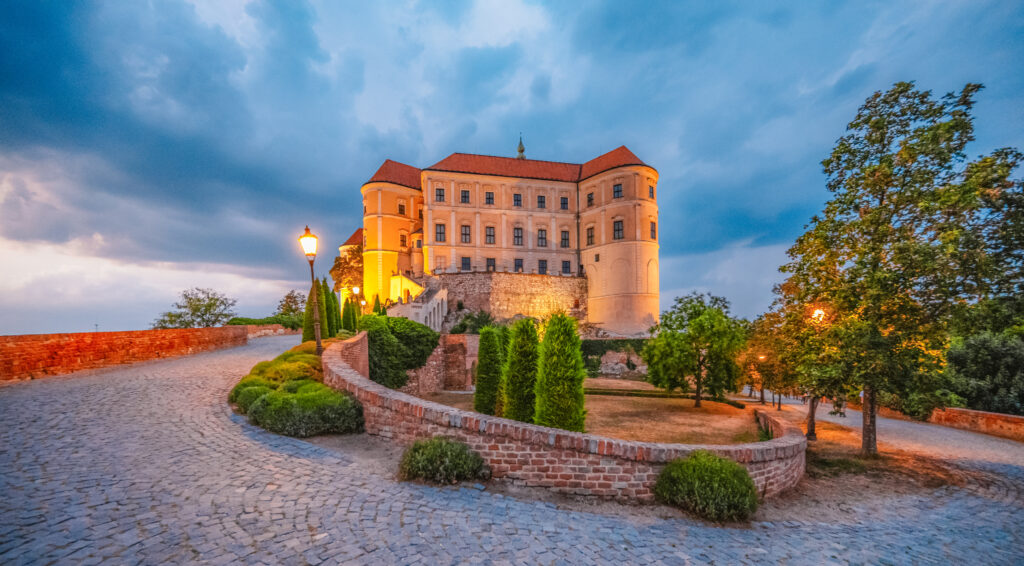
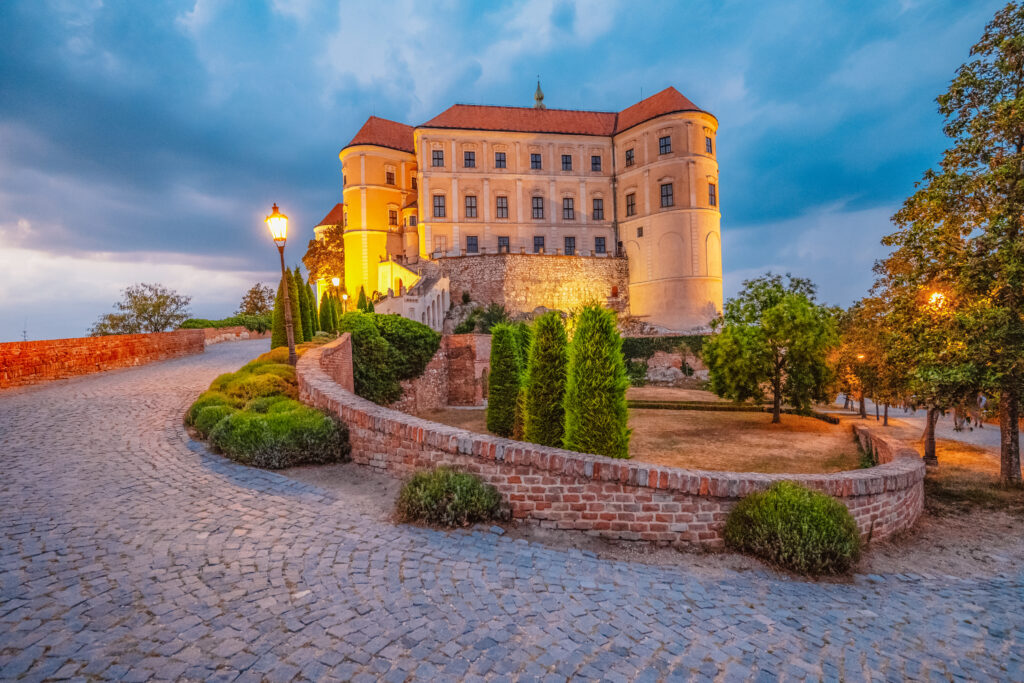
Schloss Mikulov, known in German as Nikolsburg, is not just an architectural marvel, but also a repository of rich and mysterious history. Nestled in the picturesque town of Mikulov in the South Moravian Region of the Czech Republic, this castle has witnessed centuries of events that have contributed to its storied past. At the heart of its legend lies the enigmatic figure of Heinrich Steinpeiss, whose life and purported possession of a magical artifact have sparked intrigue and fascination for generations.
The Legendary Burgrave – Heinrich Steinpeiss served as the “Liechtensteinischer Burggraf zu Nikolsburg” until his death in 1390. As a burgrave, he was responsible for the administration and defense of the castle, a role that entailed significant influence and power. However, it is not merely his position that cemented his place in history, but rather the alluring legend that surrounds him: Heinrich was said to own a glowing stone, a mystical artifact believed to bestow prosperity upon its holder. This “Glücksstein,” or luck stone, became synonymous with the name Steinpeiss. Legend has it that the stone was a gift from an unknown benefactor, possibly even an alchemist, who recognized Heinrich’s valor and loyalty. It was said that as long as the stone remained within the castle’s walls, the Liechtenstein family would flourish, their coffers filled, and their enemies kept at bay.
Historical Context and Deepening Mysteries – To understand the significance of Heinrich Steinpeiss and his supposed artifact, one must delve deeper into the historical context of Schloss Mikulov. The castle’s origins date back to the late 13th century, constructed by the Liechtenstein family, who were prominent nobles in the region. Over the centuries, the castle evolved architecturally and culturally, reflecting the changing tides of European history. While records from the period are sparse, references to Heinrich Steinpeiss can be found in the annals of medieval historians. These documents, often embellished with flourishes typical of the era, describe him as a formidable leader and a man of great wisdom. The pervasive belief in the luck stone likely stemmed from a combination of Heinrich’s personal charisma and the superstitions of medieval society, which were rife with tales of magical objects and divine providence.
The Myth of the Glücksstein – The story of the glowing stone takes on various forms in local folklore. Some versions suggest the stone emitted a radiant light visible only to its rightful owner, guiding them through perilous times. Others claim that the stone’s glow indicated impending dangers, allowing Heinrich and his successors to preemptively counter threats. This talismanic quality added to the aura of invincibility that surrounded the Liechtenstein family during their tenure. Beyond the realm of legend, some modern researchers speculate that the so-called glowing stone could have been a highly polished piece of quartz or another luminescent mineral, which might have appeared magical under certain lighting conditions. The true nature of the stone remains a mystery, adding to the allure and mystique of Heinrich Steinpeiss’s legacy.
Additional Legends and Contemporary Perspectives – Expanding on the narrative of Schloss Mikulov, it is essential to consider other legends interwoven with its history. For instance, the castle survived numerous sieges and invasions, which locals often attributed to the protective powers of the Glücksstein. During the Thirty Years’ War, when many European castles fell to ravaging armies, Mikulov managed to endure, further embedding the myth of its supernatural safeguard in regional lore. In contemporary times, Schloss Mikulov stands as a testament to centuries of human endeavor, artistry, and resilience. It attracts thousands of visitors each year, who come not only to admire its stunning architecture and verdant surroundings but also to immerse themselves in its enigmatic past. Exhibitions and guided tours frequently highlight the tale of Heinrich Steinpeiss and his legendary stone, ensuring that this captivating story continues to enchant new generations.
Scholarly Inquiries and Modern Interpretations – Scholars interested in medieval European history and folklore continue to investigate the story of Heinrich Steinpeiss, examining archaeological evidence and historical texts to glean insights into his life and the possible existence of the Glücksstein. While definitive answers remain elusive, these studies contribute to a broader understanding of how legends shape cultural heritage and collective memory. Moreover, interdisciplinary approaches combining history, mythology, and science have begun to uncover new facets of such legends. For instance, researchers explore the psychological impact of believing in a protective artifact on a community’s morale and cohesion, suggesting that the myth of the Glücksstein may have played a pivotal role in uniting and inspiring the people of Mikulov.
The tale of Heinrich Steinpeiss and the glowing stone of Schloss Mikulov is a fascinating blend of history and myth that captivates all who hear it. Whether viewed as a historical curiosity, a source of cultural pride, or an enduring mystery, the legend of the Glücksstein continues to cast its spell over both scholars and tourists alike. As new discoveries emerge and old legends are reinterpreted, the story of Schloss Mikulov and its enigmatic burgrave will undoubtedly continue to thrive, enriching the tapestry of European cultural heritage










Post Comment