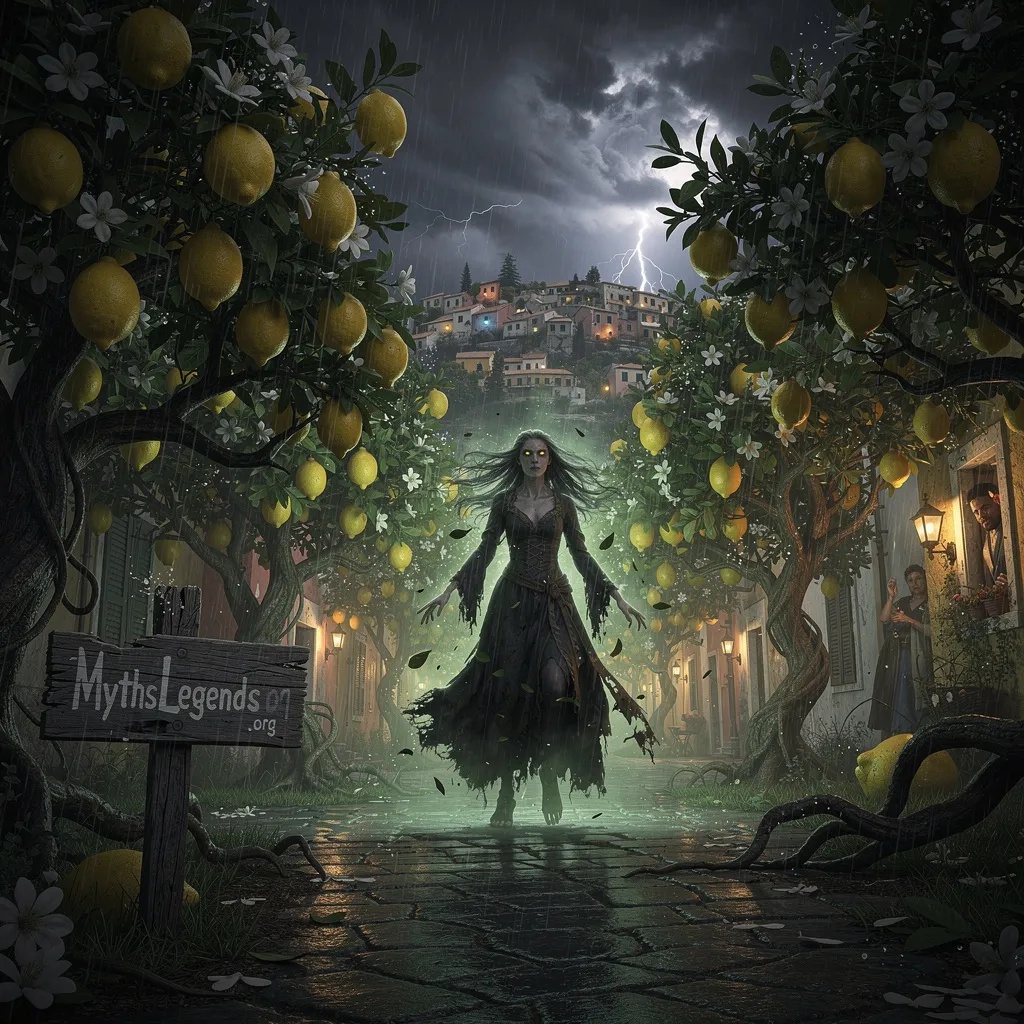
The Cursed Lemon Island: Procida and the Dark Legend of the Witch Livia
Procida, an idyllic island in the Gulf of Naples, attracts numerous visitors every year with its picturesque landscapes and charming pastel-colored houses. But behind this peaceful façade lies a dark and ominous legend that still terrifies the locals to this day. At the heart of this story is the mysterious witch Livia and her powerful curse.
The scent of lemons and the presence of Livia – Procida’s blossoming lemon groves are widely known. Their beguiling scent fills the air and gives the island an almost magical charm. But it is not only the lemons that shape the atmosphere of this island. An ancient legend, passed down from generation to generation, tells of a woman named Livia who lived in these groves centuries ago.
Livia was not only a resident, but also a wise healer whose knowledge of medicinal herbs and nature made her famous far and wide. She knew how to cure illnesses and ward off storms by harnessing the powers of nature. At first, the villagers revered her for her abilities and often sought her advice.
Mistrust and the fateful night – Over time, however, their former admiration turned to mistrust. When a series of inexplicable misfortunes befell Procida—such as unusually violent storms and mysterious illnesses—the villagers became fearful. Rumors and suspicions spread. It was rumored that Livia was not a healer, but a witch who conjured dark forces.
On a particularly stormy night, the inevitable finally happened. The angry villagers, driven by rage and fear, broke into Livia’s house. They accused her of bringing disaster upon the island and demanded her banishment. Despite her desperate protests, Livia found no one willing to listen to her. However, shortly before she disappeared, she cursed the lemon groves.
The Curse of the Lemon Groves – Livia’s words would change the island forever. “May anyone who picks these fruits without permission be haunted by endless misfortune and suffering,” she cried into the angry wind. Since that moment, a dark shadow has fallen over the lemon groves of Procida. The once beloved and carefree fruits became a symbol of misfortune.
To this day, locals tell stories of those who dared to ignore the curse. According to reports, strange and unfortunate incidents occurred with frightening regularity. One of the most famous stories is about a young man who stole the golden yellow fruits despite the warnings. Shortly afterwards, he lost his job, his family broke up, and he himself became seriously ill.
Coincidence or actually the result of an ancient curse?
The fear lives on – The power of the legend continues to hold the inhabitants of Procida in its grip. Although modern science questions many of the old myths, few dare to pick the lemons without the express permission of the landowners. Even tourists are often warned of the possible consequences of disobedience.
Historians suspect that the origin of the legend lies in the villagers’ attempt to protect their valuable lemon harvest. It may have been a clever plan to prevent theft and looting. Nevertheless, belief in Livia’s curse is firmly anchored in the collective memory of the island.
The dual meaning of the story – The grim story of Livia and the cursed lemon grove is not only a warning, but also a reflection of human fears and abysses. It shows how quickly admiration can turn into mistrust and love into hatred. In the story of Livia, we also learn that the power of belief and the power of words can endure for generations.
In the midst of the modern world, Procida has never completely shaken off its mystical past. The scent of lemons that envelops the island is not only a reminder of the beauty of nature, but also of the invisible fear that lives in people’s hearts.
Thus, Procida remains an island of contrasts: paradisiacal and mysterious at the same time, a place of beauty and horror. So the next time you visit the picturesque hills and blossoming lemon groves, think of the curse that hangs over the island—and maybe think twice before reaching for a golden fruit.













Post Comment