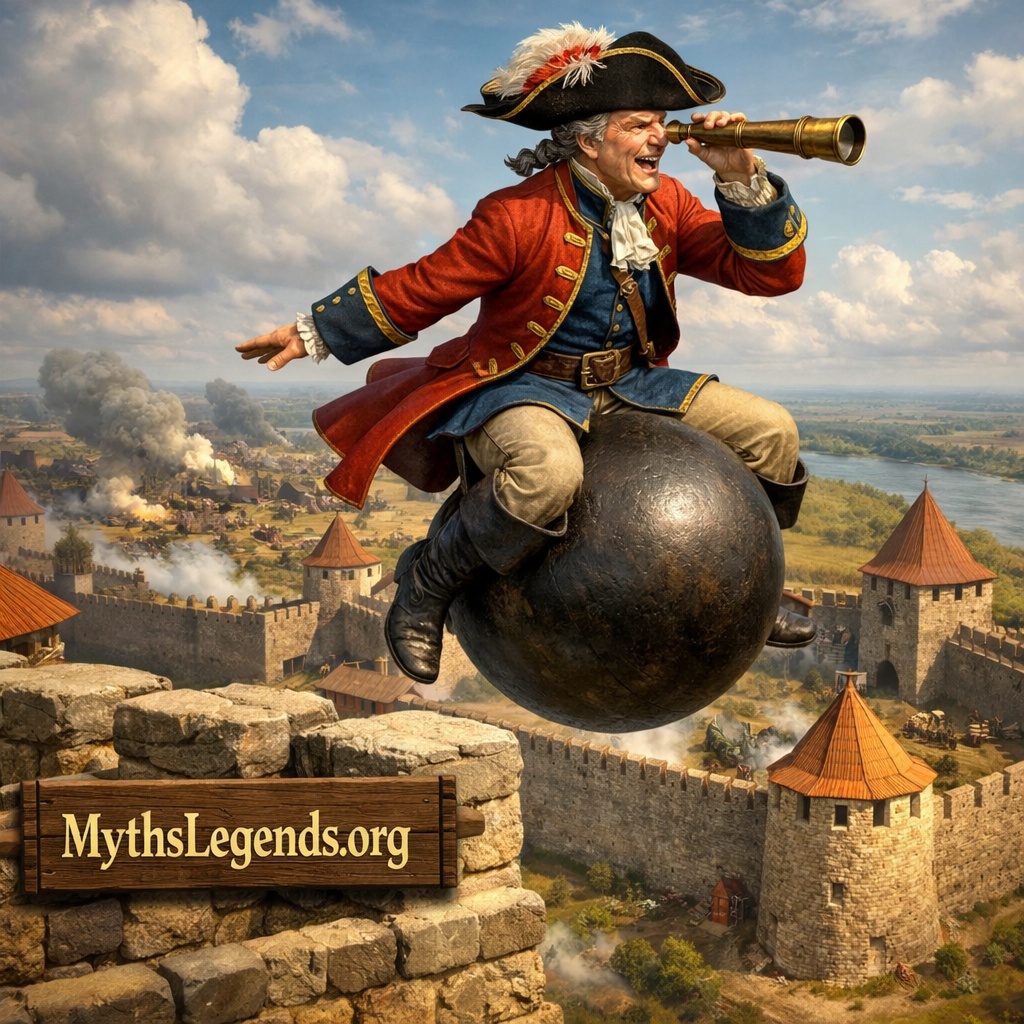
Münchhausen: The baron who made history on the back of a cannonball
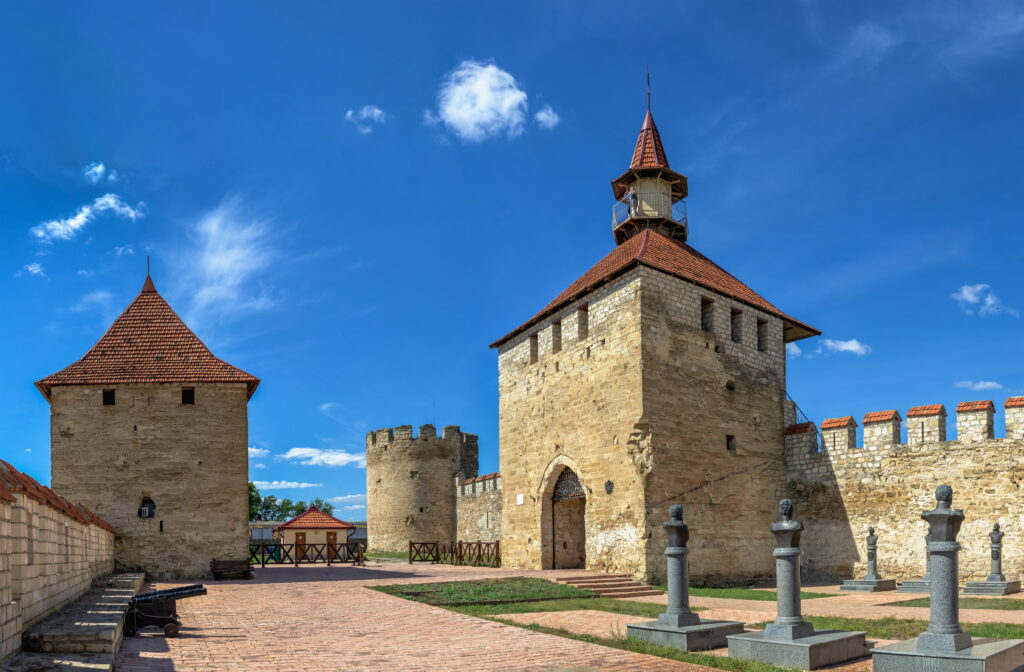
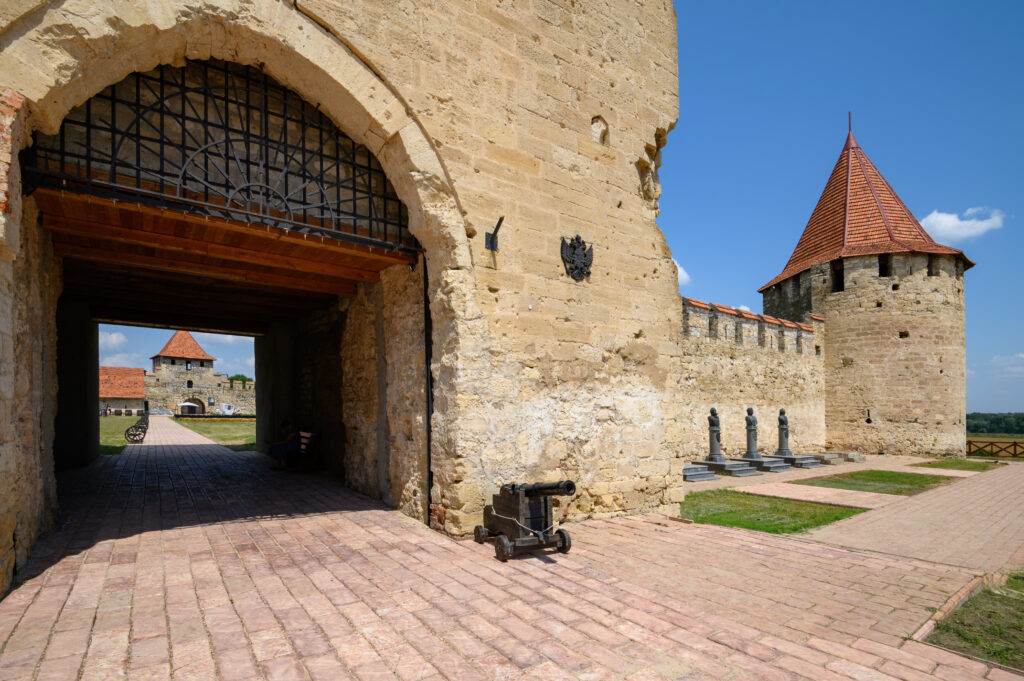
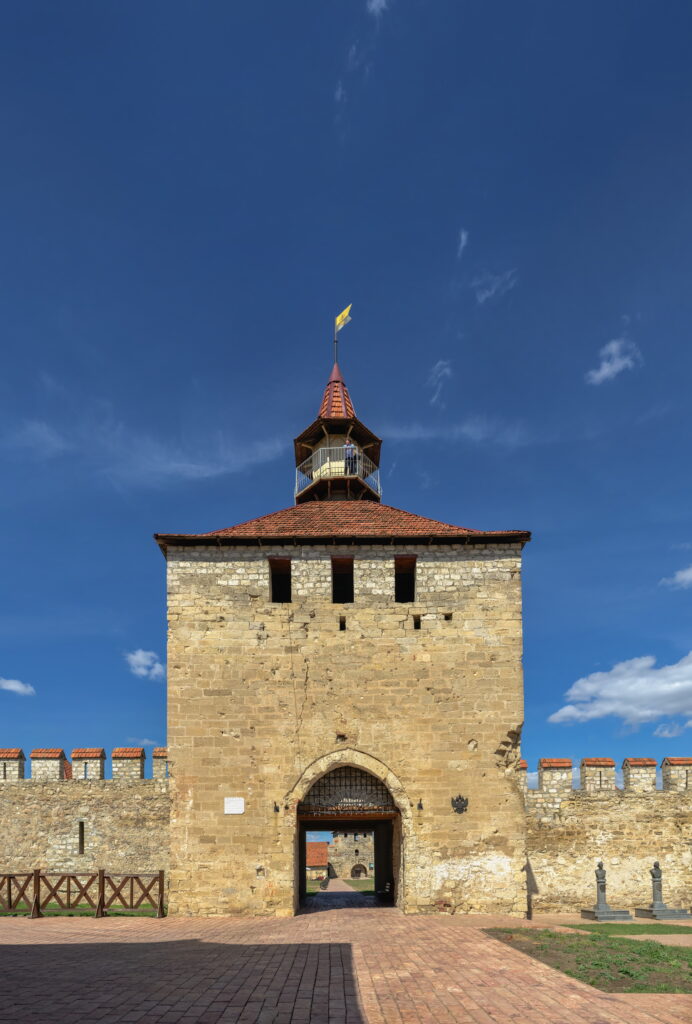
The fortress of Bender (also known as Tighina) in the Republic of Moldova, or more precisely in the region of Transnistria, is home to a piece of European history and mythology. Closely linked to this historic place is the colorful figure of Hieronymus Carl Friedrich von Münchhausen, a German nobleman and officer who became immortal not only through his military achievements, but above all through his fantastic stories.
The historic fortress and its significance – The Bender Fortress played an important role in the 18th century as a military base and bulwark against enemies. Originally under Ottoman rule, it was a strategically important point on the border with the Russian sphere of influence. In 1738, an important siege took place here, in which Baron Münchhausen also took part. As an officer in the Russian army, he was one of the many soldiers who fought against the Ottoman occupation. However, this was not just another military confrontation, but the scene of the birth of one of the most famous legends of all time.
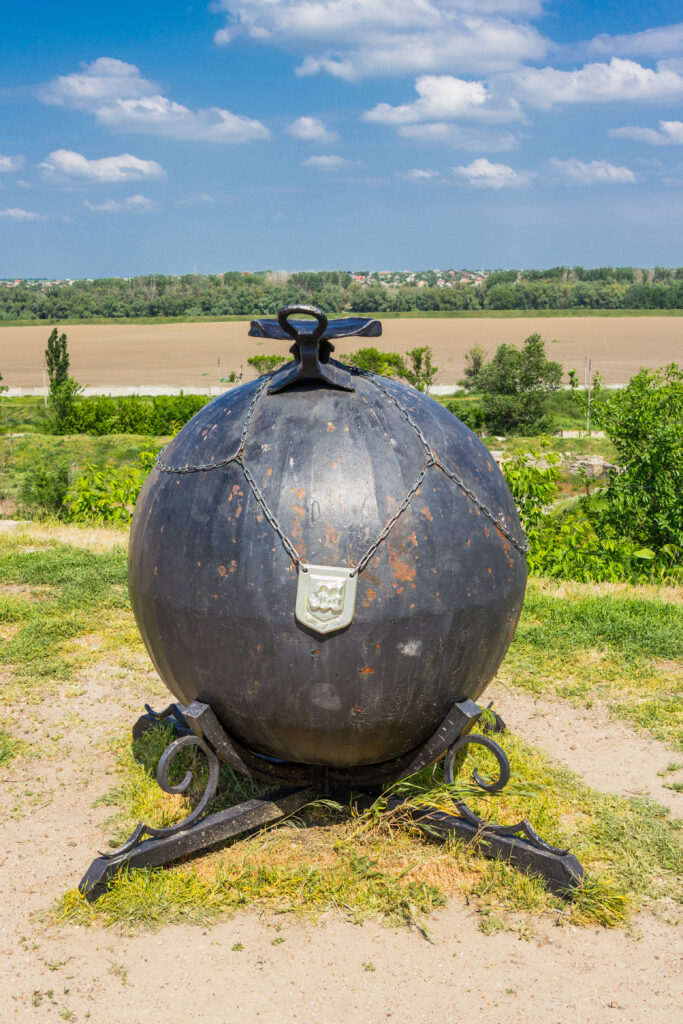
Münchhausen’s incredible adventures and the legend – Baron Münchhausen is known worldwide for his imaginative and often exaggerated stories, which have made him a legendary figure. One of the most widespread and popular stories is undoubtedly his ride on a cannonball. The myth says that during the siege of the fortress of Bender, Münchhausen chose a courageous and extraordinary method to scout the enemy lines: he sat on a fired cannonball and flew over the enemy positions. After gathering valuable information, he is said to have returned safely on an enemy cannonball.
The interactive monument – Within the well-preserved walls of the Bender Fortress is a monument that pays tribute to this great story. It shows the baron on a giant, symbolic cannonball, equipped with a saddle and a handle so that visitors have the opportunity to experience a piece of this adventure for themselves. This monument is more than just a tribute to Münchhausen; it invites visitors to enter the baron’s fantastical world and get a taste of his daring adventures.
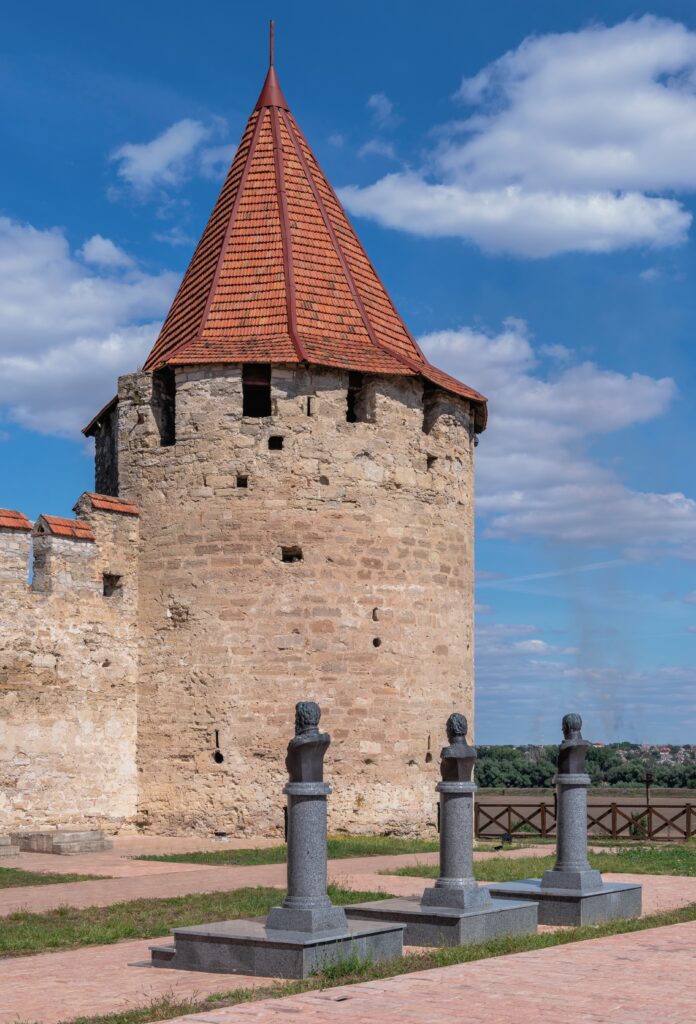
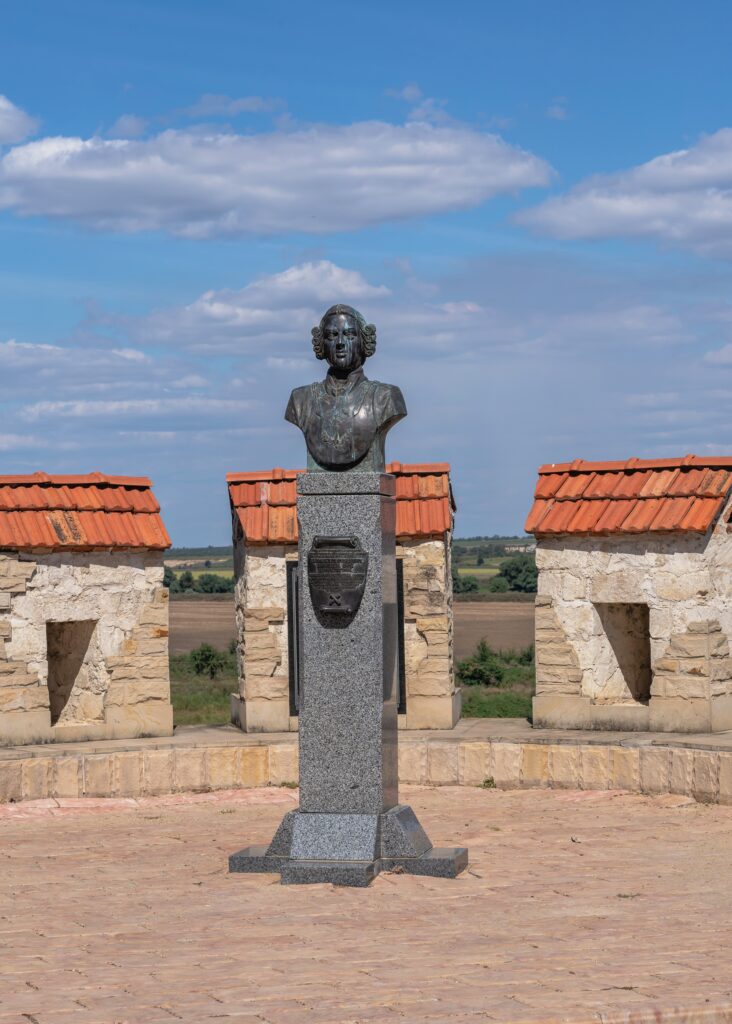
The bust and the honor of a legend – In addition to the impressive cannonball monument, there is also a traditional bust of Münchhausen in the “Allee der Herrführer” (Avenue of the Lords). This classic representation recalls the baron’s historical background and honors him as an outstanding figure in military history. The avenue itself is a place of remembrance and reflection, where various important personalities are immortalized in the form of busts. Münchhausen’s place among them underscores his dual identity as a brave soldier and an unforgettable storyteller.
Additional stories and adventures – In addition to the famous cannonball ride, there are many other adventures that Münchhausen recounts and which have fascinated his listeners for generations. For example, he tells of a time when he pulled himself out of a swamp by pulling himself up by his own hair. Or when he ended up in the belly of a giant fish and finally found a way out by steering the animal to the coast. A lesser-known but equally fascinating story is about Münchhausen’s journey to the moon. He claimed that during one of his expeditions, he discovered a giant beanstalk that reached up to the sky. Curious, he climbed up and suddenly found himself on the moon, where he encountered a civilization that was very different from that on Earth. Munchausen’s accounts of the moon dwellers and their strange customs are a testament to his boundless imagination and inventiveness.
The literary adaptation of his stories – The adventures and stories of Baron Munchausen were first recorded in writing and published by the German author Rudolf Erich Raspe. Raspe published the work anonymously, which initially led to questions about whether these stories actually came from the Baron himself. Later, however, the tales became popular under the title “Wonderful Travels on Land and Sea: Campaigns and Funny Adventures of Baron Münchhausen” and quickly spread throughout Europe. Further adaptations and translations contributed to Münchhausen becoming a distinctive literary figure whose stories are known worldwide in numerous variations and interpretations.
Historical accuracy versus fantasy – Although many of his stories seem obviously exaggerated or even impossible, some of the events Münchhausen describes are based on true events in his life. His service in the Russian army and participation in the siege of the fortress of Bender are historically documented facts. However, Münchhausen was a master at blending reality and fiction in such a way that it was often difficult to distinguish between the two. It was precisely this fusion of truth and fantasy that made his stories so fascinating and timeless.
A lasting legacy – Today, Münchhausen is not only a symbol of adventure and creativity, but also an example of the power of storytelling. His stories have inspired generations and continue to be reinterpreted in the form of books, films, and plays. The monument and bust in the Bender Fortress are visible testimonies to his enduring presence in cultural memory and offer visitors the opportunity to experience a piece of this legend for themselves.
Shrouded in history and myth, Bender Fortress remains a fascinating place for historians, literature lovers, and adventurers alike. Münchhausen’s legacy as a master storyteller lives on, both in the hearts of those who hear his stories and in the places associated with his legendary adventures.





Post Comment