The mysterious secrets of Vilnius: The cave of the legendary basilisk
Vilnius, the enchanting capital of Lithuania, is not only a city with breathtaking Baroque architecture and narrow cobblestone streets, but also a city full of legends that surround its historical fabric with a mysterious aura. Among these stories, one stands out for its nightmarish appeal—the legend of the basilisk. This mythical creature, said to dwell in the shadowy catacombs beneath the city’s bustling surface, has captured the imagination of locals and visitors alike, inspiring both curiosity and trepidation.
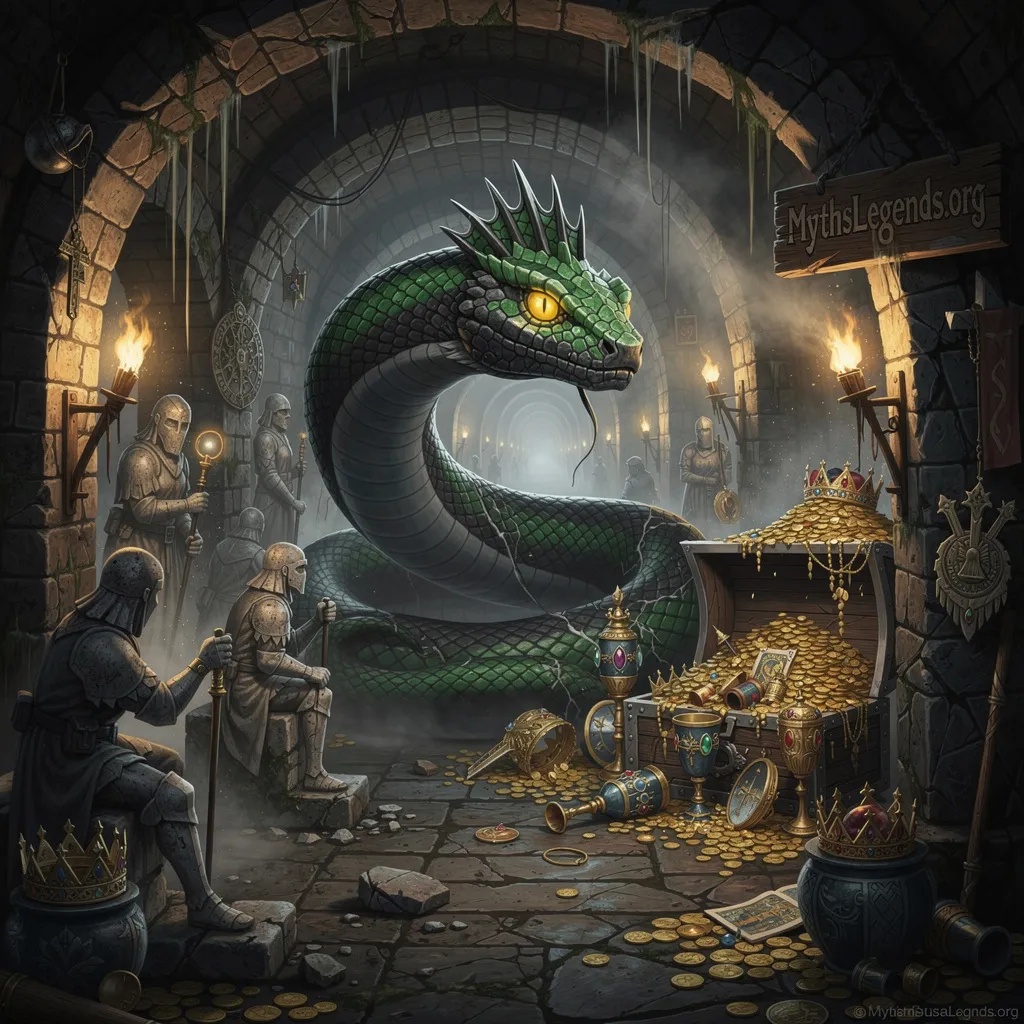
The Basilisk of Vilnius is described as a serpentine monster that can turn anyone who meets its gaze to stone. The mere mention of its name sends a shiver down the spine, reminiscent of the terrifying creatures of ancient lore.
Legends say that this monstrous guardian watches over unimaginable treasures hidden in the labyrinthine depths beneath Vilnius. Although the story sounds like pure fantasy, its roots run deep into the rich history of European myths and historical intrigue.
Uncovering the origins – Stories about basilisk-like creatures have endured for centuries and have their origins in ancient Roman and Greek mythology. These tales spread throughout Europe with traveling merchants and scribes and became part of local folklore. The Basilisk of Vilnius, however, is unique, shaped by the city’s distinctive blend of cultural influences and turbulent history. It reflects a time when fear of the unknown—embodied by dark tunnels and hidden riches—fueled vivid storytelling.
Some historians suggest that the basilisk legend was a metaphor for real dangers lurking underground in the Middle Ages.
The network of tunnels beneath Vilnius, used primarily for defense and storage, ironically became a breeding ground for disease and disaster. The story of a monster that could turn people to stone may have been a symbolic warning against venturing into these dangerous passages.
The catacombs: a dangerous labyrinth – The catacombs beneath Vilnius are a labyrinth that holds the city’s history within its walls. Originally built as cellars and later expanded for military purposes, these tunnels bear witness to centuries of human endeavour and conflict. There are numerous stories of prisoners escaping through these secret passages, smugglers hiding their goods, and even alchemists seeking seclusion for their forbidden experiments. These rich historical layers contribute to the myth surrounding the Basilisk’s cave.
Modern expeditions into the catacombs have found no conclusive evidence of treasure or monsters, but the unsettling atmosphere remains undeniable. Archaeologists and urban adventurers report an eerie silence that pervades the air, occasionally interrupted by inexplicable echoes.
Perhaps it is this inexplicable atmosphere that continues to fuel the myth of the basilisk—a haunting reminder of what humanity fears when it is no longer visible.
The fascination of myth and mystery – In today’s age of technology and reason, one might wonder why such myths persist. The answer lies in humanity’s timeless love of storytelling and the accompanying fascination with the unknown. Legends such as that of the basilisk offer not only entertainment, but also a connection to our past, when stories served as both a moral compass and warnings cloaked in fantasy.
Furthermore, the basilisk legend has become a cultural touchstone for Vilnius, attracting tourists fascinated by tales of supernatural guardians and hidden riches. It adds an extra layer of magic to the city’s identity, enticing the adventurous and history buffs to explore Vilnius more closely.
Local tour guides often incorporate these stories into their tours, embellishing historical facts with legendary flair to ensure that Vilnius’ mysterious guardian is never forgotten.
Beyond the legends: reality rooted in folklore – While the basilisk may be a product of myth, its cultural influence is undeniably real. Take, for example, the many artistic representations that have emerged over the years—paintings, sculptures, and literary works, all inspired by this eerie tale. These creative expressions serve to keep the legend alive, constantly reinvented through the lens of modern interpretation.
Even more intriguing are the recent urban artworks and installations in Vilnius that subtly allude to the story, inviting viewers to ponder the line between fiction and reality. Glowing eyes painted on walls and street art featuring serpentine shapes remind the public of the city’s ancient guardian.
As a city that embraces its complex history and vibrant culture, Vilnius thrives on the rich fusion of fact and fiction contained in its legends. The basilisk, whether real or imaginary, embodies the spirit of adventure and the essence of the unknown. It invites everyone to ponder the mysteries that lie beneath their feet and to reflect on the stories we tell to capture the invisible forces that shape our world.
So, the next time you stroll through the picturesque streets of Vilnius, remember: in every shadow lurks the possibility of a myth, inviting you to look closer and perhaps, just perhaps, catch a glimpse of the basilisk’s shadow. Whether monster or metaphor, its influence on the city’s imagination endures, luring curious souls into the depths of the wondrous and mystical.











Post Comment