The terrifying tale of the Osterwiek dragon: unveiling the myths and mysteries surrounding the legendary monster of Quedlinburg
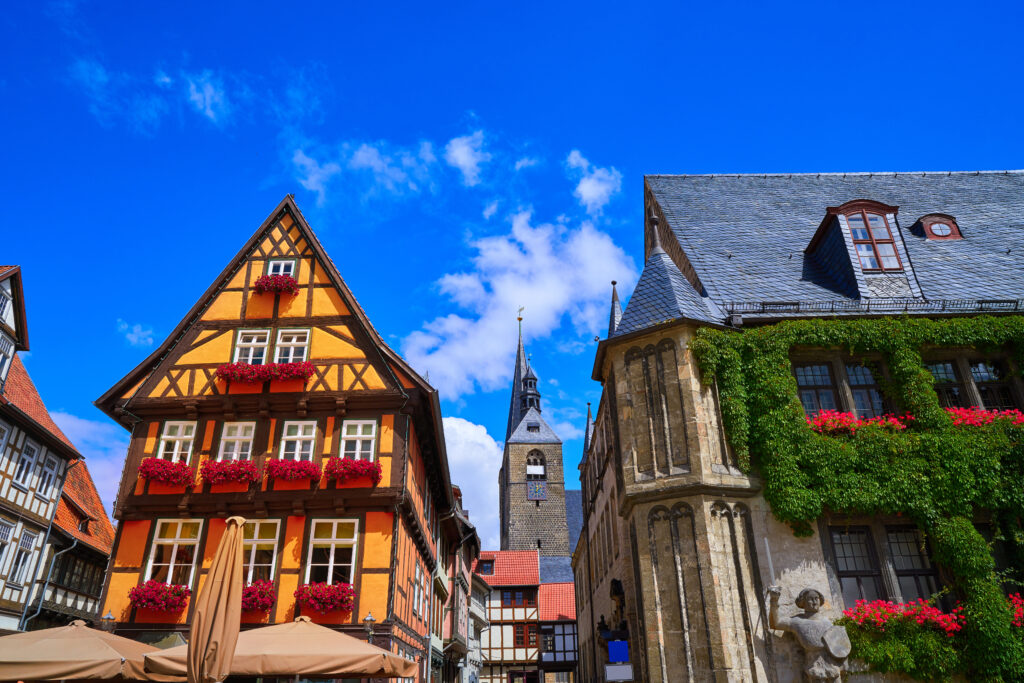
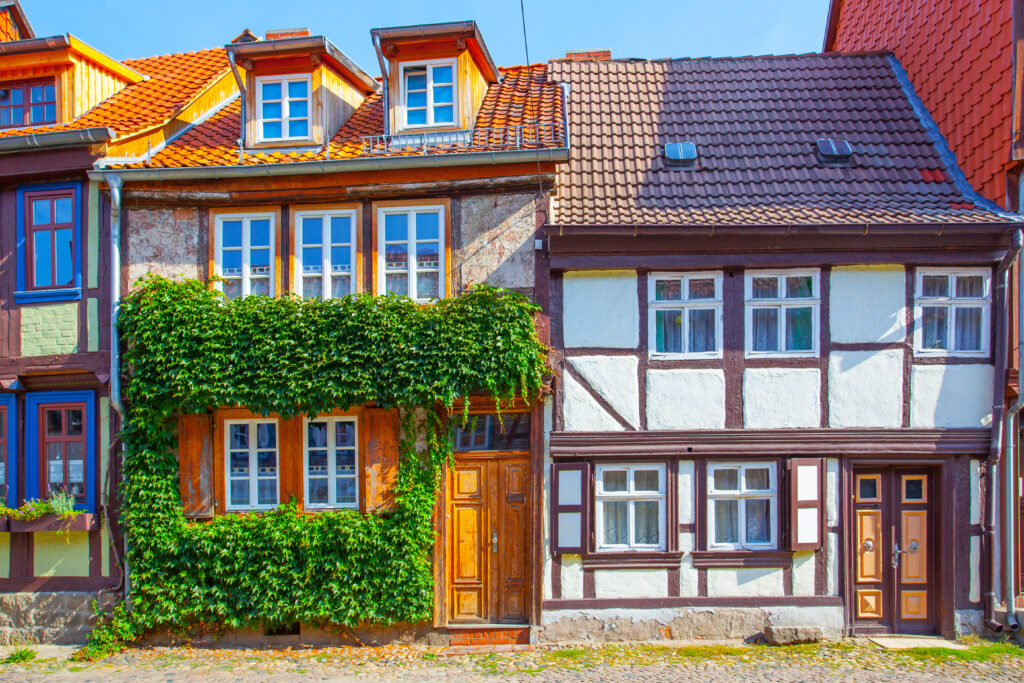
In the heart of Germany, a land rich in myths and legends, there is a story that has fascinated historians for centuries and captivated storytellers. Not far from the picturesque town of Quedlinburg lies the idyllic village of Osterwiek, shrouded in the mystery of its mythical protector and bogeyman – the Osterwiek Dragon. The story of this legendary creature is not just a simple bedtime story, but a tale steeped in ancient fears, local folklore and perhaps even historical truths.
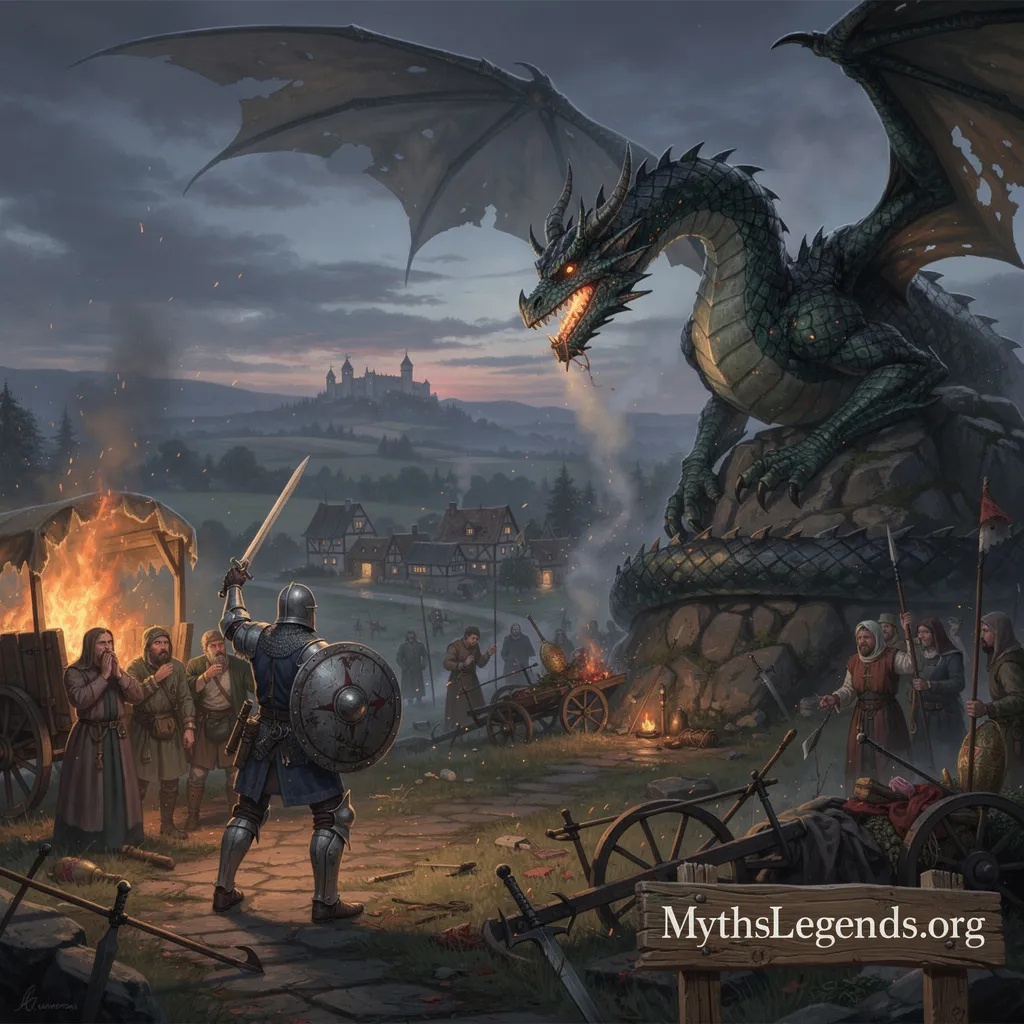
According to legend, passed down through generations, Osterwiek once stood under the terrible shadow of a dragon. Vividly described by those who told its story, the monster is said to have had scales that shimmered like polished armour, eyes that glowed eerily, and breath hot enough to scorch the earth itself. Its presence was a curse for the villagers, who believed that it regularly demanded tribute in order to spare their lives and their land.
According to legend, the dragon’s destructive fury knew no bounds, rendering the fields barren and darkening the skies with its imposing flight. The simple farming community, already struggling with the challenges of medieval life, was faced with the seemingly impossible task of appeasing this relentless predator. Every year, when the fields were tilled and the seasons changed, the villagers gathered to make sacrifices – animals and, as some stories grimly suggest, even humans – to keep the monster at bay.
But the story of the Osterwiek dragon, like any good legend, does not end in despair. This is where the hero of our story comes in: a brave knight whose existence blurs the line between myth and reality. The knight, who remains unnamed in many versions of the story, is sometimes thought to be a local nobleman, while other accounts speak of a wandering stranger who was lured to Osterwiek by tales of the terrible dragon.
Armed with a sword forged by legendary smiths and a shield emblazoned with sacred symbols, the knight challenged the dragon to a battle that became the stuff of epic poems. The battle between man and monster is said to have taken place on a hill overlooking the village, now known by locals as ‘Dragon Hill’. The battle was fierce and seemed hopelessly uneven, but the knight’s bravery and cunning came to the fore. Legend has it that at a crucial moment, the knight pierced the dragon’s heart, killing the monster and freeing Osterwiek from its fiery grip.
While this story is exciting and dramatic, it also arouses curiosity about the possible truths hidden behind the myth. Could there be historical events that inspired such an impressive story? Some folklorists suggest that the dragon could symbolise invaders or natural disasters that regularly ravaged the region. In many cultures, dragons often represent chaos or forces of nature that are beyond human control. In this context, the Osterwiek dragon could well symbolise a time when the village faced severe difficulties that were ultimately overcome through collective resilience or the knight’s leadership.
Furthermore, archaeological finds indicate that medieval fortifications and weapons have been found in the surrounding regions, suggesting that Osterwiek may indeed have been the scene of battles or significant encounters with dragons – albeit, unfortunately, only human ones. It is also plausible that the story was a metaphorical expression of triumph over such adversity and evolved over the centuries into the fire-breathing monster we hear about today.
Even more fascinating is that the dragon motif is echoed in Quedlinburg and other nearby villages, each of which has its own variations on dragon myths.
A comparison of regional folklore reveals similar narratives in which dragons often appear as tormented figures who must be defeated by brave knights. Such recurring themes may point to a shared cultural memory that emphasises the need to overcome fear and chaos – important concepts in the turbulent times of European history.
Today, the legend of the Osterwieker dragon serves not only as a captivating story for tourists and locals alike, but also as a reminder of the power and endurance of oral traditions. It is a creative fabric woven into Osterwieck’s identity, illustrating how communities adapt mythologies to reflect their values, fears and aspirations.
As visitors stroll along the cobbled streets of Quedlinburg and venture into the tranquil countryside of Osterwiek, the clang of steel against dragon scales still echoes in the air – a testament to a narrative preserved through songs, festivals and storytelling. Whether the dragon truly existed or not remains a mystery, but the legacy it left behind is undeniable.
With each retelling, the story of the Osterwiek dragon continues to inspire wonder, bridging the gap between times past and our present, ensuring that the spirit of this captivating myth lives on for generations to come.




Post Comment