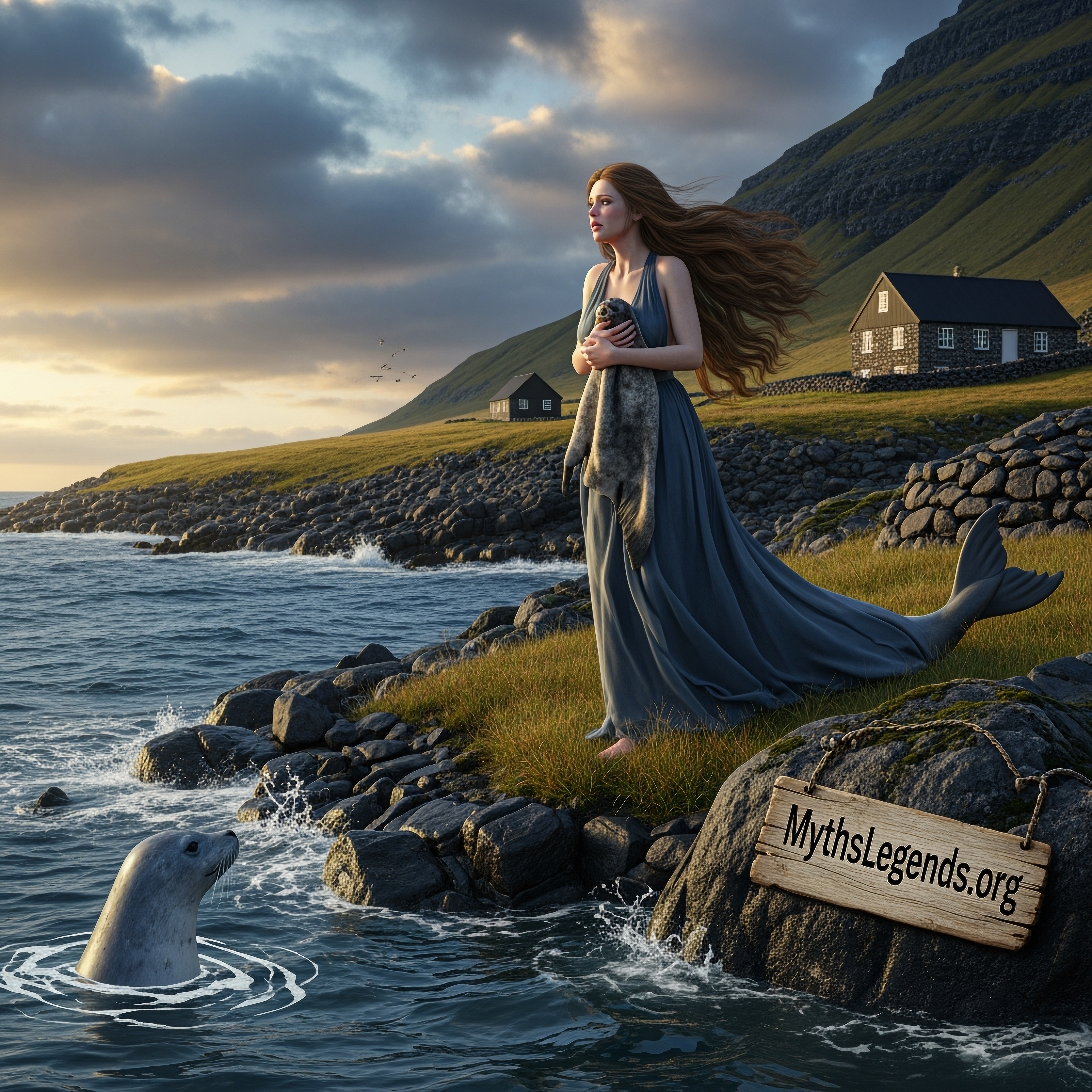
The Enchanting Legend of Tórshavn’s Selkies
In the heart of the North Atlantic, among the rugged cliffs and misty fjords of the Faroe Islands, the legend of the selkies resonates deeply with the islanders. These mythical creatures, known as seal people, are said to possess the extraordinary ability to shed their seal skins and transform into humans. This enchanting tale has been woven into the cultural fabric of Tórshavn, the capital city, where folklore and reality often blur under the ethereal glow of the Northern Lights.
One of the most enduring selkie stories centers around a young farmer who stumbled upon a mysterious scene one moonlit night. As the legend goes, he witnessed a group of seals transform into beautiful human figures upon reaching the shore. Entranced by one selkie woman’s beauty, the farmer hatched a plan. He stealthily crept closer and took her seal skin, thus trapping her in human form. Without her skin, she could not return to the sea and was compelled to live on land.
Bound by necessity, the selkie woman became the farmer’s wife. Over time, they had children, blending the mystical with the mundane. Despite her outward appearance of happiness, her heart remained tethered to the ocean, her true home. The story weaves a poignant narrative of love, belonging, and the eternal pull of one’s roots.
Years passed, and the farmer grew complacent, believing his secret was safe. However, the selkie woman never ceased searching for her lost skin. On a rare occasion, fate smiled upon her when she stumbled across a hidden crevice where the farmer had hidden her skin. Seizing this opportunity, she donned her seal skin and returned to the sea, leaving behind a legacy of longing and love that would echo through generations.
The tale of the selkie is more than a simple story; it serves as a metaphor for the deeper themes of freedom and identity—a reflection of the Faroe Islanders’ own relationship with their environment and heritage. The selkie legend has captivated storytellers for centuries, inspiring countless adaptations and interpretations. From oral traditions to literary works, this myth has been persistently explored, breathing life into the isle’s rich tapestry of folklore.
In recent times, the legend has been revisited by contemporary Faroese artists and writers who seek to explore its complex themes. Among those is the celebrated Faroese poet, Rannvá Holm Mortensen, whose poignant verses delve into the inner conflict of the selkie woman. Her poetry paints vivid images of turbulent seas and yearning hearts, offering readers a profound exploration of identity and choice.
Additionally, anthropologists have noted the parallels between selkie legends and similar myths from other cultures, such as the “swan maiden” tales of European folklore or the “kitsune” fox spirits of Japan. These stories share common motifs of transformation and captivity, hinting at a universal human fascination with the idea of duality and metamorphosis. Such comparisons provide intriguing insights into how different cultures interpret the notion of being caught between two worlds.
Historians suggest that the selkie myth may have practical origins as well. The Faroe Islands, with their harsh climate and isolated location, demanded resilience and resourcefulness from their inhabitants. The selkie might symbolize the marrige of sea and land, crucial for survival. Fishermen, reliant on the sea’s bounty, perhaps saw seals as both a source of sustenance and a mysterious connection to another, more enchanting world beneath the waves.
Moreover, the legend reflects the islands’ geography—a rugged landscape interspersed with tranquil waters. It underscores the emotional ties that bind the Faroese people to their maritime surroundings. Even today, as modern technology bridges distances previously insurmountable, the spirit of the selkie continues to reverberate through the islands’ collective consciousness, reminding its people of their intricate dance with nature.
Though technology and globalization alter the way of life on the Faroe Islands, the selkie story remains a steadfast reminder of their cultural heritage. Folklore festivals often feature reenactments of the tale, enchanting locals and visitors alike with its timeless charm. The legend is also immortalized in local arts, from evocative paintings to haunting musical compositions, ensuring its enduring presence in popular culture.
In essence, the selkie legend of Tórshavn transcends mere storytelling; it embodies the essence of the Faroe Islands’ unique cultural identity. The tale resonates with anyone who has ever felt torn between two worlds, who has ever longed for a place where they truly belong. As new generations grow up listening to this captivating fable, the selkies of the Faroe Islands continue to swim through the currents of time, leaving their indelible mark on the hearts and minds of those who dare to dream.

Post Comment