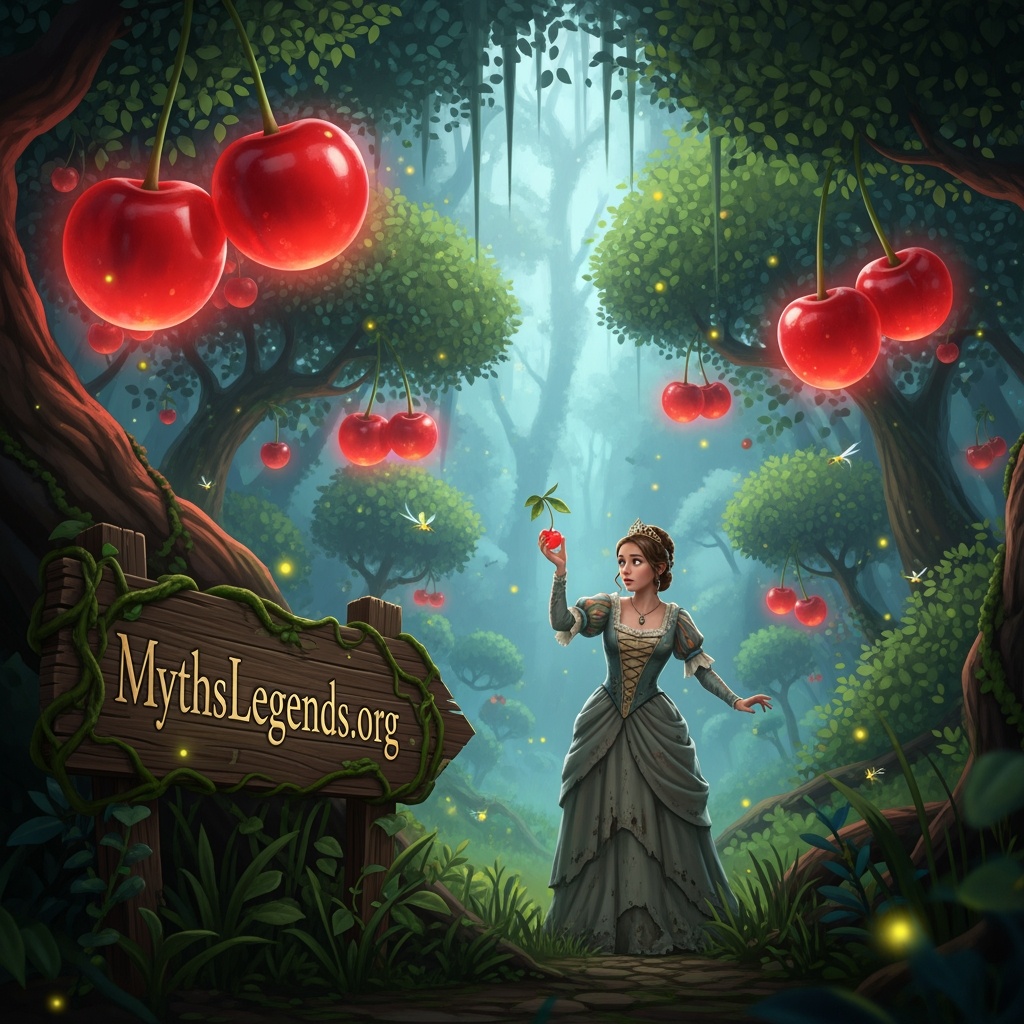
The Cherries of Tschifflick: A tale of royal resilience and forbidden gardens
In the annals of history, where fact and myth intertwine, we find legends that spark our imagination and transport us to worlds where courage and love overcome all adversity. One such legend comes from the Zweibrücken region and revolves around the cherries of Tschifflick—a story full of royal intrigue, family devotion, and the unshakable spirit of a young princess.
The royal prisoner of Versailles. The story begins with Maria, the younger daughter of Stanislaus Leszczyński, the exiled king of Poland. Maria was married to Louis XV of France – often mistakenly referred to as Louis IV by laymen – and found herself trapped within the magnificent but suffocating confines of the Palace of Versailles. Despite the gilded splendor and incessant whirl of court life, Maria felt imprisoned and longed for the simple joys of her family home in Tschifflick. Her father Stanislaus had been robbed of his Polish crown, but he was nevertheless a man of remarkable resilience. After finding refuge in Zweibrücken, he harbored no bitterness toward his fate. Instead, he tended a modest estate with gardens and orchards that reminded him of his homeland. Among them was a delicate and fruitful cherry tree that his beloved daughter had once planted.
A gift from home. Aware of Maria’s lonely existence and her heartbreaking homesickness, Stanislaus devised a plan to comfort her. He carefully picked the ripest cherries from the orchard and placed them on a plate made of rushes that he had woven himself. This simple but heartfelt gift was brought to Versailles by a trusted messenger who understood the message it contained. When Maria received the cherries, she was overwhelmed with emotion. The taste of her homeland was as sweet as she remembered, and each bite filled her with warmth and nostalgia. In a world where words often fail, the cherries spoke of her father’s love and his unshakeable spirit.
An unexpected reward. This heartwarming gesture did not go unnoticed by Louis XV. Although bound by the machinations of power politics, the French king admired Stanislaus’ quiet dignity and ingenuity. While he could not restore Stanislaus to the Polish throne—realpolitik dictated otherwise—he wanted to show his appreciation. So, in an unexpected twist of fate, Louis granted Stanislaus the office of governor of the Duchy of Lorraine, with Nancy as its capital. This new role was more than just a title; it was a recognition of Stanislaus’ integrity and an opportunity for him to exert influence once again. For Maria, this meant that her father would be closer to her both physically and in terms of prestige, allowing father and daughter to share moments of joy and connection despite their circumstances.
The quill and the cherry juice. Driven by gratitude and a desire to share this joyful development with her father, Maria sat down to write a letter. In an inspired burst of enthusiasm, she dipped her quill in the juice of the cherries Stanislaus had sent—a symbolic gesture to describe her joy with the very gift that had rekindled it. She carefully crafted a second plate from the cherry stems, modeled after her father’s original work, and placed the letter on it. She sealed it carefully and sent the message back to Zweibrücken, confident that it would be carried on the wings of hope and family love.
Echoes through the centuries. The stories of Stanislaus and Maria were passed down through generations, becoming richer with each retelling. Scholars and historians continue to try to untangle the threads of truth and fiction, drawn to the human elements that resonate so deeply—the iron will of a father, the longing of a daughter, and the simple beauty of cherries that connected kingdoms and hearts. As we reflect on this tale, we are reminded of the timeless power of small gestures of love and how they can change lives. Much like the cherries of Tschifflick, these gestures give us stability, provide comfort amid chaos, and create connections that transcend distance and fate.
In a world where kingdoms rise and fall and the course of history often overshadows the stories of individuals, the legend of the cherries remains a powerful reminder that at the heart of every story of greatness lies a core of humanity. In these humble seeds, we find hope, even in gilded cages.













Post Comment