The story of the femme fatale of Vienna’s Jungferngässchen and her Don Juan
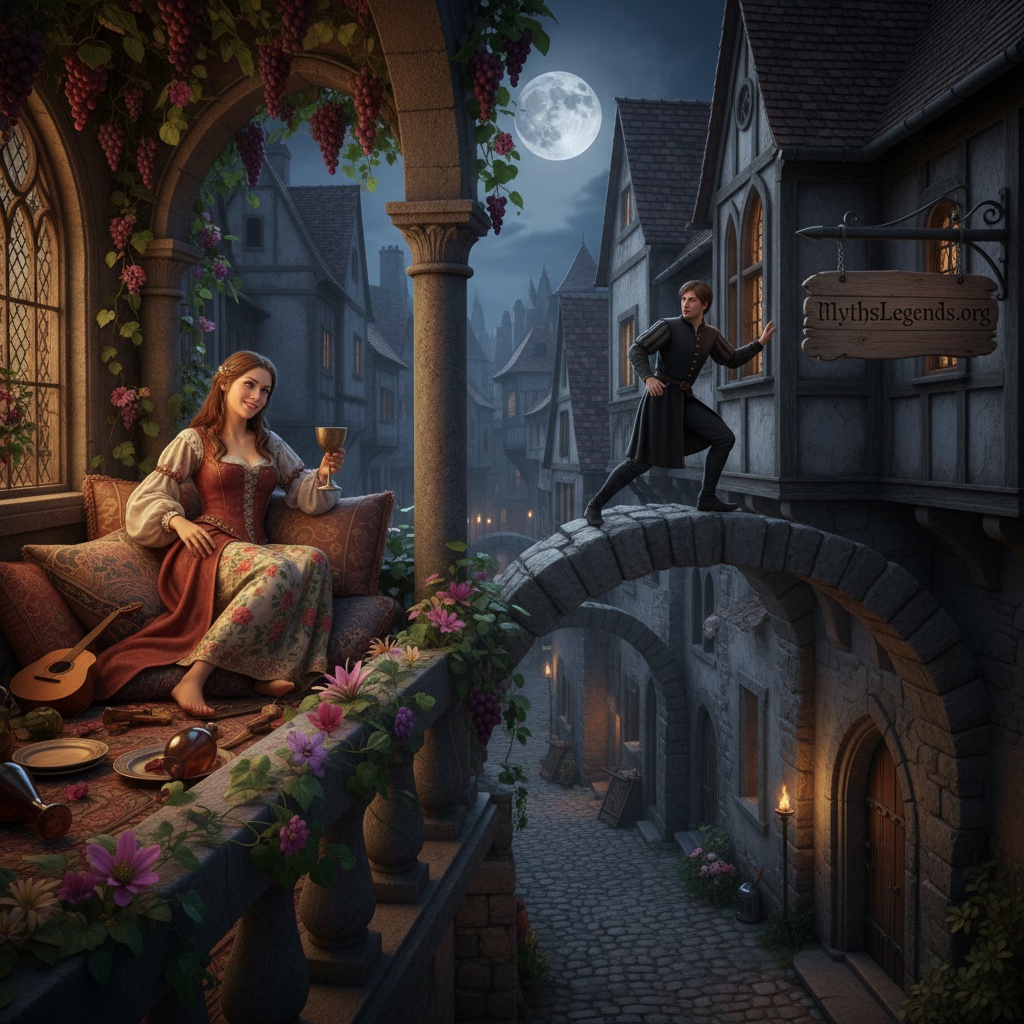
In early 14th-century Vienna, in a small alley behind St. Peter’s Church, a dramatic and memorable story took place that is still told today. In the house on the corner of Jungferngässchen, now known as No. 6, formerly No. 613, lived a pretty girl named Frowiza. She was known for her loose lifestyle, which caused great annoyance to the respectable fathers of the city. Her sons were often seduced and fleeced by the spendthrift beauty, and it was not uncommon for her orgies to end with health consequences or even death. Opposite, in what is now No. 7, then No. 571, resided City Councilor Stephan Knogler. He had only one son, whom he raised strictly and allowed no freedom whatsoever. This excessive caution often led to disaster, as in this case. For at night, when everyone in the house was asleep, his dutiful son climbed over the archway connecting the two houses to be with Frowiza. The inevitable happened: one night, when the father happened to get up and go to the window, he saw his drunken son climbing back across the narrow bridge in the moonlight. Shocked and angry, he shouted threateningly at him. The boy lost his footing and fell into the alley, where he broke his neck. Full of grief and anger, the father brought a lawsuit against Frowiza. At that time, women who had violated customs were sentenced to public penance. In poor clothes, barefoot and with a straw wreath on her head, she stood in front of the church doors and had to endure the ridicule of passers-by. This shame often meant that such women never found a man who wanted to marry them. This is the origin of the proverb: “The maiden must rub the Stephansturm,” which was particularly popular during Carnival. The alley where Frowiza lived was therefore given the name “Jungferngässchen” (Maiden’s Alley). Another version tells of a woman whose misfortune had forced her to ask the gravedigger to prepare a grave for her. But before she could lie down in the grave, she found a man who married her. The gravedigger, surprised and amused, gave the alley this name because many hopeless virgins wanted to order a grave from him in the hope of also finding a husband. Another theory says that the alley got its name because it was inaccessible without entrance doors, similar to a chaste virgin. In fact, however, the alley was so named because virgins in solemn white dresses lined up there during processions. The sad end of Frowiza was that she fell seriously ill and died a painful death. Frowiza, Vienna’s femme fatale, was buried without much ceremony in the cemetery of St. Peter’s Church. On an autumn night in 1356, another eerie episode took place. The young and adventurous squire Conrad der Chirichperger, engaged to a noble lady, was not particularly faithful. He was considered Vienna’s Don Juan. On a nighttime stroll, he encountered a gravedigger who showed him Frowiza’s open grave. Shortly thereafter, Conrad expressed his desire for the girl to come back to life so she could be with him at night. Despite the gravedigger’s warning, he extended an invitation. When he returned home, he regretted his actions and would have remained deeply concerned had his bride not visited him to seek shelter from a storm. During dinner, the pastor of St. Peter’s, Conrad’s fatherly friend and tutor, entered. When Conrad told him about the sacrilegious invitation, the pastor performed a blessing ritual. The effect was terrible. The bride’s face contorted and she turned into a dead grimace. With a bloodcurdling scream, she disappeared in a greenish flame. The squire realized that the priest had saved him from a terrible danger. Purified and grateful, he led an exemplary life with his fiancée from then on. The Chirichperger house still bears the name “Zum Totenkopf” (The Skull) today, a reminder of this ghostly story. Thus ends the saga of Vienna’s own Don Juan, a legend whose drama is in no way inferior to the stories of other daring lovers.







Post Comment