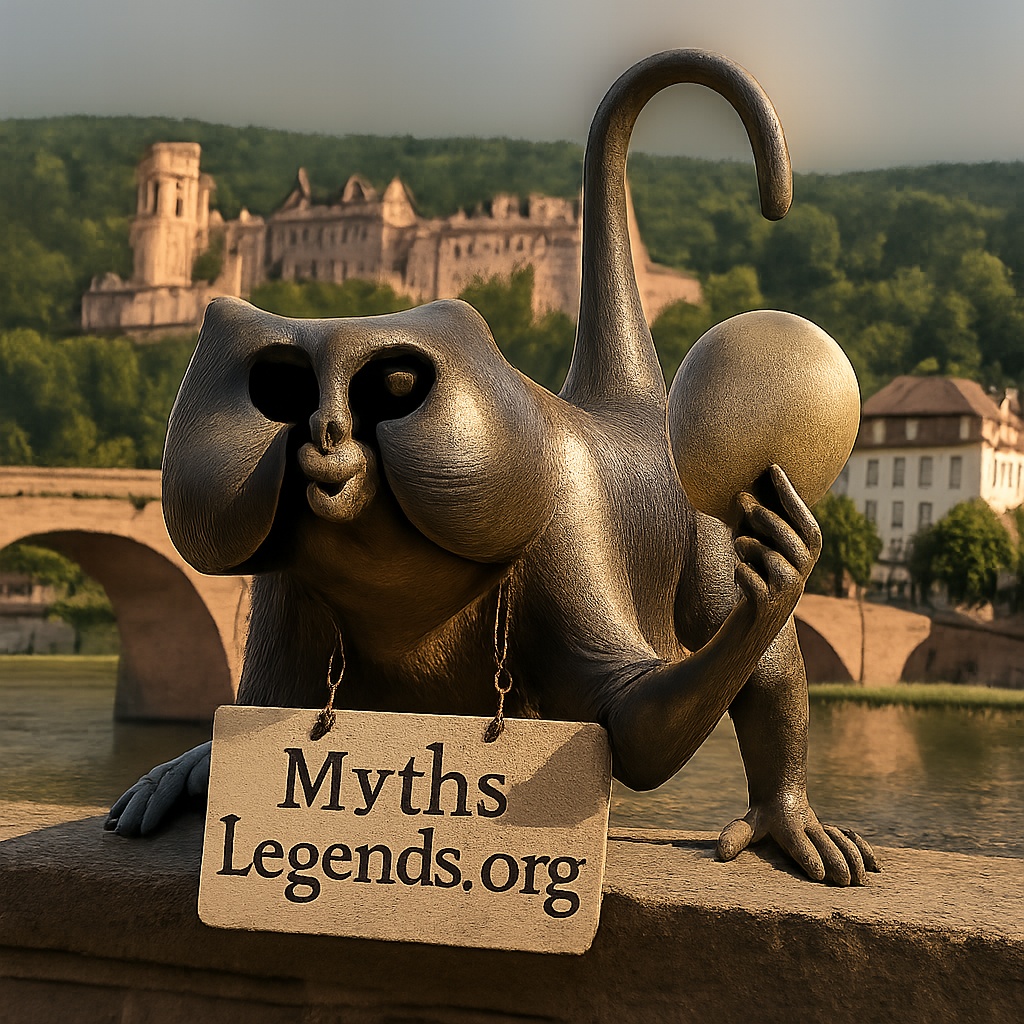
The Old Bridge in Heidelberg with the monkey on the bridge
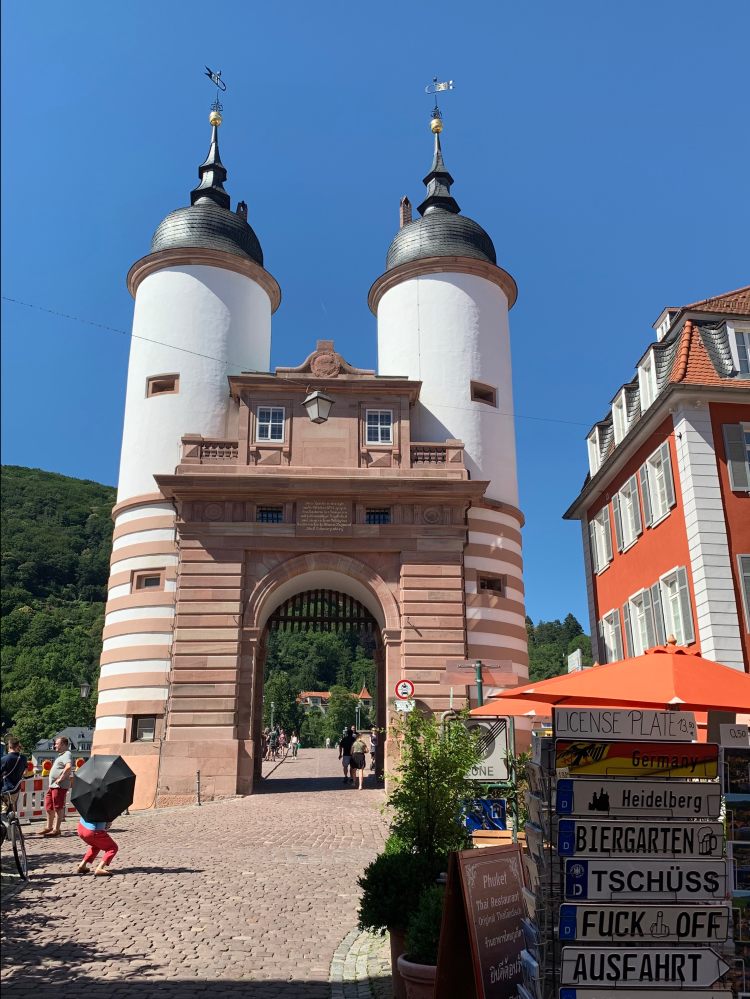
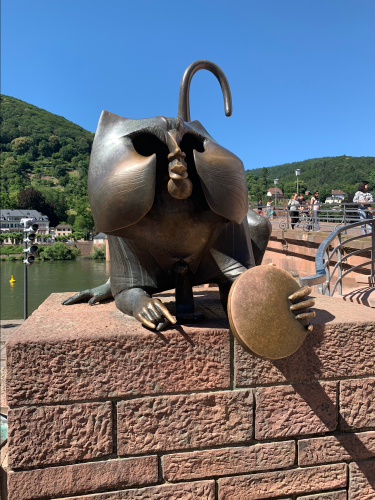
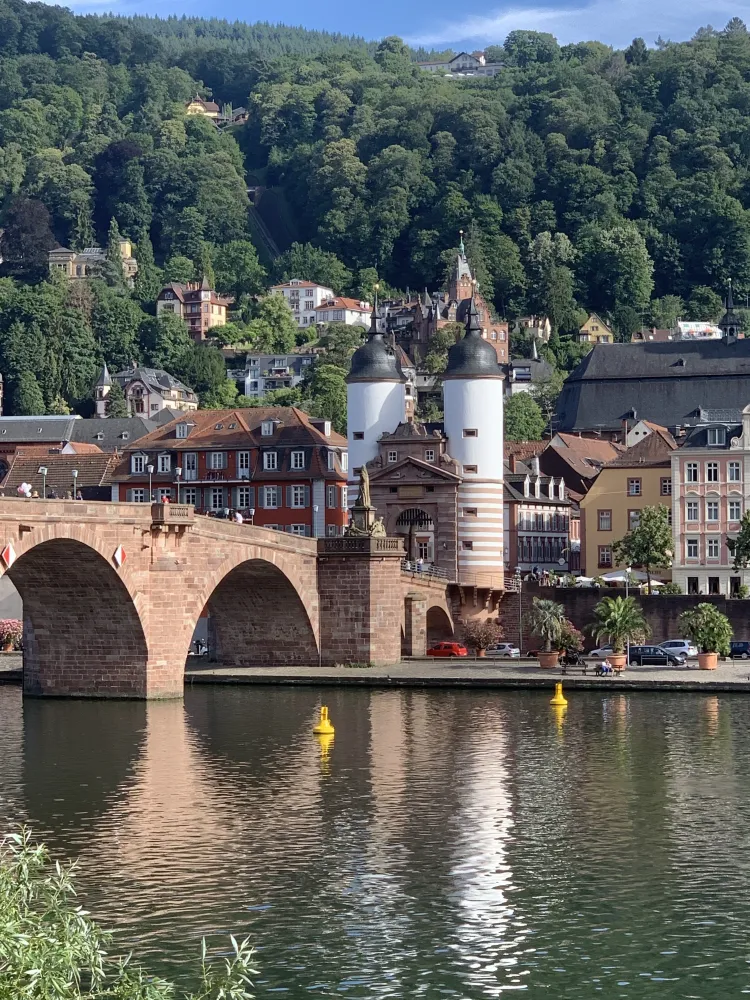
The Old Bridge in Heidelberg is one of the most famous landmarks of the city of Heidelberg in Baden-Württemberg. The bridge, which is 200 meters long and 7 meters wide, connects the old town with the banks of the Neckar River at the eastern end of the Neuenheim district. Today, the Old Bridge, which is actually named after its builder, Elector Karl Theodor, Carl-Theodor-Brücke, is one of Heidelberg’s tourist attractions. I have crossed the bridge, which was built in the 18th century from Neckar Valley sandstone and has nine arches, many times and still admire its beauty and the fantastic view of the Neckar River from it. Elector Karl Theodor had the stone bridge built between 1786 and 1788 because the previous wooden bridges were repeatedly destroyed by floods and wars. My path from the cobblestone-paved old town led me to the northern bridge gate, where I was greeted by the Heidelberg bridge monkey. Its significance dates back to 1481. At that time, it sat in the tower of the former bridge and mockingly greeted visitors with the Electoral Palatinate greeting, which involved grabbing its bare rear end. His rear end was directed towards Kurmainz, and so the mocking greeting was aimed at the bishops of Mainz. The people of Heidelberg thus demonstrated that they no longer belonged to the bishops, but to the electors. The monkey also held a mirror in his hand, which encouraged the population to engage in critical self-reflection. The monkey was destroyed during the War of the Palatinate Succession. At the request of the “Alt Heidelberg” association, German sculptor Professor Gernot Rumpf designed a bronze bridge monkey in 1977, which was erected on the bridge in 1979. With its mirror and ring, the bridge monkey symbolizes not only vanity but also lust and ugliness with its bare rear end. The outstretched finger on its right hand serves to ward off evil glances. Thus, anyone who looks at the monkey mockingly simply gets the mockery back. Next to the monkey is a plaque with a poem by Martin Zeiler from the 17th century: “Why are you staring at me? Haven’t you seen the old monkey? Look around Heidelberg and you’ll see more like me.” Incidentally, the monkey’s head is hollow, so anyone can stick their head inside and take a selfie. Next to the monkey are two mice. Legend has it that if you stroke the mice, you will have many children. If you stroke the mirror, you will become wealthy, and if you stroke the outstretched fingers, you will return to Heidelberg. I always admire this beautiful bridge, which features a sculpture of the Roman goddess Minerva, the goddess of wisdom, next to the monument to Elector Karl-Theodor. Both sculptures were created by the sculptor Konrad Linck. On the monument to the Elector on the southern bank of the Neckar, there are figures on the two-step pedestal symbolizing the most important rivers in the areas ruled by the Elector: the Rhine and Moselle, as well as the Danube and Isar. The inscription embedded in the pedestal of the statue reads: “The Senate and people of Heidelberg erected this monument in pious reverence to Carl Theodor, the father of the Palatinate, in 1788.” This monument to the Elector shows the gratitude of the citizens of Heidelberg for the construction of the bridge. In addition, on the north bank of the bridge there is a copy of the bridge’s patron saint, Johannes Nepomuk; the original is in the Kurpfälzisches Museum. I love to look out over the Neckar from the Old Bridge and pause for a few minutes. The panorama is simply breathtakingly beautiful, and I am glad that the Old Bridge could be rebuilt through a fundraising campaign after its destruction on March 29, 1945, by German soldiers. The starting signal for reconstruction was given on March 14, 1946, and the Old Bridge was inaugurated on July 26, 1947. The bridge was also included in the World Monuments Fund, a list of the most endangered monuments around the world. For me, my visit to Heidelberg always begins with the Old Bridge, which is so idyllically framed by the river and mountains in the Heidelberg cityscape. As the German poet and thinker Johann Wolfgang von Goethe said about Heidelberg: “The city, in its location and with its entire surroundings, has, one might say, something ideal about it.”










Post Comment