
O du lieber Augustin – the legendary Viennese cult figure
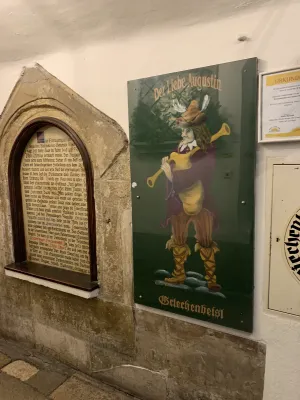
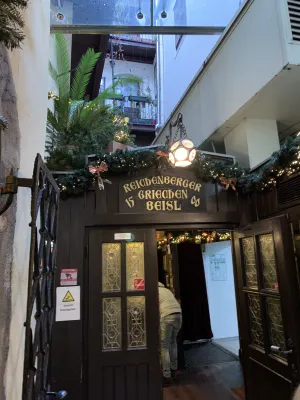
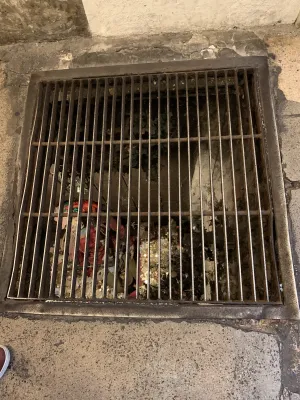
Almost everyone knows the famous folk song “O du lieber Augustin, Alles ist hin!” (Oh dear Augustin, everything is gone!). I often sang this song as a child without realizing its meaning. According to Austrian legend, this folk song originated as follows. In the second half of the 17th century, the plague broke out in Vienna. This plague epidemic claimed many victims, who lay scattered in the streets and houses. To escape the horrors of everyday life during the plague, many Viennese fled to taverns. This included dear Augustin, who entertained people in taverns as a bagpipe player and singer. He liked to invest his money in alcohol and was considered a heavy drinker. After getting so drunk in a tavern that he couldn’t find his way home, he lay down in an alley to sleep off his intoxication. Every day, the plague servants collected the dead from the alleys and streets, and this time they also collected dear Augustin, whom they thought was dead because he was fast asleep. They loaded him onto their cart and threw him into a plague pit outside the city walls. When dear Augustin came to his senses, he saw the many dead bodies around him and began to sing to attract attention, as he could not free himself from the pit. He was lucky and the plague servants heard him and were able to free him. According to legend, dear Augustine then wrote the ballad “O du lieber Augustin, Alles ist hin!” (Oh dear Augustine, everything is gone!), which became a real hit with the public. The folk song was not documented until 1800, but to this day many places in Vienna commemorate dear Augustine. The Griechenbeisl at Fleischmarkt 11 in particular has become a real pilgrimage site for tourists. On its façade is a minstrel figure framed by the inscription “Here dear Augustin sang his song for the first time.” I found the entrance area of the restaurant particularly fascinating, with the Augustin doll sitting in a gloomy cellar hole. This has become a real place of pilgrimage for locals and tourists alike. Incidentally, dear Augustin is still honored as a cult figure today. In addition to an Augustin monument in Neustiftgasse, there is an Order of “Dear Augustin,” which is awarded every year by the Vienna Carnival event, and since 1995 there has even been a tabloid newspaper for the homeless called Augustin. In addition, the Austrian postal service issued an Augustin stamp in 1998, and in 1999, the local private radio station “Radio Augustin” went on the air for the first time. Dear Augustin has truly become a legend who can be found everywhere in Vienna’s old town if you look closely.










Post Comment